
Locomotives
In the early twentieth century, several Chinese railways imported steam locomotives from Britain for main-line service, mountain operations, and branch-line shunting. The Peking–Kalgan Railway was among the lines that made early use of several types of British-built locomotives, including Mallet articulated steam locomotives and tank locomotives manufactured by the North British Locomotive Company (N.B.L.C.).
To cope with the steep gradients of the Guangou section, the Peking–Kalgan Railway purchased four Mallet Type 1 steam locomotives in 1907. These compound articulated locomotives were specifically intended for hauling trains over the mountainous section. In the following year, two North British tank locomotives were acquired, mainly for shunting and local trip workings on the Peking–Mentougou Branch.
These early British-built locomotives illustrate how Chinese railways selected motive power according to different operating conditions, while also documenting the application of modern British locomotive-building technology on China’s railway network.
Mallet Type 1 Steam Locomotive
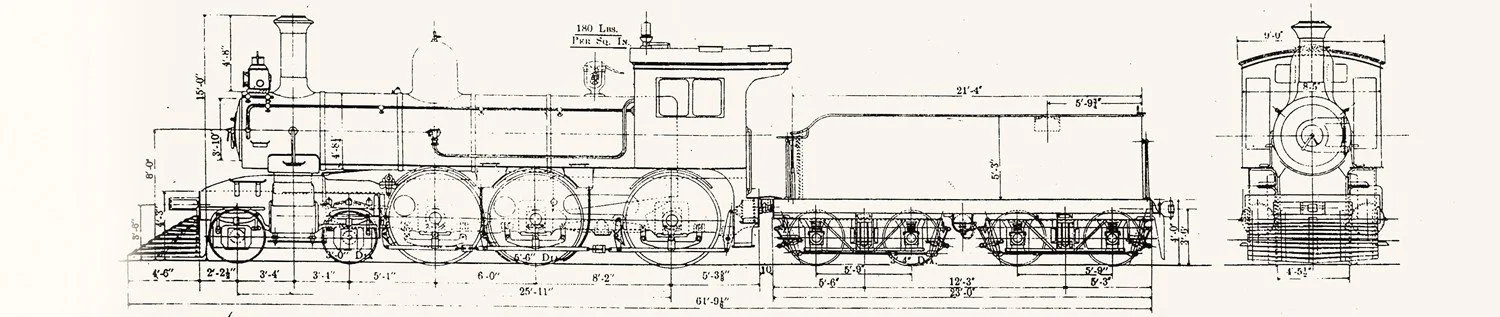
The Mallet Type 1 was the first generation of steam locomotives specifically introduced by the Peking–Kalgan Railway for the steeply graded Kuangou section, and formed part of the first locomotive allocation at the Nankou engine shed. In 1906 and 1907, Jeme Tien Yow consulted his American classmate E. P. Lord about the availability of locomotives in the United States suitable for operation on steep mountain gradients. Ultimately, four locomotives were purchased in 1907 from the North British Locomotive Company (N.B.L.C.), numbered 21–24.
Unlike a conventional simple-expansion steam locomotive, the Mallet used a compound steam-expansion system. Steam from the boiler first entered the high-pressure cylinders; after expanding and performing work there, it was then passed into the low-pressure cylinders for a second stage of expansion, allowing more effective use of the steam’s thermal energy.
North British Steam Locomotive
A Mallet Type 1 locomotive during the Japanese occupation period, photographed at Nankou Station, 1937–1945.
Simplified drawing of the Mallet Type 1 locomotive.
The locomotive had four steam chests and four cylinders. The combined service weight of locomotive and tender was 139.59 tonnes, with an overall length of 21,654 mm and driving-wheel diameter of 1,295 mm. Its wheel arrangement was 0-6-6-0, with a rigid wheelbase of 2,946 mm and a normal boiler pressure of 14.06 kg/cm². The heating surface comprised 15.42 m² in the inner firebox and 225.58 m² in the fire tubes, while the grate area was 4.19 m².
The tender had a service weight of 41.554 tonnes, with a coal capacity of 5.588 tonnes and a water capacity of 15.147 tonnes. On the Kuangou section, the Mallet Type 1 had a rated trailing load of 100 tonnes in both directions.
By 1932, following the introduction of the more powerful Mallet Types 3 and 4, only one or two Mallet Type 1 locomotives remained in intermittent service. During the Japanese occupation period, the type was classified as マレイ (Marei). In 1951, it was redesignated Class ML1(ㄇㄌ 1), and the class designation was abolished in 1955.
The North British tank locomotive was built by the North British Locomotive Company (N.B.L.C.) in 1908 and had a 2-6-2 wheel arrangement. The Peking–Kalgan Railway owned two locomotives of this type, numbered 19 and 20. They were used for shunting and local trip workings on the Peking–Mentougou Branch between Xizhimen and Mentougou, with a rated trailing load of 200 tonnes.
The locomotive weighed 37.592 tonnes and measured 10,236 mm in overall length. Its driving wheels were 1,069 mm in diameter, with a rigid wheelbase of 3,048 mm and a total locomotive wheelbase of 7,061 mm. The inner-firebox heating surface was 6.138 m², the tube heating surface 45.15 m², and the grate area 1.208 m². Normal boiler pressure was 10.545 kg/cm², and maximum operating speed was 24.1 km/h.
Chinese XK3 Class (ex-GWR “Dean Goods”) 0-6-0 Steam Locomotive
The XK3 Class steam locomotive originated from the Great Western Railway’s “Dean Goods” 0-6-0 freight locomotive, designed by William Dean and built at Swindon Works between 1883 and 1899. During the Second World War, a number of these locomotives were requisitioned by the British Army and sent to continental Europe. After the war, Britain supplied a batch to China as part of the United Nations Relief and Rehabilitation Administration (UNRRA) aid programme. Around 22 locomotives arrived mainly between 1946 and 1947 and were later classified as XK3, with some assigned to the Chekiang–Kiangsi Railway.
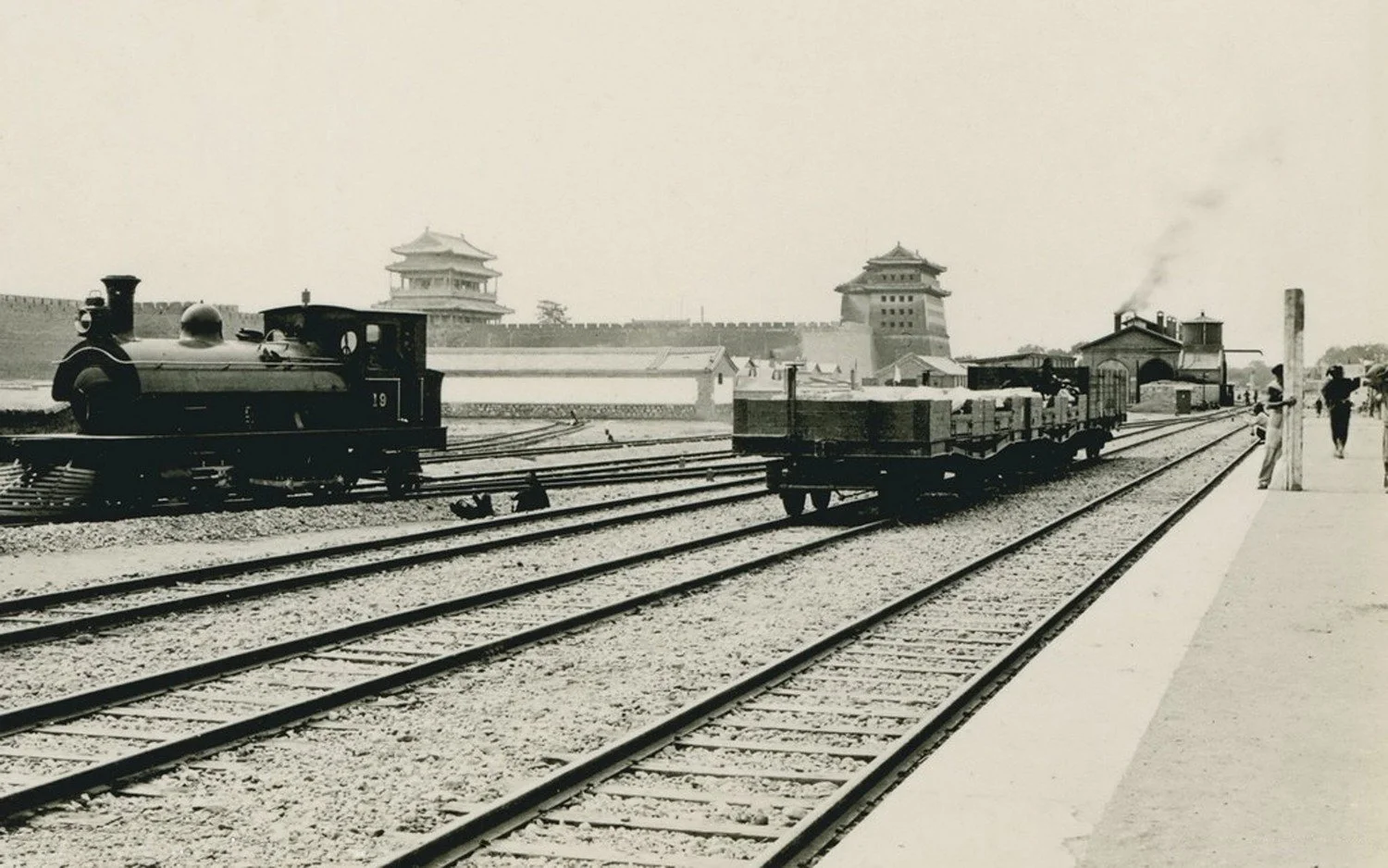
As a tank locomotive, it had no separate tender; the water tanks and coal bunker were incorporated into the locomotive itself. Coal capacity was 1.422 tonnes and water capacity 3.408 tonnes. During the Japanese occupation period, the type was classified as プレコ (Pureko). After 1949 it was redesignated Class PL5, and by 1951 the class was no longer listed. Photographed at Xizhimen Station, between 1906 and 1918.
Preserved at the STEAM Museum in Swindon, Great Western Railway No. 2516 is a “Dean Goods” steam locomotive built at Swindon Works in 1897. It is of the same type as the XK3 locomotives supplied to China after the Second World War and used on the Chekiang–Kiangsi Railway. By the 1950s, all of the XK3 locomotives sent to China had been withdrawn and scrapped. Photographed in Swindon, July 2019.
The cylinders and connecting-rod mechanism of the “Dean Goods” locomotive are located between the driving wheels. This 0-6-0 type was a typical British main-line freight locomotive of the late nineteenth century. Photographed in Swindon, July 2019.
Interior of the “Dean Goods” locomotive cab, showing the rear of the boiler, firebox door, gauges, valves, and braking equipment. The XK3 locomotives supplied to China after the Second World War had essentially the same cab arrangement. Photographed in Swindon, July 2019.