
Railway Terminals and First-Class Station Buildings
From the late nineteenth to the early twentieth century, as British engineering technology, capital, and railway construction systems entered China, a number of large first-class railway stations were built. These stations were generally located at railway termini, major cities, and important transport junctions. In addition to serving passenger transport and railway operations, they often became important urban gateways marking the arrival of the railway age.
Unlike lower-class stations, which tended to follow more standardized architectural forms, British-designed first-class station buildings did not conform to a single fixed style. Depending on the period of construction, urban setting, and individual designer, they incorporated a wide range of Western architectural languages, including Victorian, British Renaissance, Baroque, colonial veranda, and eclectic styles. Tall clock towers, prominent gables, continuous verandas, complex rooflines, and spacious waiting halls together created the distinctive architectural character of major railway terminals of the period. Examples such as Majiapu Station in Beijing, Zhengyangmen East Station, Tianjin Central Station, Tangshan Station, Shanghai North Station, Nanjing Xiaguan Station, Shanghai South Station, Hangzhou City Station, and the Kowloon–Tsim Sha Tsui Terminus reflected the design characteristics of different railway systems and historical periods.
These buildings also record the dramatic changes experienced by China’s modern railways and cities. War, railway expansion, urban redevelopment, and changing transport demands caused many first-class station buildings to be damaged, rebuilt, altered, or completely demolished. Shanghai North Station was damaged during the conflicts of 1932 and 1937; the second-generation British-style station building at Tangshan was demolished in 1975; and after the Kowloon–Tsim Sha Tsui Terminus closed in 1975, only its clock tower was retained. By 2026, relatively few complete or partial remains of these early large British railway terminals survived.
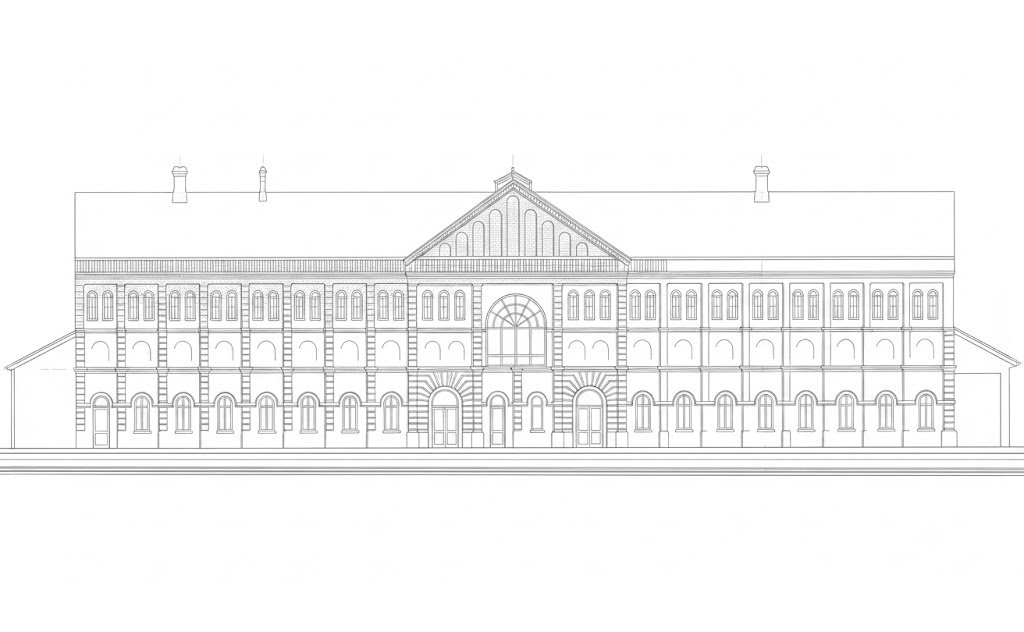
Beijing Station of the Imperial Railways of North China( Zhengyangmen East Station of the Peking–Mukden Railway )
In 1900, British forces occupying Beijing extended the railway northward from Yongdingmen. The line entered the city west of Zuo’anmen, then passed through the areas inside Guangqumen, Dongbianmen, and Chongwenmen before reaching the eastern side of Zhengyangmen, where the third Beijing railway station was established. A two-story British-style station building was constructed here, and the station opened to traffic in November 1901.
Source: Allied Forces postcard
Tianjin Central Station, Imperial Railways of North China
Tangshan Station, Peking–Mukden Railway
By 1906, Zhengyangmen East Station had been established as the formal Beijing terminus of the Imperial Railways of North China. The original two-story station building was therefore demolished and replaced by a second-generation station building featuring a clock tower and passenger waiting halls. View looking west.
Top: Tianjin Central Station, built in 1903, was constructed on the orders of Yuan Shikai, then Viceroy of Zhili and Beiyang Minister, who frequently travelled between Beijing and Tianjin. The station became an important part of the Tianjin railway hub and connected westward with the Tianjin–Pukou Railway, of which it served as the starting station. Tianjin Central Station had three platforms, a main station building, and additional waiting rooms on the platforms. In scale, it was comparable to Tianjin East Station. Photographed in the 1930s. From the Survey Report on the Peiping–Liaoning Railway: Engineering Works.
Bottom: Present-day Tianjin North Station. The eastern half of the original station building had already been demolished. Photographed in August 2008.
British-style station building on Platform 3 of Tianjin North Station. Photographed in August 2022.
The second-generation Tangshan Station was built in 1907. Because the first station stood over an area affected by underground coal mining, ground subsidence damaged its foundations, and the station was relocated about one kilometre westward. The new station featured a British-style, castle-like station building, three platforms, and a pedestrian footbridge. Photographed in 1907. From The Far Eastern Review.
Changxindian Station, Peking–Hankow Railway
Shanghai Station, Shanghai–Nanking Railway
In March 1908, Shanghai North Station on the Shanghai–Nanking Railway was completed and connected with the Woosung branch line. Its imposing station building was a four-story British-style structure. From a contemporary postcard.
Kowloon Station, Kowloon–Canton Railway
Liverpool Road Station, Manchester, built in 1830 as the Manchester terminus of the Liverpool and Manchester Railway, is among the world’s oldest surviving buildings associated with the modern passenger railway.
During the Japanese occupation period, the Beijing Railway Bureau of the North China Transportation Company was established, replacing the earlier administrative system in which individual railway lines were managed separately. The occupation authorities designated Zhengyangmen Station as Beijing’s main railway terminus, and all long-distance passenger trains departed from here.
Source: North China Transportation Company
In 1938, the occupation authorities renamed Tianjin Central Station Tianjin North Station, a name that remains in use today. The photograph shows the northern footbridge and the covered passage connecting the station buildings.
Source: North China Transportation Company
A Beijing–Tianjin high-speed train passes Tianjin North Station. In the foreground is the British-style station building on Platform 3, while the partially demolished main station building can be seen in the distance. Photographed in November 2024.
In 1975, the British-style castle-like station building at Tangshan was demolished and replaced by a Soviet-style station building. During the 1976 Tangshan earthquake, the new station building, completed only the previous year, was completely destroyed. Another Soviet-style building was later constructed on the same site. The 1907 steel footbridge, however, suffered relatively little damage in the earthquake and remains in use today. Photographed in November 2024.
On January 28, 1932, the Shanghai North Station building was bombed by Japanese forces during the January 28 Incident. It was partially restored in May 1933, with its original four above-ground stories reduced to two. In August 1937, the building was again destroyed during the Battle of Shanghai. It was repaired by the Japanese occupation authorities in November of that year and remained in use until 1987.
After the new Beijing Railway Station opened in 1959, the old Zhengyangmen East Station was converted for use as a railway club, locomotive depot, and special-transport facilities. In 1966, construction of the Beijing Subway by cut-and-cover methods reached the site, resulting in the demolition of the waiting hall and the northern half of the station building; part of the clock tower was also removed. In the 1990s, the clock tower was restored to its historic appearance, while a historic-style reconstruction of the waiting hall was built on the southern side. The complex subsequently served as a shopping centre and later as a railway museum. Photographed in July 2022.
The remains of the former Tianjin Central Station building after 1949, by which time more than half of the original structure had been demolished. One staircase of the northern footbridge had also been sealed off. Photographed in August 2022.
In 2002, the surviving old Shanghai North Station building, which had been used as an office building, was completely demolished. In April of that year, the railway authorities constructed an 80%-scale historic-style replica immediately west of the original station site. Its exterior was modeled on the original appearance of Shanghai North Station and it now houses the Shanghai Railway Museum.
In 1947, the Nationalist Government again invested in the reconstruction of Nanjing Xiaguan Station. The new station building was designed by architect Yang Tingbao of the Kwan, Chu and Yang Architects and Engineers, with construction undertaken by Xu Shunxing. The building was completed within the same year, and its station name was inscribed by Yu Youren. During the final stage of the Chinese Civil War in 1949, the building was partially destroyed by bombing and was repaired in 1950.
In 1975, the Kowloon–Canton Railway terminus was relocated to Hung Hom, and Tsim Sha Tsui Station was closed. Its waiting halls and main station building were subsequently demolished. Before demolition, municipal councillors and members of the public had already proposed preserving the station as a museum, but ultimately only the clock tower was retained. Photographed in 2024.
In 1974, the new Guangzhou passenger station was completed. Dashatou Station, then known as Guangzhou Station, was renamed Guangzhou East Station and converted into a passenger-car servicing and stabling facility. In 1984, the section of the Canton–Kowloon Railway between Dashatou and Tianhe was dismantled as part of urban transport improvements. The old station building was demolished in 1985, and a railway office building was completed on the site in 1997. Photographed in 2020.
From the mid-nineteenth century onward, as Britain’s railway network expanded rapidly, major stations gradually developed from simple boarding and alighting points into large public buildings combining waiting, ticketing, baggage handling, offices, and the function of an urban gateway. Major termini in important cities were often equipped with large train sheds, clock towers, hotels, and other facilities, becoming some of the most prominent railway buildings in the urban landscape.
Unlike small and medium-sized stations along the line, Britain’s major stations did not follow a single standardized architectural style. Stations built by different railway companies, in different cities and periods, varied considerably in appearance and could adopt Classical, Italianate, Gothic Revival, Renaissance Revival, Baroque, and other styles. Their functional organization, however, gradually developed into a relatively mature system.
From the late nineteenth to the early twentieth century, these ideas of major-station design also entered China together with British railway engineering and construction experience. Stations such as Zhengyangmen East in Beijing, Tianjin Central, Shanghai North, Nanjing Xiaguan, Hangzhou City, and Kowloon differed greatly in architectural appearance, but shared common characteristics such as larger scale, concentrated passenger facilities, and prominent urban façades. These stations are therefore better understood as adaptations and continuations of British experience in major railway-station design under different Chinese urban conditions, rather than as direct copies of any single British station.
Beijing Station of the Tianjin–Lugouqiao Railway (Majiapu Station)
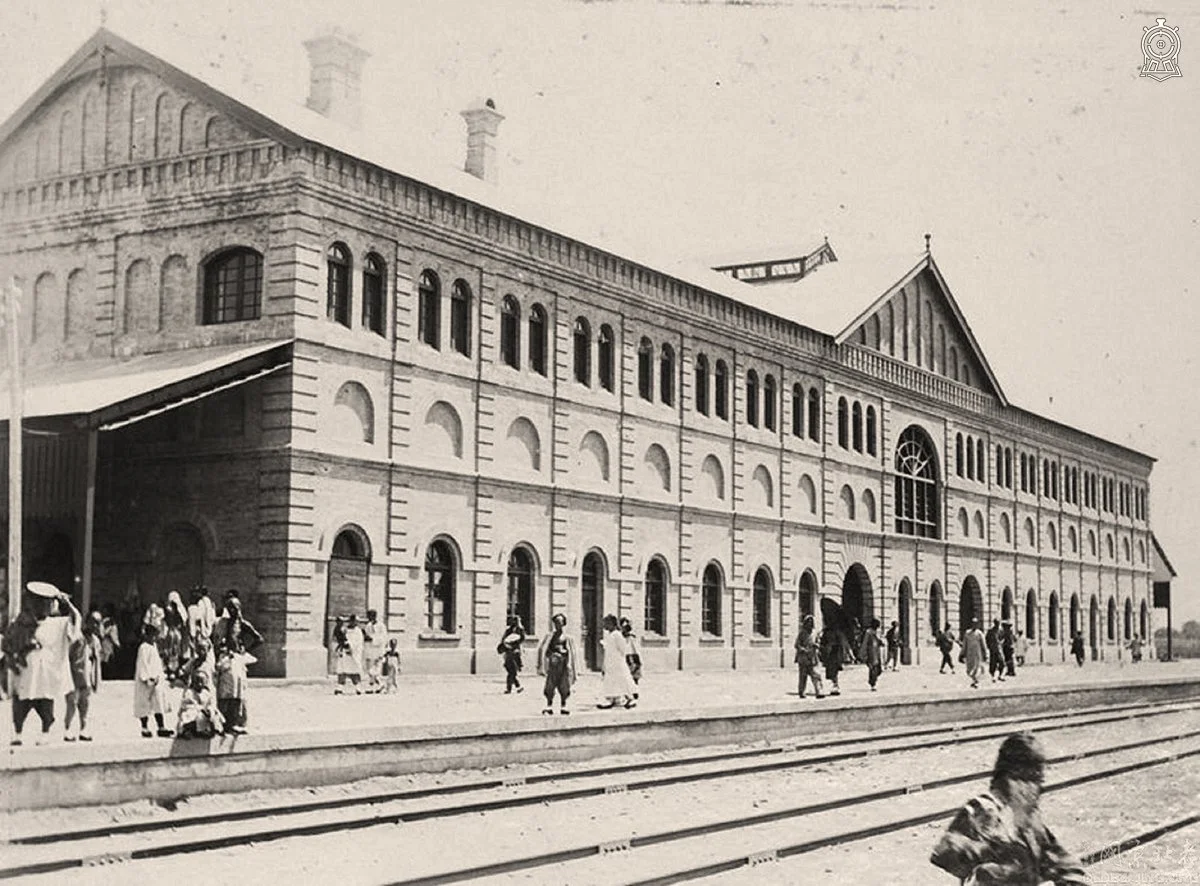
Beijing Station was begun in 1896 and completed in 1897 at Majiapu, outside Beijing’s You’anmen Gate. It was the first railway terminus in the history of Beijing. The station included a three-story station building and two platforms. To the north were an engine shed and a tramway line leading toward Yongdingmen. View looking northeast from the southwest, photographed in 1899.
Source: The National Archives, Kew.
In 1900, Beijing Station was burned during the Boxer Uprising. During the occupation of Beijing by the Eight-Nation Alliance, part of the tramway alignment was used to extend the railway toward the Temple of Heaven, where a new Beijing Station was established. The original 1897 station was thereafter renamed Majiapu Station. The photograph shows the ruins of Majiapu Station; the surviving foundations in the image mark the southwestern corner of the station building. View looking northeast from the southwest, photographed in December 1900.
Source: Original photographic archives, Album 225, “China 1900–1902.”
Majiapu Station was completely abandoned after 1902. The former station yard was later converted into farmland, became a dairy facility during the Japanese occupation period, and after 1949 was used by an agricultural machinery factory. Because the abandoned station foundations were exceptionally solid, local residents and factory workers later constructed workshops and housing directly above them. To this day, the 凸-shaped foundation plinth of the former Majiapu station building continues to support some of these residential structures. View looking northeast from the southwest, photographed in April 2020.
The southwestern corner of Majiapu Station, now hidden beneath later single-story buildings. The dimensions and form of the surviving foundation plinth correspond closely with those visible in historical photographs. Photographed in December 2022.
Nanjing Xiaguan Station, Shanghai–Nanking Railway
Nanjing Xiaguan Station was begun in 1905 and completed in July 1908 as the Nanjing terminus of the Shanghai–Nanking Railway. The station was designed and constructed according to the standards of a British first-class railway station. Photographed in 1910. From Jinling Shengguan.
Guangzhou Dashatou Station on the Canton–Kowloon Railway was built in 1911 and featured a station building in a modern Western architectural style. By the late 1940s, as Guangzhou expanded, Dashatou Station had evolved from a site on the southeastern edge of the city into a prominent landmark in eastern Guangzhou.
In 1931, in response to increasing passenger and freight traffic, the Nationalist Government removed the canopy between the two two-story station buildings and constructed a new three-story central station building.
Shanghai South Station, Shanghai–Hangchow–Ningpo Railway
In 1908, Shanghai South Station of the Shanghai–Hangchow–Ningpo Railway was completed. Its station building was designed in a Baroque Eclectic style and stood on the south side of the station yard, parallel to the tracks. During the Battle of Shanghai in 1937, the station was bombed by Japanese aircraft. After Japanese forces occupied Shanghai, the approximately 1.5 km railway section between Shanghai South Station and Rihuigang was dismantled. Photographed by Wang Xiaoting in 1937.
In 1939, the Japanese occupation authorities completely demolished Shanghai South Station. Passenger services formerly handled there were transferred to Shanghai North Station. Railway tracks were never restored on the former station site, and today only a number of local street names preserve the memory of the old railway station. Photographed in 2022.
Hangzhou City Station, Shanghai–Hangchow–Ningpo Railway
Originally known as Qingtaimen Station, Hangzhou City Station was relocated from outside the city walls to a site within the city in 1909. It was completed in 1910 and renamed Hangzhou City Station. The station building combined a British colonial veranda style with Eclectic architecture.
Tracing the Origins
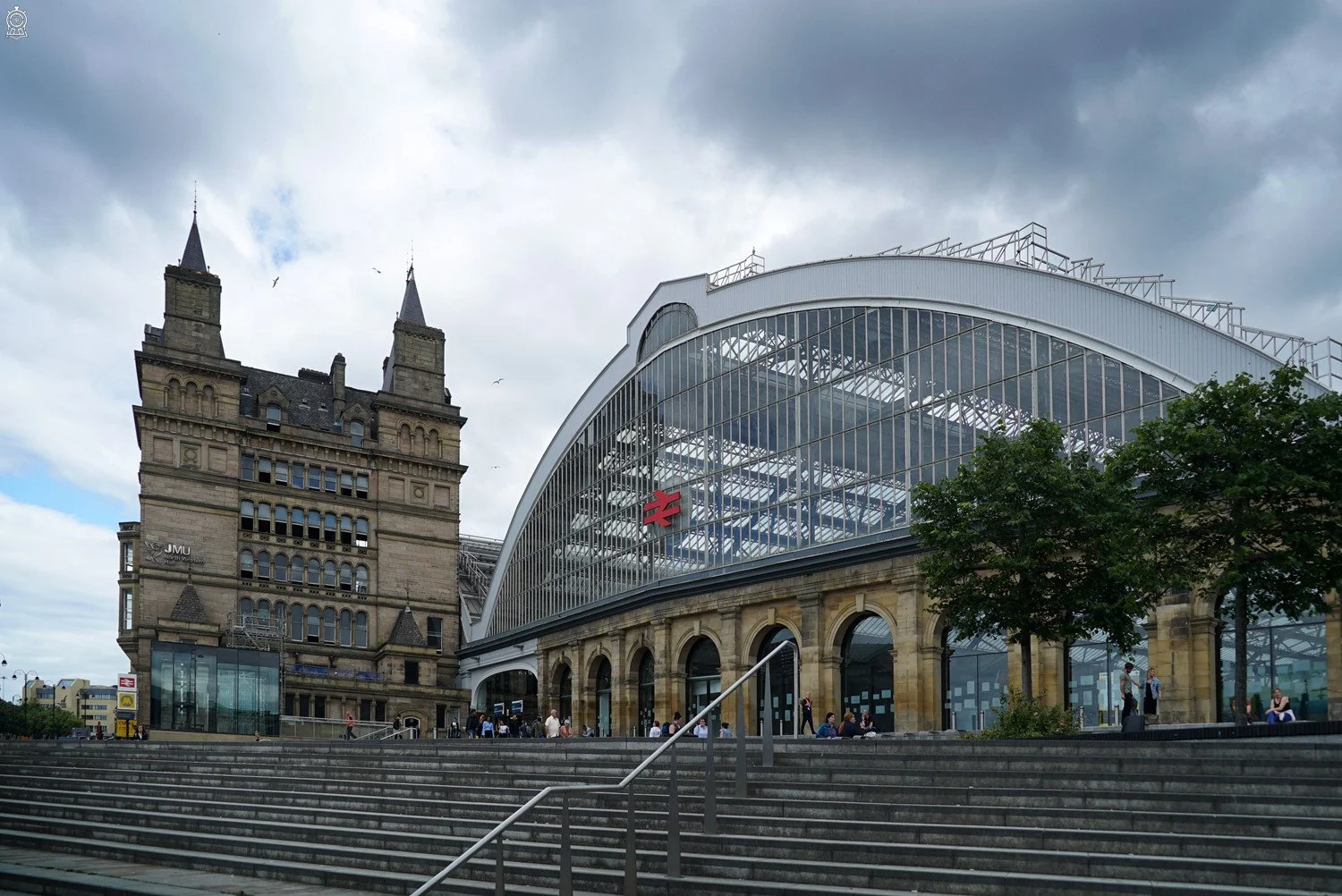
Lime Street Station, Liverpool, opened in 1836. Following several expansions during the second half of the nineteenth century, it developed large iron-and-glass arched train sheds and became one of the representative major urban termini of Victorian Britain.
Around October 1937, Japanese forces bombed Hangzhou City Station twice, destroying the first-generation station building. In 1941, construction began on a new station building inspired by Tang-style architecture as interpreted through Japan’s Nara-period architectural tradition, bringing the history of the original station building to a definitive end. From the postcard series Hangzhou West Lake: Traces of the Fierce Fighting, Hangzhou Station.
Guangzhou Dashatou Station, Canton–Kowloon Railway
Kowloon Station, also known as Tsim Sha Tsui Station, was located in Kowloon, Hong Kong. Built between 1914 and 1916, it was an Edwardian Baroque station building. The station was regarded as the eastern terminus of the Eurasian railway network, from which passengers could travel by connecting rail services through China and onward across the Eurasian continent to Paris, France. From The Hong Kong Island Coastline.
In 1974, a new Guangzhou passenger station was completed. Dashatou Station, then known as Guangzhou Station, was renamed Guangzhou East Station and became a passenger-car servicing and storage facility. In 1984, the Canton–Kowloon Railway between Dashatou and Tianhe was dismantled as part of efforts to improve urban transportation. The old station building was demolished in 1985, and a railway office building was constructed on the site in 1997. Photographed in 2020.
Baodingfu Station, Lugouqiao-Baoding Railway
Baodingfu Station was built between 1897 and 1899 as the terminus of the Lugouqiao–Baoding section of the Peking–Hankow Railway. The chief engineer of this section was the British engineer Claude W. Kinder. After the station was completed in July 1899, subsequent railway construction was transferred to the Belgian company. During the Boxer Uprising in 1900, the station was set on fire by the Boxers, although the station building itself suffered relatively limited damage. This second-class station featured a gable with an industrialized interpretation of Renaissance Revival decoration, consisting of a central circular motif flanked by triangular forms, together with British-style bargeboards and finials.
A down-direction passenger train stands at Platform 1 of Baoding Station. In the background is the third-generation Baoding Station building, completed in 1975. Photographed in July 2006.
In 1975, the third-generation Baoding Station building replaced the second-generation station dating from the Japanese occupation period. Photographed in July 2006.
Between 2009 and 2012, a fourth-generation station building was constructed on the western side of Baoding Station. In 2018, the new eastern station building was completed on the site of the former station buildings. Shown here is the east station building. Photographed in December 2020.
Following the Marco Polo Bridge Incident of 1937, Japanese forces carried out air raids on Baoding Station, destroying the old station building.
During the Japanese occupation period, the remains of the first-generation Baoding Station building were completely removed, and a new waiting hall was constructed on the same site as the second-generation Baoding Station.
Changxindian Station was built between 1897 and 1899 as a major station at the northern end of the Lugouqiao–Baoding section of the Peking–Hankow Railway. The chief engineer of this section was the British engineer Claude W. Kinder, and the first-generation station building, designed in a Classical style, was completed in February 1899. During the Boxer Uprising in 1900, the station was set on fire by the Boxers. The interior was severely damaged, leaving little more than the façades standing. After taking over the Peking–Hankow Railway project, the Belgian company demolished the surviving remains of the first station building and constructed a second-generation station on the same site.
The second-generation Changxindian Station building and its ancillary structures, rebuilt on the site of the original station. In 2026, the complex was listed as immovable cultural heritage in Fengtai District. Photographed in November 2020.
York Station.
Interior of the large-span train shed at York Station.
St Pancras Station, London, completed in 1868. The station is renowned for its enormous single-span iron train shed and the Gothic Revival Midland Grand Hotel in front, making it a major example of the integration of railway architecture and urban public architecture in nineteenth-century Britain.
King’s Cross Station, London, opened in 1852. Its main façade is defined by two large arches corresponding to the wide-span train sheds behind, giving the building a simple and highly distinctive appearance.
The Great Western Hotel in front of Paddington Station, London, built in the 1850s. As an important urban frontage of the Great Western Railway terminus, it integrated the railway station, hotel, and surrounding streetscape. It is now the Hilton London Paddington.
The station area at Paddington Station, London.
Panoramic view of Bristol Temple Meads Station. Originally built by the Great Western Railway and later expanded several times, the station developed into a major railway hub composed of historic station buildings, curved platforms, and large train sheds.
Interior of the large-span train shed at Bristol Temple Meads Station.
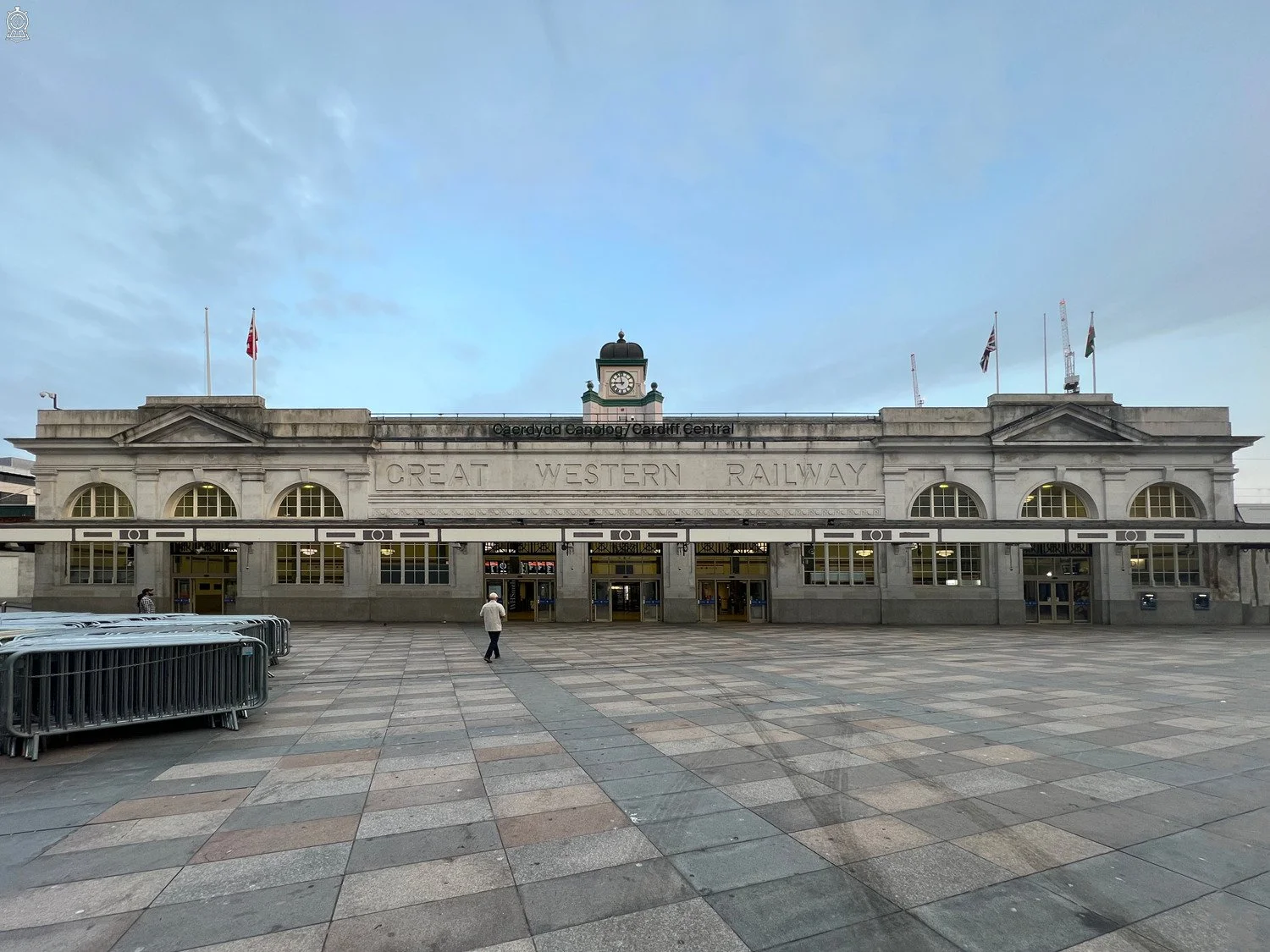
Cardiff Central Station.
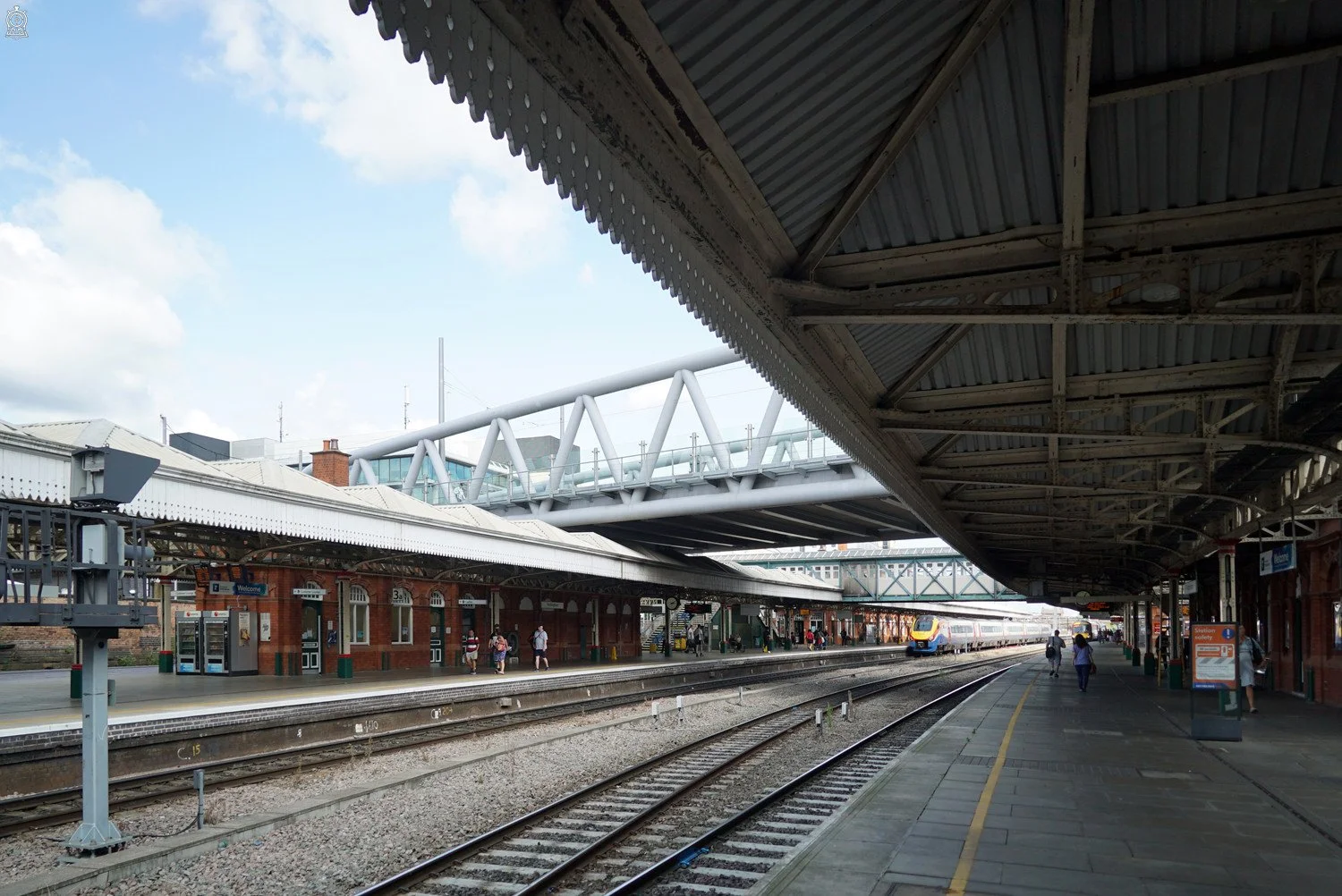
Nottingham Station.
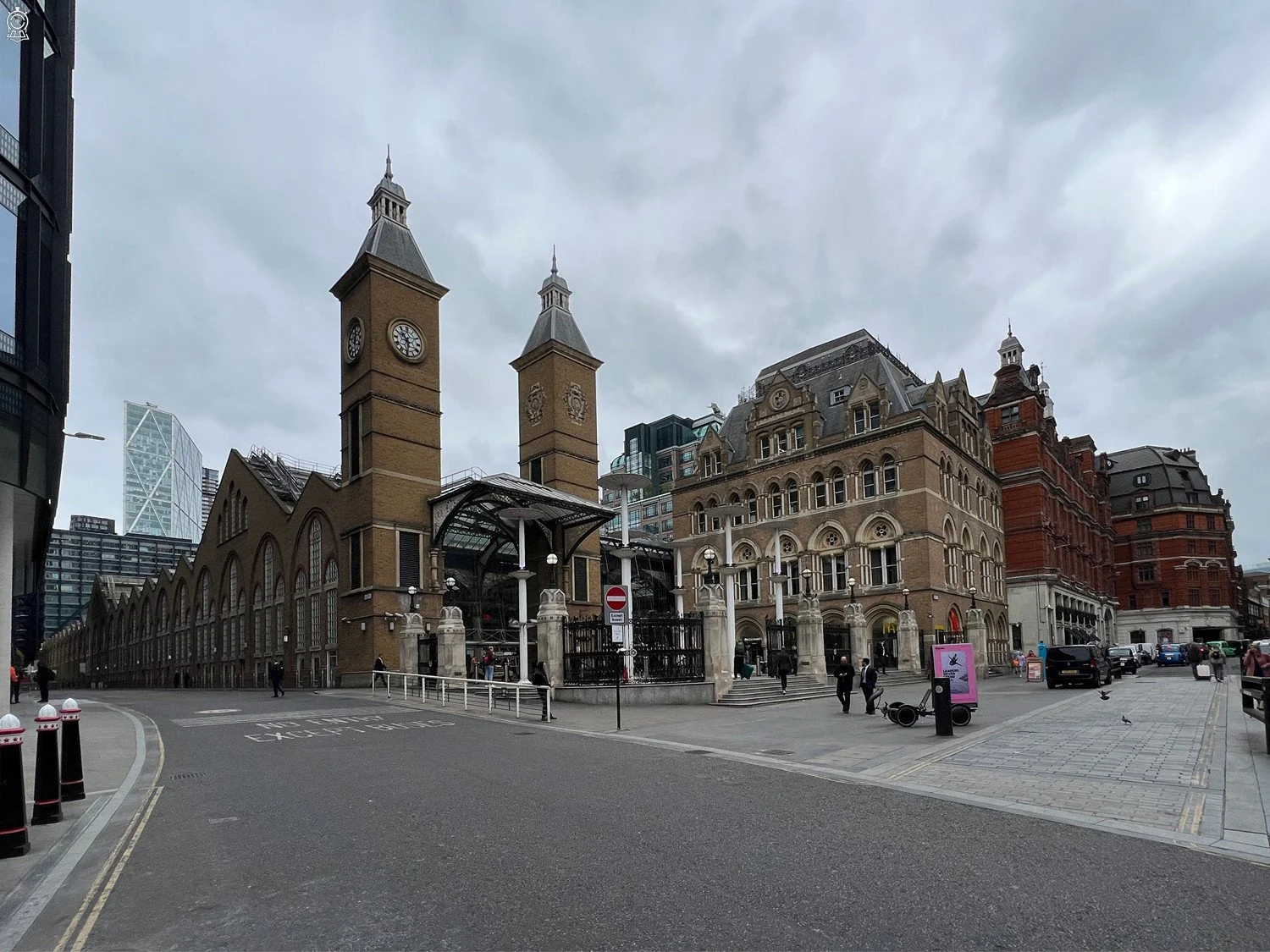
Liverpool Street Station, London.
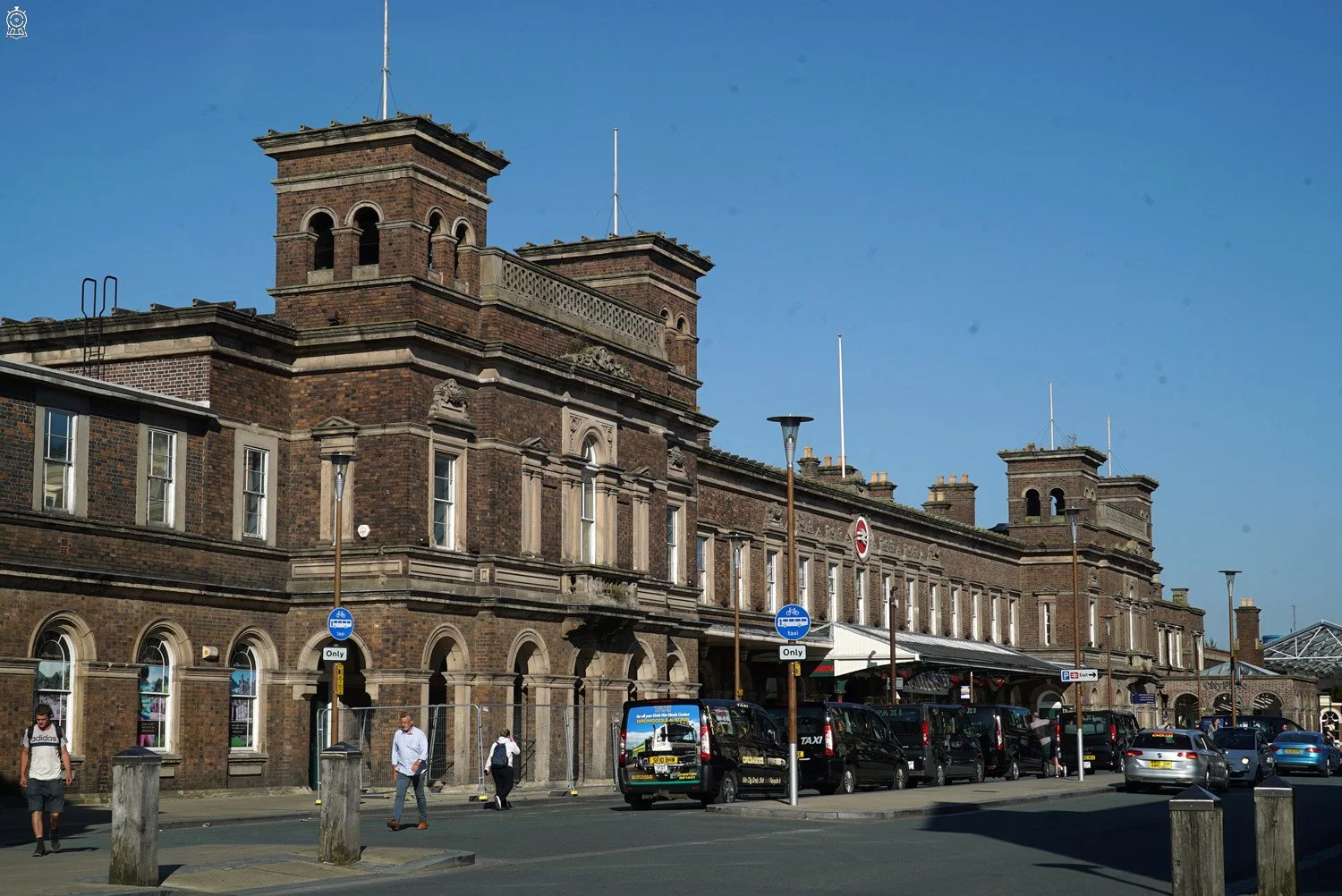
Chester Railway Station.
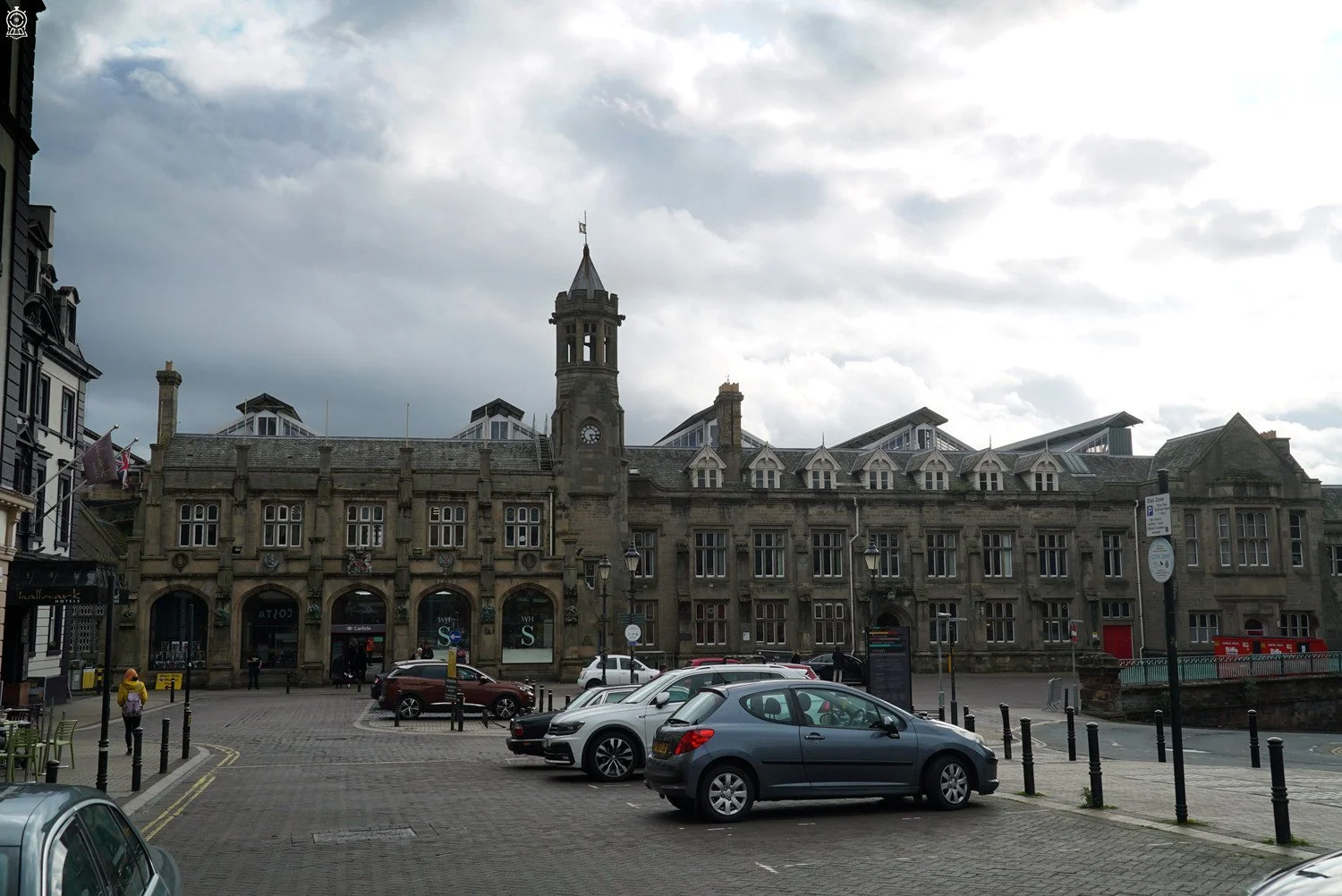
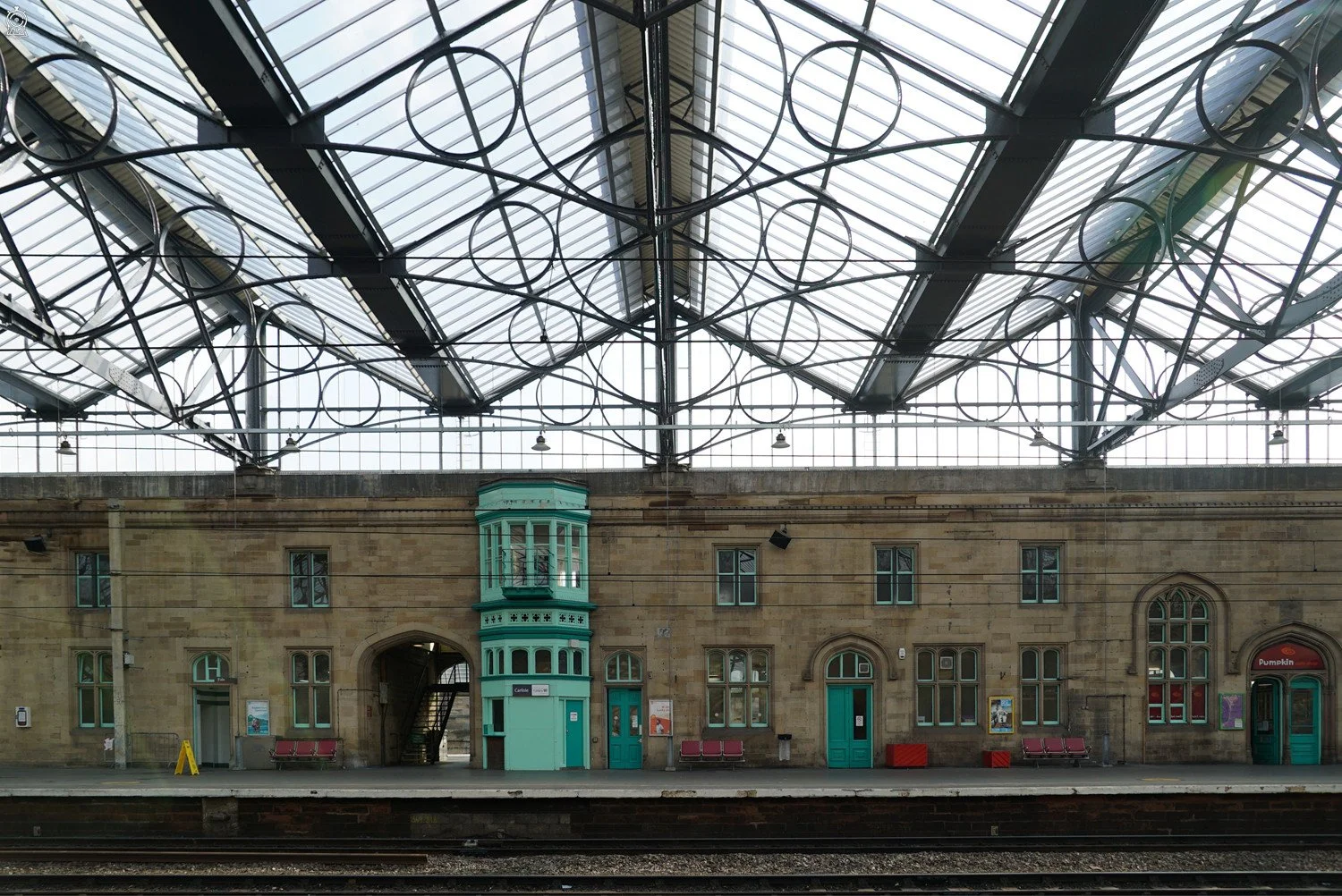
Carlisle Railway Station.
Interior of the Carlisle Railway Station.