
Warehouses
As railway freight traffic expanded, warehouses became an important category of ancillary station buildings, used mainly for the temporary storage, loading, unloading, and transfer of goods. They were generally located within freight yards or near station buildings and were connected directly to freight sidings to facilitate the handling of railway consignments.
The scale of warehouses varied considerably according to the class and importance of the station. Third-class stations such as Xiaoxihe and Shaheji generally had relatively small warehouses of similar form, while second-class stations such as Chuzhou and Mingguang were provided with several warehouse buildings. At Pukou Station, the southern terminus of the Tianjin–Pukou Railway, the volume of freight transfer was much greater, and nine warehouses were once concentrated along the Yangtze River waterfront.
Most of these warehouses were primarily utilitarian and relatively simple in architectural form, although pitched roofs, gables, and occasional British decorative details can still be observed. As railway freight operations and station layouts changed, many early warehouses were demolished or abandoned. Surviving examples now provide important physical evidence for the study of early railway freight facilities.
The warehouse at Tianjin Central Station on the Imperial Railways of North China stood north of the station building, on the west side of the tracks. Construction began in 1903, and the building was demolished between 2009 and 2011. Before demolition, a British-style finial still survived on the roof. Photographed in August 2008.
The freight warehouse at Xiaoxihe Station on the Tianjin–Pukou Railway. The eastern section of the roof has collapsed. Photographed in April 2024.
The signboard on the freight warehouse at Xiaoxihe Station on the Tianjin–Pukou Railway. The words “Tianjin–Pukou Railway” and the final two characters of the station name “Xiaoxihe Station” remain legible. Photographed in April 2024.
The freight warehouse at Shaheji Station on the Tianjin–Pukou Railway. As a third-class station, Shaheji had a small freight warehouse of the same scale as that at Xiaoxihe Station. Photographed in November 2022.
Pukou Station, the southern terminus of the Tianjin–Pukou Railway, handled a large volume of freight transfer. Nine warehouses were built along the Yangtze River waterfront east of the station and remained in use until December 2019. Photographed in November 2022.
Chuzhou Station on the Tianjin–Pukou Railway was classified as a second-class station and was provided with 11 freight warehouses. Photographed in November 2019.
Mingguang Station on the Tianjin–Pukou Railway was a second-class station and therefore had several freight warehouses. Photographed in November 2022.
The freight warehouse at Puzhen Station on the Tianjin–Pukou Railway. Photographed in November 2022.
The freight warehouse at Linhuaiguan Station on the Tianjin–Pukou Railway. Unlike other freight warehouses on the line, this building has two warehouse doors on its eastern façade. Photographed in November 2022.
The freight warehouse at Dongge Station on the Tianjin–Pukou Railway. Photographed in November 2022.
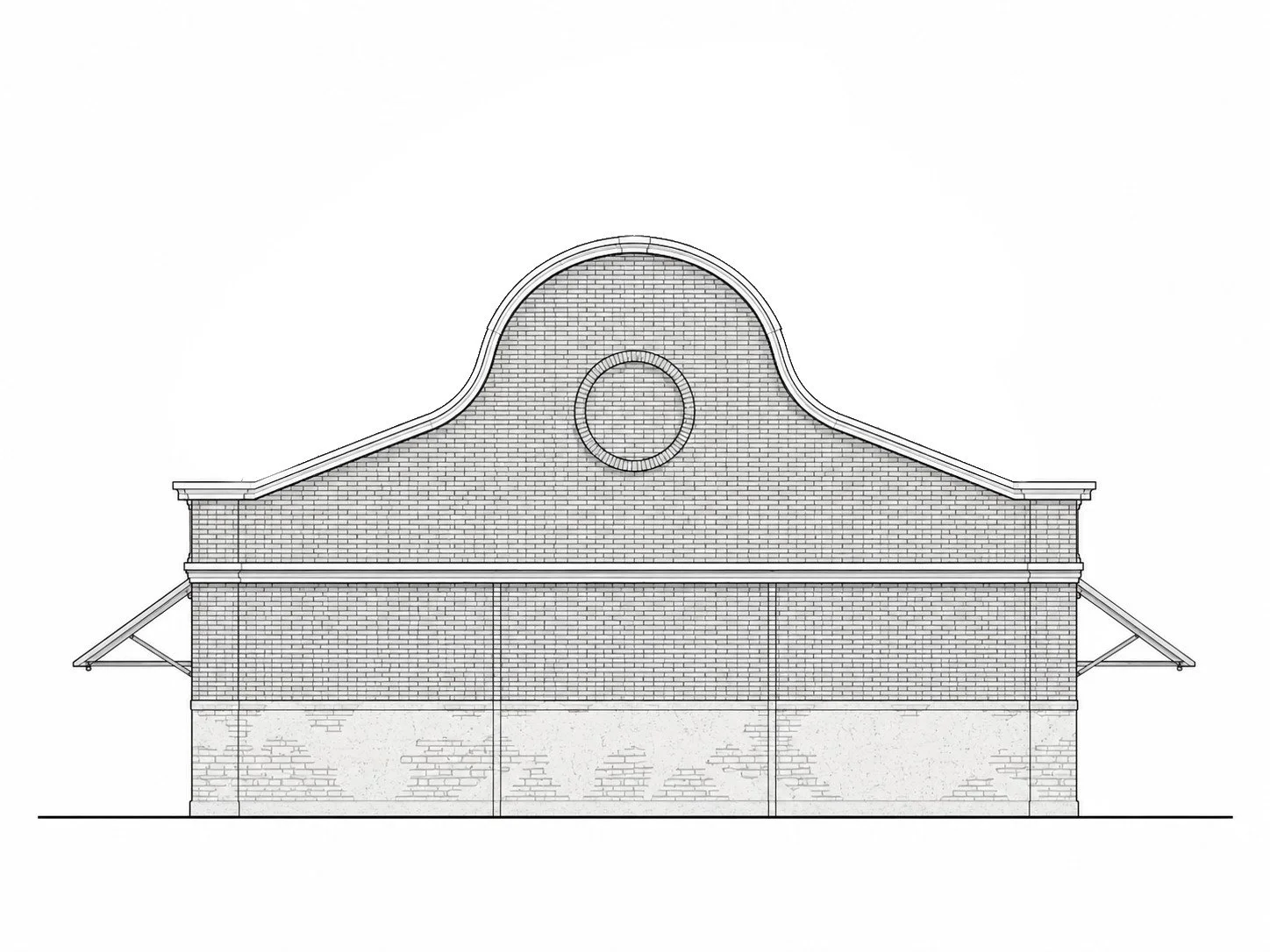
The north gable of Warehouse No. 2 at Pukou Station on the Tianjin–Pukou Railway. Photographed in November 2022.