
Ancillary Buildings
Between 1895 and 1928, the influence of American participation in railway construction in China extended beyond stations, bridges, and engine houses to the many ancillary buildings required for everyday railway operations. As modern railway management systems gradually developed, major stations, locomotive depots, and railway junctions came to include administrative offices, engineering and materials departments, police facilities, freight and transshipment buildings, warehouses, and staff accommodation, together forming a complete operational environment. Most of these buildings emphasized practicality, using brick, timber, and, in later years, reinforced concrete. Their designs were generally restrained, and they were grouped around station yards and workshops according to their different functions, creating highly specialized railway building complexes.
In China, American railway engineering and management concepts were further adapted to local materials, climate, and traditional construction methods. On the Canton–Samshui Railway, for example, some office buildings combined Western-style red brickwork, arches, and verandas with Lingnan architectural elements such as tiled roofs and perforated screens. American influence on these ancillary buildings was therefore expressed more clearly in functional zoning, administrative organization, and the overall arrangement of railway facilities than in any single fixed “American architectural style.”
Canton–Samshui Railway
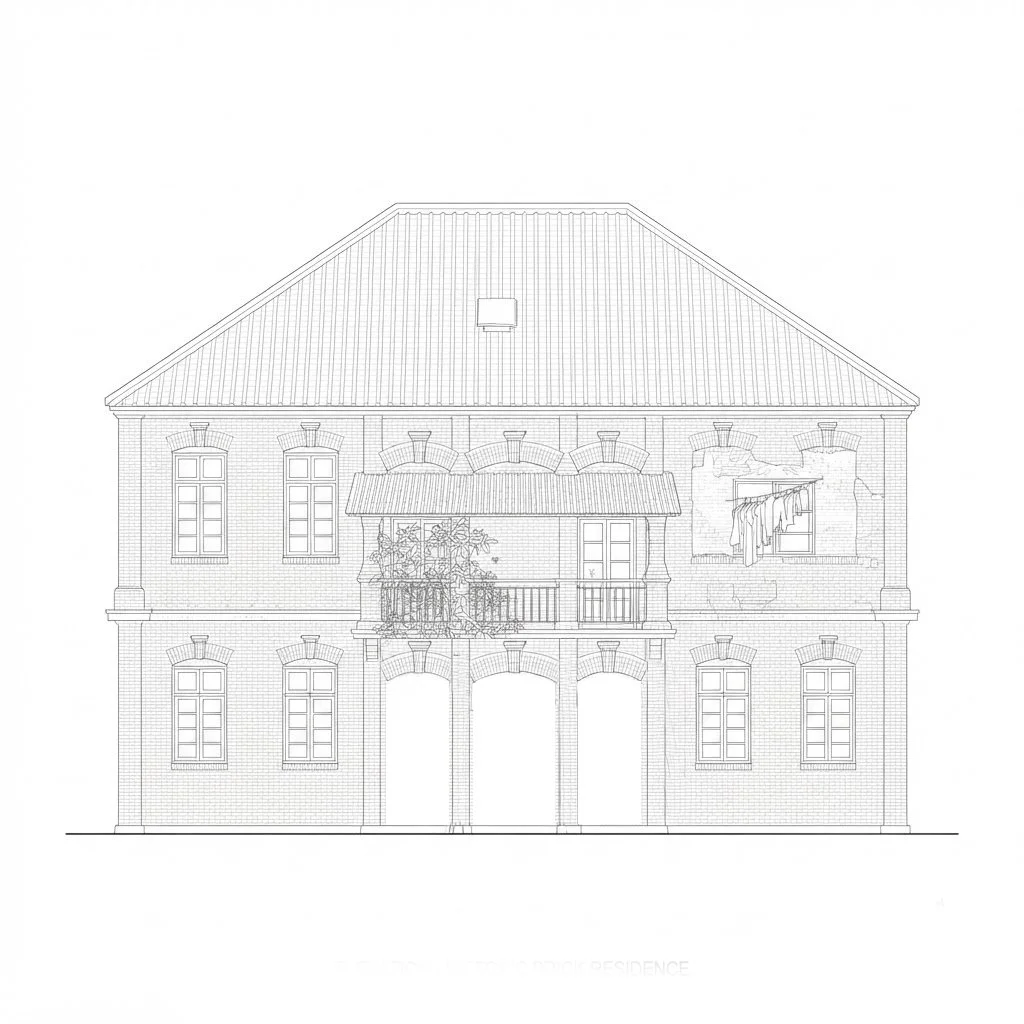
Canton–Samshui Railway Administration Office Building. Construction began in 1905. The two-story building is of brick-and-masonry construction with an arcaded veranda. It faces east and measures approximately 18 m long by 12 m wide, with a floor area of about 430 m². The Canton–Samshui Railway General Union was established here in 1926. Photographed in December 2019.
Canton–Samshui Railway Administration Building at Shiweitang Station, built in the 1920s. The building no longer survives. From the Canton–Samshui Railway Travel Guide, September 1926.
Zhuzhou–Pingxiang Railway
Panoramic view of Anyuan Station and the coal mine. The railway system and railway buildings were jointly designed by American and Chinese engineers, while the mining-related buildings were designed under German engineering direction. View looking west.
Locomotive Department of the Zhuzhou–Pingxiang Railway at Anyuan Station. The building no longer survives. From the Zhuzhou–Pingxiang Railway Travel Guide, October 1919.
Canton–Samshui Railway Administration Office Building, located within the group of railway ancillary buildings south of the station yard. The main structure is built of red brick and topped by a hipped tile roof. Rows of rectangular wooden windows are set beneath segmental brick arches with keystones and decorative mouldings. Its restrained design retains characteristics of early twentieth-century American-influenced railway brick architecture. Photographed in December 2019.
Third Section Police Station of the Canton–Samshui Railway, located at Samshui Station. From the Canton–Samshui Railway Travel Guide, September 1926.
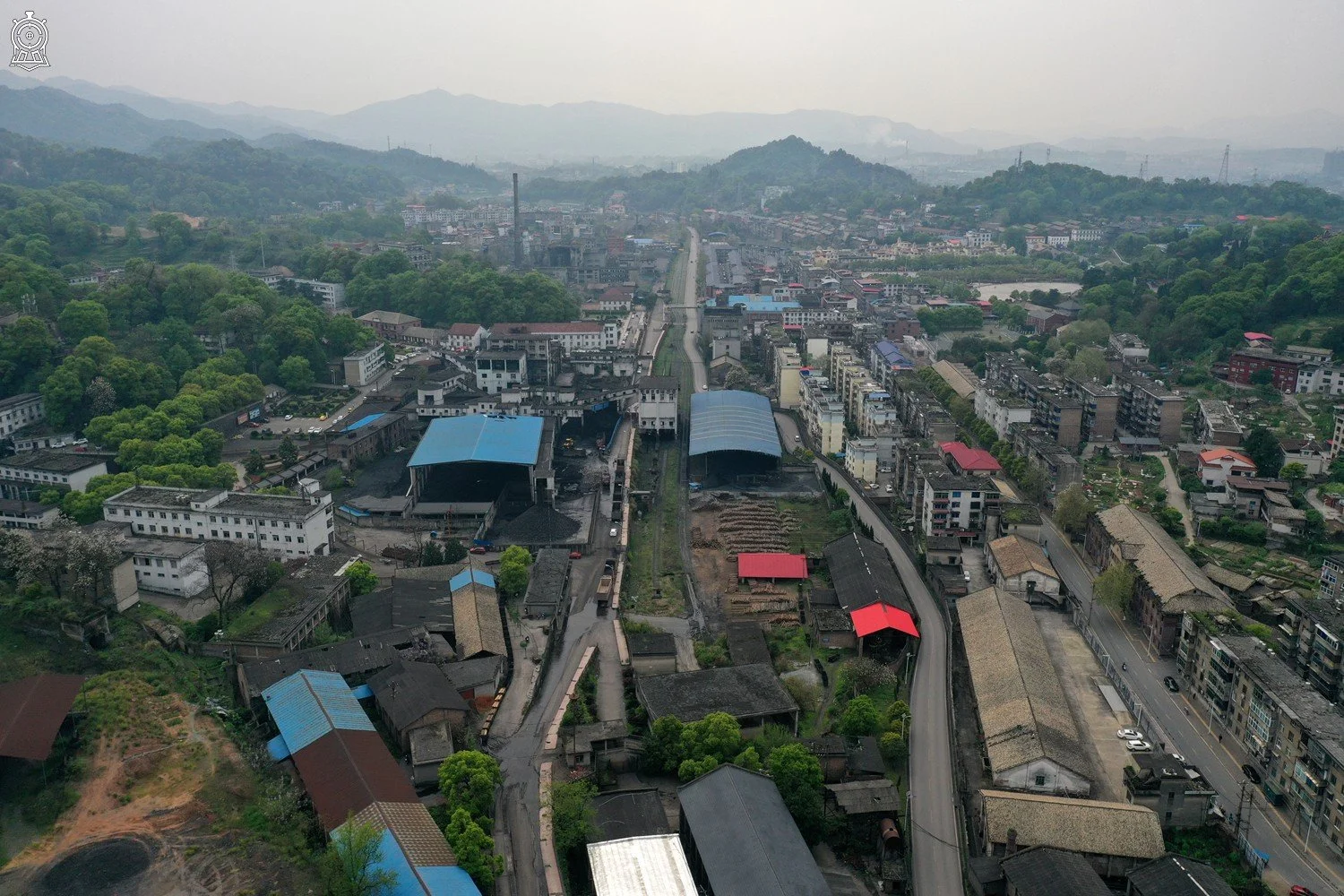
Because of wartime destruction and later reconstruction, almost all of the original railway buildings at Anyuan Station have disappeared. Photographed in March 2021.
Materials Department of the Zhuzhou–Pingxiang Railway at Liling Station. The building no longer survives. From the Zhuzhou–Pingxiang Railway Travel Guide, October 1919.
Architectural detail of the Canton–Samshui Railway Administration Office Building. A projecting balcony is supported by a series of decorative plaster brackets, while a traditional Chinese perforated screen survives above. Western-style brick arches and brackets are combined with traditional Lingnan architectural elements. Photographed in December 2019.
Zhuzhou–Pingxiang Railway Administration Office at Liling Station. The building no longer survives. From the Zhuzhou–Pingxiang Railway Travel Guide, October 1919.
Pingxiang Colliery Transshipment Office at Zhuzhou. Located beside the Xiang River near Zhuzhou Station on the Zhuzhou–Pingxiang Railway, the facility handled coal from the Pingxiang mines for transfer to boats bound for the Hanyang Ironworks. The building no longer survives. From the Zhuzhou–Pingxiang Railway Travel Guide, October 1919.