
Locomotives
Between 1895 and 1928, although the United States did not establish a railway sphere of influence in China on the same scale as Britain, France, Germany, Russia, or Japan, it nevertheless became an important participant in the development of modern Chinese railways through railway investment, engineering surveys, international loans, equipment supply, and technical expertise. In the late nineteenth century, American engineers participated in the construction of the Zhuzhou–Pingxiang Railway. American capital also acquired interests in the construction of the Canton–Hankow Railway, organized engineering surveys, and undertook the construction of the Canton–Samshui branch, before China recovered the railway rights in 1905. American financial institutions subsequently participated in international railway financing projects such as the Hukuang Railway Loan, allowing American capital to remain involved in China’s railway development.
At the same time, large quantities of American-built steam locomotives, rolling stock, rails, and railway machinery were imported into China, with products from manufacturers such as Baldwin and ALCO being particularly prominent. During the Republican period, American involvement in Chinese railways gradually shifted away from the direct acquisition of railway concessions toward equipment exports, engineering expertise, and financial cooperation, making the United States an important force in the modernization of China’s railway system.
It is also worth noting that American approaches to route surveying, railway construction, and operation were introduced into Chinese railway practice by members of the Chinese Educational Mission who had studied in the United States, most notably Zhan Tianyou (Jeme Tien Yow). Their application of this knowledge and experience contributed positively to the development and modernization of China’s railway engineering.
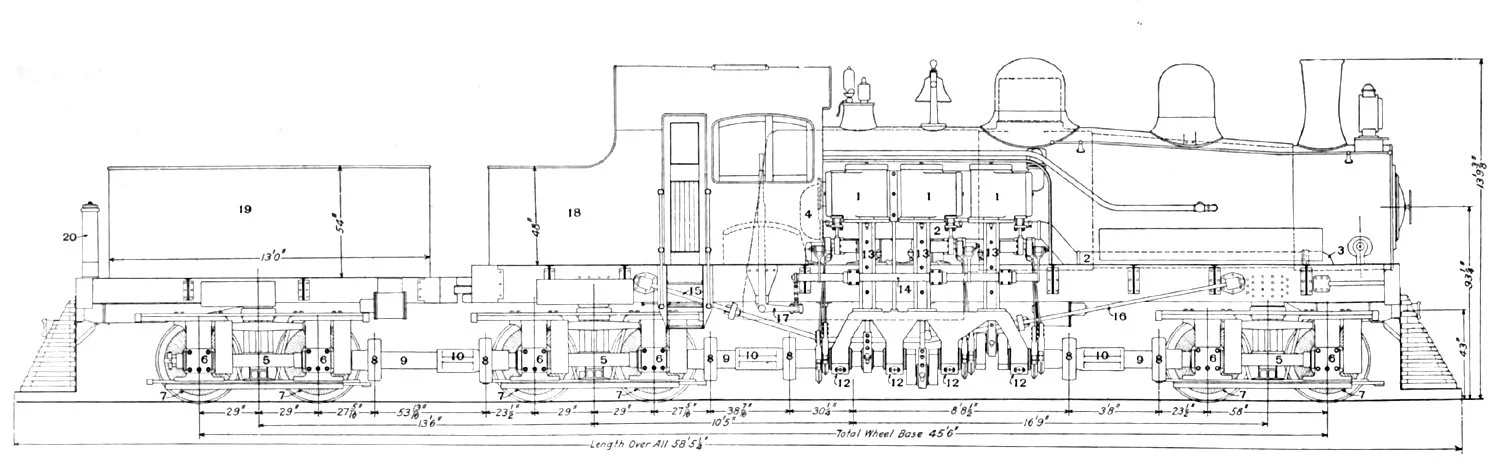
The Mallet Type 2 was a compound steam locomotive introduced from the United States by the Peking–Kalgan Railway in 1911. Built by the Baldwin Locomotive Works, four locomotives were supplied and originally numbered 71–74; their Baldwin works numbers were 35037–35040, all completed in 1910. They had a 2-4-4-2 wheel arrangement and were specifically intended for the steep gradients and sharp curves of the Guangou section. At the time, their rated trailing loads were 200 tons in the down direction and 325 tons in the up direction, making them important mountain-haul locomotives during the early years of the Peking–Kalgan Railway.
ALCO Class 2882 C S 293(Mallet Type 3 Steam Locomotive)
Baldwin 2-4-4-2 Mallet (Mallet Type 2 Steam Locomotive)
Mallet Type 3 No. 94 at Nankou Station. The locomotive displayed the characteristic appearance of an American steam locomotive, with polished brass boiler bands and an air-operated brass bell. Near the high-pressure cylinders, the Mallet Type 3 was fitted with an intercepting valve that regulated the supply of steam between the high- and low-pressure cylinders. In 1948, locomotive No. 1502, formerly No. 95, suffered from prolonged loss of tractive performance. Locomotive engineer Lian Hao eventually identified a fault in the intercepting valve and repaired it, restoring the locomotive’s normal performance. In 1932, the rated trailing loads for the class on the Kuangou section were 200 tons in the down direction and 325 tons in the up direction. Before the introduction of the larger Mallet Type 4, the Mallet Type 3 was one of the most powerful and important locomotives employed on the Kuangou section. Photographed in 1933, from Pingsui.
Because of its exceptional size and weight, some bridges along the railway could not safely carry the Mallet Type 4. A warning plate, known among locomotive crews as a “Qiegao Plate” (切告牌, warning notice), was therefore mounted beneath the cab. It read:
“This large locomotive is exceptionally heavy and is permitted to operate only between Nankou and Kangzhuang. All bridges south of Nankou and north of Kangzhuang are of insufficient strength and cannot support such a heavy locomotive. Unauthorized operation beyond this section may cause bridge collapse, damage to the locomotive and rolling stock, and loss of life. Extremely dangerous! Warning! Warning!”
The noted Chinese writer Bing Xin, who travelled on the Peking–Kalgan Railway, also referred to it as an “extra-large locomotive.” Its enormous boiler, thunderous double exhaust beats, and the extremely demanding work of the firemen made it one of the most legendary locomotive types of the steam era on the Kuangou section. Photographed by Sun Mingjing on June 30, 1937.
The Shay locomotives were first used mainly on the Guangou section of the Peking–Kalgan Railway. However, because the geared transmission limited their speed, and as the locomotives grew older, they had largely been withdrawn from main-line Kuangou service by around 1932. Some were later transferred to the branch line between Xizhimen and Mentougou, while at least one locomotive was reportedly sent to Jiaotong University for teaching and display purposes.
Between 1914 and 1921, a total of 46 locomotives of this type were imported into China. In 1931 they were renumbered 301–346, and were therefore also known as the “300 class” of the Peking–Suiyuan Railway. The class later underwent several redesignations: during the Japanese occupation it became the “ミカナ” class; in 1951 it was redesignated MK12; and in 1959 it was formally classified as the Jiefang 12 (JF12) class. Some locomotives remained in service into the 1980s, demonstrating both the sound performance and remarkable longevity of the type, and for a time they were among the principal main-line steam locomotives on China’s railways. The Japanese-period image shows No. 344, one of the 1921 batch, corresponding to Works No. 63054.
The Pacific type became one of the important standard passenger locomotive types in modern Chinese railway history. After the Ministry of Communications of the Beiyang Government established the Railway Technical Standards Committee in 1917, the Pacific series was included among the standard passenger locomotive types. After 1949, later main-line passenger steam locomotive classes, including the Shengli and Renmin classes, were developed on the basis of this broader Pacific-type tradition. The class was redesignated PX1 (ㄆㄒ1) in 1951 and standardized as the SL1 (Shengli 1) Class in 1959. The classification was formally abolished in 1990, and no examples are known to survive today. Photographed between 1914 and 1928.
This 2-4-4-2 Mallet design, built by Baldwin around 1910–1911, appears to have been produced in a total of only six examples. Four were purchased by the Peking–Kalgan Railway and became its Mallet Type 2 locomotives for service over the Kuangou section, while the other two remained in the United States for use on logging railroads. One of the American examples, later known as Skookum, spent many years dismantled and out of service before being painstakingly reassembled and restored through the efforts of railway enthusiasts and preservation groups. Today, Skookum can still be seen operating on the Niles Canyon Railway, providing a rare opportunity to observe at close range the basic structure and operating characteristics of the type once used on the Peking–Kalgan Railway more than a century ago. Photographed in May 2019.
According to locomotive engineer Gu Shiming, who had worked aboard the Mallet Type 3, its great weight made it exceptionally steady in motion. It rode considerably more smoothly than the MK1 Class, although not quite as smoothly as the still larger Mallet Type 4. Its firedoor was similar to that of the MK1 Class and was equipped with a foot-operated pneumatic control. The Mallet Type 3 served on the Peking–Kalgan and later Peking–Suiyuan Railway system for more than four decades. The remaining locomotives were gradually withdrawn and dismantled during the 1950s and 1960s. Photographed between 1937 and 1945.
The Y3a Class was built in 1923 by the Richmond Works of the American Locomotive Company (ALCO). Like the Mallet Type 4, it used a 2-8-8-2 compound Mallet configuration and represented a further development of the American USRA heavy freight locomotive concept. It was used primarily for low-speed haulage and helper service on heavy coal trains in the mountainous regions of Virginia. The locomotive weighed approximately 244 tonnes, had driving wheels about 1,473 mm in diameter, and was fitted with high- and low-pressure cylinders measuring 25 × 32 in and 39 × 32 in, respectively. It was slightly larger and heavier overall than the Mallet Type 4. The Y3a and the Mallet Type 4, built only two years apart, may be regarded as close relatives, sharing very similar overall construction and appearance. Photographed at the Illinois Railway Museum in May 2018.
None of the six Shay locomotives used on the Peking–Kalgan Railway survives today. To understand how this unusual type of locomotive worked, one must now rely on historic photographs, archival records, and preserved Shay locomotives from elsewhere. Several Shay locomotives preserved in American railway museums still display very similar technical features, including the vertical cylinders, external driveshafts, and bevel-gear transmission, offering valuable insight into the structure and operation of the locomotives once used on the Peking–Kalgan Railway.
One MK12 locomotive was restored by workers at Fengtai Locomotive Depot and named “Fengtai No. 71.” It was photographed in front of the Fengtai engine house, built in 1897. Photographed after 1949, from the Annals of Fengtai Locomotive Depot. By the 1980s, all locomotives of this type had been scrapped.
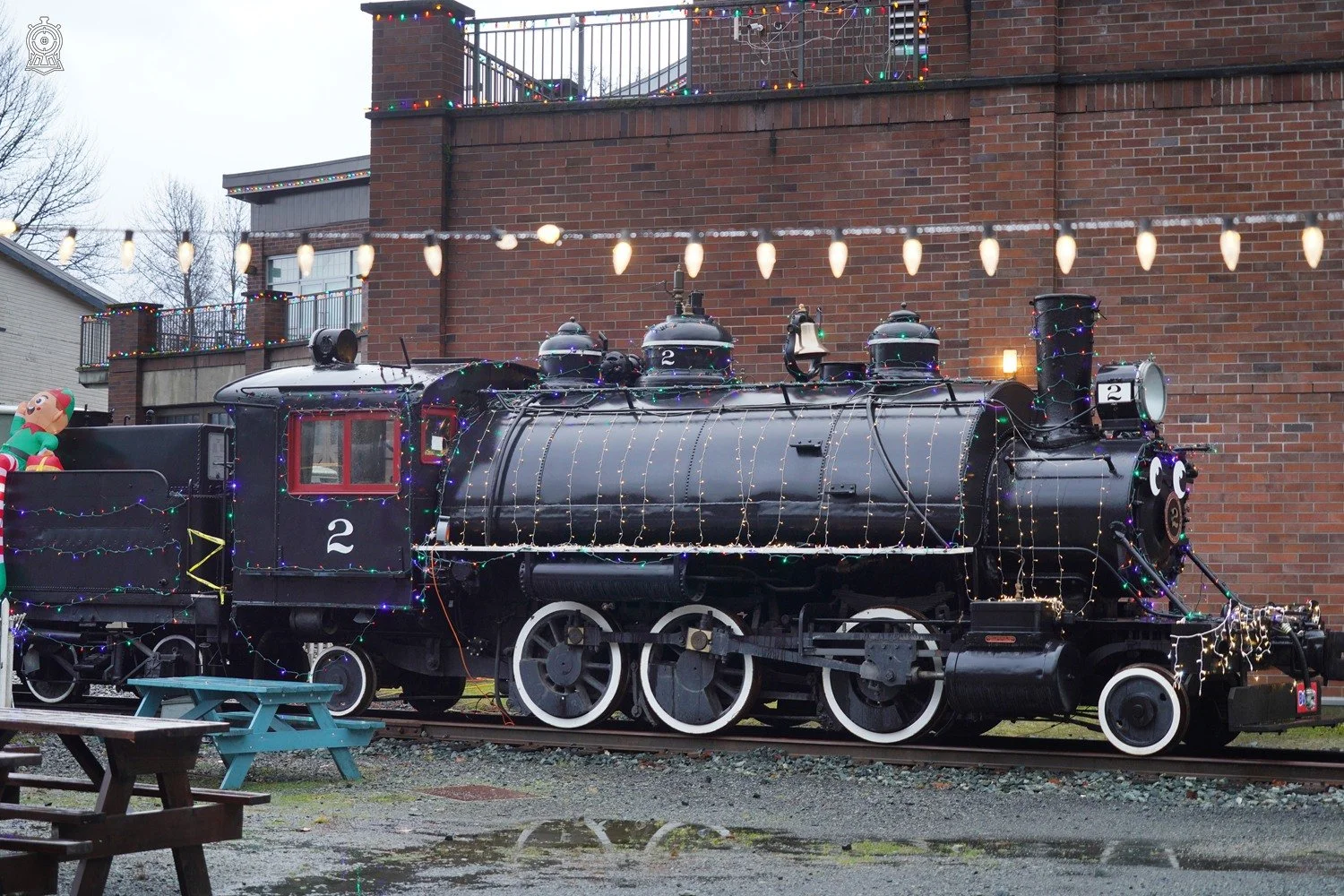
A locomotive broadly similar to the PL7 is preserved at the British Columbia Railway Museum in Canada: a Pacific Great Eastern 2-6-2ST built in 1910. Photographed in December 2025.
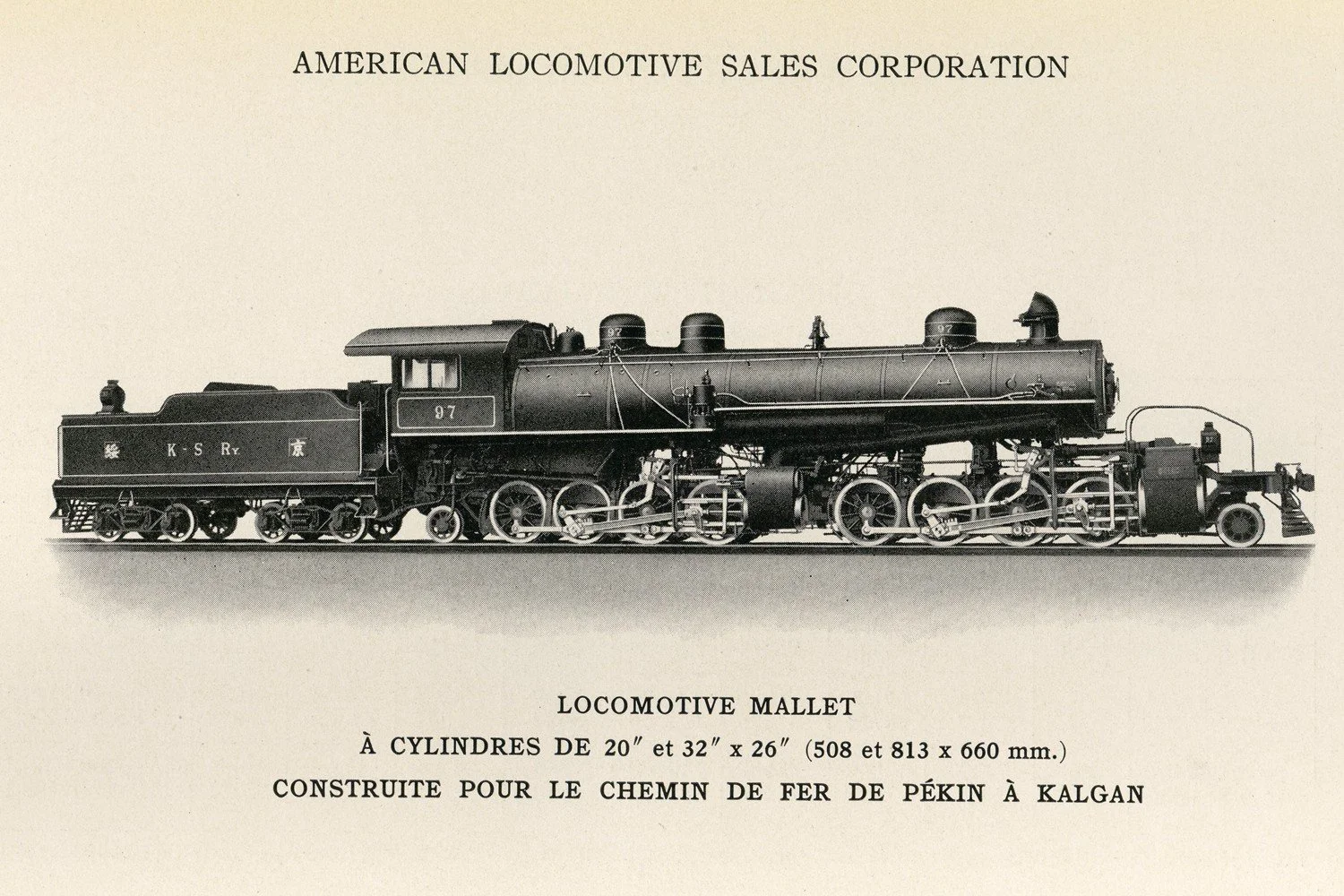
The Mallet Type 3 was introduced on the Peking–Kalgan Railway in 1914 and comprised seven 2-8-8-2 compound Mallet locomotives built by the American Locomotive Company (ALCO). They were numbered 94–100 and were intended specifically for service over the steeply graded Guangou section. The first four, Nos. 97–100, carried ALCO works numbers 53916–53919 and were built in 1913; three additional locomotives, Nos. 94–96, were built in 1919 with works numbers 60530–60532. The class weighed approximately 187.7 tons and developed a maximum tractive effort of 241 kN. The image shows an ALCO builder’s photograph of a Mallet Type 3 locomotive.
The Shay locomotive, known in China as the RA class, was a geared steam locomotive for mountain service built by the Lima Locomotive Works in the United States. The Peking–Kalgan Railway imported six of these locomotives, numbered 25 to 30, specifically for use on the steeply graded and sharply curved Guangou section. They were delivered in two batches: Works Nos. 2185–2187 of 1909, which became PKR Nos. 28–30, and Works Nos. 2535–2537 of 1912, which became PKR Nos. 25–27. Their appearance and method of power transmission were entirely different from those of ordinary steam locomotives, making them among the most distinctive mountain locomotives used on the early Peking–Kalgan Railway.
Shay Locomotive (RA Class)
The Mallet Type 4 locomotives were built in 1921 by the Schenectady Works of the American Locomotive Company (ALCO). A total of seven were imported and assigned to the Nankou locomotive depot, primarily for service over the steeply graded Guangou section between Nankou and Kangzhuang on the Peking–Kalgan / Peking–Suiyuan Railway. They had a 2-8-8-2 wheel arrangement, an engine weight in working order of approximately 202.3 tonnes, and a maximum tractive effort of 411 kN, making them among the most powerful steam locomotives then operating in China. The seven locomotives were numbered 201–207 and carried ALCO works numbers 63065–63071. Photographed in 1933, from Pingsui.
ALCO Class 2882 C S 445(Mallet Type 4 Steam Locomotive)
Kalgan–Suiyuan Railway No. 44, 2-8-0 Steam Locomotive, 1912. Shown here is Locomotive No. 44, a 2-8-0 Consolidation locomotive of the same type once used on the Peking–Kalgan and Kalgan–Suiyuan Railways. It was built in 1912 by Rogers Locomotive Works of Paterson, New Jersey, with works number 51712.
This class was designed and built by ALCO with a 2-8-2 wheel arrangement. Beginning in 1914, the Peking–Kalgan Railway purchased these locomotives in several batches, mainly for use on the Fengtai–Nankou and Kangzhuang–Zhangjiakou sections, with a rated trailing load of about 720 tonnes. The combined weight of locomotive and tender was approximately 135.78 tonnes, the overall length was 20.296 metres, and the driving wheels were 1,270 mm in diameter. The image shown here represents the type later widely used on the Peking–Kalgan and Peking–Suiyuan Railways.
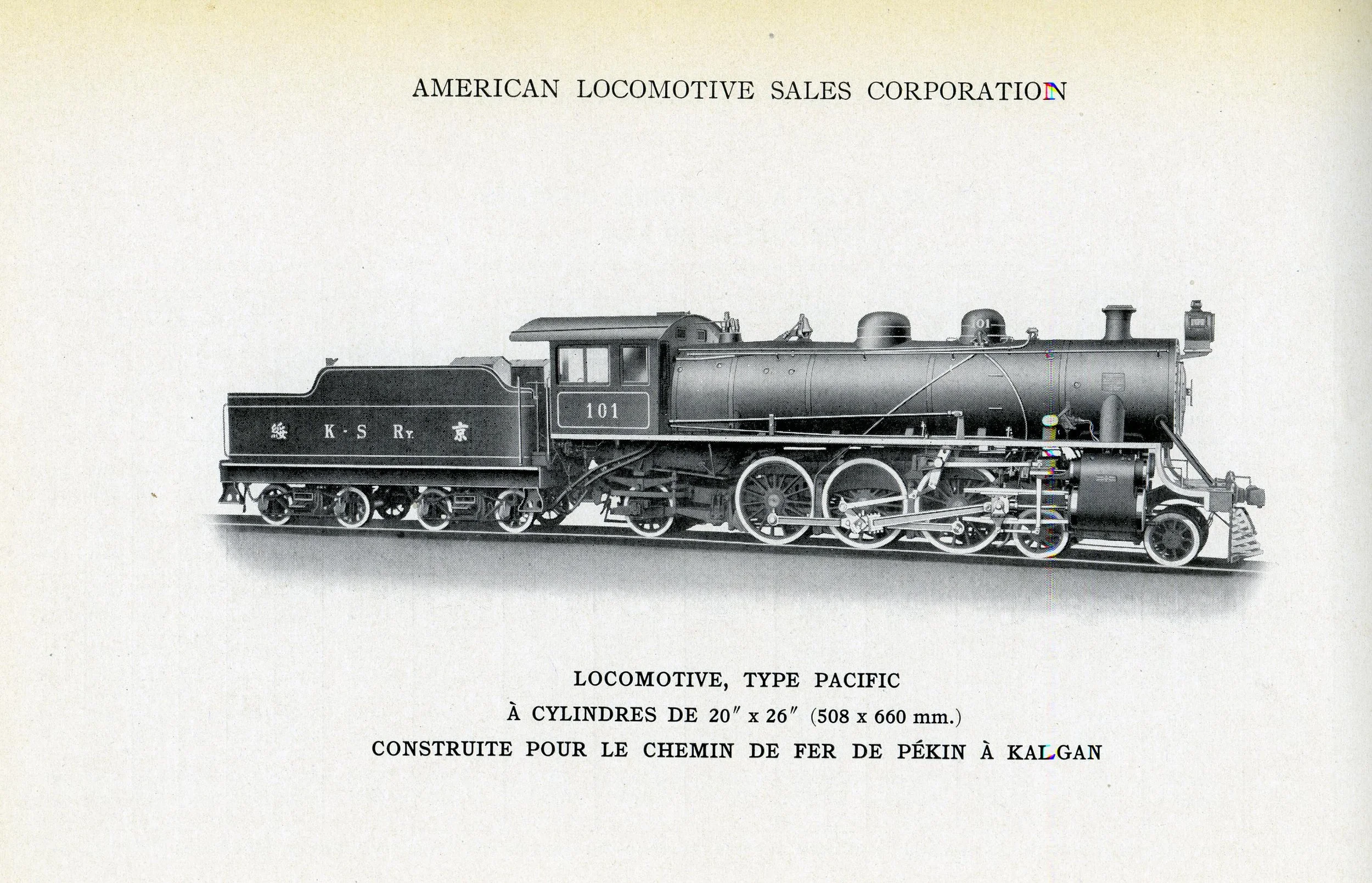
In 1914, with the introduction of the Pacific locomotives and Type A superheater elements supplied by the American Superheater Company, the Peking–Kalgan Railway began fitting its steam locomotives with superheaters. This significantly improved thermal efficiency, reducing coal consumption by approximately 15–20% and water consumption by 25–30% compared with saturated-steam locomotives. Between 1914 and 1921, the Peking–Kalgan Railway acquired a total of 21 locomotives of this type, numbered 101–121. As the railway was extended westward toward Suiyuan, some tenders carried the Chinese characters “京綏” together with the railway’s English abbreviation. The image shows No. 101, the first locomotive of the batch, in an ALCO builder’s photograph.
This class weighed about 50.343 tonnes in working order and measured approximately 10.871 metres in overall length. The driving wheels were 1,118 mm in diameter, the rigid wheelbase was 3,043 mm, and the total wheelbase was 7,849 mm. The average axle load on the driving wheels was about 13.154 tonnes. The photograph shows a PL7 locomotive in service at Nankou Station, taken in the 1920s.
Russian Ye Class 2-10-0 “Russian Decapod”
DK2 No. 114, preserved at the former Baotou West locomotive depot, is one of the surviving representatives of the Russian-designed 2-10-0 Ye / DK2 family in China. The locomotive retained the characteristic long boiler, five coupled driving axles, and heavy freight configuration of the original Russian Decapod design. Photographed at the Baotou West locomotive depot in July 2010.
Canton–Samshui Railway Class A 0-4-4T Forney Locomotive
During the 1870s and 1880s, New York’s elevated railways made extensive use of 0-4-4T Forney tank locomotives, built mainly by American manufacturers such as Baldwin, Rogers, and the New York Locomotive Company. Their compact dimensions and short wheelbase made them particularly well suited to urban elevated railways with sharp curves and closely spaced stations. The locomotive shown here is a typical Forney type used on the Manhattan Elevated Railway.
Around 1903, as New York’s elevated railways were electrified, a number of these steam locomotives were sold overseas. Eight were purchased by the Canton–Samshui Railway; most had been built in 1885–1886 and were subsequently renumbered Class A, Nos. 1–8. The photograph shows two 0-4-4T Forney tank locomotives hauling freight cars on the Canton–Samshui Railway.
A surviving GE 40-ton electric locomotive at the Shuangda Coal Mine in Tianshifu, Benxi, Liaoning. More than a century later, this former Fushun Colliery locomotive still retains the characteristic low-profile steeplecab body of the type. Photographed in February 2026.
Rogers Class 280 S 154 (KD Class —Consolidation)
Locomotive No. 41, once used on the Peking–Kalgan Railway and later on the Kalgan–Suiyuan Railway, was built in 1912 by Rogers Locomotive Works of Paterson, New Jersey, U.S.A. This class used the 2-8-0 wheel arrangement, known in English as the Consolidation type. The locomotive had an overall length of about 18.062 metres and driving wheels measuring 1,244 mm in diameter. It was later incorporated into the Chinese Railways KD class.
Because the Guangou section of the Peking–Kalgan Railway had steep gradients and unusually demanding operating conditions, locomotives of this type were used mainly on sections outside the Kuangou mountain district. As the railway was extended westward beyond Kalgan, they continued in service on the Kalgan–Suiyuan Railway and later the Peking–Suiyuan Railway.
Peking–Suiyuan Railway No. 80, a Mikado-type (2-8-2) steam locomotive built by the American Locomotive Company (ALCO) at its Cooke Locomotive & Machine Works in New Jersey in 1915, with Works No. 55000. The tender bears the Chinese characters “京綏” together with the railway’s English abbreviation “K-S Ry.” When the Mikado type was first introduced into China in 1914, it was sometimes rendered in Chinese as “Maikedou”, and also transliterated as “Mikado,” a Japanese word originally meaning “Emperor.” Photographed at the Cooke works, New Jersey, in 1915
ALCO Class 282-S-189 / JF12 Class Mikado Type 2-8-2 Steam Locomotive
Unlike main-line steam locomotives equipped with separate tenders, this class used a tank locomotive design, with the water tanks and coal bunker built directly into the locomotive body. With a coal capacity of about 3.048 tonnes and a water capacity of about 6.058 tonnes, it was better suited to the frequent starting, stopping, and short-distance movements required in station and yard switching work. During the Japanese occupation period, the class was designated Pure-na (プレナ). In 1951, it was redesignated PL7(ㄆㄌ7), and in 1955 the class designation was withdrawn. No examples survive today.
A GE 206-type 40-ton electric locomotive of the Fushun Colliery, published in the August 1920 issue of The Far Eastern Review. The locomotive shown is No. 17, with its pantograph mounted toward one end of the roof. At the time, the Fushun Colliery electric railway operated on 1,200-volt DC. Peter Crush Chinese Railway Collection.
Interior of the No. 2 end of a Fushun Colliery GE 40-ton electric locomotive, published in the August 1920 issue of The Far Eastern Review. The photograph provides an important early record of the locomotive’s electrical equipment, controllers, and original cab arrangement. Peter Crush Chinese Railway Collection.
The Mallet Type 2 differed structurally from conventional steam locomotives. Its frames, driving wheels, cylinders, and valve gear were divided into front and rear engine units, connected by an articulated pivot. Steam first entered the rear high-pressure cylinders, then passed to the front low-pressure cylinders for a second stage of expansion. This articulated arrangement allowed the locomotive to negotiate the tight-radius curves of the Kuangou section more easily while still providing the tractive effort required on its long, steep gradients. Photographed between 1937 and 1945.
From August 1914, when a down-direction train reached Nankou, its regular road locomotive was detached and a Mallet Type 3 was coupled to the rear to push the train up the mountain. This operating method reduced the risk of coupler failure and also limited the exposure of passengers to smoke from the locomotive. Several safety sidings were provided along the single-track Kuangou section for trains suffering brake failure or insufficient power, but the powerful Mallet Type 3 could normally push its train through the mountain section without having to use these refuge tracks. Photographed between 1914 and 1928. Wang Wei Collection.
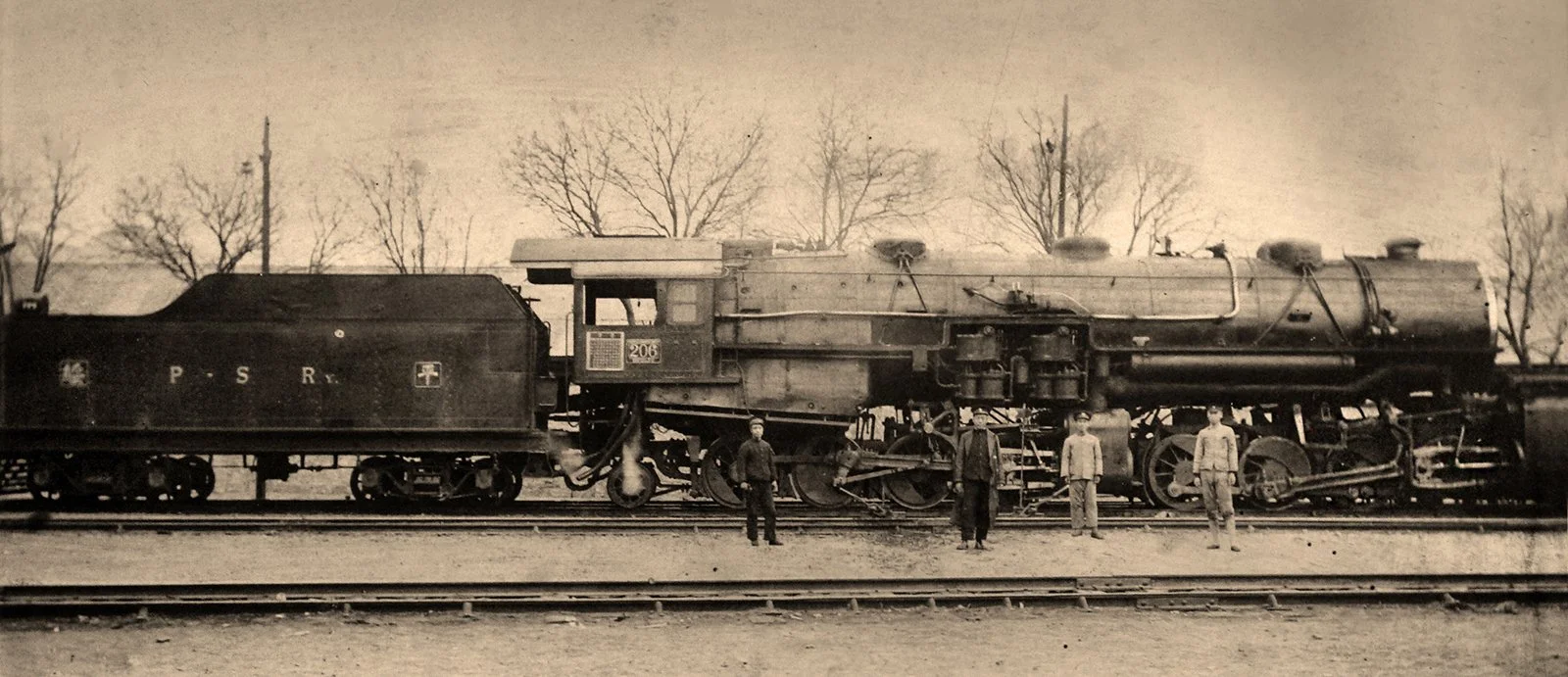
The locomotive engineers who operated the Mallet Type 4 were once described as “living immortals riding the clouds, three feet above the ground.” Because of the locomotive’s enormous size and immense tractive power, it was entrusted with the most demanding mountain-haul duties over the Kuangou section, a responsibility that gave its crews considerable pride. Whenever a train passed through the tunnels around Juyongguan, the top of the boiler ran extremely close to the tunnel roof, causing dense coal smoke and exhaust steam to pour into the cab. The assistant engineer and firemen could temporarily crouch down for protection, but the engineer had to keep watching the line ahead while controlling the throttle. He therefore worked with one hand holding a wet towel over his nose and mouth and the other gripping the controls, operating the locomotive amid intense heat and thick smoke. Driving the Mallet Type 4 was consequently one of the most arduous and technically demanding duties at Nankou locomotive depot. Li Yanyu, the engineer, is second from left; the assistant engineer stands at far left, with two firemen on the right. Photographed by Jiangji Shanye Photo Studio, c. 1937–1938.
The most notable feature of the Shay locomotive was its use of vertical cylinders and a longitudinal driveshaft. Power generated by the cylinders was transmitted through a crankshaft, universal shafts, and bevel gears to the wheels, allowing all the wheels on multiple trucks to participate in traction. Although this design did not permit high speeds, it provided excellent low-speed pulling power and was especially well suited to sharp curves and long steep gradients.The six Shay locomotives on the Peking–Kalgan Railway were numbered 25 to 30, with a combined locomotive-and-tender weight of approximately 100 tons. In historic photographs, No. 28 can still be seen bearing the characters “Jing-Zhang” on its side. Although their shape may seem unusual today, comparison with the workers standing beside them shows that these were by no means small locomotives, but rather heavy machines specially designed for difficult mountain lines.
The Mallet Type 2 locomotives were originally numbered 71–74. During the Japanese occupation period, they were reclassified as the Mareni (マレニ) class and renumbered 1501–1504. In 1951, they were reclassified again as the ML2 Class (ㄇㄌ2型) and numbered 11–14. According to contemporary eyewitness accounts, some were still in service around 1954, although they were already approaching retirement, and all subsequently disappeared. In 1975, the class was formally removed from the Chinese railway locomotive classification system. A total of only six locomotives of this 2-4-4-2 Mallet design were built worldwide: four for the Peking–Kalgan Railway and two for logging railroads in the United States. Photographed in 1909; builder’s photograph from the Baldwin Locomotive Works.
Jing-Sui Railway Nos. 51–67 Prairie-Type 2-6-2ST Tank Switching Locomotive(PL7 Class)
The Jing-Sui Railway Nos. 51–67 were Prairie-type (2-6-2) tank switching steam locomotives built by Baldwin Locomotive Works in the United States. A total of 17 locomotives were supplied, mainly for yard and station shunting duties. According to surviving records, the class included Works Nos. 34815–34818 (Nos. 51–54, built in 1910), 52337–52338 (Nos. 55–56, 1919), 52357 (No. 57, 1919), 53757 (No. 58, 1920), 53688 (No. 59, September 1920), 53714–53718 (Nos. 60–64, 1920), 53689 (No. 65, 1920), and 53758–53759 (Nos. 66–67, 1920).
The history of the DK2 class can be traced back to the Russian Ye class 2-10-0 “Russian Decapod.” Between 1915 and 1918, Baldwin Locomotive Works and the American Locomotive Company (ALCO) built large numbers of these locomotives in the United States for Imperial Russia and the Chinese Eastern Railway. The Chinese Eastern Railway eventually received more than one hundred examples. When Japan acquired the northern section of the Chinese Eastern Railway from the Soviet Union in 1935, 45 locomotives were taken over, of which 44 were subsequently regauged from the Russian 1,524 mm gauge to standard gauge for service on the South Manchuria Railway. They were initially classified Deka-A“デカニ”, and later Deka-ni. After 1949, surviving locomotives of this family were incorporated into the Chinese railway system and were redesignated DK2 “ㄉㄎ2” in 1959. Photographed at the Baotou West locomotive depot in July 2010.
Fushun Colliery General Electric 40-Ton Steeplecab Electric Locomotive
The Pacific-type passenger steam locomotive used on the Peking–Kalgan and later Peking–Suiyuan Railways was also known in Chinese as the “Paiseifei” type and carried the class code PF. The class was built in 1914 by the American Locomotive Company (ALCO). Locomotive No. 102, shown here, was built at ALCO’s Cooke Locomotive & Machine Works in New Jersey and carried works number 54410. These locomotives had a 4-6-2 wheel arrangement, a combined locomotive-and-tender weight of approximately 132.84 tonnes, an overall length of 20.396 metres, and driving wheels 1,580 mm in diameter. They were used mainly on passenger services between Fengtai and Nankou and between Kangzhuang and Zhangjiakou, with a rated trailing load of about 510 tonnes. Photographed at the Cooke Works in New Jersey in 1914.
ALCO 4-6-2 , Peking–Suiyuan Railway Class 100(Pacific)
Because of the Russian Revolution and the political and commercial upheaval that followed, some locomotives completed in the United States for Russia were never delivered. They were instead modified for American service, including conversion to 4 ft 8½ in standard gauge. Frisco No. 1630 was one of these locomotives. After entering service with the St. Louis–San Francisco Railway, it survived into preservation and is now maintained at the Illinois Railway Museum. Photographed at the Illinois Railway Museum in May 2018.
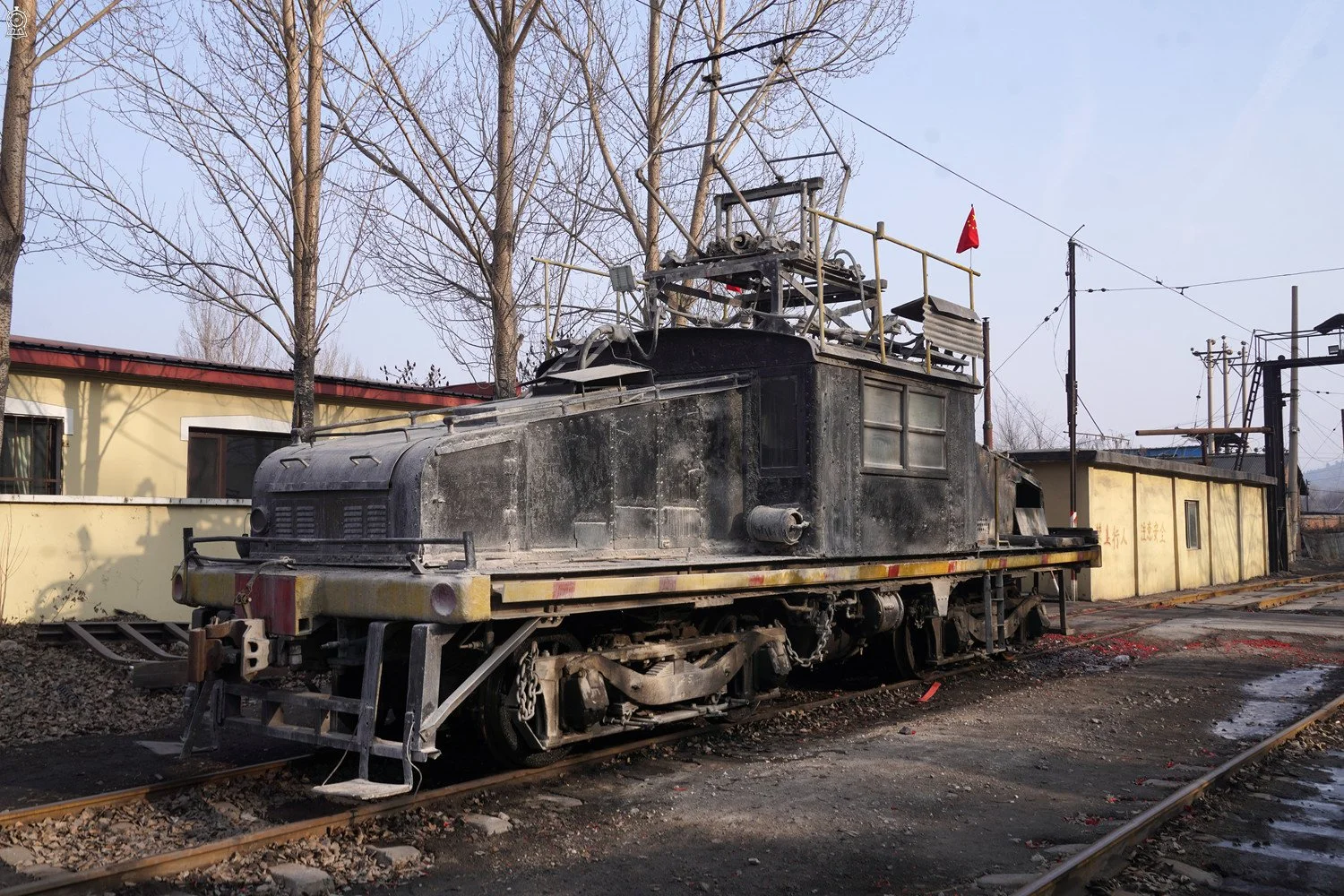
The surviving GE 40-ton electric locomotive at the Shuangda Coal Mine. Its central cab was deliberately kept unusually low, rising only slightly above the machinery compartments at either end. This distinctive arrangement was developed to suit the restricted clearance of the Fushun Colliery railway and is one of the most obvious differences between this locomotive and conventional American steeplecab electric locomotives. Photographed in February 2026.
Frisco No. 1630, a 2-10-0 “Russian Decapod,” was built by Baldwin Locomotive Works in 1918 as part of a large order originally intended for Imperial Russia. Following the Russian Revolution, a number of completed locomotives were never exported and remained in the United States. No. 1630 was later acquired by the St. Louis–San Francisco Railway (Frisco) and eventually preserved at the Illinois Railway Museum, where it remains an operating example of the same broad locomotive family from which China’s DK2 class originated. Photographed at the Illinois Railway Museum in May 2018.
Around 1903, as New York’s elevated railways were electrified, a number of these steam locomotives were sold overseas. Eight were purchased by the Canton–Samshui Railway; most had been built in 1885–1886 and were subsequently renumbered Class A, Nos. 1–8. The photograph shows two 0-4-4T Forney tank locomotives hauling freight cars on the Canton–Samshui Railway.
Another GE 40-ton electric locomotive of the Fushun Colliery, published in the August 1920 issue of The Far Eastern Review. On this example, the pantograph is positioned near the centre of the locomotive, illustrating variations in equipment arrangement among early locomotives of the same type. Peter Crush Chinese Railway Collection.
The cab of the surviving GE 40-ton electric locomotive at the Shuangda Coal Mine more than a century later. Compared with the 1920 historical photograph, much of the original piping, wooden doors, instrument boxes, and multiple knife switches remains in place, while some of the control equipment is still in use today. Photographed in April 2023.
Commonwealth Edison No. 4, a steeplecab electric locomotive preserved at the Illinois Railway Museum. Built by ALCO/GE in 1911, it has the conventional steeplecab arrangement and spent many years switching coal cars at power-generating facilities in the Chicago area. It belongs to the same early American industrial electric-locomotive tradition as the GE 40-ton locomotives later used at the Fushun Colliery. The Fushun locomotives, however, had a noticeably lower central cab to accommodate the restricted clearance of the mining railway. Photographed in May 2018.
British Columbia Electric Railway No. 960, a steeplecab electric locomotive preserved at the Railway Museum of British Columbia. Built by ALCO/GE in 1912, it was originally Oregon Electric Railway No. 22 and was transferred to British Columbia Electric in 1946. Its central cab and machinery compartments at both ends represent the typical North American steeplecab arrangement widely used on industrial and interurban railways in the early twentieth century, providing a useful structural comparison with the Fushun Colliery GE 40-ton locomotives of the 1910s. Photographed in December 2025.