
Century-Old Station Stone Plaque Discovered in Gaobeidian: The Plaque Is an Extant Relic of the Lugouqiao-Hankou Railway and Was Buried Underground for Over 40 Years
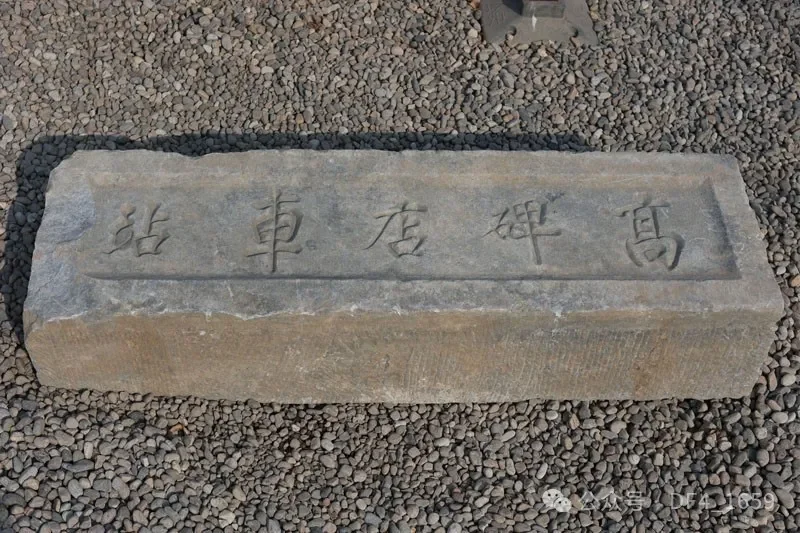
The photo shows the stone plaque of the old Gaobeidian Station.
(Photo by Beijing Youth Daily reporter Cui Yifei)
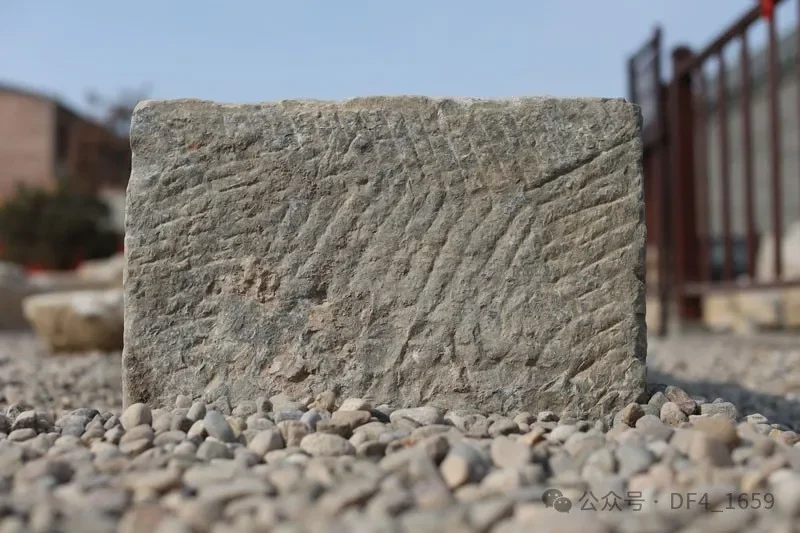
Axe-chiseled marks on the plaque
(Photo by Beijing Youth Daily reporter Cui Yifei)
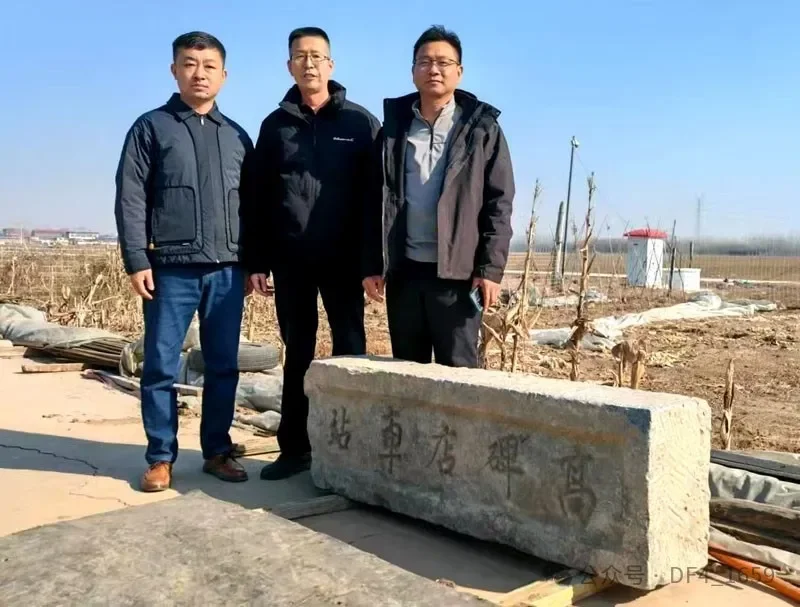
Successfully acquiring the cultural relic. From left to right in the picture are Rong Peng, Wang Weilong, and Sun Guoliang. (Photo by Dong Sanjun)
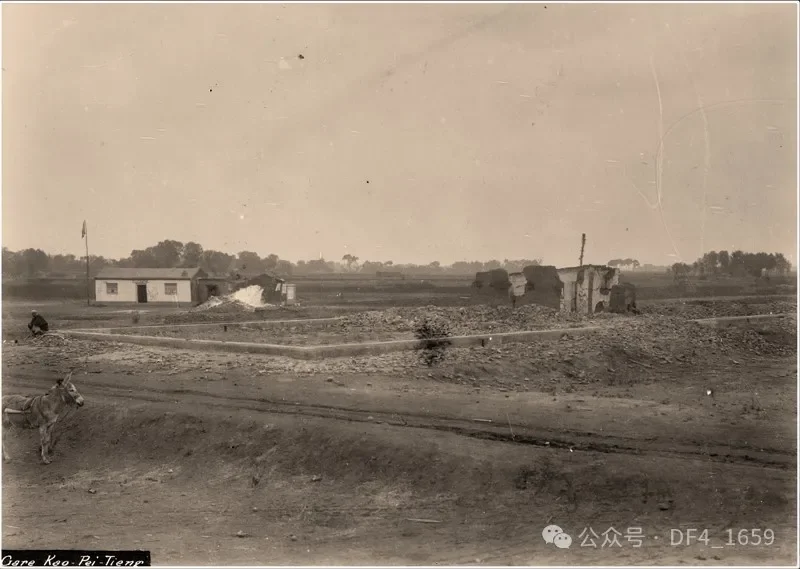
The Gaobeidian Station demolished by the Boxers (Photo by Georges Bouillard)
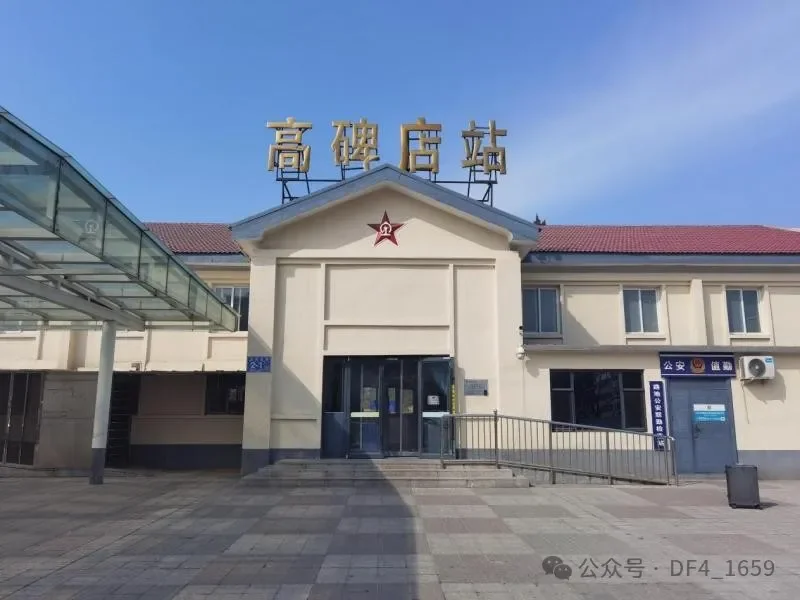
Current status of Gaobeidian Station (Photo by Beijing Youth Daily reporter Cui Yifei)
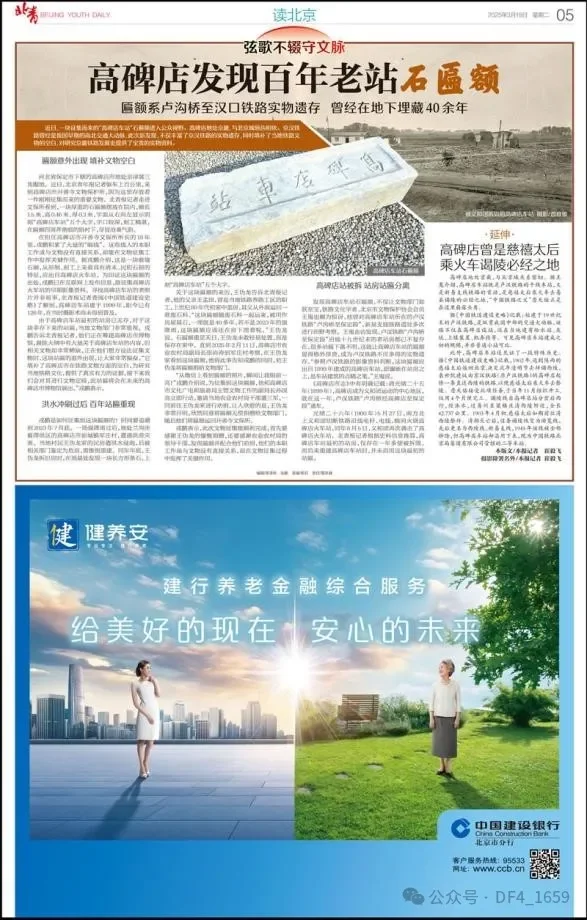
March 18, 2025, Beijing Youth Daily
During his 18 years serving as the director of the Kaishansi Cultural Relics Protection Institute in Gaobeidian, Rong Peng accumulated a vast network of informants. Although the primary jobs of these informants may not be directly related to cultural relics, they can play a pivotal role in artifact acquisition work... Recently, with the assistance of agricultural cadres in Gaobeidian, Rong Peng acquired a stone plaque inscribed with Gaobeidian Station. Having weathered dynastic changes and the vicissitudes of time, this century-old station plaque was buried underground for more than 40 years. This new discovery fills a gap in Gaobeidian's railway cultural relics, further enriching the physical heritage of the Beijing-Hankou Railway.
Stone Plaque Fills a Gap in Gaobeidian's Cultural Relics Gaobeidian City, administered by Baoding City in Hebei Province, is located in the hinterland of the Beijing-Tianjin-Hebei triangle. Recently, a Beijing Youth Daily reporter drove over a hundred kilometers to the Kaishansi Cultural Relics Protection Institute in Gaobeidian, where a newly acquired, important cultural artifact is housed. Walking into the institute, the Beiqing Daily reporter saw a thick and heavy stone plaque placed inside the courtyard. Measuring 1.5 meters long, 0.46 meters high, and 0.3 meters thick, the front face bears the five characters 高碑店車站(Gaobeidian Station) incised from right to left. The characters are deeply carved and executed with exquisite craftsmanship, exuding a weathered charm set off by the axe-chiseled marks around the perimeter of the plaque. According to Rong Peng, director of the Kaishansi Cultural Relics Protection Institute in Gaobeidian, this is a wall-embedded stone plaque. Judging from its style and carving techniques, it bears the characteristics of late Qing and early Republic of China stone carvings and should have originated from the Gaobeidian railway station. To verify the plaque's origin, Rong Peng has posted information online seeking early photographic materials of the Gaobeidian railway station. Finding old photos of Gaobeidian Station is no easy task; the Beiqing Daily reporter consulted A Brief History of Chinese Railway Construction and learned that Gaobeidian Station was built in 1899, making it 126 years old today—a time when photography had not yet become widespread.
As the original station building of Gaobeidian Station no longer exists, local cultural relics departments attach great importance to this surviving station plaque. Rong Peng told Beiqing Daily that they are currently preparing to establish the Gaobeidian City Museum. The exhibition outline contains a wealth of content regarding Gaobeidian Station, but relevant artifacts are extremely scarce. Just as they were racking their brains to collect cultural relics, the unexpected appearance of this station plaque greatly excited everyone. It fills the gap in Gaobeidian's railway cultural relics and provides true and powerful evidence for studying local railway culture. Next, we will conduct cultural relic grading on it, and this station plaque will be exhibited in the future Gaobeidian City Museum, Rong Peng stated.
A Flood Brings the Century-Old Station Plaque Back to Light How did Rong Peng manage to acquire this plaque? The story dates back to late July 2023, when Gaobeidian's Xinchengzhen Junzhuang Village, located in the Langouwa detention basin, suffered severe flood disasters following a torrential downpour. The residential house of local villager Wang Weilong was soaked by floodwaters and subsequently appraised by relevant departments as a dilapidated building that needed to be demolished and rebuilt. In late December of the same year, when Wang Weilong was dismantling the old house, he discovered a rectangular stone strip at the foundation inscribed with the five characters 高碑店車站(Gaobeidian Station) .
Regarding the origins of this plaque, Wang Weilong told Beiqing Daily that his father, Wang Mengtian, was once an employee of the local railway maintenance work zone. In the early 1980s when the family was building a house, his father hauled back a pile of waste stone materials from elsewhere. This plaque was transported along with the waste stone and used as a house foundation stone, buried for more than 40 years. If not for the heavy rainfall in 2023, this plaque would probably still be buried beneath the house, Wang Weilong said.
When the stone plaque saw the light of day once again, Wang Weilong did not dare dispose of it lightly and instead kept it safe at home. It wasn't until February 11, 2025, that Zhang Yantao, deputy director of the Gaobeidian Municipal Bureau of Agriculture and Rural Affairs, inspected Junzhuang Village and saw the plaque at Wang Weilong's home. While informing Rong Peng of the matter, he persuaded Wang Weilong to donate the plaque to the cultural relics department.
Seeing the photo of the plaque on WeChat instantly made my eyes light up! Rong Peng recounted. To successfully acquire the plaque, he and Sun Guoliang, the deputy director in charge of cultural relics at the Gaobeidian Municipal Bureau of Culture, Radio, Television and Tourism, took immediate action. They invited Dong Sanjun, an official from the local agriculture and rural affairs bureau, to go together to Wang Weilong's home to persuade him to donate it. To their relief, Wang Weilong was very enlightened and readily agreed to unconditionally donate the plaque to the cultural relics department, after which they transported the plaque back to the Kaishansi Cultural Relics Protection Institute.
Rong Peng expressed that the smooth completion of this artifact acquisition was first thanks to Wang Weilong's generous donation, and also to the leadership cadres of the local agriculture and rural affairs bureau who discovered the plaque and assisted in persuading the owner. Although their primary duties were not directly related to cultural relics, they played a crucial role in the artifact collection process.
The Boxers Demolished Gaobeidian Station Buildings
The discovery of the Gaobeidian Station stone plaque not only treated the cultural relics department to a treasured find, but also surprised railway culture scholar and Beijing Cultural Relics Protection Association member Wang Wei. He had previously conducted multiple field investigations into the Lugouqiao-Baoding section of the Lu-Han Railway and the Xinyi Branch Line railway ruins where Gaobeidian Station is located. Wang Wei's visits revealed that the late 19th-century old station buildings along the Lugouqiao-Baoding section of the Lu-Han Railway no longer exist, and the whereabouts of many station plaques remain unknown. This makes the Gaobeidian Station plaque exceptionally precious, serving as a rare extant physical relic of the Lu-Han Railway. Judging from image materials of the Lu-Han Railway, this plaque should date from the Gaobeidian Station built in 1899. Originally embedded above the station building, it was the finishing touch of the station architecture, Wang Wei said.
How did this plaque end up among the common people? Wang Wei analyzed that shortly after Gaobeidian Station was built, it was destroyed by the Boxers (Yihetuan). After the station plaque was separated from the station building, it was not properly preserved, leading to its reuse as construction material in other buildings. An old photograph collected by Wang Wei shows that after Gaobeidian Station was demolished by the Boxers, only broken walls remained; near the architectural ruins, the dismantled station plaque can be faintly seen.
A Must-Pass Stop for Empress Dowager Cixi Traveling by Train to Pay Homage at the Imperial Tombs
Gaobeidian is situated in the imperial capital region and maintains a close relationship with the city of Beijing. According to Wang Wei, Gaobeidian Station was not only a trunk-line station on the Lu-Han Railway, but also the starting station of the Xinyi Branch Line railway—a mandatory stop for Empress Dowager Cixi when traveling by train to Yixian to pay respects at the imperial tombs. Jeme Tien Yow, the "Father of Chinese Railways, first made his mark right here.
According to A Brief History of Chinese Railway Construction, the Lu-Han Railway, constructed in the late 19th century, was a major transportation artery running through central China. The railway not only established a station in Gaobeidian, but also built a water supply station, ash pits, coaling facilities, and a locomotive depot locally. This shows that at the time of its initial construction, the scale of Gaobeidian Station was far beyond that of an ordinary small station.
Furthermore, Gaobeidian Station witnessed a special piece of history. According to A Brief History of Chinese Railway Construction, in 1902, Empress Dowager Cixi, having fled to Shaanxi, returned to Beijing and decided to visit the Western Imperial Tombs during the Qingming Festival the following year. Yuan Shikai suggested building a railway directly to the Western Tombs starting from Gaobeidian on the Beijing-Hankou Railway (formerly the Lu-Han Railway) so that Empress Dowager Cixi could travel by train to worship at the tombs. Jeme Tien Yow accepted this assignment, organized the commencement of construction in November of that year, and completed it in just four months. Branching off westward from Gaobeidian Station, the tomb-visiting line passed through Laishui and Yizhou to Lianggezhuang near the Qing Western Tombs, spanning a total length of 42.737 kilometers. In early April 1903, Empress Dowager Cixi traveled to the Qing Western Tombs as scheduled to offer sacrifices. After the fall of the Qing dynasty, this tomb-visiting line was converted into a sightseeing route, successively renamed the Xiling Line and the Xinyi Branch Line. The line was entirely dismantled in 1945, but Gaobeidian Station was retained and is currently a second-class station administered by China Railway Beijing Group Co., Ltd.
Related reporting by Beijing Youth Daily on March 18, 2025
Text by Beijing Youth Daily reporter: Cui Yifei
Photography by Beijing Youth Daily reporter: Cui Yifei Editor: Li Tao
March 18, 2025, Beijing Youth Daily
