
Strolling through Paterson, New Jersey: an important locomotive manufacturing hub for the Beijing-Zhangjiakou Railway

Paterson Great Falls (Photo by reporter Hsu Chun-ta)
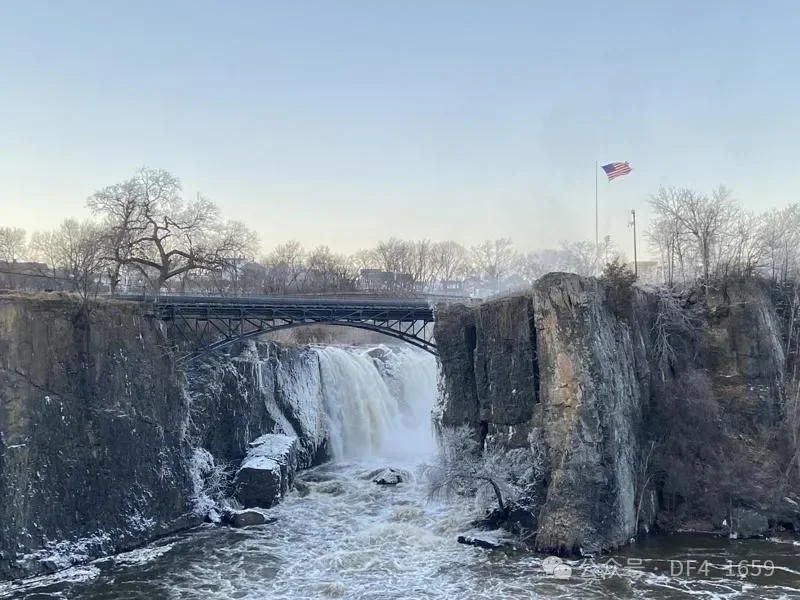
During the bitter winter cold, while the main body of Paterson Falls is still flowing, the cliffs on both sides are covered with rime, creating a crystal-clear world. (Photo by reporter Hsu Chun-ta)
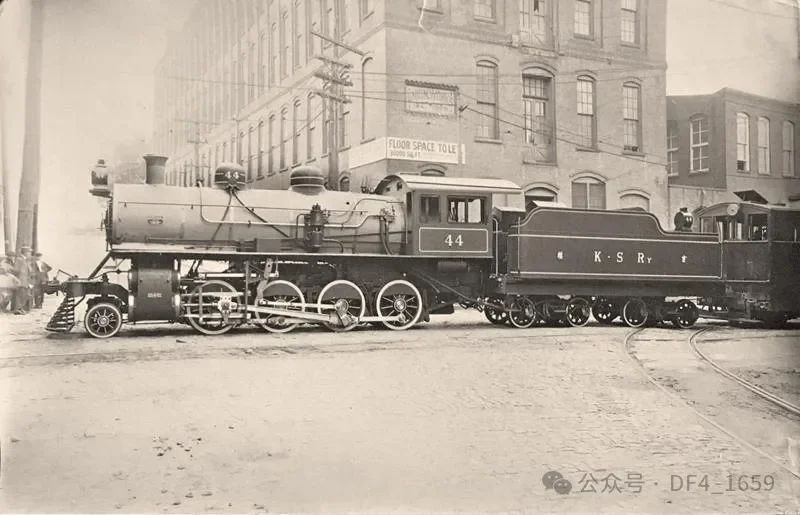
The Beijing-Zhangjiakou Railway (later renamed the Pingsui Railway), the first railway independently designed and built by the Chinese, once placed bulk orders for locomotives from the Paterson Locomotive Works. The photo shows a historical picture of Pingsui Railway locomotive No. 44 rolling out of the factory. (Historical archival photo, provided by Wang Wei)
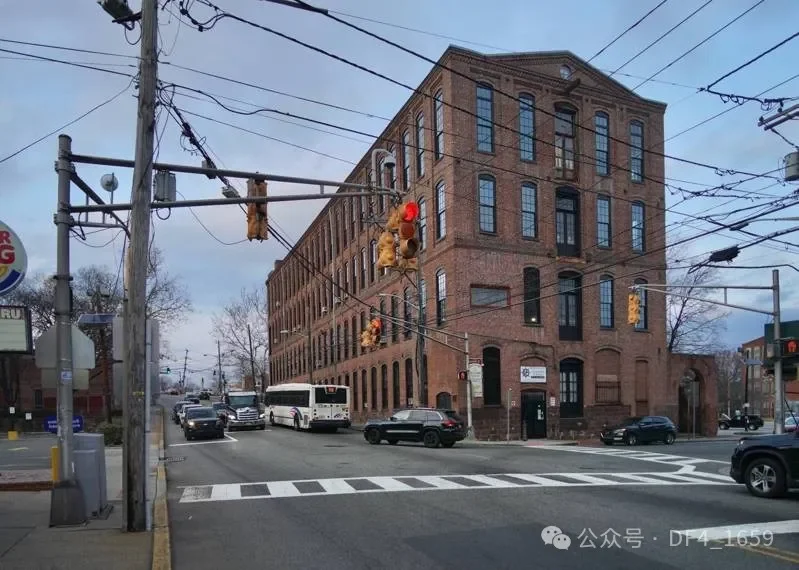
Some of the old buildings of the Paterson Locomotive Works, which flourished from the 19th to the early 20th century, still stand today. The photo shows Chinese railway history researcher Wang Wei taking a street view photo today from the exact same camera position as the old photo above. The railway in the photo no longer exists, but the background buildings are identical. (Photographed and authorized for use by Wang Wei)
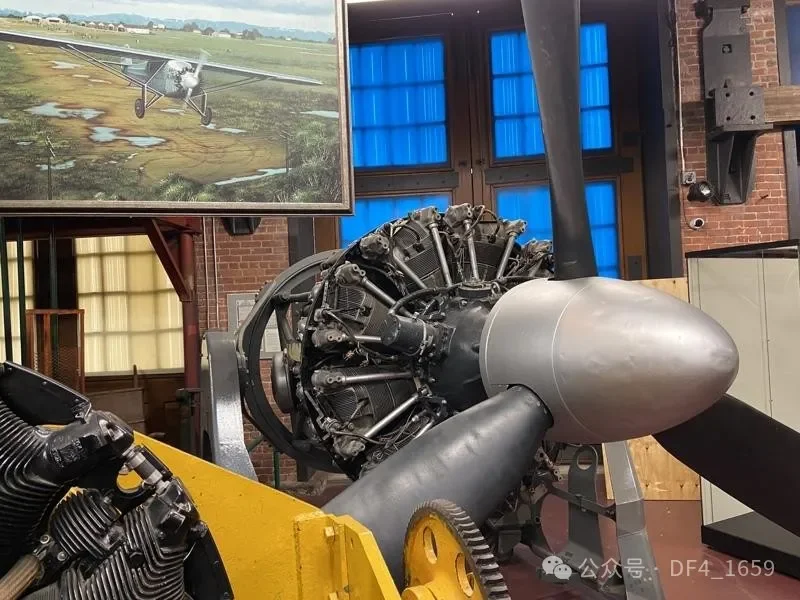
In the early 20th century, the Wright brothers, inventors of the airplane, also came to Paterson to produce their early aircraft engines. The photo shows an aircraft engine model inside the museum. (Photo by reporter Hsu Chun-ta)
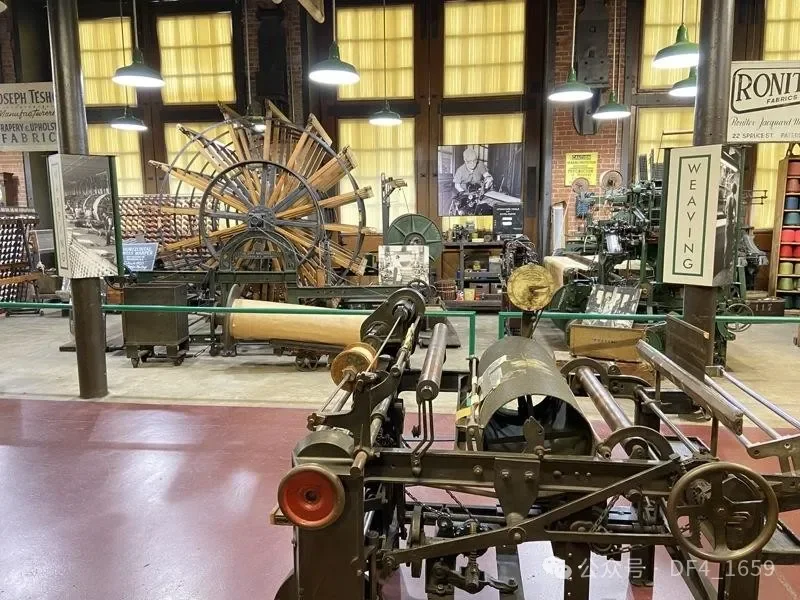
The water power provided by the waterfall laid the foundation for Paterson's industry. During the golden age of industry, Paterson's silk industry was famous nationwide. The photo shows silk processing and textile machinery on display inside the Paterson Museum. (Photo by reporter Hsu Chun-ta)
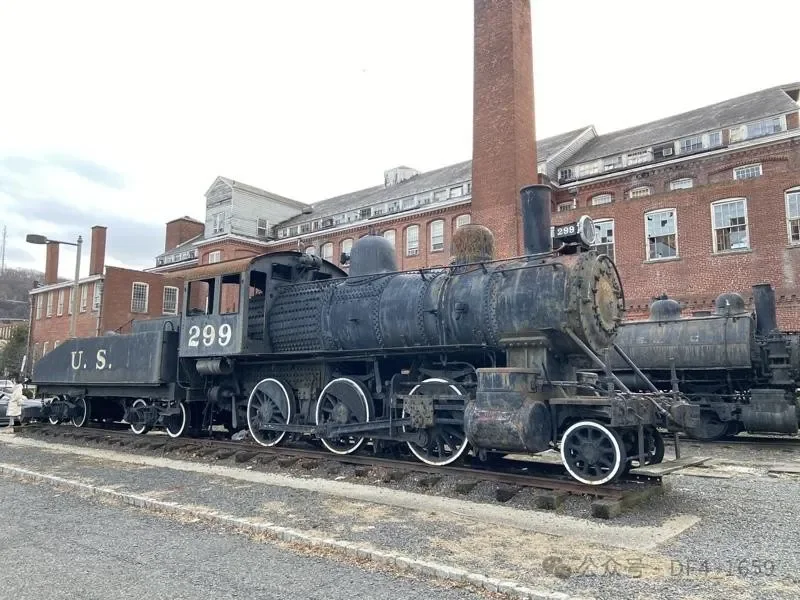
After the advent of the railway age, America's first domestically produced steam locomotive was born in Paterson. The photo shows a steam locomotive model outside the Paterson Museum. (Photo by reporter Hsu Chun-ta)
February 14, 2025, World Journal
Paterson Great Falls in New Jersey is the second-highest major waterfall in the eastern United States, second only to Niagara Falls. (Photo by reporter Hsu Chun-ta) Located just a half-hour drive from Manhattan is Paterson, an old industrial city adjacent to the second-largest waterfall in the eastern U.S. Not only does it boast natural scenery brought by the great waterfall, but it is also one of the cradles of American industrial history, and even has a historical connection to China thousands of miles away.
Waterfalls Rising from Flat Terrain, Standing Out from the Crowd The Passaic River originates in the forest-covered hills of central New Jersey, cutting through the entire North Jersey region in an inverted U-shape before flowing into New York Harbor. Before rushing out of the Appalachian Mountain plateaus, the Passaic River flows through a series of fault cliffs, the highest drop of which is located in today's city of Paterson, forming the second-highest waterfall east of the Mississippi River. Although its volume and scale cannot compare with Niagara Falls on the US-Canada border, it truly stands out in the flat terrain of the East. Paterson Falls is 77 feet high and 300 feet wide at its main body, located deep within a gap in the cliff. During the bitter winter cold, the main body of Paterson Falls usually does not freeze entirely, but the water vapor condenses into ice crystals on the cliffs alongside the waterfall, covering the entire rock face in white to form opaque white ice crystals known as rime, commonly called ice flowers.
Visionary Pioneers, Water-Powered Industry In 1791, Founding Father Alexander Hamilton visited Paterson Falls and believed that the hydraulic power brought by the waterfall's drop would be a vital force in promoting the industrialization of the newborn nation. The following year, he presided over the establishment of the Society for Establishing Useful Manufactures (S.U.M.), diverting a stream from the waterfall into a nearby hydraulic pumping station and directing the potential-energy-carrying water flow through a transmission system into various factories beside the waterfall to drive industrial machinery. Today, this six-story pumping station still stands beside the waterfall, and a statue of Hamilton has been placed in the square facing the pump house across the water to commemorate this founding father of American industry.
Birthplace of the First Steam Locomotive During the golden age of industry, Paterson was a major center for the American silk-weaving and machinery manufacturing industries. After the advent of railways, Paterson produced America's first steam locomotive due to its industrial foundation. By the early 20th century, the Wright brothers also chose Paterson to manufacture their early aircraft engines, making it one of the cradles of America's aviation manufacturing industry.
The Paterson Museum, open free of charge, is located in a former factory building of the historic Rogers Locomotive Works. Two old locomotives displayed outside reflect its historical origins. Stepping inside, the curators do not use dry text to recount the city's long history; instead, they intuitively display the brilliance of its industrial era through a wealth of industrial products and actual machinery. Following the visitor route, visitors first see the processing of railway and locomotive parts, after which the exhibits gradually grow larger, revealing complete sets of silk processing and textile machinery—virtually moving an entire production line from an old silk mill indoors. Visitors can also view ancient aircraft engines and early submarine models.
China's First Railway Has Ties to This Place Before entering the internal combustion era, Paterson's locomotive factories produced a total of over 10,000 steam locomotives, of which at least 76 recorded locomotives were sold to China's Beijing-Zhangjiakou Railway. Prior to the Beijing-Zhangjiakou Railway, late 19th-century lines like the Beijing-Fengtian and Beijing-Hankou railways also sporadically imported locomotives manufactured in Paterson.
Construction of the Beijing-Zhangjiakou Railway began in 1905 and was completed in 1909. Starting from Beijing (known as Beiping during the Republican era), it crossed the Great Wall northwestward to Zhangjiakou beyond the frontier, becoming the first trunk railway in history designed and constructed entirely independently by Chinese people. During the Republican era, the line was further extended northwestward to Datong, Shanxi, and Guisui (now Hohhot) in Inner Mongolia.
Jeme Tien Yow, the chief engineer of the Beijing-Zhangjiakou Railway, was sent abroad to study by the Qing imperial court in his youth and pursued advanced studies at Yale University. Consequently, when he subsequently oversaw the operation of the Beijing-Zhangjiakou Railway, he also chose to purchase locomotives and rolling stock from the United States first. According to discoveries by Chinese railway history researcher Wang Wei, the Beijing-Zhangjiakou Railway was the only modern Chinese railway operating organization that ever placed bulk orders for products from the Paterson locomotive factory, taking delivery of at least 76 units. When including other railway companies that acquired them through purchases or transfers, nearly a hundred Paterson-built locomotives once galloped across Chinese soil.
Accessible from New York in Half an Hour Located in northern New Jersey, the city of Paterson enjoys convenient transportation. Heading west from New York along I-80, it can be reached in under half an hour. Sightseers using public transit can take New Jersey Transit commuter trains or catch a commuter minibus to Paterson near the George Washington Bridge in Uptown Manhattan. The main sightseeing locations in Paterson—the museum and the Paterson Great Falls National Historical Park—are both free to open, and numerous old factory ruins can still be found throughout the neighborhoods near the waterfall.
Little Lima: Savoring South American Cuisine The city of Paterson is currently home to a large population of Latin American immigrants. A neighborhood near the museum is known as "Little Lima," where visitors can go to enjoy authentic Peruvian and other South American culinary flavors.
February 14, 2025, World Journal
