
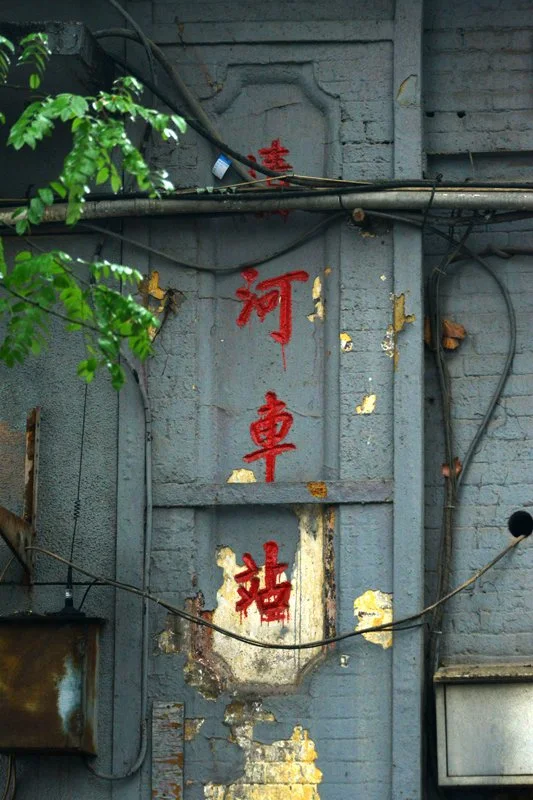
The vertical plaque, dating to the same year as the old station building, was inscribed in 1906 by Chen Zhaochang, the then-general manager of the Beijing-Zhangjiakou Railway.
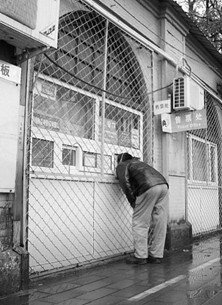
Pictured above:
The arched gate from the station's early establishment has evolved into the current ticket window, though the general outline of the arch remains visible.
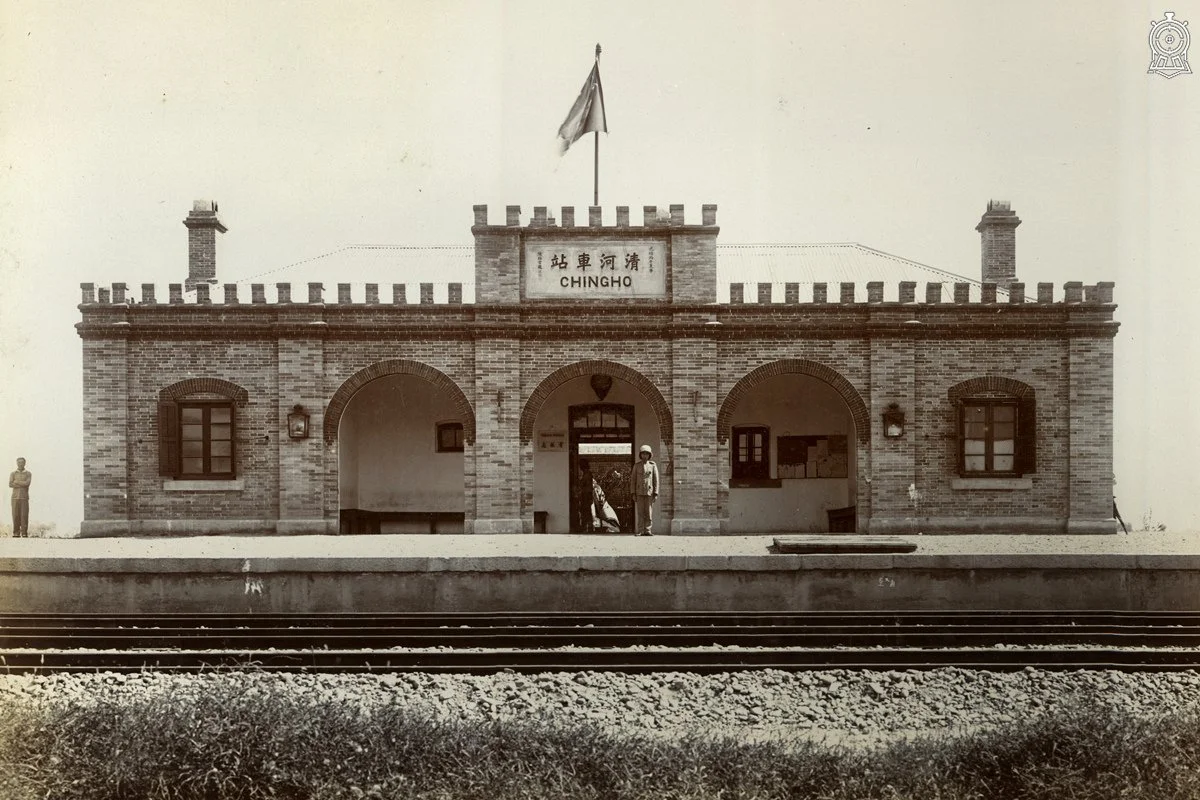
The old Qinghe Station building, completed in 1906, photographed in 1909. Sourced from "Photographs of the Beijing-Zhangjiakou Railway Construction".
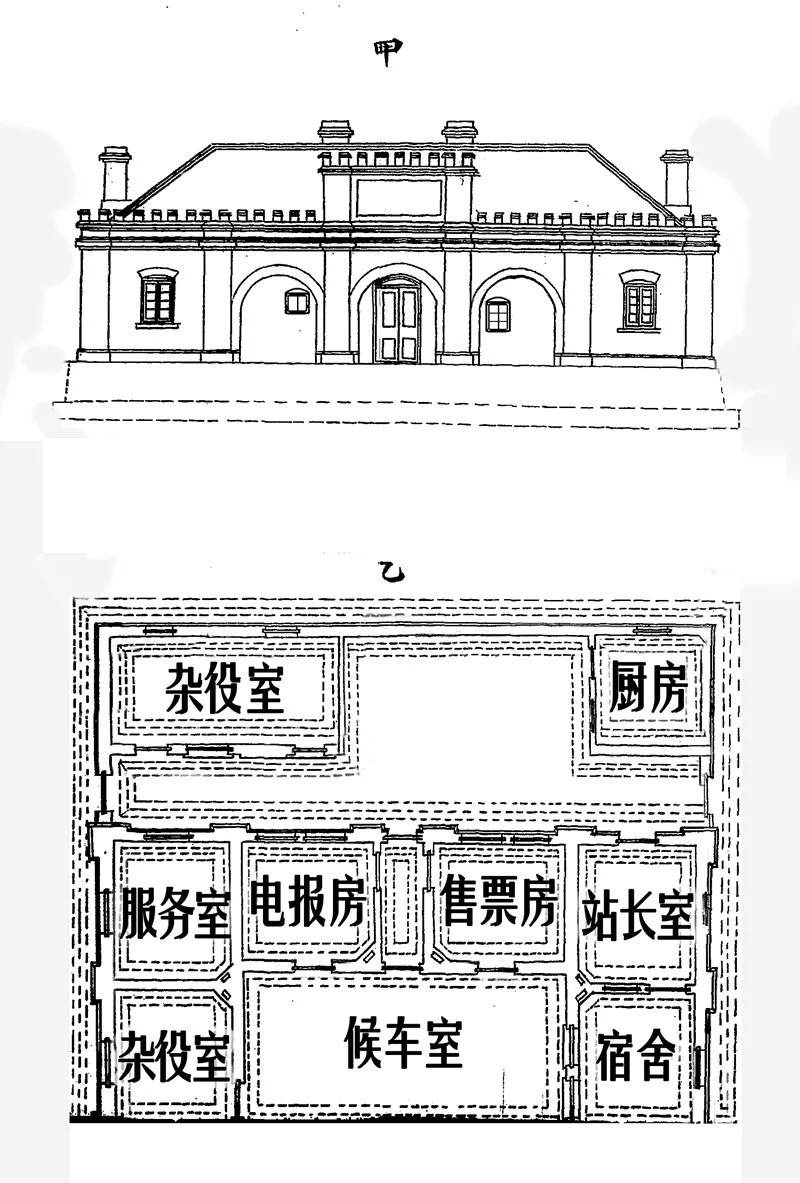
Elevations and floor plans of a third-class station on the Beijing-Zhangjiakou Railway. Provided by/Wang Wei.
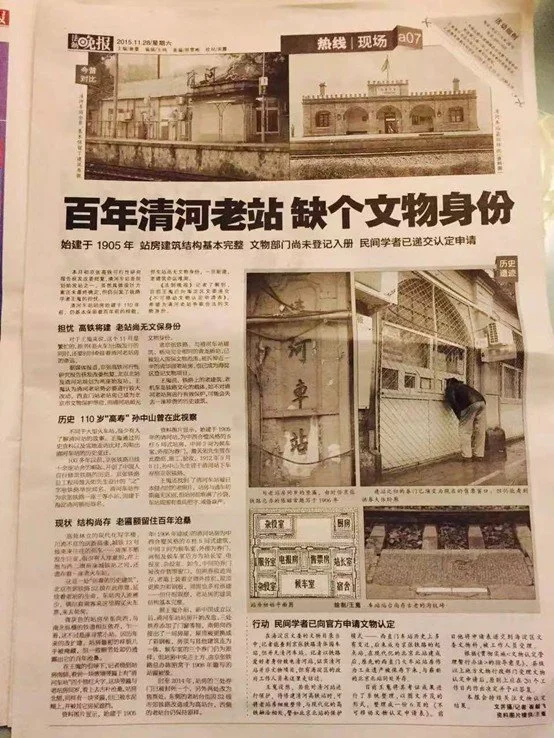
Legal Evening News (November 28, 2015) reported
Legal Evening News (November 28, 2015)
The vertical plaque, dating to the same year as the old station building, was inscribed in 1906 by Chen Zhaochang, the then-general manager of the Beijing-Zhangjiakou Railway.
At the beginning of this month, the feasibility study report for the Beijing-Zhangjiakou High-Speed Railway was approved by the National Development and Reform Commission (NDRC), with Qinghe Station designated as one of the planned departure stations. Although the specific design plan has not yet been finalized, it has sparked concerns from railway scholar Wang Wei. The Qinghe Station building was first constructed 110 years ago and largely retains its appearance from a century ago, but the station lacks official cultural heritage status; once rebuilding begins, the fate of the old architecture remains uncertain.
Reporters from the Legal Evening News learned that Wang Wei has currently submitted an "Immovable Cultural Relic Identification Application Form" to the Haidian District Culture Commission, hoping to secure a legitimate cultural relic identity for the old Qinghe Station.
Pictured above: The arched gate from the station's early establishment has evolved into the current ticket window, though the general outline of the arch remains visible.
Concern: High-Speed Railway to Be Built, but the Old Station Lacks Heritage Protection Status
For Wang Wei, this November has been a busy month. While his new book Chasing Trains was being published and distributed, he also had to constantly worry about the fate of the old Qinghe station building.
According to media reports, the feasibility study report for the Beijing-Zhangjiakou High-Speed Railway was approved by the NDRC, designating Beijing North Station and Qinghe Station as two originating terminals. Wang Wei believes that the old Qinghe Station will inevitably undergo major alterations. While the old Xizhimen Station building has become a Beijing Municipal Cultural Heritage Protection Unit, Qinghe Station possesses no such cultural relic status.
Along the old Beijing-Zhangjiakou Railway, Qinglongqiao Station—which shares the exact same architecture and layout as Qinghe Station—has been included in the scope of nationally protected cultural relics; the Qinghuayuan old station building, nearly half of which was demolished, has also become a registered cultural relic project in Haidian District. Wang Wei stated that old buildings and locomotives along railways are the carriers of railway culture, and if effective protection is not provided to the old Qinghe station building, a precious historical structure might be lost.
The old Qinghe Station building, completed in 1906, photographed in 1909. Sourced from "Photographs of the Beijing-Zhangjiakou Railway Construction".
History: A 110-Year "Advanced Age"—Sun Yat-sen Once Inspected Here
Unlike large railway stations, very few people understand the story of Qinghe Station. Through historical data and field visits for comparison, Wang Wei outlined the historical evolution of Qinghe Station.
More than 100 years ago, the rise of over a dozen station buildings along the Beijing-Zhangjiakou Railway pioneered the history of Chinese people building railways by themselves. The "zigzag" railway designed by Chief Engineer Zhan Tianyou is world-famous. As a third-class station on the Beijing-Zhangjiakou Railway, Qinghe Station got its name because it was built in Qinghe Town, Haidian. Archival pictures show that Qinghe Station, initially built in 1905, was a Chinese-and-Western mixed-style station building with 6 pillars and 5 bays, the middle 3 bays serving as a waiting room and the exterior featuring arched gates. Mr. Zhan Tianyou once surveyed, constructed, and inspected the site. On September 8, 1912, Mr. Sun Yat-sen got off the train at Qinghe Station to inspect the Beijing-Zhangjiakou Railway. Wang Wei also found old photographs from when Qinghe Station was occupied by the Japanese invaders; the station building was completely indistinguishable from the early days of traffic opening, but sandbags were piled high in front of it, and the surrounding area was heavily guarded with strict security.
Elevations and floor plans of a third-class station on the Beijing-Zhangjiakou Railway. Provided by/Wang Wei.
Current Status: Structure Survives, Old Plaque Retains a Century of Vicissitudes
Soaring modern office buildings, the bustling Jingxin Expressway, and passing trains on Metro Line 13... With constant drastic changes in the surroundings, few people notice that an old railway station still survives between the Shangdi and Xierqi subway stations. This is a "living historical building" where the Beijing Suburban Railway S2 line stops, continuing the life of the old station. Passenger traffic inside the station is sparse, with occasional passengers coming here to buy train tickets, coming and going in a hurry. The dark gray station building faces east and west, interdependent with the north-south crisscrossing railway tracks. At first glance, this is just an ordinary small station. Due to renovations and expansions over the years, the original appearance of the station building has been almost concealed, but certain details still reveal its century of vicissitudes.
Under Wang Wei's guidance, reporters from the Legal Evening News (Legal Evening News WeChat ID: fzwb_52165216) walked around to the south side of the station building and saw an embedded vertical plaque with four red-traced characters reading "Qinghe Railway Station" (清河車站). This vertical plaque is as old as the old station building and looks quaint and weathered. On the north side of the station building, there is a similar vertical plaque, but it has been plastered over with cement and blocked by other buildings.
Archival pictures show that the Qinghe station building, initially constructed in 1905 (completed in 1906), was a Chinese-and-Western mixed-style 6-pillar, 5-bay structure, with the middle 3 bays serving as the waiting room and outer arched gates. The sides and the rear of the waiting room served as the station master's office, telegraph room, and chores room. Today, the middle arched gate has been converted into a ticket window, but traces of the arch remain, air conditioner outdoor units are installed on the old wall, the roof has been replaced with color steel plates, and there are many additions around it... However, upon closer observation, the architectural structure of the old station building remains basically intact.
According to Wang Wei's introduction to reporters from the Legal Evening News (Legal Evening News WeChat ID: fzwb_52165216), after the founding of New China, the renovation of the Qinghe Station building began. Doors and windows were added to the three arches, a room was extended westward from the south side, the roof was replaced with color steel plates, and the roof was integrated with other buildings, while the three arched gates of the waiting room remained in their original state. However, the station plaque directly above the center of the station building, inscribed by Beijing-Zhangjiakou Railway General Manager Chen Zhaochang in 1906, was destroyed.
By 2014, one of the three arched gates of the station building had been sealed up, and the other two were converted into a ticket office. The old east platform was also transformed into a high platform due to the modification of the S2 suburban railway, while the old west platform remains in its original state.
Action: Civilian Scholar Has Applied to Officials for Cultural Relic Recognition
In the cultural heritage directory of the Haidian District Culture Commission, reporters could find the Qinghuayuan Station of the Beijing-Zhangjiakou Railway, but there is no Qinghe Station. Reporters called Qinghe Station in the capacity of a railway enthusiast and confirmed that Qinghe Station is not a cultural relic project, but government staff from Haidian District have visited and walked around there.
Wang Wei envisions that if Qinghe Station can be protected, when the Qinghe High-Speed Railway Station is built, the old station building can be meticulously renovated to harmoniously coexist with the modernized high-speed rail—much like the protection model of Beijing North Station. Xizhimen Station underwent many changes historically and later became the starting point of the Beijing-Zhangjiakou Railway. After the modernized Beijing North Station was built, the original Xizhimen railway station building was preserved as an industrial heritage, coexisting side by side with the brand-new Beijing North Station.
Currently, Wang Wei has systematically organized his textual and graphical research achievements into a 6-page "Immovable Cultural Relic Identification Application Form" presented in rich detail. The day before yesterday, he submitted the application form to the Cultural Relics Section of the Haidian District Culture Commission, and it was accepted by the staff.
According to the Guiding Opinions on Implementing the "Interim Measures for the Administration of Cultural Relic Identification", local cultural administrative departments at or above the county level shall, in principle, make a decision and give a reply within 20 working days after accepting an application for cultural relic identification.
This newspaper will continue to follow up on the results of the cultural relic identification. Text and photos by/Reporter Cui Yifei
