
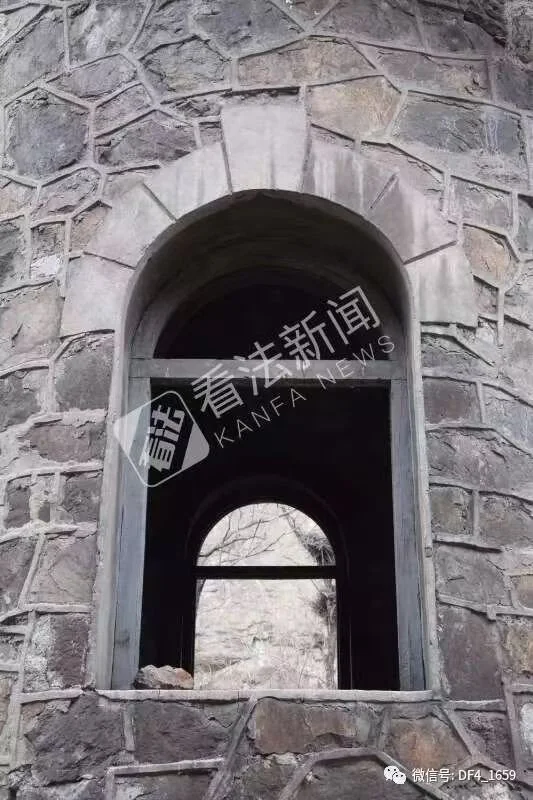
Inside the old water tower, only the wooden window frames remain across the three arched windows.Photo / Legal Evening News / Law Vision News Reporter Cui Yifei
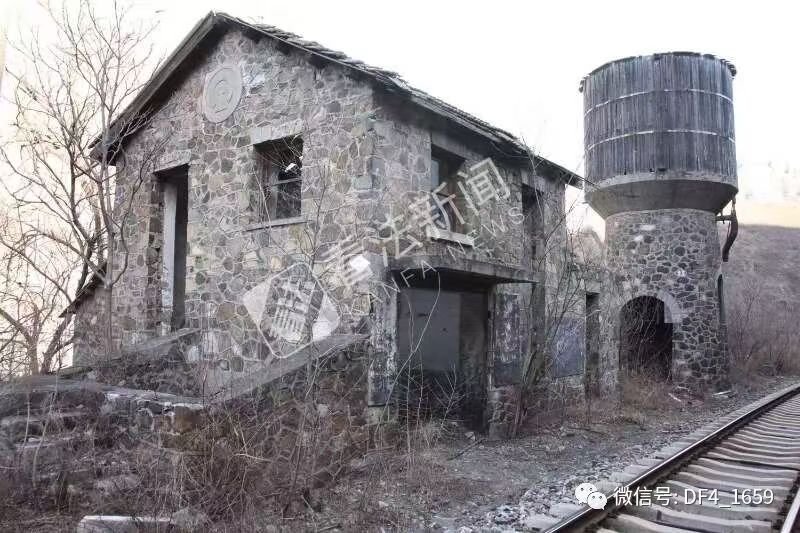
Panoramic view of the old water tower and auxiliary room concealed by shrubs.Photo / Legal Evening News / Law Vision News Reporter Cui Yifei
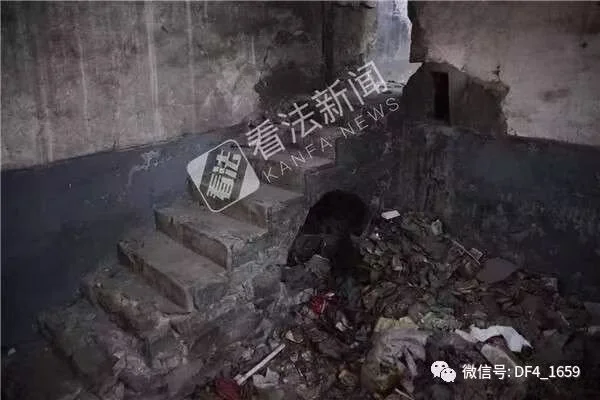
Instead of a water pump, the auxiliary room is filled with garbage and feces everywhere.Photo / Legal Evening News / Law Vision News Reporter Cui Yifei
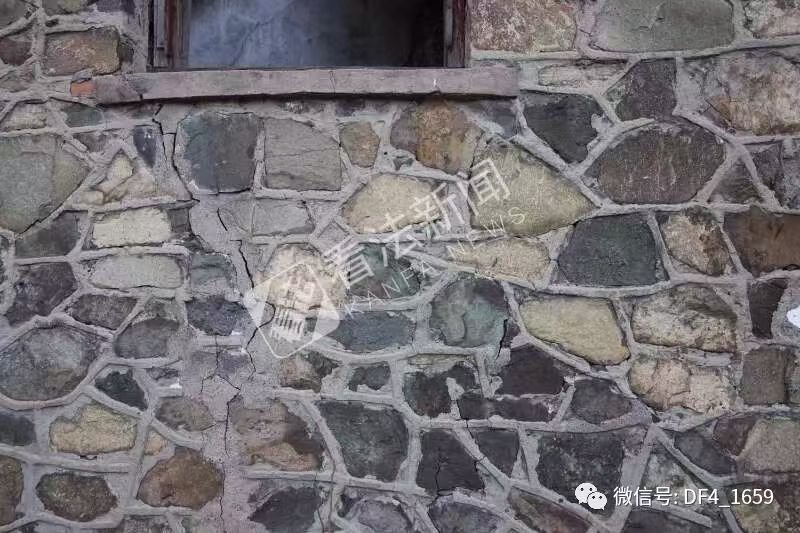
Light yellow, greenish-cyan, and dark brown rubble interlock, giving the outer walls of the pump house a touch of aesthetic appeal.Photo / Legal Evening News / Law Vision News Reporter Cui Yifei
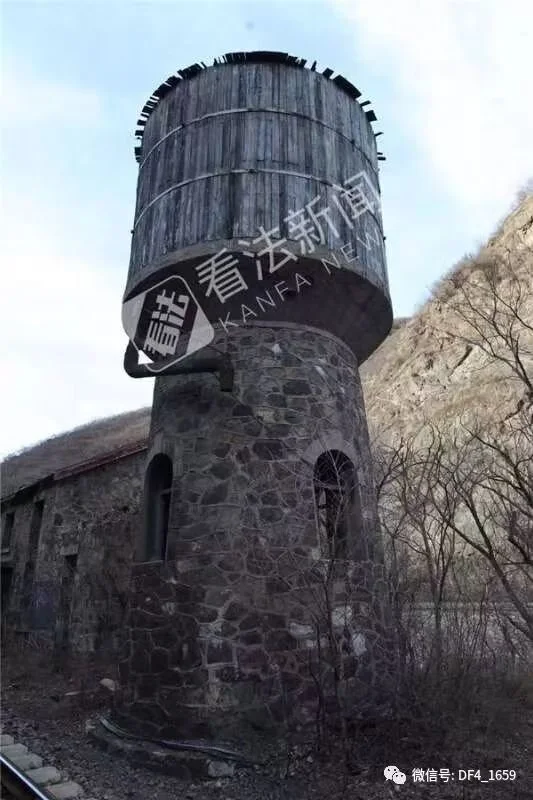
The water tower, over ten meters tall, is basically well preserved.
Photo / Legal Evening News / Law Vision News Reporter Cui Yifei
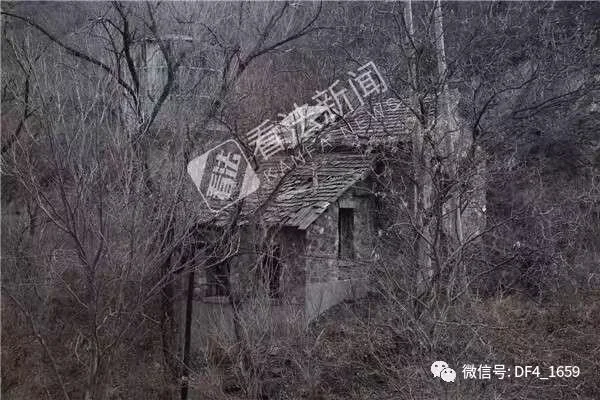
The water tower and auxiliary room hidden in the valley.
Photo / Legal Evening News / Law Vision News Reporter Cui Yifei
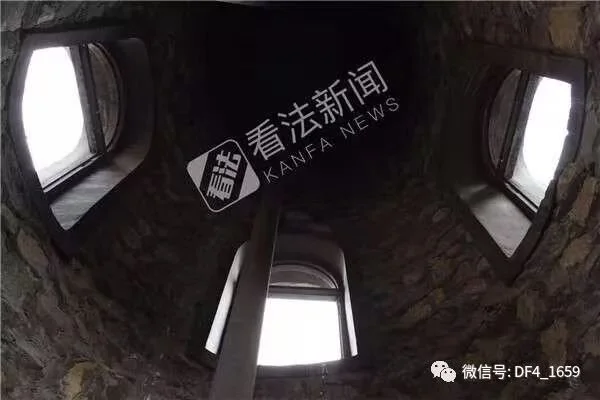
The three arched windows of the water tower, with their wooden window frames still surviving.
Photo / Legal Evening News / Law Vision News Reporter Cui Yifei
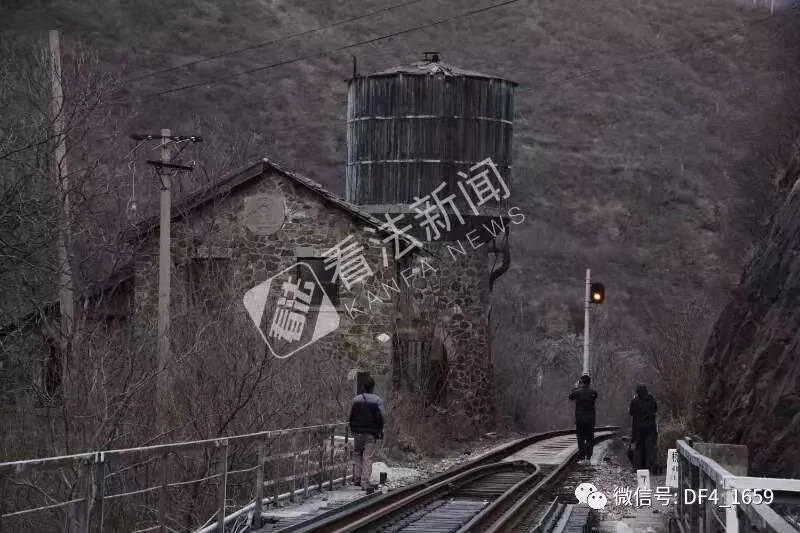
Several railfans are photographing the old water tower and its auxiliary buildings.
Photo / Legal Evening News / Law Vision News Reporter Cui Yifei
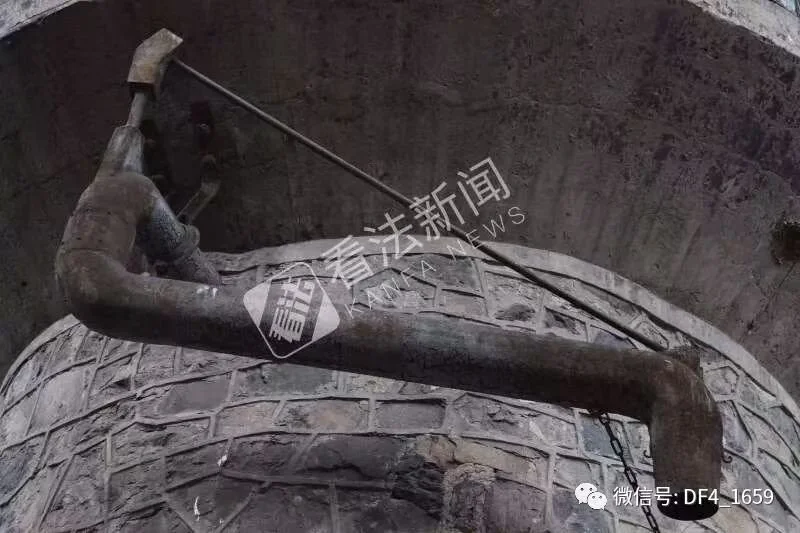
The water crane suspended beneath the water tank acts like a large water faucet to fill steam locomotives with water.
Photo / Legal Evening News / Law Vision News Reporter Cui Yifei
January 5, 2018, Legal Evening News
Legal Evening News / Law Vision News (Reporter Cui Yifei) — Along the Datai Branch Line in the western mountainous area of Mentougou, Beijing, there stands an obscure, long-abandoned water tower that few people know about—it is one of Beijing's only two surviving old steam locomotive water towers and the second-oldest surviving steam locomotive water tower in the Beijing region.
The Unfrequented Old Water Tower in the Western Beijing Valley
The reporter first encountered this old water tower in 2008. At that time, there was a commuter train consisting of only a single carriage running back and forth between Sanjiadian and Muchengjian, popularly nicknamed the "Jingmen Little Commuter Train" by railfans. The little train wandered through the valley, and when it reached Qingshuijian, an ancient water tower suddenly burst into view, but because one was on the train, it was merely a passing glance. Getting truly close to it would not happen until a decade later.
With his new book My Beijing-Zhangjiakou Railway just published and released, railway cultural scholar Wang Wei embarked on a new round of field surveys. Guided by Wang Wei, reporters from Legal Evening News / Law Vision News set out from downtown Beijing, driving more than 50 kilometers all the way west to the Qingshuijian railway crossing in Mentougou District. The old water tower is located about 100 meters away from the crossing, nestled against the mountains and beside the river, standing quietly by the railway tracks. Although it has been abandoned for many years and is unmanned, with a "skylight" opened in the roof of the auxiliary room, the vicissitudes of time cannot conceal the ruggedness of its industrial architecture.
The Former "Gas Station" for Steam Locomotives
Wang Wei told Legal Evening News / Law Vision News reporters that as for the famous Beijing-Zhangjiakou Railway, a total of 11 steam locomotive water towers were constructed along the entire line when it was initially completed, but only two survive today, located respectively in Kanggzhuang, Beijing, and Xiahuaayuan, Hebei. Meanwhile, on the Datai Branch Line, the Qingshuijian water tower is the only surviving old water tower.
The old water tower is right next to the railway tracks, built specially to supply water to steam locomotives. Compared to the water towers commonly seen in the urban area, it is not as tall, with an estimated total height of over ten meters. The stone-built base is mostly buried in the soil, and the sturdy cylindrical tower body slowly narrows upward, with a barrel-shaped water tank sitting atop the tower body, its outer ring wrapped in wood, which Wang Wei believes might have been for insulation.
Arched windows are opened on three sides of the tower body, and an arched door on one side, with the wooden window frames still surviving, resembling a small ancient castle. The internal metal water pipes have been preserved. A rusty water crane hangs outside the water tank like an oversized water faucet, dedicated to filling steam locomotives with water. Wang Wei said that adding water to a steam locomotive is like a car needing refueling, and the water tower is akin to a "gas station" for steam locomotives.
The auxiliary building right next to the water tower is likewise constructed with rubble masonry, suspected to have been a pump house for drawing water. The water pump has been removed, and all doors and windows are completely open to the air, with only the railway department's concrete badge affixed to the top of the gable wall.
As it happened, a track patroller passed by. "Do you know when this water tower was built?" Wielding the small hammer in his hand, the patroller said it must be about a hundred years old, though he was not clear on the specific details, knowing only that it was used in the past to supply water to steam locomotives.
"Hey! A train is coming in a moment!" A shout came from the duty room at the Qingshuijian crossing over 100 meters away, reminding reporters to be mindful and step aside. Shortly after, a dozen freight train carriages drove past, pushed by a diesel locomotive at the tail end heading towards Muchengjian.
Most Beijing residents are unfamiliar with the railway line where the old water tower is located, yet it is inextricably linked to production and daily life.
The Chronicles of the Beijing Railway Bureau record that the Datai Branch Line is located in the western part of Beijing, composed of the former Jingmen Branch Line and Menban Branch Line. It starts from Wulu in Haidian District, Beijing, in the east, passes through Shijingshan, then passes through Sanjiadian, Mentougou, Seshufen, Datai, and other locations in Mentougou District to Muchengjian (namely Banqiao), totaling 11 stations (including Luopoling on the Fengsha Line), with a main line length of 53.363 kilometers.
Steam Locomotive Water Tower Lacks Cultural Relic Status Yet
Wang Wei introduced that before the popularization of diesel locomotives, mostly steam locomotives ran on railways. Steam locomotives could not do without "water and coal." With the vicissitudes of time, steam locomotives were gradually replaced by diesel and electric locomotives, and the water towers once dedicated to serving them were consequently abandoned.
Judging from existing materials, Wang Wei deduced that the Menban section opened to traffic in 1927, making it very likely that this old water tower was built 90 years ago. It is the only surviving steam locomotive water tower on the Datai Branch Line and one of Beijing's two surviving old steam locomotive water towers, with the other located in the Kanggzhuang section of the Beijing-Zhangjiakou Railway, possessing a history of over a century.
Wang Wei is currently collecting historical materials, and they are preparing to submit an "Immovable Cultural Relic Identification Application Form" to the cultural relics department to strive for an officially recognized cultural relic status for the old water tower.
Relevant Regulations
Article 2 of the Interim Measures for the Administration of Cultural Relics Identification: Items listed in the first paragraph of Article 2 of the Law of the People's Republic of China on Protection of Cultural Relics shall be identified as cultural relics. Special types of cultural relics such as vernacular architecture, industrial heritage, agricultural heritage, commercial time-honored brands, cultural routes, and cultural landscapes shall be identified in accordance with these Measures.
Article 7: Citizens, legal persons, and other organizations requesting in writing the identification of immovable cultural relics shall provide their names or titles, domiciles, valid identity document numbers, or valid license numbers to the local cultural relics administrative department at or above the county level. The local cultural relics administrative department at or above the county level shall solicit public opinions through forms such as hearings and make a decision to reply.
The Interim Measures for the Administration of Cultural Relics Identification have been implemented since October 1, 2009.
