
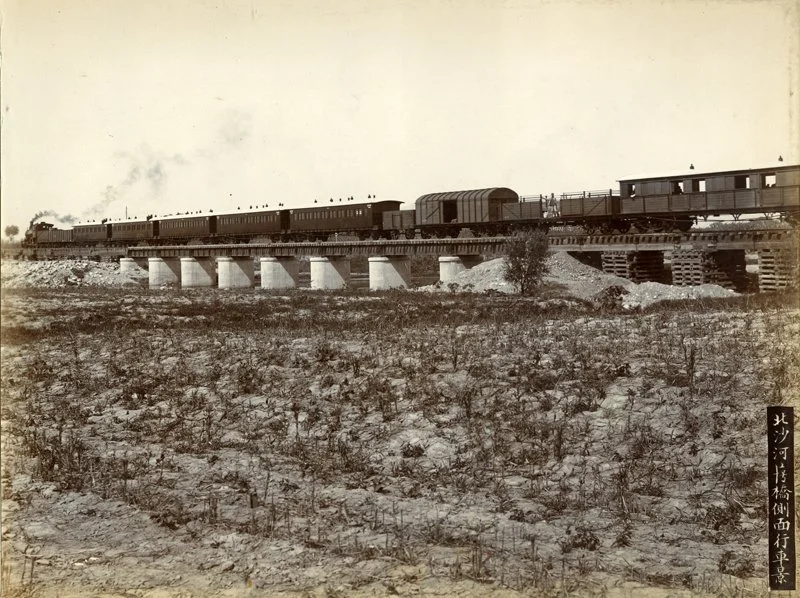
Appearance of the Beishahe Bridge when initially built; photograph taken in 1905.
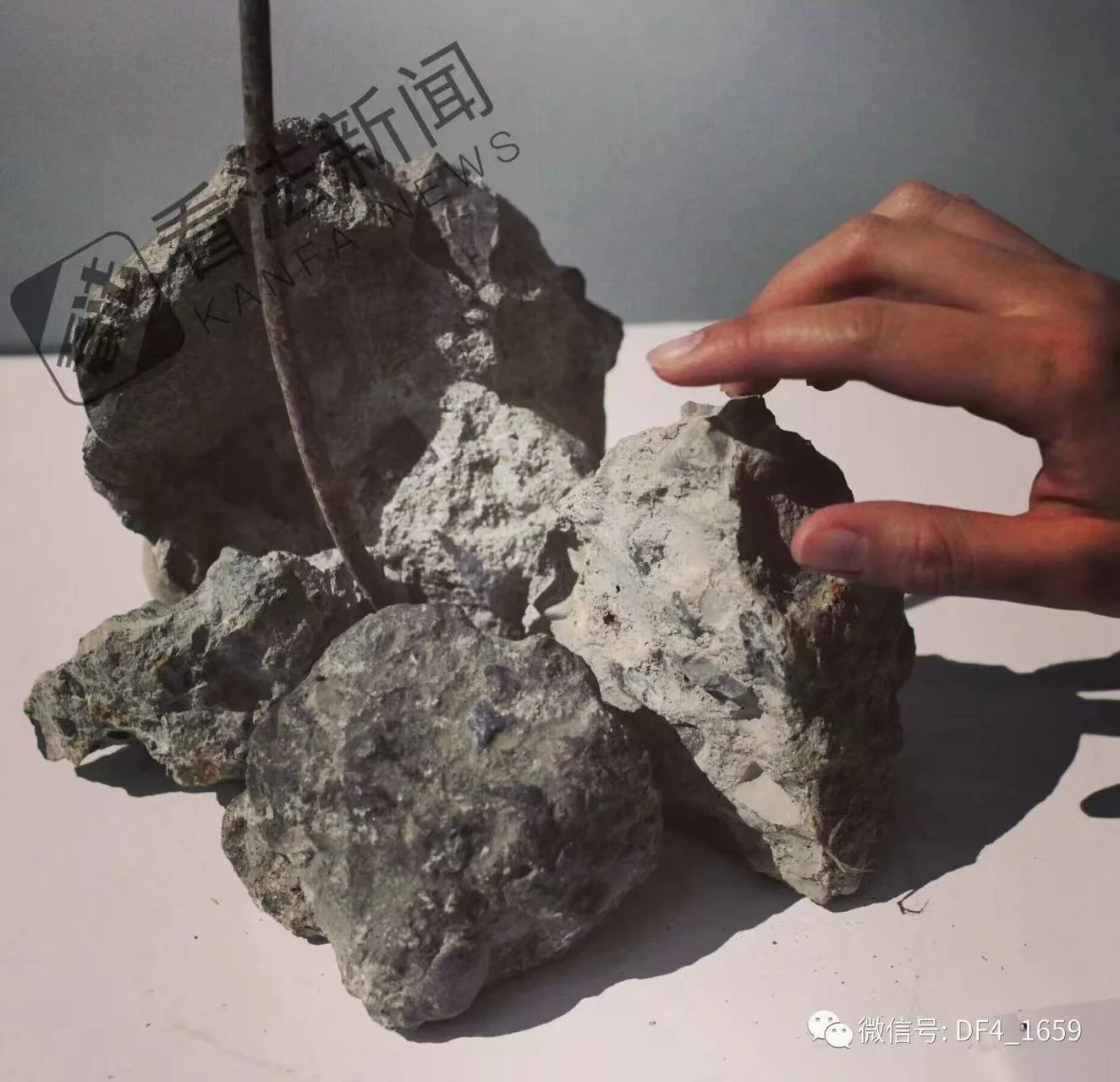
Concrete blocks dismantled from the Beishahe Bridge displayed in the exhibition.
Cui Yifei photographed on January 14, 2018.
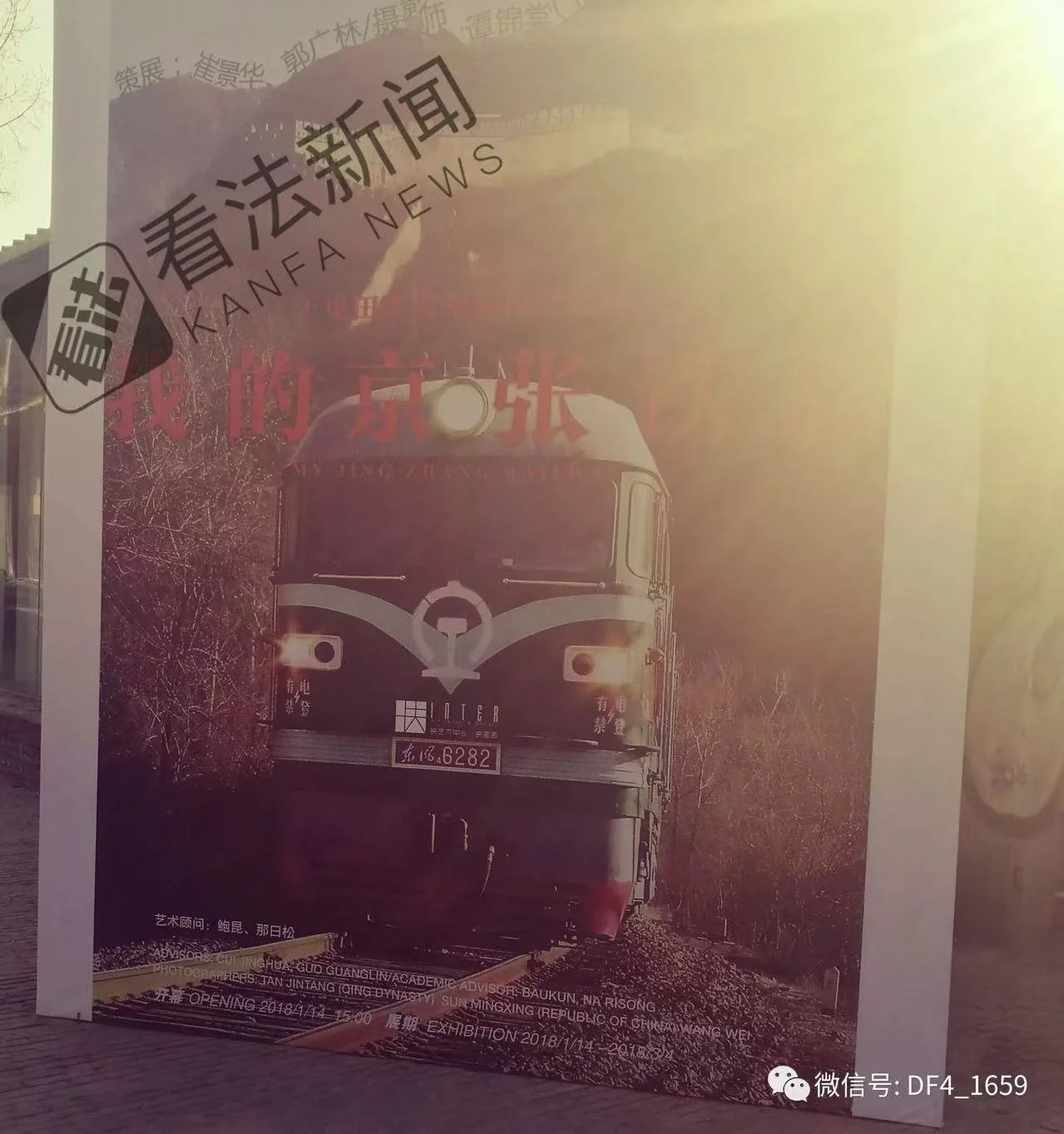
On-site poster of "My Beijing-Zhangjiakou Railway—Wang Wei Field Survey Image and Document Exhibition".
Cui Yifei photographed on January 14, 2018.
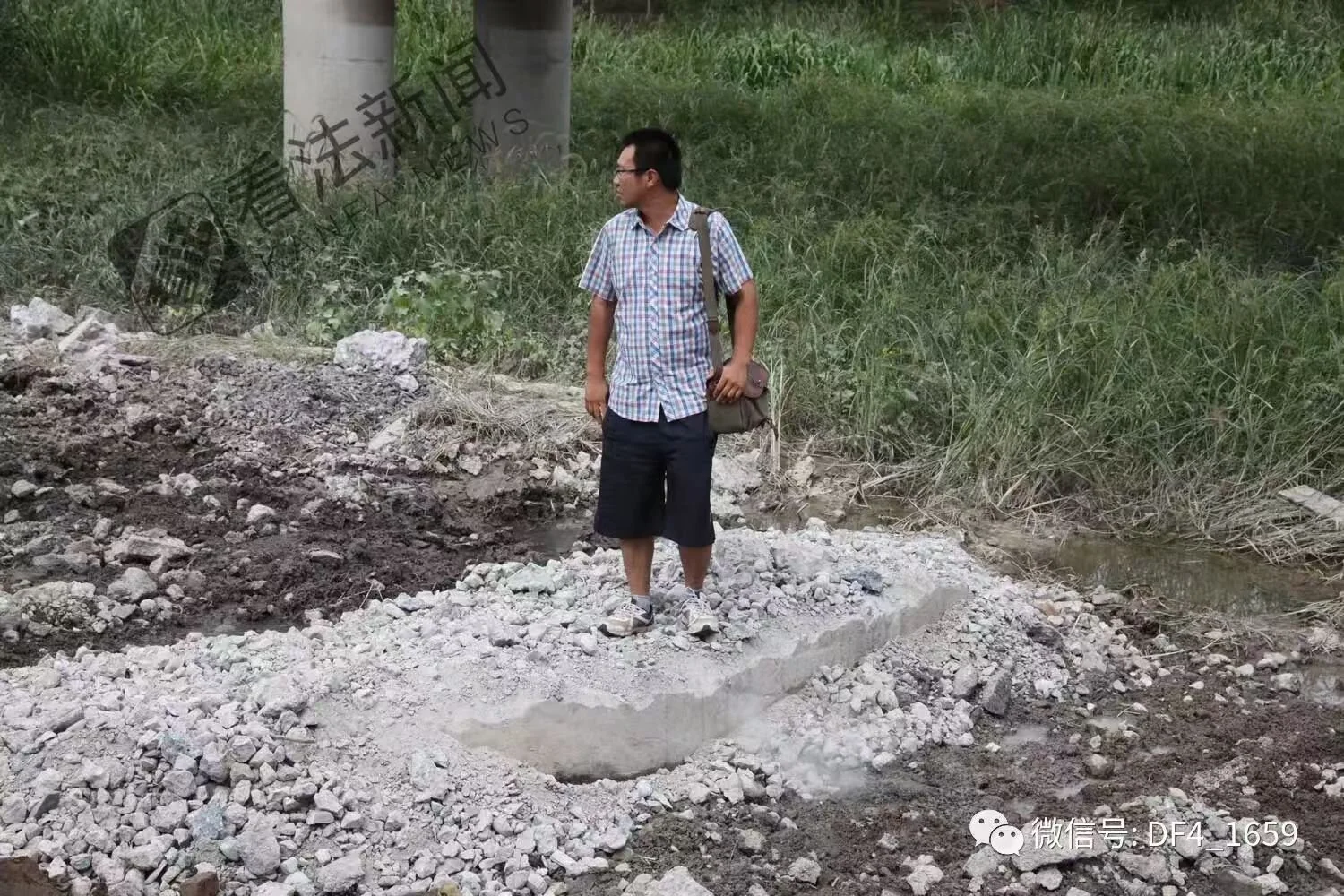
Wang Wei standing on the base of a dismantled pier of the Beishahe Bridge.
Cui Yifei photographed on August 26, 2017.
January 16, 2018, Legal Evening News
Legal Evening News / Law Vision News (Reporter Cui Yifei) — On the afternoon of January 14, "My Beijing-Zhangjiakou Railway—Wang Wei Field Survey Image and Document Exhibition" opened at the 798 Photo Gallery in Beijing's 798 Art District. The exhibition comprehensively displays the historical changes of railway stations, tunnels, bridges, locomotive sheds, and other related structures along the Beijing-Zhangjiakou Railway. In addition to image materials, four chunks of concrete originating from a railway bridge make the Beijing-Zhangjiakou Railway tangible and within reach.
They were stacked on a display stand, with a piece of steel reinforcing bar protruding from the middle, making them look somewhat unappealing. This reporter picked one up, and it felt as heavy as a block of lead in the hand. The exhibition description label indicates that these are "century-old concrete blocks from the Beishahe No. 16 Bridge dismantled in 2017."
Audience member Ms. Liu Shi told Legal Evening News / Law Vision News reporters that had it not been for the description label at the scene, it would be hard to imagine that this was actually cement from over 100 years ago. Photographs form the core of this exhibition, but these physical objects bring the audience even closer to the Beijing-Zhangjiakou Railway, making her feel as though she could see Zhan Tianyou directing construction on-site.
The Beijing-Zhangjiakou Beishahe No. 16 Bridge, also known as the Beishahe Bridge, is located in Changping District, Beijing, about 700 meters west of the Chaozong Bridge on the Beijing-Tibet Expressway. The Toponymic Records of Changping County, Beijing, published in 1997, records that the Beishahe Bridge was initially built in 1905 (the 31st year of the Guangxu reign of the Qing Dynasty), featuring 16 spans and a total length of 168.8 meters, named after crossing the Beishahe River.
According to Wang Wei's statistics, ranked by length, the longest bridge on the Beijing-Zhangjiakou Railway is the Huailai River No. 56 Bridge, while the second-longest is the Beishahe No. 16 Bridge dismantled in 2017. Wang Wei stated that looking across the entire Beijing-Zhangjiakou Railway, although the Beishahe No. 16 Bridge was not the longest bridge on the line, among bridges in service for over 100 years, it ranked first in length. Between August and September 2017, due to the construction of a high-speed railway, all 16 piers of the bridge were dismantled sequentially from south to north.
In June of this year, Wang Wei's new book My Beijing-Zhangjiakou Railway was published. Through more than a decade of field visits, it amounts to a comprehensive cultural relic census of the entire Beijing-Zhangjiakou Railway line. He expressed that displaying the concrete chunks from the Beishahe Bridge this time is intended to let more viewers understand the Beijing-Zhangjiakou Railway.
Text and photos by/Reporter Cui Yifei
