
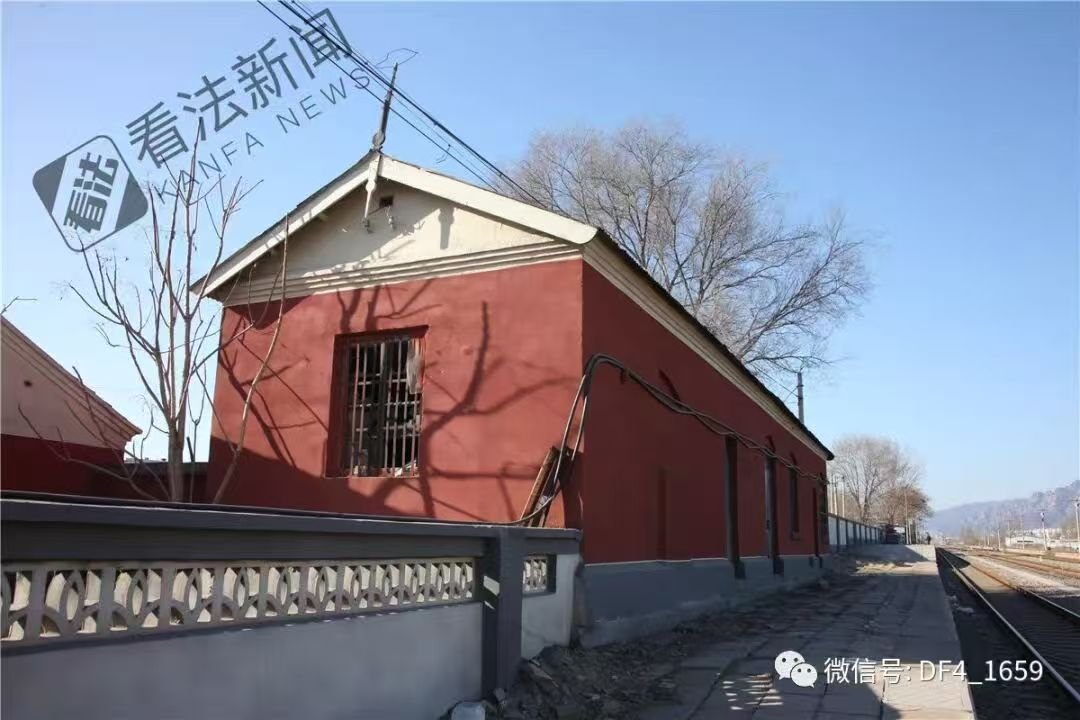
The final architectural remains of the old station building of Changping Station. Photo / Legal Evening News / Law Vision News Reporter Cui Yifei
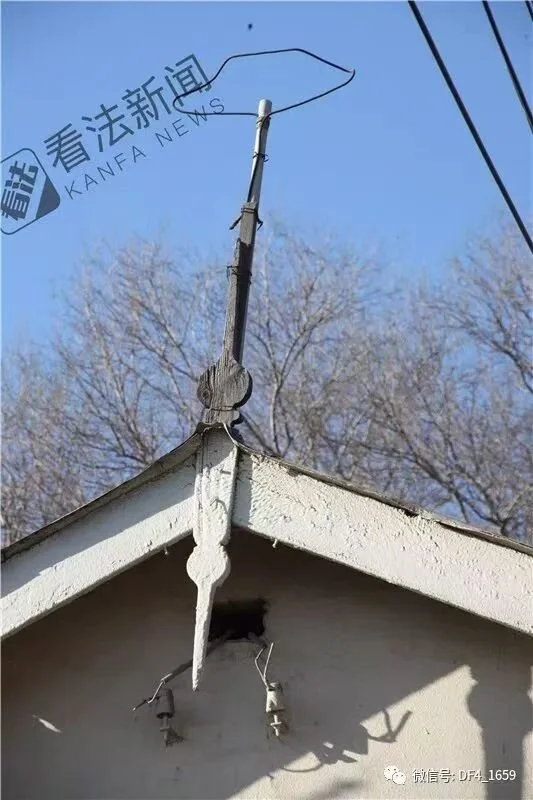
The Finial 'suspended fish' decoration on one side of the old station building. Photo / Legal Evening News / Law Vision News Reporter Cui Yifei
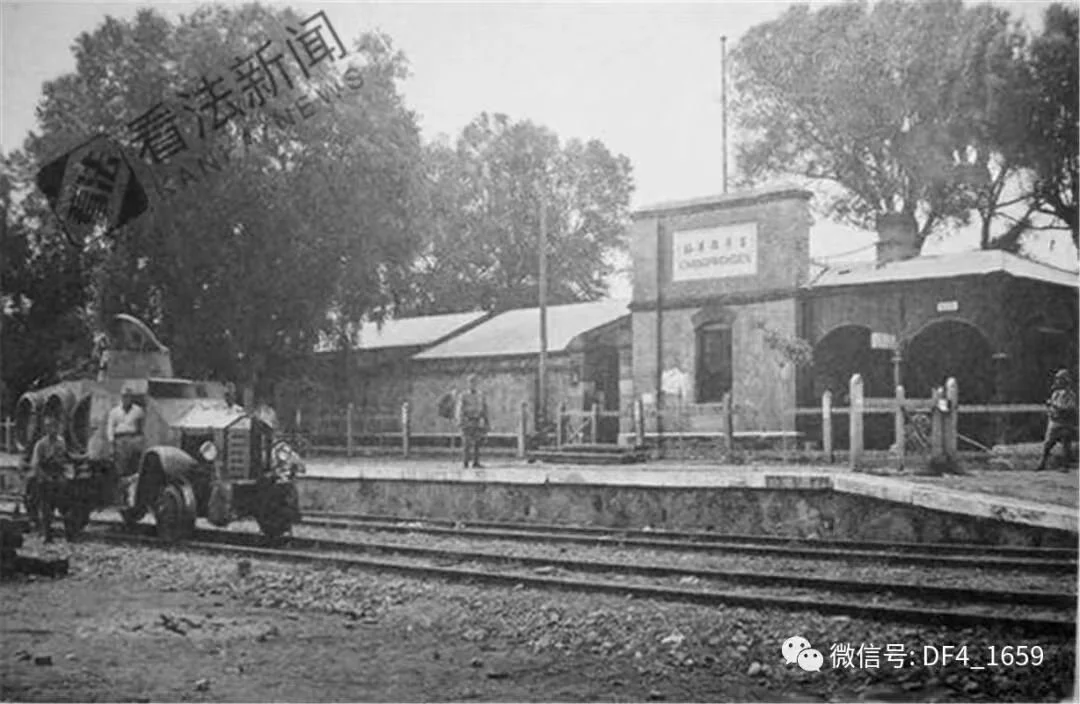
Old photograph of Changping Station on the Beijing-Zhangjiakou Railway, taken during the Japanese puppet regime period (Provided by Wang Wei).
January 30, 2018, Legal Evening News
Legal Evening News / Law Vision News (Reporter Cui Yifei) — Recently, this reporter accompanied railway cultural scholar Wang Wei to search for the last remaining old buildings of Changping Station on the Beijing-Zhangjiakou Railway. Due to successive renovations, very few architectural remains of the old station building are left, and the overwhelming majority of people know very little about the surviving relics. Wang Wei plans to fight for a legal cultural relic status for the old station building.
"My Beijing-Zhangjiakou Railway—Wang Wei Field Survey Image Exhibition" is currently being exhibited at the 798 Photo Gallery. Meanwhile, Wang Wei has not stopped his steps in field surveys. Recently, he revisited Changping Station on the Beijing-Zhangjiakou Railway.
Compared to stations with better-preserved old station buildings like Qinglongqiao and Xizhimen, it is very difficult to find remains of the old station building at Changping Station on the Beijing-Zhangjiakou Railway. An abandoned single-story bungalow beside the tracks has windows where the wind is already leaking through. Wang Wei said that this is the final architectural remains of the old station building of Changping Station. The "suspended fish" decoration on one side of the building still survives, which is a common decorative element in auxiliary buildings along the Beijing-Zhangjiakou Railway.
An old photograph provided by Wang Wei, taken during the Japanese puppet regime period, is one of the few image records of the old station building of Changping Station. In the frame, the central station plaque with the traditional Chinese characters for "Changping County Station" can be faintly seen, which is similar in layout to other old station buildings along the Beijing-Zhangjiakou Railway.
According to Wang Wei's introduction, Changping County Station was located at the 70th li of the Beijing-Zhangjiakou Railway. In the early period when the Beijing-Zhangjiakou Railway opened to traffic, no station was set up in Changping; this was merely a section of the main line within the Shahe-Nankou interval. In the winter of the fourth year of the Republic of China (1915), because the number of train runs between Nankou and Xizhimen increased, and the distance between the Shahe and Nankou interval was slightly long, this station was additionally established for the convenience of train crossing and to improve transport efficiency.
At the time of its initial construction, Changping County Station was merely a fourth-class small station with only two tracks. The station name differed from the current one, being called "Changping County Station," and it was approved by the Ministry of Railways as Changping Station in 1950.
In the late 1970s, the Jingtong Railway opened, with its starting point set in front of the old station building of Changping Station, after which Changping Station became a pivotal hub of Beijing's railways.
According to Wang Wei's textual research, in 1994, a dedicated cement plant line was connected to Changping Station, and due to reasons leading to another expansion of the station yard, the main body of the old station building embedded with the station plaque reading "Changping County Station" was demolished. What we can see today is merely the rear of the old station building, yet it is the final remaining relic of the old station building of Changping Station, with a history exceeding 100 years. Wang Wei is further collecting materials, intending to fight for a cultural relic status for the remains of the old station building.
Photo / Legal Evening News / Law Vision News Reporter Cui Yifei
