
Folk Scholar Submits Second Application for Cultural Relics Recognition to Protect Century-Old Railway Station Buildings
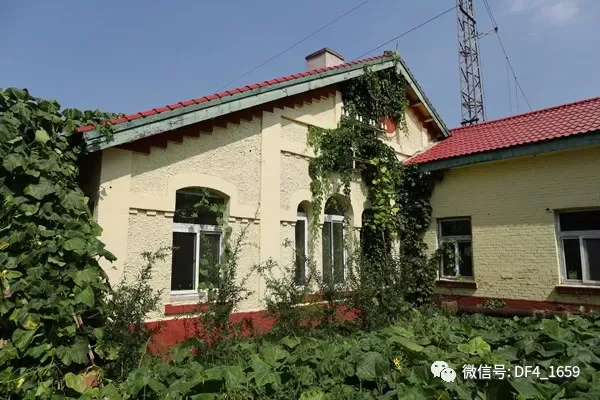
The photo shows the well-preserved old station building of Doudian Station
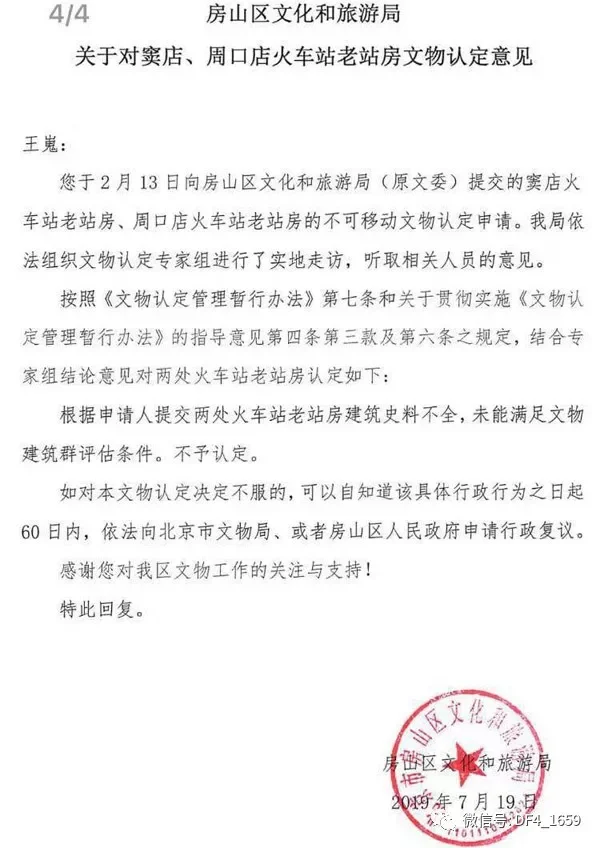
The reply letter from the Fangshan District Bureau of Culture and Tourism to Wang Wei
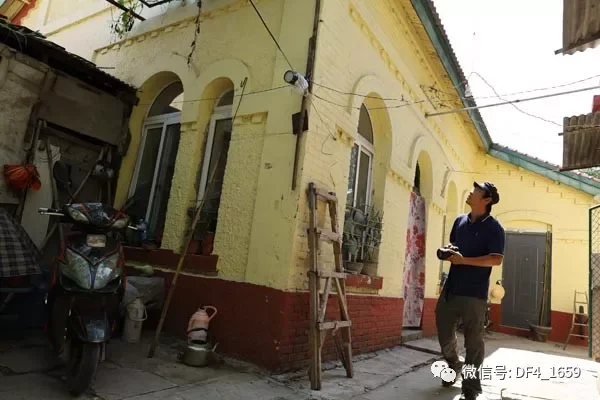
Photo taken on August 25 showing Wang Wei conducting an on-site visit to the old station building of Doudian Station
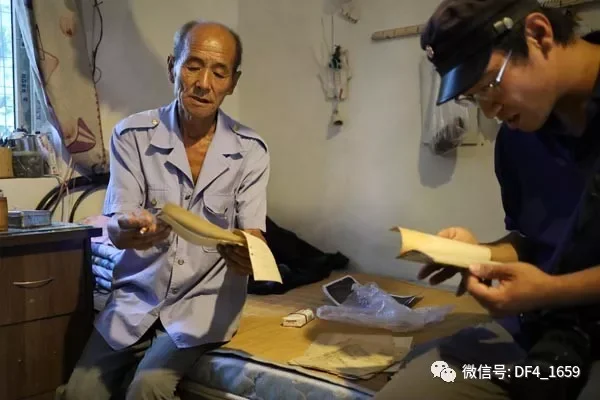
Doudian Station staff providing relevant historical materials to Wang Wei
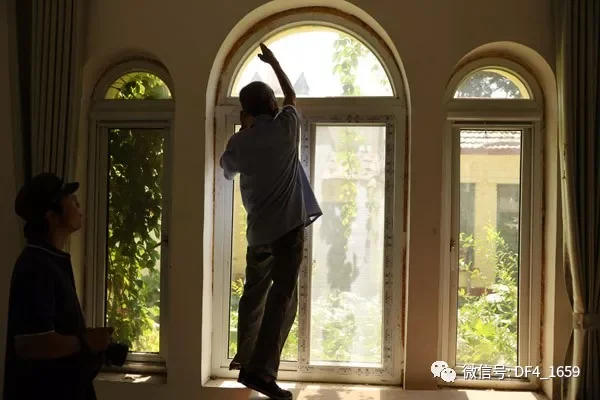
The slender arched windows of the old Doudian station building share a style similar to that of a Western small chapel
Wang Wei submitting the administrative reconsideration materials

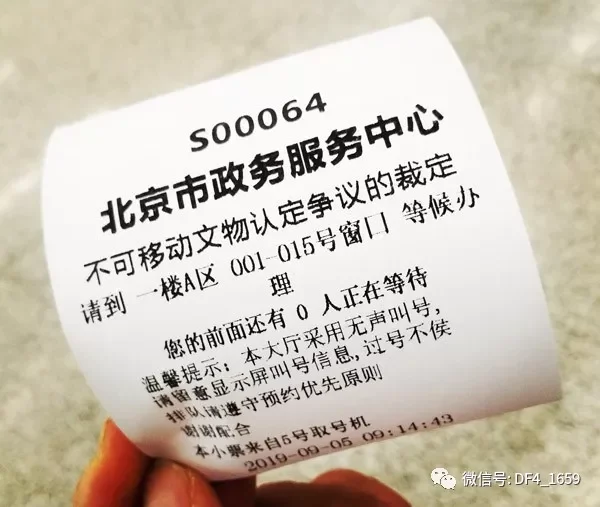
The number ticket received by Wang Wei when submitting the reconsideration materials on September 5
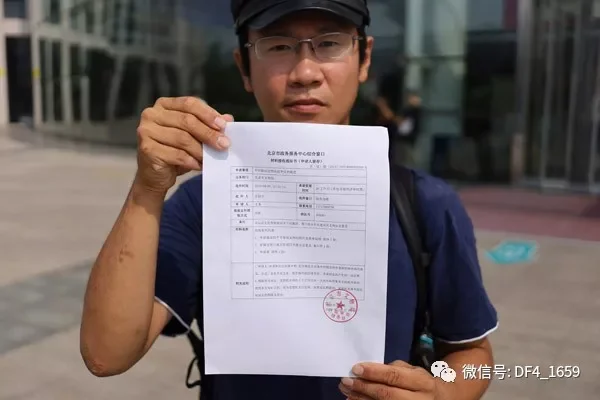
The Material Receipt Notice received by Wang Wei after submitting the administrative reconsideration materials
September 5, 2019, Beijing Youth Daily
Due to the rejection of his application for cultural relics recognition, on the morning of September 5, Wang Wei submitted administrative reconsideration materials to the Beijing Municipal Bureau of Cultural Heritage, hoping to secure statutory cultural relics status for the old station building of Doudian Railway Station and the historical remnants of Zhoukoudian Railway Station. According to Beijing Youth Daily reporters, these two railway stations are located in Fangshan District and have histories exceeding a century.
Application for Cultural Relics Recognition Rejected Due to Incomplete Architectural Historical Data
The Gazetteer of Place Names in Fangshan District, Beijing records that Doudian Station was built in the 25th year of the Guangxu reign of the Qing Dynasty (1899); Zhoukoudian Station, located to the southeast of the Zhoukoudian Peking Man Site, was built in 1897 and primarily handled the transport of coal produced by the Changgouyu Coal Mine and other locations.
Railway culture scholar Wang Wei's investigations revealed that after more than a century, the old station building of Doudian Station remains well-preserved, while partial remnants of the old station building at Zhoukoudian Station still survive. Both are precious modern historical buildings, yet neither has obtained official cultural relics recognition or protection under the Cultural Relics Protection Law.
At the beginning of this year, Wang Wei drafted two Applications for Immovable Cultural Property Recognition and submitted them on February 1 to the Fangshan District Bureau of Culture and Tourism (formerly the Culture Commission), hoping to secure cultural relics status for the old station buildings. On July 26, Wang Wei received a written "non-recognition" reply from the Fangshan District Bureau of Culture and Tourism.
As understood by Beijing Youth Daily reporters, "incomplete architectural historical and documentary data" became the primary reason for the non-recognition. In addition, the cultural relics department also pointed out that "the current preservation status of the old station building at Zhoukoudian Station is poor, and the original architectural layout of the station is incomplete." However, Wang Wei did not give up; he immediately began refining the materials to prepare for administrative reconsideration.
Scholar Reorganizes Historical Data and Submits Administrative Reconsideration Materials
According to Wang Wei's textual research, Doudian Station, built in 1899, was a station along the Lu-Han Railway (Beijing–Hankou), where the engineering of the Lu-Bao section (Lugouqiao–Baoding) was in charge of British engineer Claude William Kinder, leading to Doudian Station being built as a typical British-style station building. Furthermore, as one of the few surviving old station buildings along the Lu-Han Railway, the Doudian old station building holds exceptionally high value for studying China's early railways and Chinese industrial historical architecture. In 1899—* correction: in 1949*, Chairman Mao Zedong and other state leaders traveled aboard a special train into Beiping precisely via Doudian Station. Therefore, the Doudian old station building holds significant importance for patriotic education and red historical and cultural research.
Beijing Youth Daily reporters visited the site with Wang Wei and saw that although Doudian Station has ceased passenger operations, the old station building remains well-preserved; features such as the slender arched windows reminiscent of a Western small chapel and the bargeboard (hanging fish) decorations have been retained to this day, possessing strong artistic and epochal characteristics. Although the old Zhoukoudian station retains only partial remnants, Wang Wei believes they should be preserved as modern industrial historical sites of Fangshan District.
At 9:00 AM on the morning of September 5, Beijing Youth Daily reporters accompanied Wang Wei to the Beijing Municipal Government Services Center, where he submitted 15 pages of reorganized reconsideration materials to the comprehensive service window and received a Notice of Material Receipt stamped with the official seal of the Administrative Approval Service Office of the Beijing Municipal Bureau of Cultural Heritage. The notice indicates that the applied matter is the "Adjudication of Immovable Cultural Relics Recognition Disputes," with a promised acceptance processing time of 20 working days (excluding the time limit for organizing reviews).
It is understood that as a nationally renowned folk railway culture scholar, Wang Wei is the author of My Jingzhang Railway and has assisted cultural relics departments in securing cultural relics status for multiple railway historical buildings across the Beijing and Hebei regions. Beijing Youth Daily reporters will continue to follow the results of this cultural relics recognition reconsideration.
Text / Beijing Youth Daily Reporter Cui Yifei
Photography / Beijing Youth Daily Reporter Cui Yifei
Editor / Cui Yifei
