
Six Historical Peking Kalgan Railway Relics Granted Status Due to Him
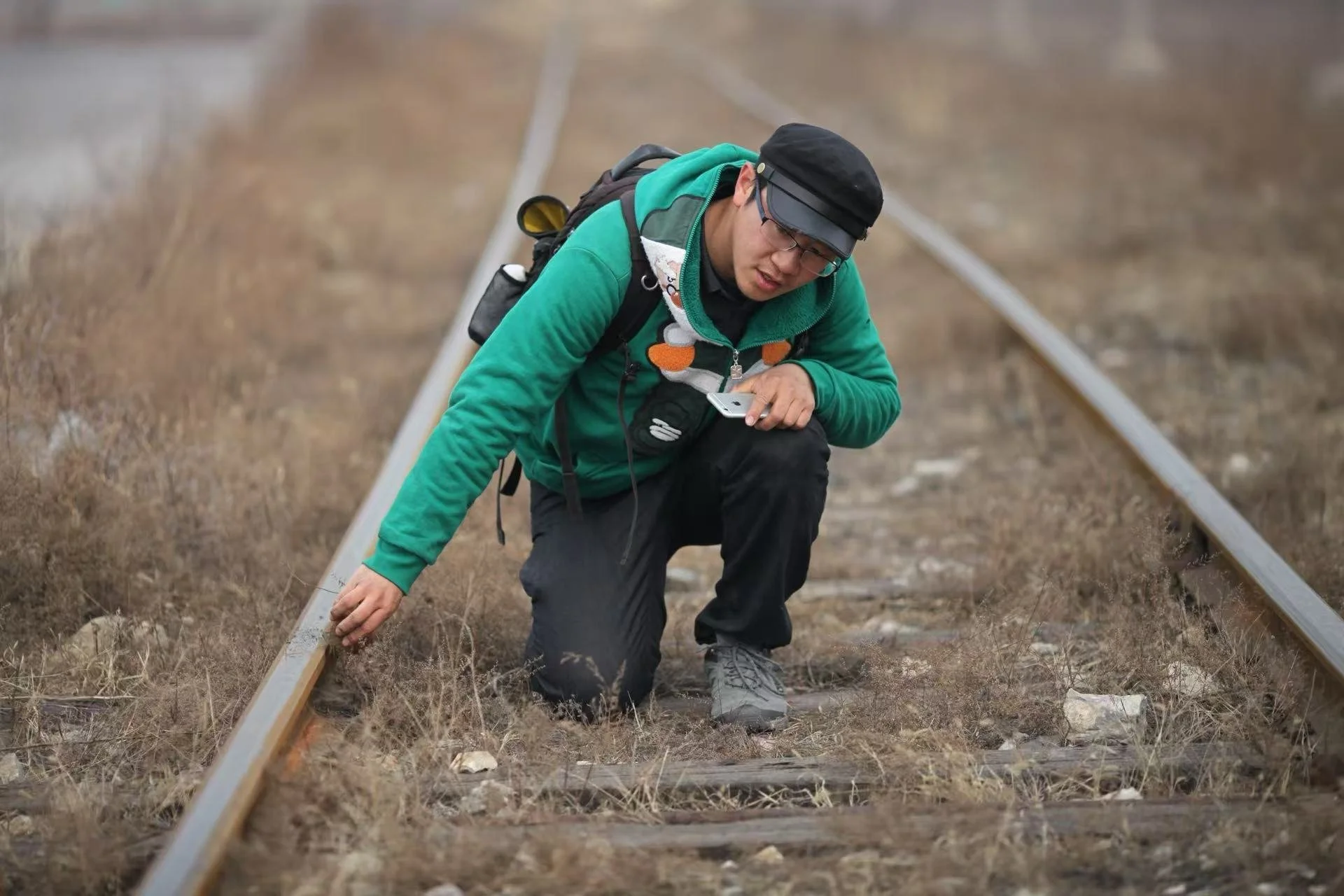
Wang Wei inspecting old rails at Kangzhuang Station on the Peking Kalgan Railway(Jingzhang) Railway
September 15, 2019, Beijing Youth Daily
Recently, the Yanqing District Bureau of Culture and Tourism officially announced three Jingzhang Railway historical buildings—the Kangzhuang Station Building Complex, the Xibazi Station Building Complex, and the Longtangou No. 44 Bridge—as immovable cultural properties. The cultural property recognition process originated from the Application for Immovable Cultural Property Recognition submitted by Wang Wei in October 2018. From 2017 to the present, Wang Wei has successfully secured statutory cultural property status for six historical buildings, five of which are located in the Beijing section of the Jingzhang Railway.
Applying for Cultural Property Recognition for the Old Station Building of Qinghe Station
In 2015, with the construction of the Beijing-Zhangjiakou High-Speed Railway's Qinghe Station about to commence, the old station building of Qinghe Station, built in 1906, was decommissioned. Worried that the precious old station building would be demolished, in November 2015, Wang Wei submitted an Application for Immovable Cultural Property Recognition to the Haidian District Culture Commission.
In May 2017, the Haidian District Culture Commission recognized Qinghe Station as an immovable cultural property. This successful cultural property recognition not only rescued an important historical building, but for Wang Wei, it also marked the beginning of his series of rescue actions.
Six Historical Buildings Along the Jingzhang Railway Successively Become Cultural Relics
At Xiahuayuan Station on the Jingzhang Railway, a steam locomotive water tower built in 1909 remained, having fallen into disuse for many years. In 2018, the yard where the water tower was located underwent land leveling, leaving the old building in grave danger. Wang Wei immediately submitted an Application for Immovable Cultural Property Recognition to the cultural relics department of Xiahuayuan District, Zhangjiakou City. On July 27, 2018, the Xiahuayuan District Bureau of Culture, Radio, Television, Press and Publication listed the old water tower as a newly added immovable cultural property.
In August 2018, the architectural remnants of the old station building at Changping Station on the Jingzhang Railway, for which Wang Wei applied for cultural property recognition, gained cultural property recognition from the Changping District Culture Commission. Before obtaining cultural property status, the old Changping station building similarly faced the threat of demolition due to the construction of the Beijing-Zhangjiakou High-Speed Railway.
By June 2019, through the pathway of submitting Applications for Immovable Cultural Property Recognition, Wang Wei had successfully secured cultural property status for six historical buildings along the Jingzhang Railway.
Authored My Jingzhang Railway After Over a Decade of Work
Born in 1990, Wang Wei has loved trains since childhood, always asking his parents to take him to Xizhimen Station for photos when he was little. He began photographing and documenting the Jingzhang Railway at the age of 12. In 2005, Wang Wei posted on the Beijing Railway Fan Network under the name "Jingzhang Railway Knowledge," sharing pictures he took of various stations and sections along with stories of the Jingzhang Railway.
As his understanding deepened, Wang Wei discovered that the nearly century-old old engine house in Zhangjiakou had been demolished, the Mentougou station building on the Jingmen Branch of the Jingzhang Railway had also been dismantled, and two railway bridges personally designed by Jeme Tien Yow—the Nashahe Bridge and Beishahe Bridge—had been torn down. This drove him to accelerate his pace in recording these vanishing historical buildings.
In June 2017, Wang Wei's new book, My Jingzhang Railway, was published. The material accumulation for this set of books spanned over a decade, with compilation taking more than three years. It collected over 2,000 images (including historical and contemporary comparisons of the same locations), field investigations, on-site measurements, hand-drawn restoration diagrams, and oral history investigations, comprehensively and multidimensionally recording the historical changes of the Jingzhang Railway.
While recording, Wang Wei places even greater emphasis on preservation. In addition to the applied projects that have already gained cultural property recognition, he has also submitted Applications for Immovable Cultural Property Recognition regarding other historical buildings along the Jingzhang Railway to districts such as Xicheng and Mentougou, though no conclusions have been reached yet. Wang Wei hopes to work together with authorities to leave behind more visible and tangible history for the Jingzhang Railway, using physical historical artifacts to build cultural confidence.
Text and photographs / Staff Reporter Cui Yifei
