
Steam Locomotive Water Tower Reconstructed at Qinglongqiao Station on the Jingzhang Railway
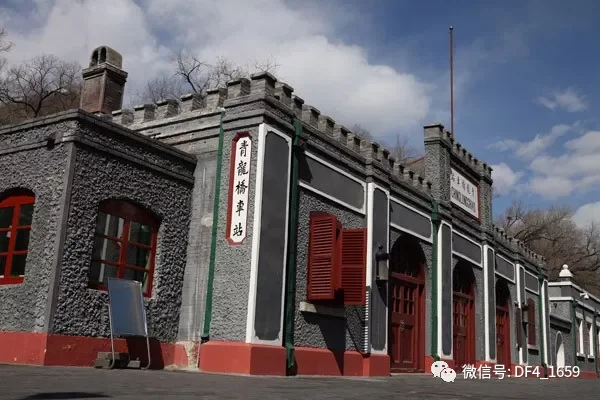
The photo shows the classic old station building of Qinglongqiao Station
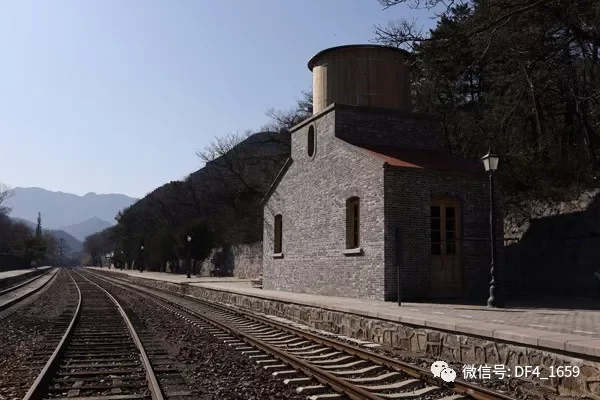
The reconstructed water tower is basically completed
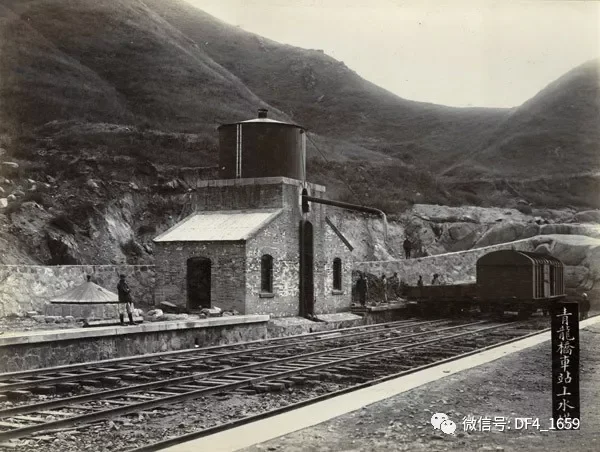
The authentic old water tower in history (photographed by Tan Jintang)
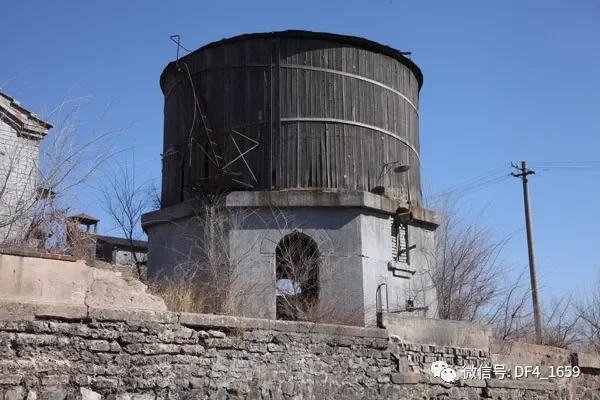
Kangzhuang Steam Locomotive Water Tower
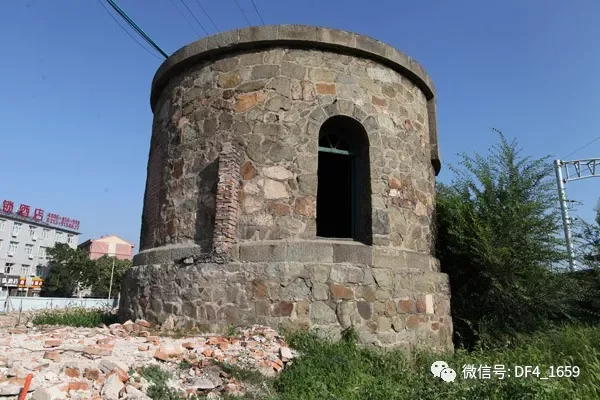
Xiahuayuan Steam Locomotive Water Tower
December 4, 2019, Beijing Youth Daily
Water towers beside railway tracks were landmark structures of the steam locomotive era, but with technological advancement, many steam locomotive water towers were phased out. Recently, within the Qinglongqiao Station on the Jingzhang Railway, cultural relics departments reconstructed a steam locomotive water tower on its original site. The water tower lacks water supply functionality and serves solely as a landscape structure. Railway culture scholar Wang Wei believes that reconstructing the old water tower helps the public intuitively understand the original appearance of Qinglongqiao Station, but there are still many historical relics along the Jingzhang Railway that urgently need protection.
Reconstructed Water Tower Closely Resembles Original Shape but Lacks Water Supply Functionality
The old station building constructed in 1909, Jeme Tien Yow—chief engineer of the Jingzhang Railway—resting in peace here, and the famous "Zigzag" railway adjacent to the station... Located at the foot of the Badaling Great Wall, Qinglongqiao Station is the most completely preserved station of the Jingzhang Railway in its original appearance, and was announced as a Major Historical and Cultural Site Protected at the National Level in 2013. Recently, a steam locomotive water tower sprang up on the platform, attracting the attention of railway culture scholar Wang Wei.
Wang Wei told Beijing Youth Daily reporters that Qinglongqiao Station historically indeed had a water tower used to supply water for steam locomotives. However, the water tower had been dismantled for many years, leaving only remnants, and he never expected the cultural relics departments to reconstruct it.
Beijing Youth Daily reporters saw at Qinglongqiao Station that about 200 meters away from the old station building on the platform stood a trapezoidal structure built of grey bricks, with sloping roofs on both sides and a raised center, with the water tank placed on the flat roof. Below the water tank, a long oval opening served as the water crane interface, though no water pipe was installed. The two sides of the structure were fitted with slender wooden doors, and two wooden windows opened on the side facing the railway tracks. The reconstructed water tower closely resembles the water tower in old photographs in shape, but differences still exist in its interior details. Wang Wei introduced that the water tower back then was equipped with a water pump; railway workers pumped groundwater into the water tank to generate water pressure, and then added water to steam locomotives through the water pipe extending from the water crane. Inside the water tower, there was also a stove to burn fires in winter preventing the water tank from freezing.
However, inside and outside the reconstructed water tower, reporters saw neither a water pump, a stove, nor a water crane. In other words, the reconstructed water tower does not possess water supply functionality.
Water Tower Dismantled for Over Half a Century; Reconstruction Serves Solely as Historical Landscape
Through historical photographs, Wang Wei discovered that the Qinglongqiao Station water tower was built in 1909 as an early structure of the Jingzhang Railway, and was dismantled in the latter half of the 1940s to the 1950s. At that time, the Jingzhang Railway was equipped with Mallet 3 and Mallet 4 steam locomotives. Compared with early steam locomotives, the water tank capacity of the tenders was increased; as long as sufficient water was added at Nankou or Kangzhuang, there was no need to replenish water midway (at Qinglongqiao). "The decrease in utilization rate is the main reason why the water tower was dismantled," Wang Wei analyzed. Regarding the reconstruction of the water tower, Wang Wei believes that after enduring more than a century, many old buildings of the Jingzhang Railway have already been dismantled, and people can only recall their appearance through old photographs. The reconstructed water tower is more three-dimensional than old photographs, making it easier for people to intuitively understand the original appearance of the station. However, landscape reconstruction is difficult to achieve with original functions, original dimensions, and original craftsmanship; the new water tower is noticeably taller than the old water tower, and there are differences in brick sizes. Before the completion of the project, he hoped that the cultural relics departments could produce explanatory signs indicating that this is a reconstructed landscape rather than an authentic relic so that visitors can distinguish between them.
As understood by reporters, the "Protection, Restoration and Environmental Remediation Project for the Water Tower, Anti-Japanese War Cultural Relics of Yanqing Qinglongqiao Railway Station" commenced on May 20 of this year and is scheduled to be completed on May 19, 2020. The construction unit is the Yanqing District Cultural Relics Management Office of Beijing, and the funding source is financial allocation.
Reporters called the project director and learned that the reconstructed water tower is not considered a cultural relic because cultural relics are not allowed to be reconstructed. The water tower is an important component of Qinglongqiao Railway Station; considering the overall style of the station, they constructed it based on old photographs, and the newly built water tower does not possess water-filling functions.
Only 3 Steam Locomotive Water Towers Survive in Beijing, with 1 Granted Cultural Relics Recognition
After more than a decade of field investigations, Wang Wei authored the book My Jingzhang Railway in 2017. He knows the buildings along the Jingzhang Railway inside and out.
According to Wang Wei's statistics, when the Jingzhang Railway was completed in 1909, a total of 11 steam locomotive water towers were constructed along the entire line. However, due to reasons such as internal combustion locomotives replacing steam locomotives, the matching water towers gradually fell into disuse, and 9 of them were dismantled. The two surviving water towers are located near Kangzhuang Station in Yanqing District and near Xiahuayuan Station in Zhangjiakou City, respectively.
From 2018 to 2019, Wang Wei submitted Applications for Immovable Cultural Property Recognition to the cultural relics competent authorities where the two old water towers are located. The cultural relics departments handled cases upon receipt, and the two old water towers were successively recognized as immovable cultural properties.
Wang Wei pointed out that as a linear industrial cultural heritage, the Jingzhang Railway has not received overall protection, and the protection levels of old buildings along the route are uneven and ambiguous, with some even lacking cultural relics status, leaving many authentic relics urgently in need of protection. For instance, the turntable site within Qinglongqiao Station awaits cleanup; in 2017, the Chouni Keng No. 23 Bridge site within the nationally protected Nankou-to-Badaling section was damaged; in the same year, the two century-old bridges, Nashahe and Beishahe, were dismantled.
Wang Wei also discovered that as far as the Beijing region is concerned, only 3 steam locomotive water towers survive. Apart from the Kangzhuang steam locomotive water tower in Yanqing gaining cultural relics recognition, the other two are located in Mentougou District and both remain in an abandoned state.
Restoration Funds Should Be Directed More Toward Original Cultural Relics
Yao Yuan, associate professor at the School of Government and Public Management of Nanjing University, was once rated by the China Cultural Heritage Protection Foundation as one of the "Top Ten Outstanding Figures in China's Cultural Heritage Protection of the Year." Yao Yuan introduced that reconstruction must undergo expert argumentation and legal approval in procedures, and this work should only be done under fully necessary circumstances.
Yao Yuan pointed out that the Jingzhang Railway differs from the Chinese Eastern Railway and the Yunnan-Vietnam Railway; the Jingzhang Railway is the first trunk railway independently designed and constructed by Chinese people and is a symbol of Chinese cultural confidence. There should be a clear understanding of such linear industrial cultural heritage. Therefore, omissions might have existed during the third cultural relics census, and once discovered, gaps should be filled. Old stations, bridges, ancillary buildings, and other structures along the Jingzhang Railway should all be incorporated into the bodies of cultural relics protection to form integrated protection.
Yao Yuan emphasized that the state attaches great importance to cultural relics protection, and restoration funds are increasing. Merely for the single point of Qinglongqiao Station, reconstructing the water tower also possesses certain positive significance; however, considered from the overall perspective of the Jingzhang Railway, efforts should still be made to rescue buildings urgently in need of protection, applying more restoration funds to the existing cultural relics themselves.
Text and photographs / Beijing Youth Daily Reporter Cui Yifei
