
Old Qinghe Station Building on the Jingzhang Railway Restored to Its Original Historical Appearance Through "Restoring the Old as the Old"
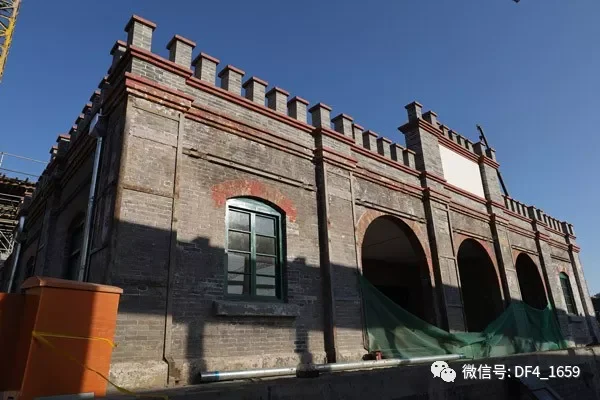
The renovated old station building reveals the original brick color from a century ago
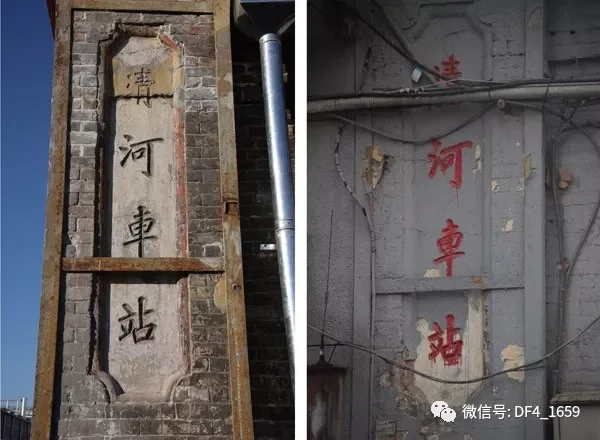
The construction crew cleaned the exterior wall paint, revealing the historical appearance of the rustic station plaque
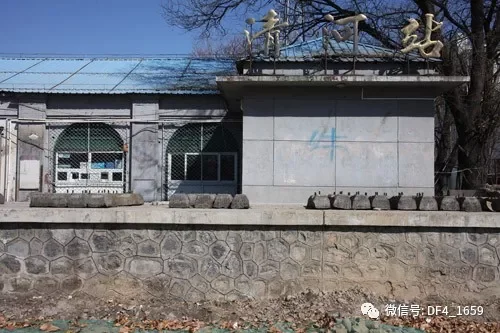
The old station building, having undergone alterations and expansions, had its original appearance almost entirely concealed (photographed by Cui Yifei on March 7, 2017)
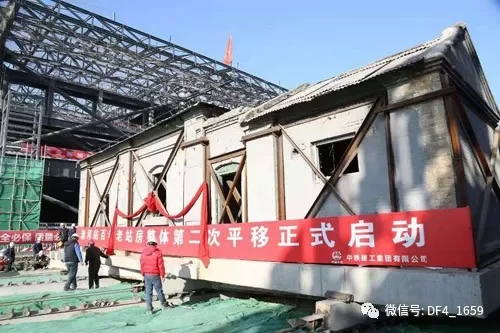
The photo shows the old station building during the relocation process
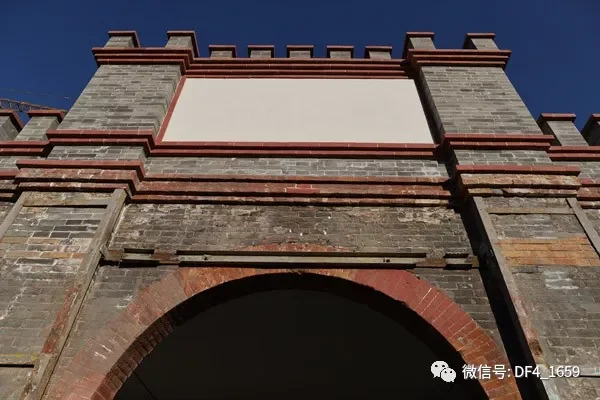
Photo: The text information inside the central station plaque has not yet been reshaped
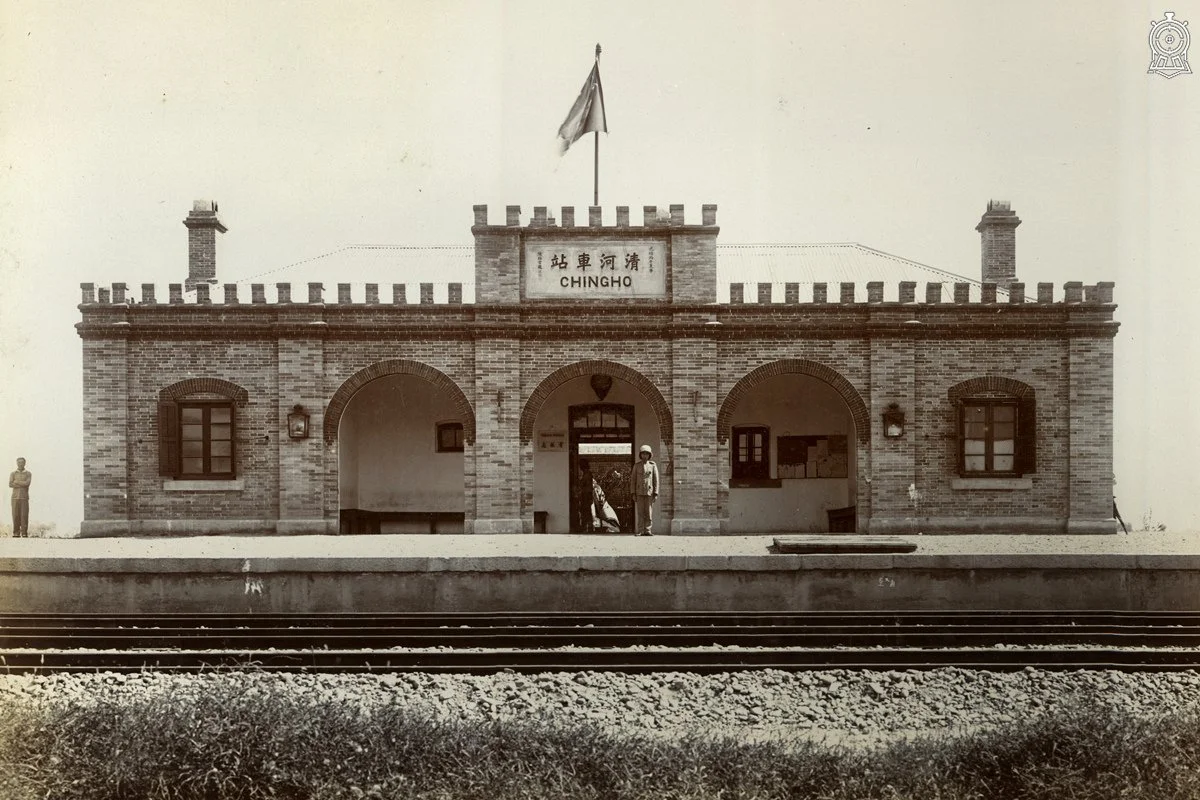
The Qinghe Station at the time of its completion, photographed by Mr. Tan Jintang
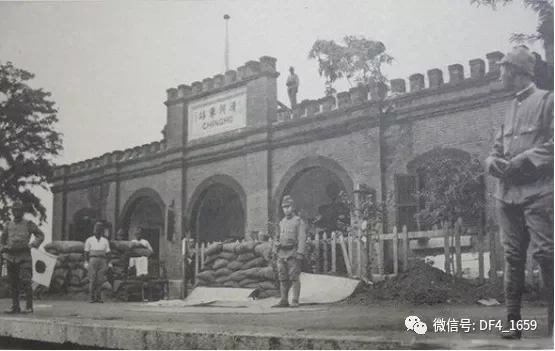
The Qinghe Station during the Japanese occupation period, author unknown
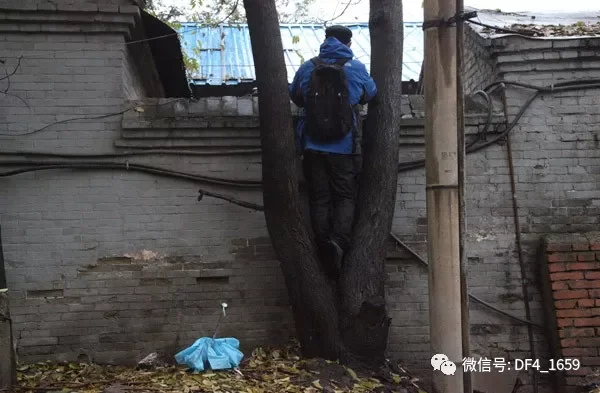
The photo shows Wang Wei conducting an inspection at Qinghe Station on November 19, 2015
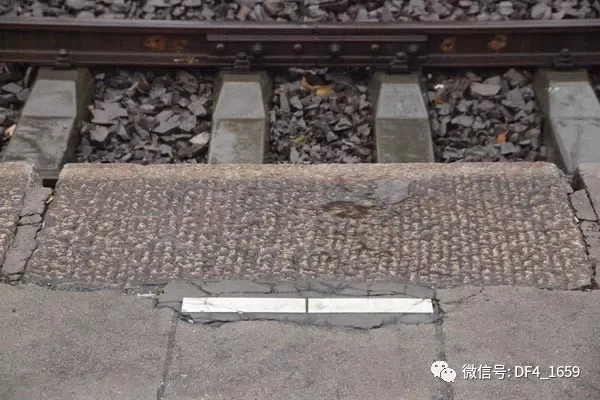
Platform stones with a century-old history from Qinghe Station
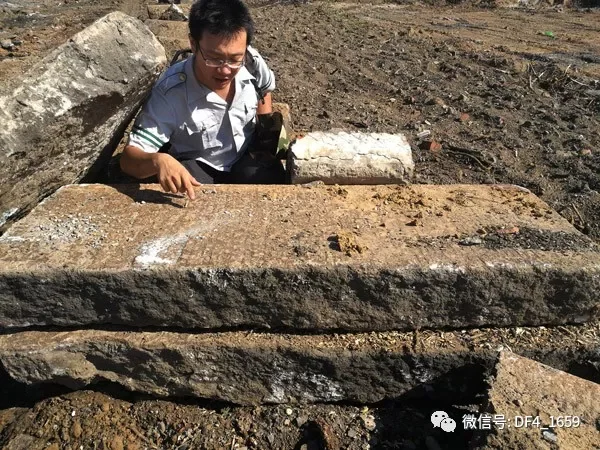
After being dismantled, the axe-chopped stones are now preserved in the China Railway Museum
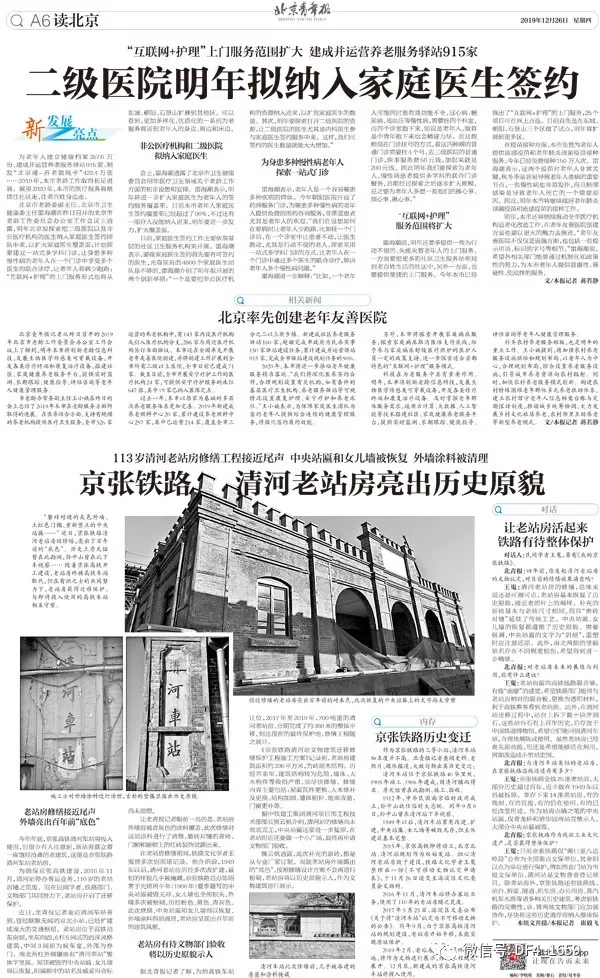
December 26, 2019, Beijing Youth Daily
December 26, 2019, Beijing Youth Daily
"Grind-brick, flush-jointed grey exterior walls, dark-red door lintels, the re-erected central station plaque..." Recently, after renovation, the old Qinghe station building on the Jingzhang Railway revealed its "base color" from a century ago. Historically, Jeme Tien Yow surveyed here, and Sun Yat-sen alighted here to inspect... With the commencement of the Beijing-Zhangjiakou High-Speed Railway construction, the old station building was eventually replaced by the high-speed railway station. However, through the joint efforts of insightful individuals, the old station building achieved relocation and preservation, standing together and looking across at the upcoming high-speed railway station.
Old Station Building Restored as It Was, Exterior Walls Reveal Century-Old "Base Color"
At the end of this year, the Qinghe Station of the Beijing-Zhangjiakou High-Speed Railway will be put into use, but few people notice that an old building weathered by vicissitudes stands beside the new station—this is the old station building of the Qinghe Station on the Jingzhang Railway.
To ensure the construction of the Beijing-Zhangjiakou High-Speed Railway, passenger transport business at Qinghe Station was suspended in November 2016, and the 110-year-old station building was subsequently abandoned. Through the joint efforts of folk scholars, railway departments, and cultural relics departments, the old station building initiated relocation and preservation.
Recently, Beijing Youth Daily reporters visited Qinghe Station and saw that the once obscure little station in northern Beijing had been expanded into a massive transportation hub. The old station building is located on the southeast side of the high-speed railway station, facing east to west. It is a Western-style building with 6 columns and 5 bays, the middle 3 bays originally serving as the waiting room, with arched doors on the exterior. The outer sides of the north and south columns are embedded with vertical plaques bearing the traditional Chinese characters "Qinghe Station" (清河車站). The destroyed central station plaque on the roof and the parapet were restored, but the station name and Wade-Giles romanization within the plaque have not yet been reshaped. What caught the reporters' eyes was that the exterior walls of the old station building were once covered with blue-grey paint; this renovation cleaned off this layer of paint, revealing the grind-brick flush-jointed grey bricks and red-brick decorations on the door and window lintels.
During the renovation of the old station building, railway culture scholar Wang Wei visited the site multiple times to document it. He introduced that after 1949, the old Qinghe station building underwent multiple alterations and expansions, and its initial appearance was almost concealed. The central station plaque inscribed by Chen Zhaochang, Director-General of the Jingzhang Railway, in the summer of the Bingwu year of the Guangxu reign (1906), was destroyed and lost, and the parapets were also completely damaged. The exterior walls were painted multiple times, passing through pink, yellow, and blue-grey. In this renovation, the central station plaque and parapets were restored, and the exterior wall paint was cleaned off, allowing the old station building to present its architectural style from a century ago.
Old Station Building Awaiting Acceptance by Cultural Relics Departments, to Be Presented in Original Historical Appearance
According to Beijing Youth Daily reporters, to make way for the high-speed railway station, from 2017 to 2019, the 700-tonne old Qinghe station building completed an overall horizontal translation of about 360 meters in phases, arriving at its current final preservation site, where renovation work commenced accordingly.
The Construction Plan for the Relocation, Renovation and Protection Project of Cultural Relics Buildings at Qinghe Station on the Jingzhang Railway records that the building area of the old station building is about 336 square meters, structured as brick-concrete and wood. Having endured more than a century, the building structure was relatively dangerous, with severe damage to walls and large timber components, requiring urgent renovation. The main renovation contents included: replacing roof tiles, repairing and reinforcing large timber components, structural reinforcement, wall tucking and patching, ground remodeling, and replacing doors and windows.
According to Xiong Yunfan, head of the engineering technology department of the China Railway Construction Engineering Group Qinghe Project Department, the renovation of Qinghe Station has not yet been completely finished. The central station plaque needs further restoration, a small square will be built near the old station, and finally an application will be made for acceptance by the cultural relics departments.
Xiong Yunfan disclosed that the new bricks replenished this time were all custom-ordered from professional manufacturers. As for the "base color" exposed on the exterior walls of the old station building, according to the renovation design plan, no more painting will be applied, and the old station building will be presented in its original historical appearance, displayed as a cultural relic building.
Sun Yat-sen Once Alighted at Qinghe Station; Folk Scholars Initiated Protection
As a third-class minor station on the Jingzhang Railway, Qinghe Station was not widely known. Beijing Youth Daily reporters consulted historical materials, old photographs, and media reports to roughly outline its historical evolution:
1905–1906: Qinghe Station was located at the 40th li marker of the Jingzhang Railway, with construction starting in 1905 and completion in 1906, named after Qinghe Town. Jeme Tien Yow once surveyed, constructed, and inspected here.
September 8, 1912: With the establishment of the Nanjing Provisional Government of the Republic of China, Sun Yat-sen assumed office as Provisional President. On September 8 of the same year, Sun Yat-sen alighted at Qinghe Station to inspect.
Japanese Occupation Period: Qinghe Station was controlled by the Japanese military and heavily guarded.
Post-1949: Qinghe Station underwent successive alterations and expansions; the central station plaque and parapets were destroyed and lost, but the main structure remained basically intact.
2015: With the Beijing-Zhangjiakou High-Speed Railway about to commence construction, Beijing North Station and Qinghe Station were planned as dual starting terminals. Worried that the old Qinghe station building would be destroyed in the construction, railway culture scholar Wang Wei compiled an Application for Immovable Cultural Property Recognition, submitting it to the cultural relics section of the Haidian District Culture Commission on November 26.
November 2016: Qinghe Station suspended passenger transport business, and the 110-year-old station building was subsequently abandoned.
May 25, 2017: The Haidian District Culture Commission issued the Announcement on Recognizing "Qinghe Station" as an Immovable Cultural Property. In September of the same year, due to the planning and construction of the Beijing-Zhangjiakou High-Speed Railway Qinghe Station, the old station building began relocation, failing to achieve in-situ preservation.
February 2019: The old station building was translated to its final preservation site to be displayed as a cultural relic, and renovation work commenced accordingly. At the end of December, the newly constructed Beijing-Zhangjiakou High-Speed Railway Qinghe Station was put into use.
Let the Old Station Building Come Alive: Comprehensive Protection Needed for the Jingzhang Railway
Through more than a decade of field investigations, Wang Wei authored My Jingzhang Railway, a book equivalent to an "investigation report on Jingzhang Railway cultural relics." Regarding the buildings along the route, Wang Wei knows them inside and out.
Beijing Youth Daily: Four years ago, you initiated the cultural relics recognition for the old Qinghe station building. Are you satisfied with the current renovation results?
Wang Wei: Overall, the renovation of the old station building has commendable aspects. The old station building has basically restored its historical appearance, approaching how it looked in old photographs. The replenished new bricks are basically the same size as the old bricks, and the "grind-brick, flush-jointed" technique continues traditional craftsmanship. The restoration of the central station plaque and parapets both followed the historical appearance. It should be emphasized that the text of the central station plaque is "intaglio" (yin carve), and reshaping should pay attention to restoration. In addition, the station names on the north and south vertical plaques have suffered varying degrees of damage, and we hope they can be further refined.
Beijing Youth Daily: What suggestions do you have for the future exhibition, display, and utilization of the old station building?
Wang Wei: The old station building faces the sound barrier of the high-speed railway line, giving somewhat of a "facing the wall" feeling. I hope the railway departments can replace the sound barrier panels opposite the old station building with transparent materials, making it easier for high-speed rail passengers to see the old station building. In addition, during the relocation process of Qinghe Station, dozens of axe-chopped stones were dismantled from the platform. These platform stones are over a century old and were later stored in the Chinese Railway Museum. I hope they can return to Qinghe Station for reasonable display or utilization. From relocation to renovation, the railway departments and cultural relics departments have invested massive manpower and financial resources. I hope in the future it will not be locked up tightly and merely become a historical landscape. Although the old station building has lost its original function, it is still hoped that it can be revitalized and utilized, such as being converted into a small station history museum.
Beijing Youth Daily: How many old station buildings similar to Qinghe Station still survive along the Jingzhang Railway route?
Wang Wei: Among the 25 old station buildings along the entire Jingzhang Railway line, most have histories exceeding a century, and nearly half were dismantled after 1949. Of the 14 surviving old station buildings, some are damaged, some are abandoned, some are still in use, and some have changed their use. As the finishing touch of the station buildings, the central station plaques are completely displayed only at Qinglongqiao and Qinghuayuan stations, while most central station plaques were destroyed and lost.
Beijing Youth Daily: Has the Jingzhang Railway, as a linear industrial cultural heritage, received overall protection?
Wang Wei: The Jingzhang Railway is the first trunk railway independently constructed by Chinese people and is an important industrial cultural heritage. Currently, only the "Nankou to Badaling Section" has been announced as a Major Historical and Cultural Site Protected at the National Level, while the rest are protected on a point-by-point basis, such as Xizhimen Station being a municipal-level cultural relics protection unit and Qinghe Station being a cultural relics census registration item. Apart from old station buildings, the Jingzhang Railway also possesses many related historical buildings such as railway lines, platforms, bridges, tunnels, engine houses, office buildings, and steam locomotive water towers. Considering the integrity of the railway, cultural relics departments in both Beijing and Hebei should strengthen cooperation to incorporate these historical remnants into overall protection as soon as possible.
Text and photographs / Beijing Youth Daily Reporter Cui Yifei
Editor / Cui Yifei
