
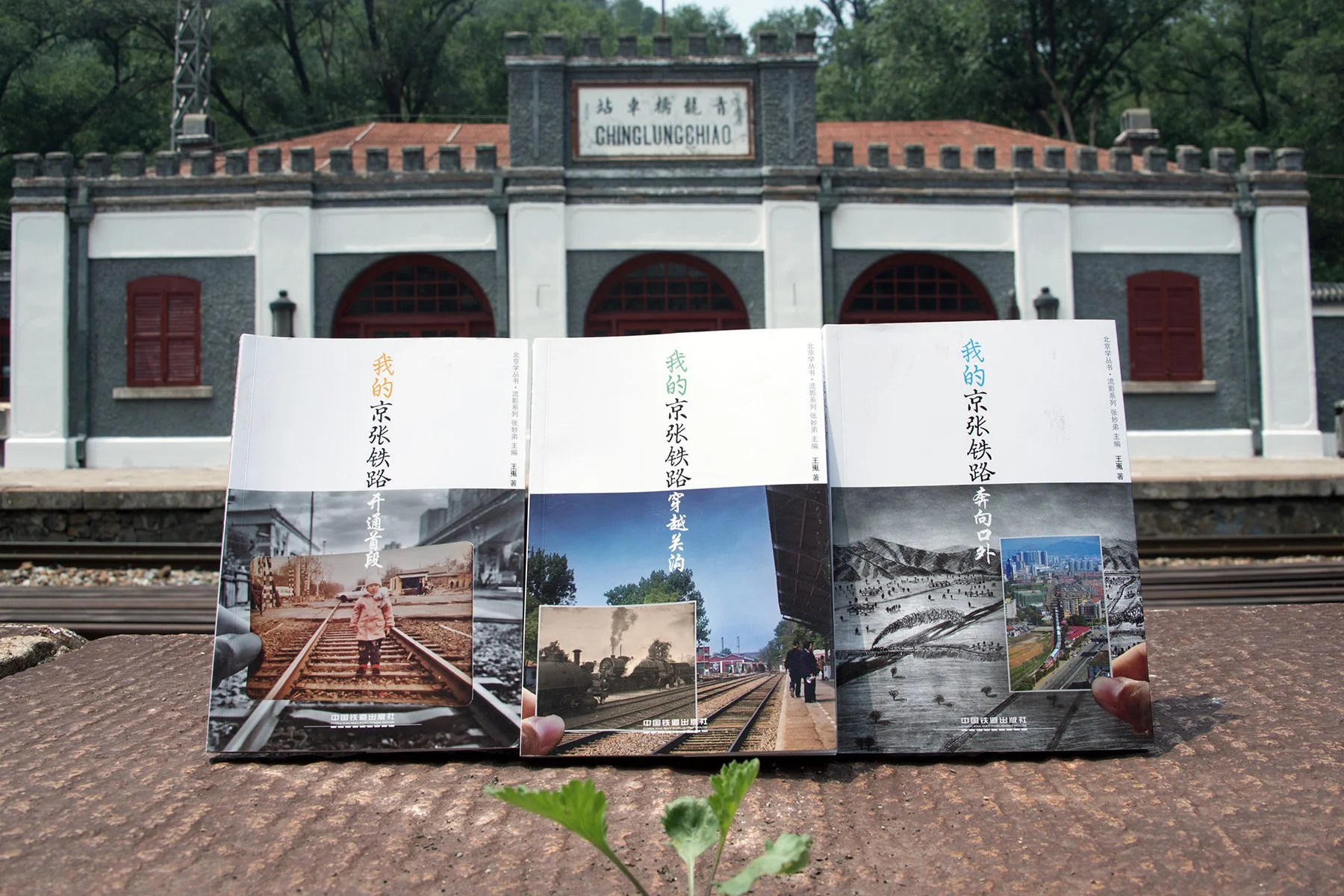
Wang Wei spent more than ten years writing "My Beijing-Zhangjiakou Railway", conducting a comprehensive cultural relic survey along the entire Beijing-Zhangjiakou Railway.
(Archival photo provided by: Wang Wei)
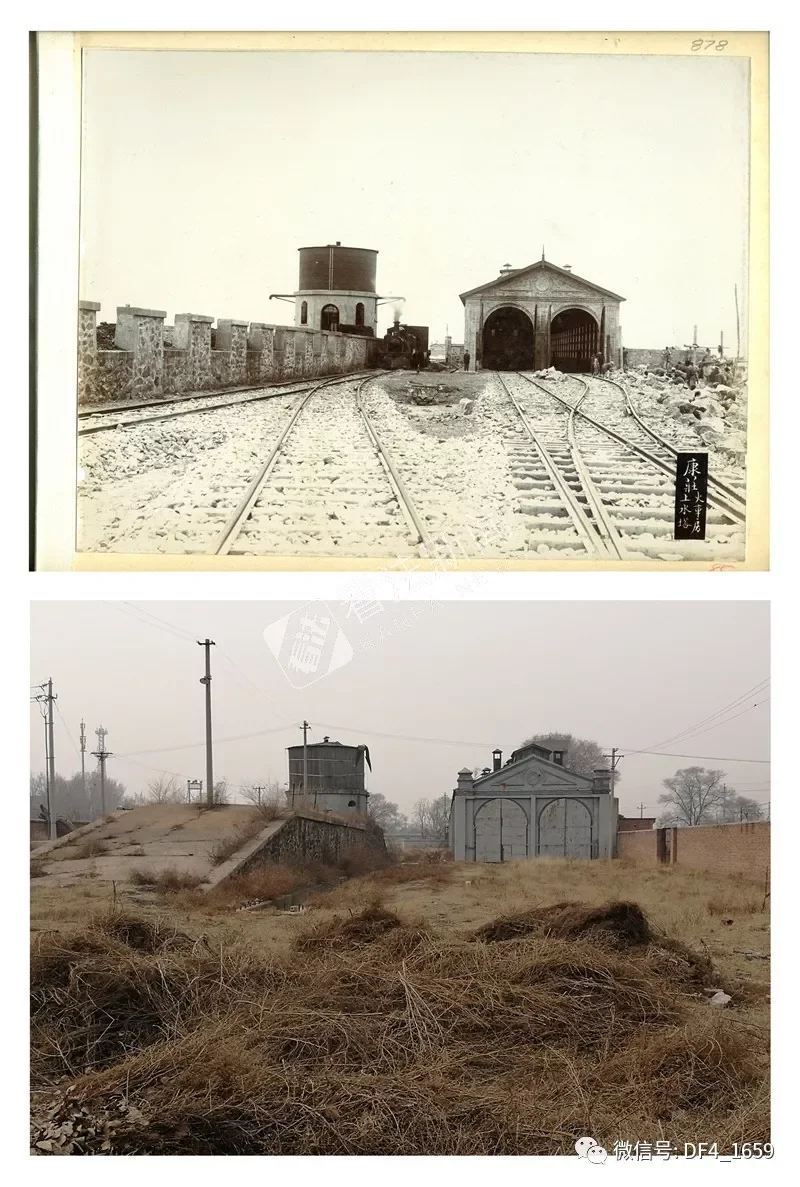
The century-old Kangzhuang locomotive shed and its water tower have not yet been officially recognized as cultural relics.
(Photo / Reporter Cui Yifei; Archival photo provided by: Wang Wei)
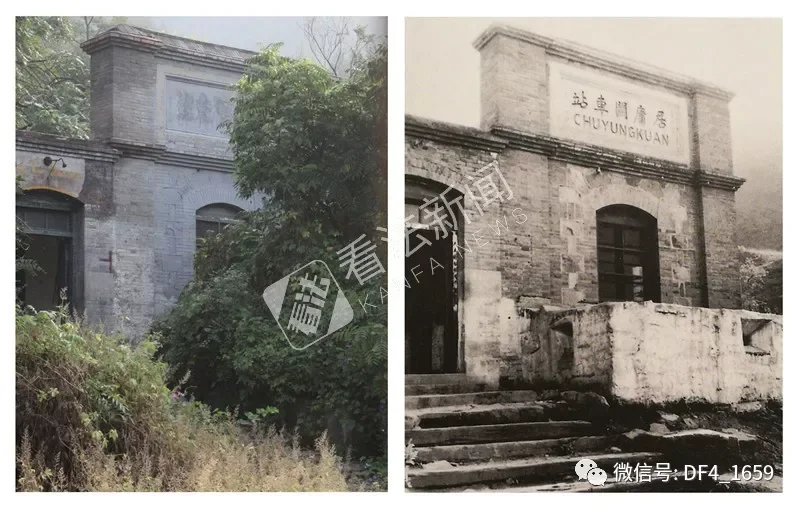
Juyongguan Station located in the Guanguan section has not yet been officially recognized as cultural relics.
(Photo / Cui Yifei; Archival photo provided by: Wang Wei)
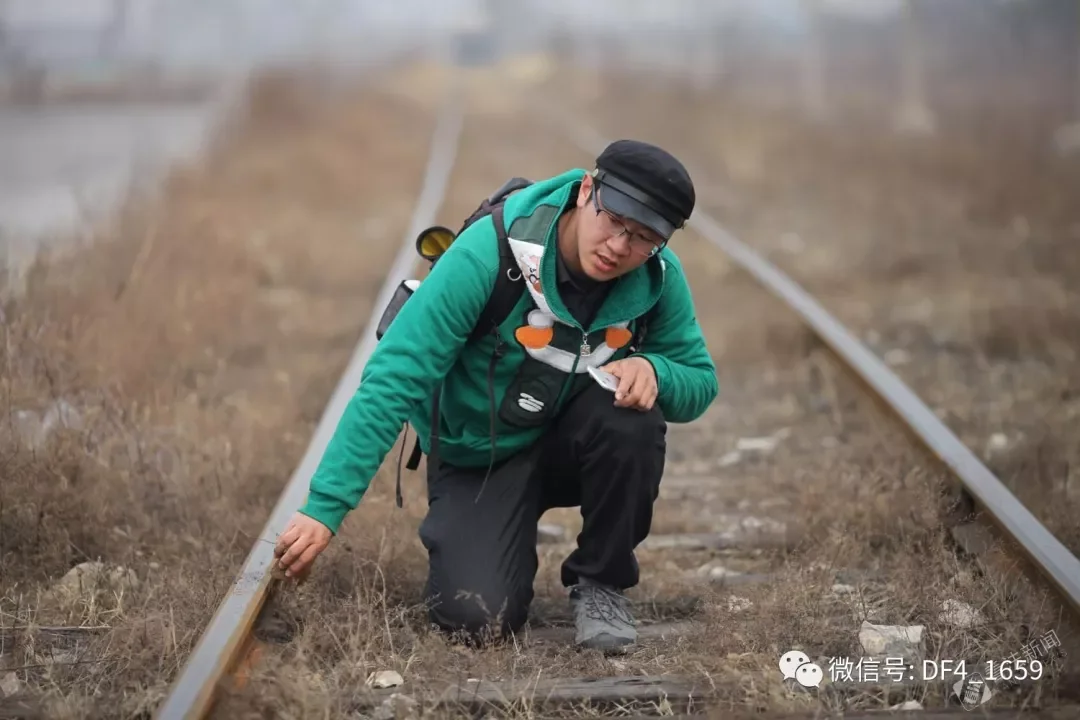
Pictured: Due to lacking cultural relic status, the Beishahe Bridge of the Beijing-Zhangjiakou Railway was dismantled in 2017.
(Photo / Reporter Cui Yifei)
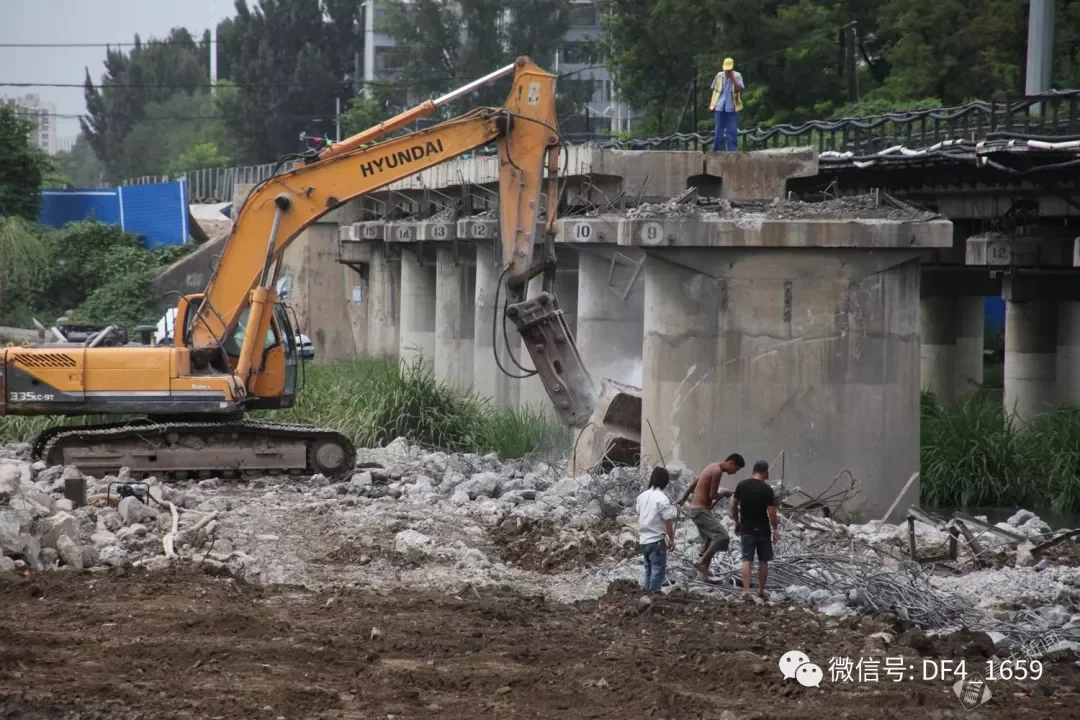
Photo: Due to lacking cultural relic status, the Beishahe Bridge of the Beijing-Zhangjiakou Railway was dismantled in 2017.
(Photo / Reporter Cui Yifei)
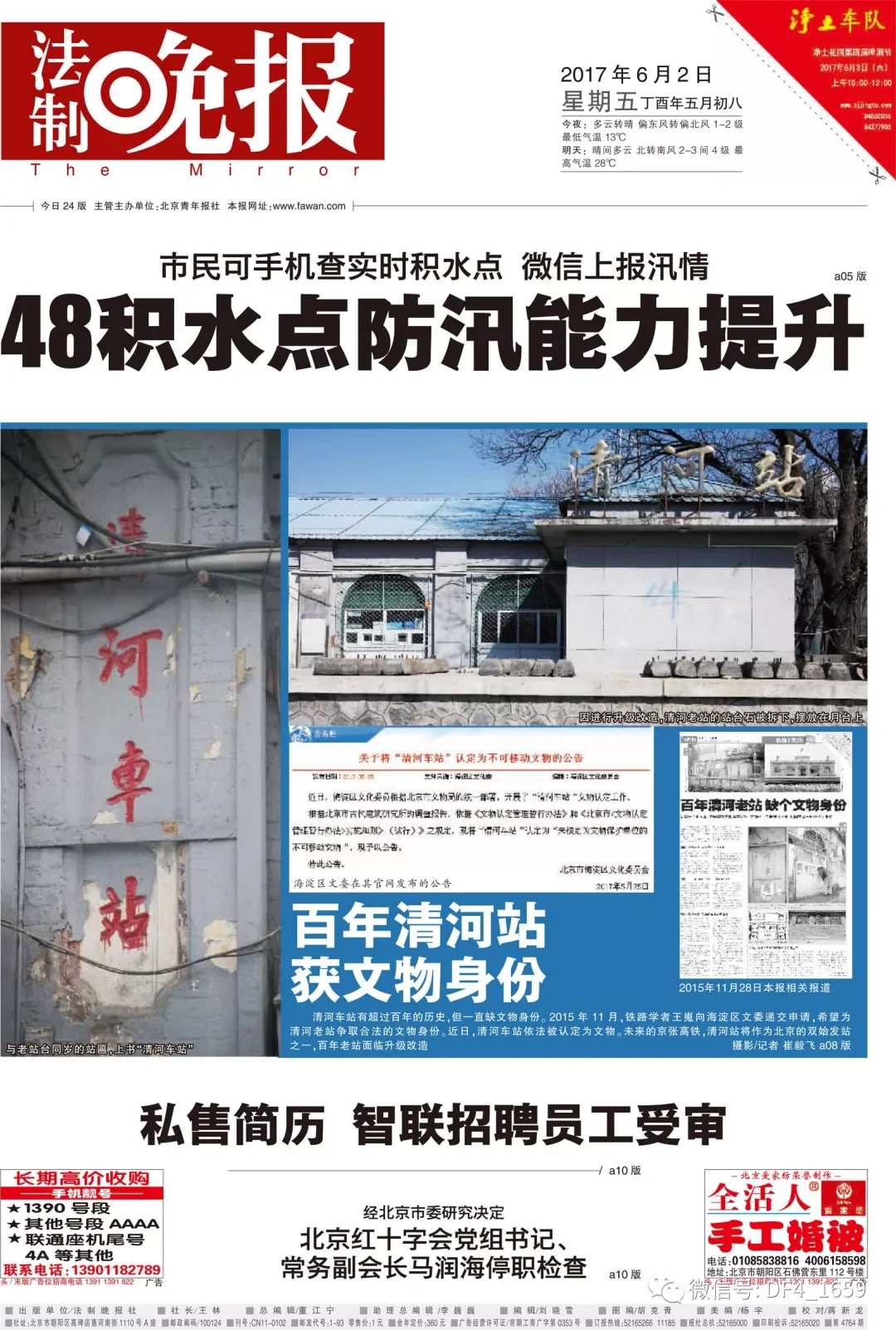
Wang Wei submitted an application for the recognition of immovable cultural relics to the Haidian District Culture Commission, fighting for legal cultural relic status for Qinghe Station. The "Legal Evening News" previously conducted full-process reporting.
April 18, 2018, Legal Evening News
Legal Evening News / Law Vision News (Reporter Cui Yifei) — A cultural relic census is a relatively comprehensive survey of local cultural relic resources organized by cultural relic administrative authorities. Among the three completed national cultural relic censuses, investigations have never been carried out specifically targeting the entire line of the Beijing-Zhangjiakou Railway. Today is April 18, the International Day for Monuments and Sites. Post-90s railway cultural scholar Wang Wei calls on cultural relic departments to seize the time to carry out this foundational work next year, which marks the 110th anniversary of the opening of the Beijing-Zhangjiakou Railway, and to prepare well for the protection, rescue, and utilization of this linear cultural heritage known as the Beijing-Zhangjiakou Railway.
Post-90s Scholar Spends Over a Decade of Accumulation Writing "My Beijing-Zhangjiakou Railway"
In 1983, the 22nd General Conference of UNESCO decided that April 18 of each year would be "International Monuments and Sites Day." The International Council on Monuments and Sites (ICOMOS) determines a theme for activities each year and calls on member states worldwide to carry out related activities. In 2018, to inspire more young people to participate in heritage protection undertakings, the theme for International Monuments and Sites Day was determined to be "Heritage for Generations." Cities such as Beijing, Shanghai, and Wuhan held related activities.
Born in 1990, Wang Wei grew up living alongside the Beijing-Zhangjiakou Railway, and from the age of 12, he began photographing and documenting the Beijing-Zhangjiakou Railway. He was deeply captivated by the historical buildings along the route, such as station buildings, garages, bridges, tunnels, and more.
On a chance encounter, Wang Wei saw a photo album commissioned by Zhan Tianyou, the chief engineer of the Beijing-Zhangjiakou Railway, more than a hundred years ago, shot by a photographer. After careful identification, he discovered that many of the angles of the photos he himself had taken coincided with them. But how many of the buildings in these old photographs still survive today? The Xizhimen Station water tower was dismantled, the nearly century-old old locomotive shed in Zhangjiyakou was dismantled, the Mentougou station building of the Jingmen Branch Line of the Beijing-Zhangjiakou Railway was dismantled... Wang Wei personally witnessed more than ten old buildings being dismantled, which further spurred him to accelerate his steps in recording these old structures.
In June 2017, Wang Wei's new book My Beijing-Zhangjiakou Railway was published. With material accumulation lasting over a decade and compilation taking more than three years, gathering over 2,000 pictures, field surveys, on-site measurements, hand-drawn restoration diagrams, and oral history investigations—it records the historical changes of the Beijing-Zhangjiakou Railway in an all-round and multi-angle manner. In the eyes of Jin Wangzhi, former deputy curator of the China Railway Museum, his book amounts to a comprehensive cultural relic survey report for the entire Beijing-Zhangjiakou Railway line.
The Beijing-Zhangjiakou Railway Lacks Overall Protection; Many Historical Buildings Lack Cultural Relic Status
Wang Wei introduced that there is a rich variety of architectural remnants along the entire Beijing-Zhangjiakou Railway, not just old station buildings, but also platforms, locomotive sheds, coal platforms, water towers, water cranes, drainage trenches, float houses, freight warehouses, administrative offices, factories, bridges, tunnels, culverts, slope protections, and more; as well as operating equipment such as steel rails, switches, signals, and rolling stock. All of these are important components of the Beijing-Zhangjiakou Railway, but those granted official cultural relic recognition are mainly concentrated in some station buildings, while most auxiliary building facilities have not yet obtained official cultural relic recognition.
The "Float House" located in the Nankou Station area was built at the beginning of the opening of the Beijing-Zhangjiakou Railway and was used back then to park special trains. Although the old building has survived, it does not have officially recognized cultural relic status.
The Qinghe Station of the Beijing-Zhangjiakou Railway will in the future be one of the dual starting stations of the Beijing-Zhangjiakou High-Speed Railway. Wang Wei submitted a cultural relic recognition application to the Haidian District Culture Commission, allowing the old station building to be preserved.
Reporters visiting found that the protection levels of Beijing-Zhangjiakou Railway buildings that have already obtained official cultural relic recognition vary unevenly, covering all levels of cultural relics ranging from unrated census registration items, district-level cultural relic protection units, municipal-level cultural relic protection units, to national key cultural relic protection units. Wang Wei believes that this reflects a lack of integrity in cultural relic recognition and a lack of the concept of linear cultural heritage.
The "Nankou Section to Badaling Section (Guanguan Section)" has been recognized as a National Key Cultural Relic Protection Unit, which is the section with the highest cultural relic level along the Beijing-Zhangjiakou Railway. Reporters checked the website of the Beijing Municipal Cultural Heritage Bureau and found that this section includes: the Nankou Railway Station building, modern and contemporary architectural remnants of the Nankou Locomotive and Rolling Stock Works, the "Human-Foot" shaped railway, Qinglongqiao Station building, staff dormitories and supervisory office, and Zhan Tianyou's tomb and bronze statue. However, according to Wang Wei's investigation, there are still many equally important historical remnants such as old station buildings, old bridges, and old tunnels in the Guanguan section that have failed to be registered and protected. For example, the No. 23 Bridge of Chou'nikeng, which was washed away by floods in 1939, left behind two bridge abutments from 1909 that were buried in 2017 due to river channel construction.
In 2017, two century-old Beijing-Zhangjiakou Railway bridges located in Changping District—the Nanshahe Bridge and the Beishahe Bridge—were successively dismantled because they lacked cultural relic status. Wang Wei said that there are still many historical buildings without cultural relic status that are in precarious danger.
Wang Wei appeals that 2019 marks the 110th anniversary of the opening of the Beijing-Zhangjiakou Railway, and cultural relic departments should utilize this historical node to coordinate multiple departments to establish a special research group, carry out a comprehensive cultural relic census along the entire Beijing-Zhangjiakou Railway, and properly inspect the family assets. For existing building facilities, it is necessary to determine their geographical locations, assess preservation conditions, verify initial construction eras, clarify architectural functions, carry out surveying, mapping, and photographic recording. For those already possessing official cultural relic recognition status, protection levels must be determined, and protection scopes and construction control zones delineated. For architectural remnants without cultural relic status, cultural relic recognition should be carried out as soon as possible, and public signage posted. For railway lines and buildings that have already disappeared, the time and cause of their disappearance must be investigated clearly, and the orientation of the original site determined. Every single one of the above cultural relics must be filled out with a standardized cultural relic census registration form, classified by station buildings, bridges, tunnels, water towers, locomotive sheds, office rooms, old steel rails, etc., and ultimately compiled into volumes. At the same time, a cultural relic map of the Beijing-Zhangjiakou Railway should be drawn.
Expert Viewpoints: Carrying Out a Comprehensive Cultural Relic Census Along the Entire Line As Early As Possible
Jin Wangzhi, former deputy curator of the China Railway Museum, told reporters that as a private scholar, Wang Wei has conducted field surveys at his own expense for over a decade, and he has pushed survey work to the extreme. However, promoting the overall protection of the Beijing-Zhangjiakou Railway certainly cannot be separated from the strength of government departments.
Jin Wangzhi said that China has conducted three nationwide cultural relic censuses. Although some buildings of the Beijing-Zhangjiakou Railway have obtained cultural relic recognition, they are still treated as isolated points without forming the concept of linear cultural heritage, showing that understanding is insufficient. A comprehensive cultural relic census along the entire line is foundational work for protecting the Beijing-Zhangjiakou Railway; the earlier the census is carried out, the more cultural relics can be rescued.
Liu Weidong, a member of the Beijing Cultural Relics Appraisal Committee, introduced to reporters that carrying out a comprehensive cultural relic census of the entire Beijing-Zhangjiakou Railway is extremely necessary, and its significance is not limited to Beijing and Hebei alone.
Liu Weidong believes that protecting cultural relics is not just the business of cultural relic departments; the management and operating units of the Beijing-Zhangjiakou Railway also have the responsibility and obligation. Moreover, single-item investigations are not comprehensive enough, so the idea proposed by Wang Wei of forming a comprehensive team of experts from cultural relic departments and railway departments is a good idea. Just like a doctor's "consultation," experts and scholars from different disciplinary fields are needed, but the premise is that there must be a leading unit to gather forces from all sides.
