
Century-Old Rails at Railway Museum Randomly Piled Up, Heavy Rust Erodes Inscriptions
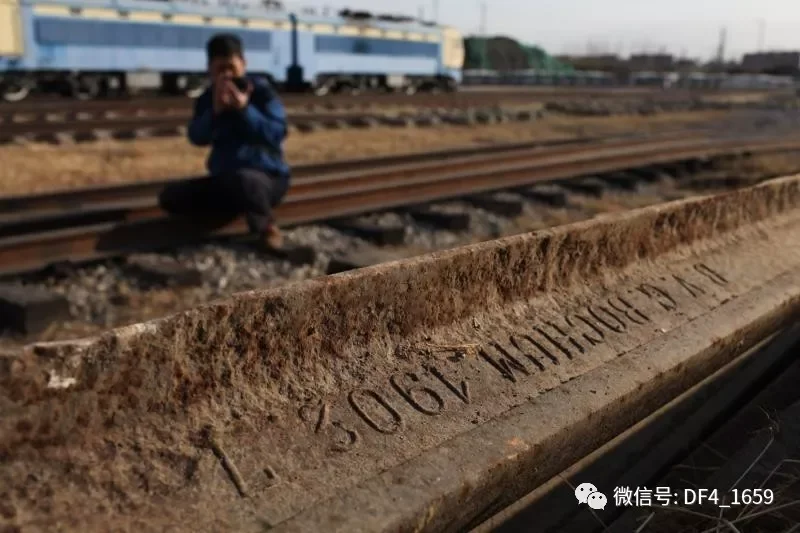
A tilted steel rail with the inscription "B.V.G. BOCHUM. 1902.7"
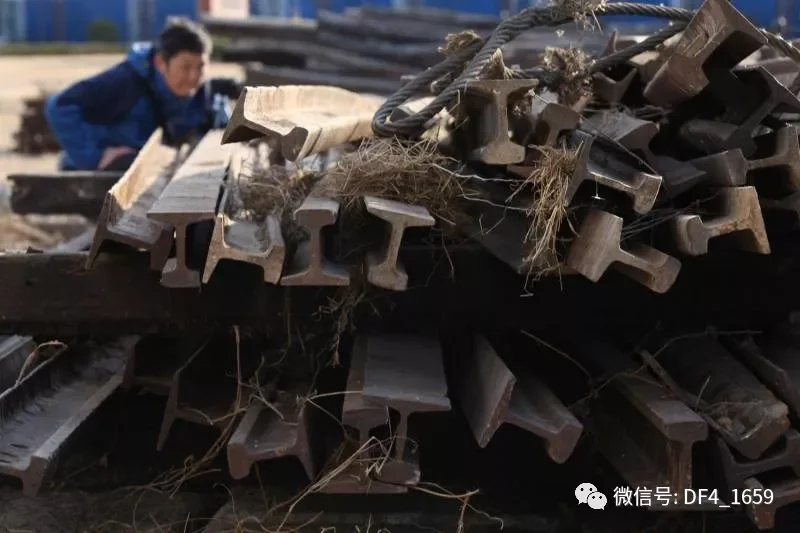
Stacked artifact steel rails
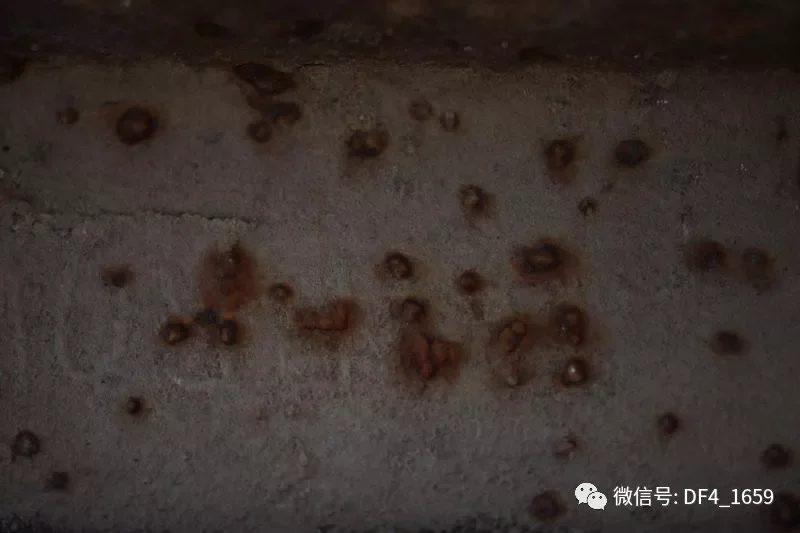
Rust formed on the inscriptions of artifact steel rails
January 27, 2019, Beijing Youth Daily
Recently, a Beijing Youth Daily reporter visited and found that more than 50 old, weathered rails are piled together in the yard of the China Railway Museum's Dongjiao Branch. Many of these rails have histories exceeding a century, but improper stacking has caused severe rusting on several of them. Some visitors believe that old rails constitute an important component of railway cultural heritage, and sloppy management leads to the diminished lifespan of these artifacts—a situation that should not happen in a national-level professional museum.
Old Rails Piled Outdoors, Inscriptions Facing Upward Violates Conservation Taboos The China Railway Museum (referred to as the Railway Museum) Dongjiao Branch is located near Jiuxianqiao in Beijing's Chaoyang District, covering an area of over 230 mu (approx. 15 hectares). Recently, observant visitors reported that more than 50 old rails were stacked in the museum's open-air yard without any covering or protection, resulting in severe rusting.
The Beijing Youth Daily reporter saw at the scene that these old rails are about 10 meters long. Instead of being laid flat and neatly on the ground, they are stacked horizontally and upside down, causing metal parts to collide, squeeze, and rub against each other. Rails on the top layer show the most obvious rusting; their originally smooth and flat surfaces have become mottled and rough due to rust, with fresh rust spots visible in some areas.
Railway enthusiast Mr. Han told the Beijing Youth Daily reporter that most of these old rails originated from Guang'anmen Railway Station and Fengtai Railway Station. After being collected by the Railway Museum, they had been stored outdoors for nearly ten years. Because they are far from the main exhibition area, they easily go unnoticed. He believes that even for open-air displays, the old rails could easily be re-laid rather than piled up like scrap metal.
Mr. Han specifically pointed out that many old rails have raised inscriptions on both sides, which contain the most critical historical information on the rails. However, due to sloppy stacking, many inscriptions face directly upward, exposed to the elements of sun and rain. Years of acid rain erosion and scorching sunlight have formed a hard layer of rust, causing extremely severe damage to the inscriptions. Such a stacking method violates the major taboo of preserving old rails.
The Beijing Youth Daily reporter spotted the inscription "B.V.G. BOCHUM. 1902.7" on a tilted rail. According to reports, this rail was manufactured in July 1902 by the Bochum Mining and Steel Company in Germany, making it 116 years old. Because this rail was on the top layer and one side of its inscription faced upward, the surface was already covered in rust. The Beijing Youth Daily reporter noted that with normal stacking, corrosion and rust would find it difficult to erode the inscriptions. The incorrect stacking angle caused many inscriptions to be covered by rust.
Properly Protecting Collection Items Is an Important Responsibility of Museums Rails are the main components of railway tracks. Their function is to guide the wheels of locomotives and rolling stock forward while bearing the enormous pressure of the wheels. The logo of the China Railway Corporation even incorporates a rail cross-section graphic, illustrating the important status of rails within the railway system. The old rails collected by the Railway Museum were produced in countries such as China, Germany, Belgium, Britain, the United States, Russia, Japan, and Poland, and many boast a history of a hundred years.
Reasonably speaking, finding their way into a museum after retirement should be a fine destination. According to the Railway Museum's official website, the China Railway Museum is a professional science and technology museum within China's railway system, primarily responsible for the protection of railway industry cultural heritage, spreading railway science and technology knowledge, promoting railway development achievements, and handling the collection, safekeeping, curation, and exhibition of historical railway artifacts and scientific research results.
The Beijing Youth Daily reporter noted that the "Railway Cultural Relics Protection and Management Work Manual" compiled and printed by the China Railway Museum in 2015 clearly stipulates: Due to factors such as the advanced age, material aging, and historical collection and storage conditions of museum collections—especially cultural relic collections—they suffer from varying degrees of corrosion and defects and are easily damaged. Effectively protecting cultural relics and other collection items is an important responsibility and fundamental mission of a museum.
Therefore, museum collections, especially cultural relic collections, must be cared for meticulously, and targeted preventive protection measures must be adopted based on the preciousness, different grades, and different textures of the collections.
Response: Immediate Rectification; Old Rails Will Be Moved Indoors for Preservation Regarding this matter, the Beijing Youth Daily reporter called the Cultural Relics Department of the China Railway Museum yesterday. An official explained that this batch of rails at the Dongjiao Branch was collected by the museum from Guang'anmen Railway Station back in the day. If not collected by the museum, they certainly would have been treated as scrap. However, each rail is over 10 meters long, and there are currently no suitable warehouses to house them, so they can only be stored outdoors. Not long ago, they even laid stone slabs, railroad ties, and other items underneath the rails. Regarding the issue of rails with "inscriptions facing upward," the staff member candidly admitted that oversights did indeed occur during the construction process without considering minor factors, and they would immediately carry out rectification.
This staff member also revealed that this year they plan to expand the warehouse at the Railway Museum Dongjiao Branch, and once the warehouse is completed, all these rails will be moved inside for preservation.
Perspective: Old Rails Are Historical Material Evidence of China's Railways Wang Wei, a railway culture scholar and author of My Jingzhang Railway, has conducted extensive research on old rails. He explained that historically significant railways and stations generally tend to yield old rails, such as the Jingzhang Railway, Jingfeng Railway, Jinghan Railway, Jingmen Railway... many of which have histories exceeding a century.
Many of these retired old rails were reused. For example, the rain shelter columns built using scrap rails in the Guang'anmen Station freight yard were mostly manufactured over a hundred years ago by countries like Britain, France, Germany, and Belgium; the British rail (BV&CoLD-1891-I.C.R) found serving as a signpost at a crossing in Changping Railway Station is the oldest rail discovered by Wang Wei. There are many such examples, showing that these rails continue to play a residual role. However, whenever their locations are renovated or demolished, their fate is usually to become scrap iron and eventually melt into liquid steel. A small number of rails manage to be preserved by domestic museums, railway engineering sections, or private collectors.
In recent years, various rails over a hundred years old have been designated as third-class cultural relics. Their value lies not only in having served China's railway lines, but also in serving as historical witnesses to China's railways. The inscriptions on both sides of the rails record the manufacturing country, manufacturer, production year, and rail model. From these inscriptions, one can analyze valuable historical information such as the purpose for which engineers chose the particular rail at the time, railway line conditions, foreign trade, and service life.
Wang Wei believes that if old rails are still laid on active lines, they should be treated as living cultural relics to extend their service life as much as possible; old rails that have been collected and protected should be properly kept, and especially those "old rails with inscriptions facing upward" should have their protection measures promptly improved.
Text / Beijing Youth Daily Reporter Cui Yifei
Photography / Beijing Youth Daily Reporter Cui Yifei
Editor / Cui Yifei
