
Post-90s Railway Culture Scholar Visits 4 Districts in One Day, Submits Multiple Applications for Cultural Property Recognition
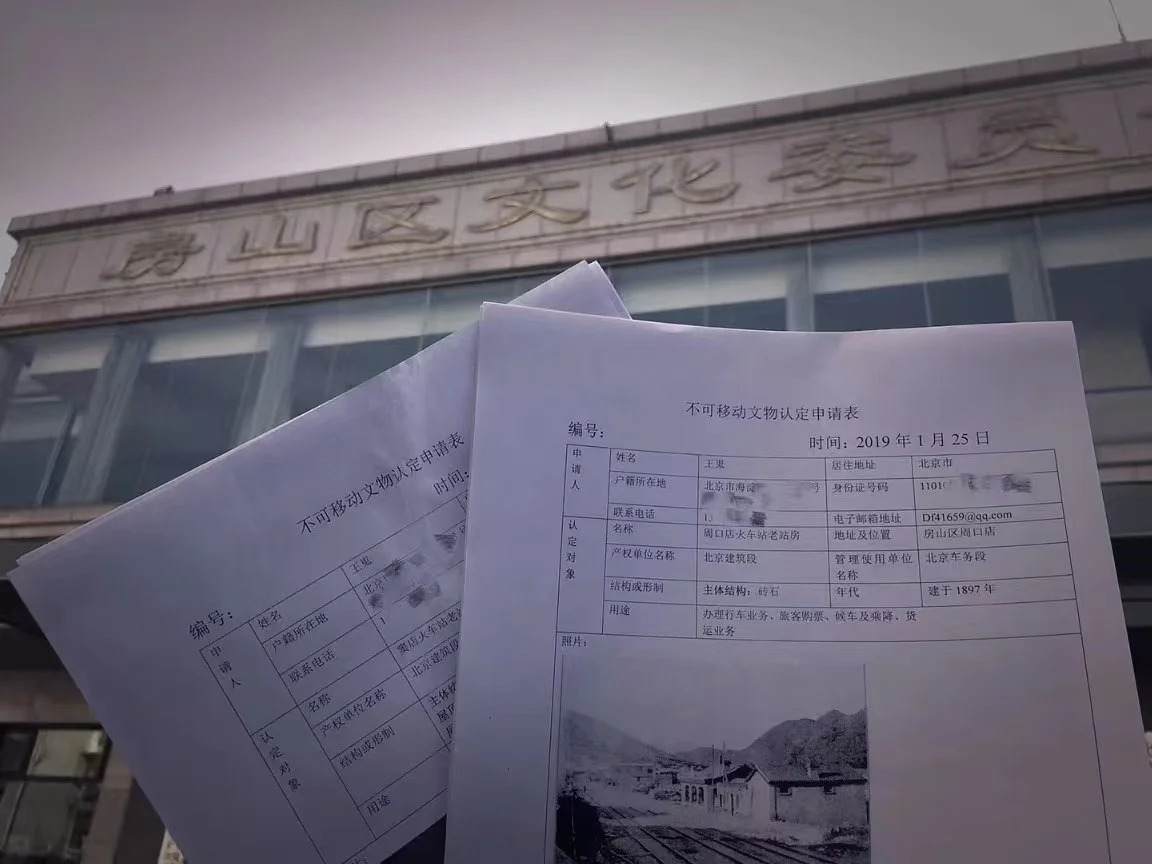
Wang Wei submitted the "Immovable Cultural Property Recognition Applications" regarding the architectural remnants of Zhoukoudian Station and the old station building of Doudian Station to the Fangshan District Culture Commission's Cultural Relics Section.
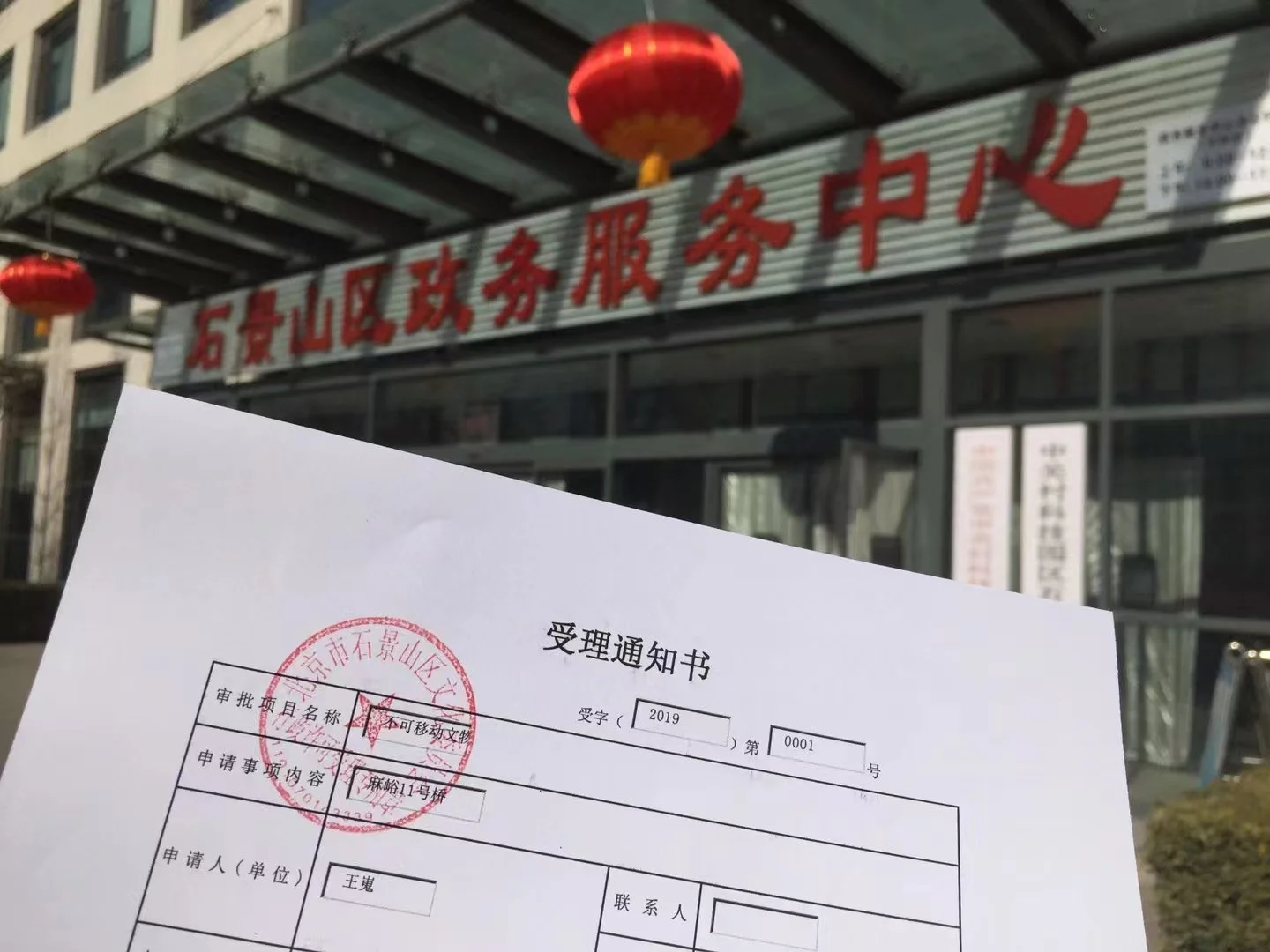
Wang Wei submitted the Application for Immovable Cultural Property Recognition regarding the old station building of Xihuangcun Station and the Mayu Railway Bridge to the Shijingshan District Culture Commission's Cultural Relics Section.
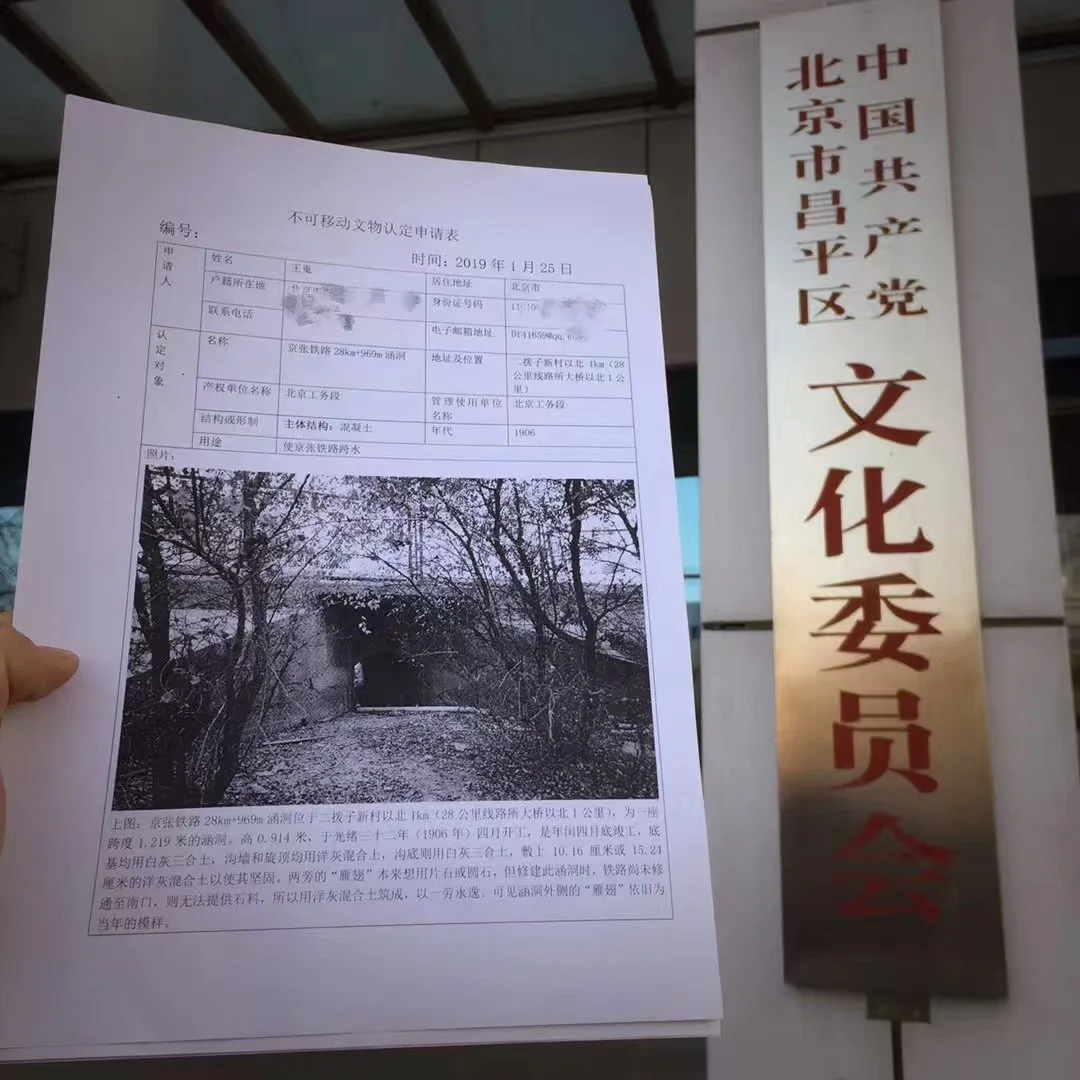
Wang Wei submitted the Application for Immovable Cultural Property Recognition regarding the Erbozi Culvert to the Changping District Culture Commission's Cultural Relics Section.
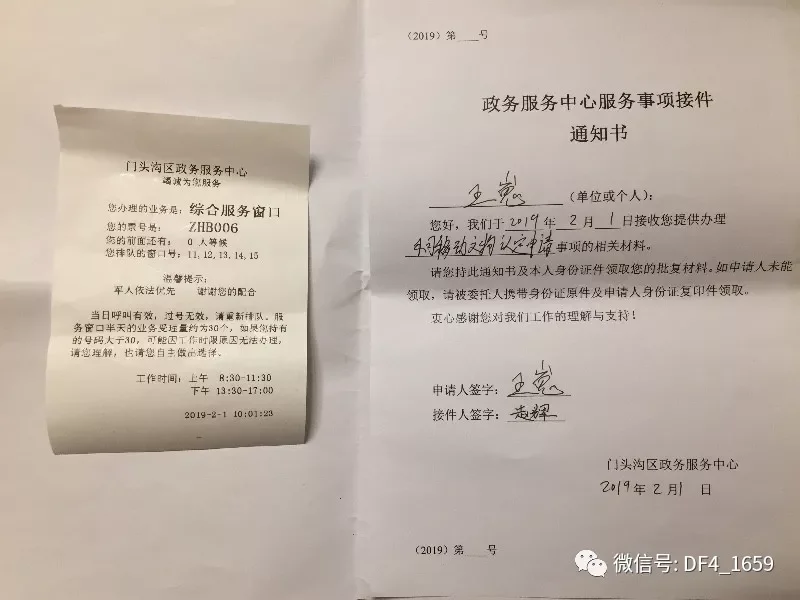
Wang Wei submitted the Application for Immovable Cultural Property Recognition regarding the remnants of the Menzhai Railway, Jiangjunling Railway (Jiangjunling Spur Line), and Tongtang Railway to the Mentougou District Culture Commission's Cultural Relics Section.
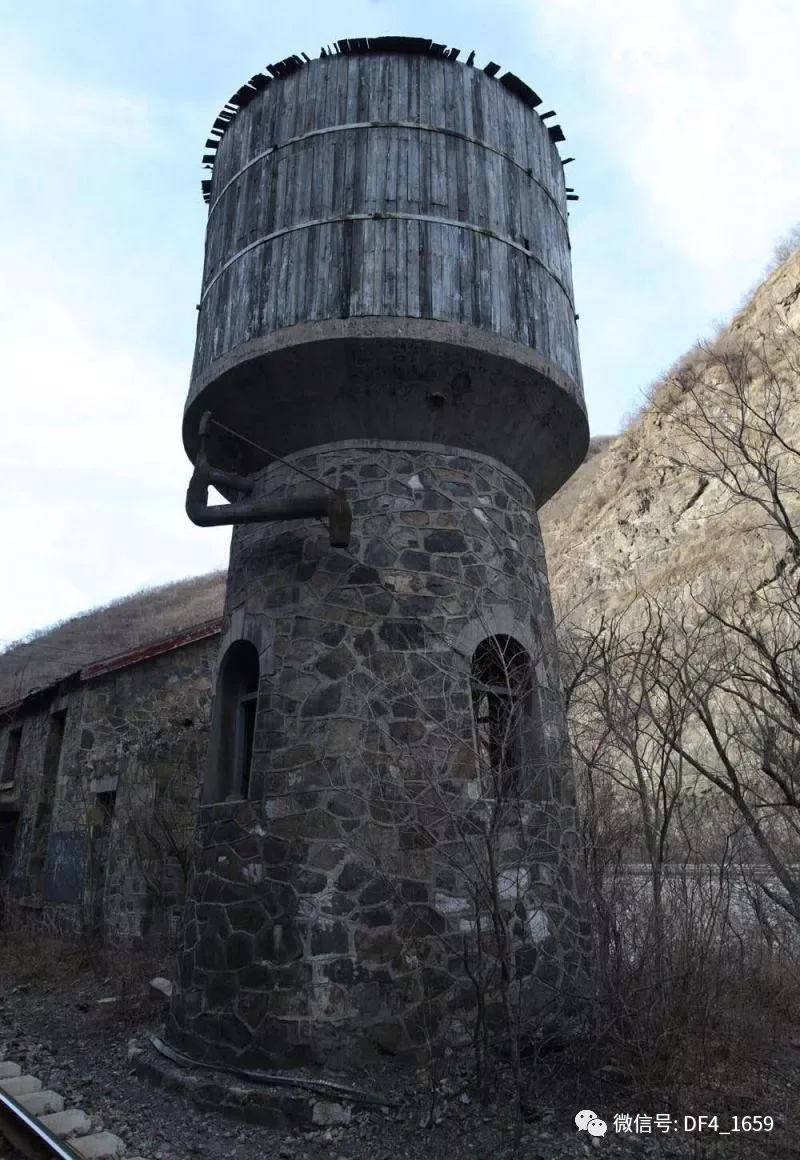
The abandoned steam locomotive water tower at Qingshuijian along the Menzhai Railway
February 1, 2019, Beijing Youth Daily
On February 1, Wang Wei drove over 180 kilometers to visit the cultural heritage departments of four districts—Mentougou, Shijingshan, Fangshan, and Changping—submitting a total of 7 "Immovable Cultural Property Recognition Application Forms" in an effort to secure official legal heritage status for multiple railway cultural relics in the Beijing area.
Wang Wei, a post-90s railway culture scholar and author of My Jingzhang Railway, has visited the vast majority of railway-related historical buildings in the Beijing area. By submitting "Immovable Cultural Property Recognition Application Forms" to cultural heritage departments, he has successfully secured legal heritage status for historical structures such as the old station building of Qinghe Station on the Jingzhang Railway, the old station building of Changping Station, and the water tower of Xiahua yuan Station. However, Wang Wei discovered that many railway heritages in the Beijing area still lack officially recognized cultural property status and are not protected by the Cultural Relics Protection Law. He worries that these old buildings might vanish completely amidst urban construction.
Wang Wei cited the example of the Menzhai Railway (Mentougou-Muchengjian), opened to traffic in 1927, which is an early Chinese merchant-run railway with a history of 92 years. Although this railway line remains in use today, preserving old station buildings, platforms, bridges, tunnels, culverts, steam locomotive water towers, and other structures, these historic buildings have not received a single cultural property designation. On the morning of February 1, Wang Wei's first stop was the Mentougou District Government Services Center. For the comprehensive protection application concerning the entire Menzhai Railway line, he prepared and printed 45 pages of A4 paper. Wang Wei believes that the Menzhai Railway, as a linear cultural heritage, should be protected as a whole.
Additionally, located in Mentougou District is the "Jiangjunling Spur Line," a railway built in 1921. Wang Wei submitted a 15-page application form for it to the Mentougou District Government Services Center. The Cultural Relics Section of the Mentougou District Culture Commission dispatched dedicated personnel to liaise with Wang Wei. Afterward, he rushed to the Shijingshan District Government Services Center to submit "Immovable Cultural Property Recognition Application Forms" for two remaining structures: the old station building of Xihuangcun Station on the Jingmen Railway and the No. 11 Bridge in Mayu. Both structures were built in 1908 and boast a history of 110 years.
In the afternoon, Wang Wei hurried to the Fangshan District Culture Commission to submit heritage recognition applications for the 107-year-old old station building of Doudian Railway Station and the late-Qing dynasty architectural remnants of Zhoukoudian Station.
Wang Wei's final stop of the day was the Changping District Culture Commission, where he submitted a cultural property recognition application for a culvert built in 1906 along the Jingzhang Railway.
After a full day's work, Wang Wei drove over 180 kilometers, submitting 7 "Immovable Cultural Property Recognition Application Forms" totaling 84 pages, all of which were accepted one by one by the cultural heritage departments. To refine the contents of these applications, Wang Wei spent nearly a year conducting field investigations and organizing materials. He told Beijing Youth Daily reporters that these old railways bear witness to the development of modern industry in the Beijing area, and he hopes that after these cultural property recognition applications are issued, they will yield positive results, preserving more modern industrial heritage for Beijing.
The Beijing Youth Daily reporter noted that according to the State Administration of Cultural Heritage's guiding opinions on implementing the Interim Measures for the Administration of Cultural Property Recognition: After county-level or higher local cultural administration departments accept a cultural property recognition application, they should in principle make a decision and reply within 20 working days. If it is necessary to commission professional institutions or experts for evaluation and consultation, or to gather public opinions through hearings, the time required is not counted within the 20-working-day limit.
Text / Beijing Youth Daily Reporter Cui Yifei
Photography / Wang Wei
Editor / Mao Yu
