
The "Throat" of the Jingzhang Railway Gains an "Identity Card"
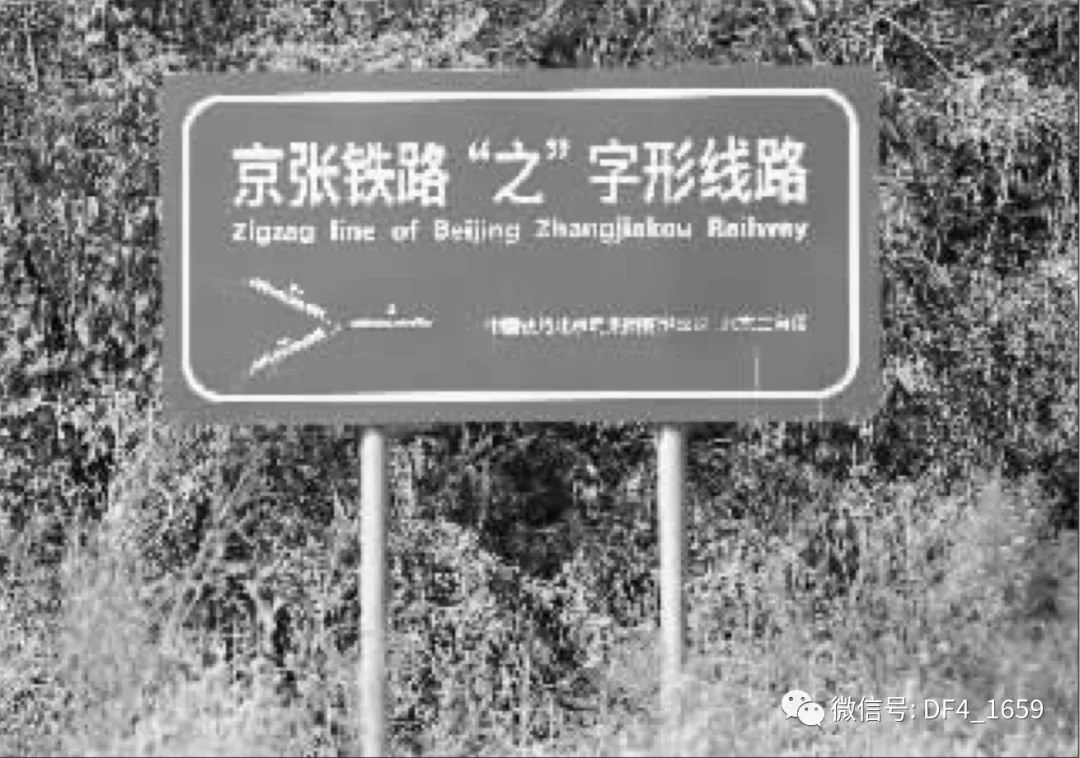
Railway authorities set up directional signs beside the zigzag route so that tourists can intuitively understand the industrial heritage.
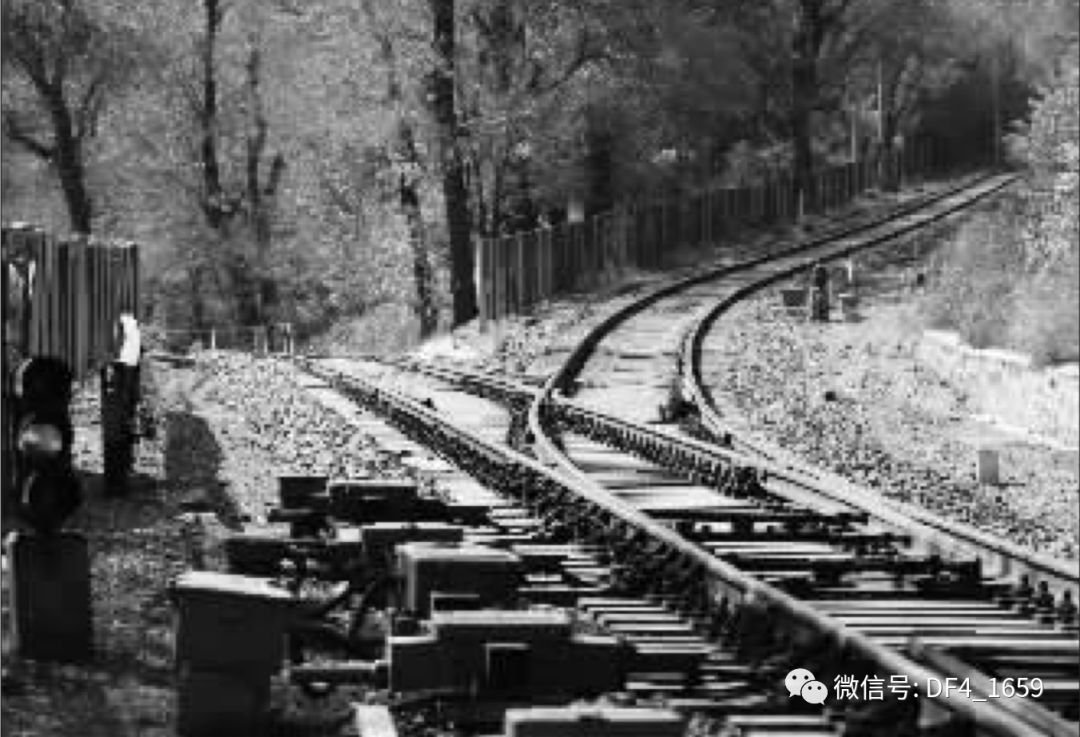
The zigzag route in use: heading up and to the right goes toward Zhangjiakou, while heading left goes toward Beijing.
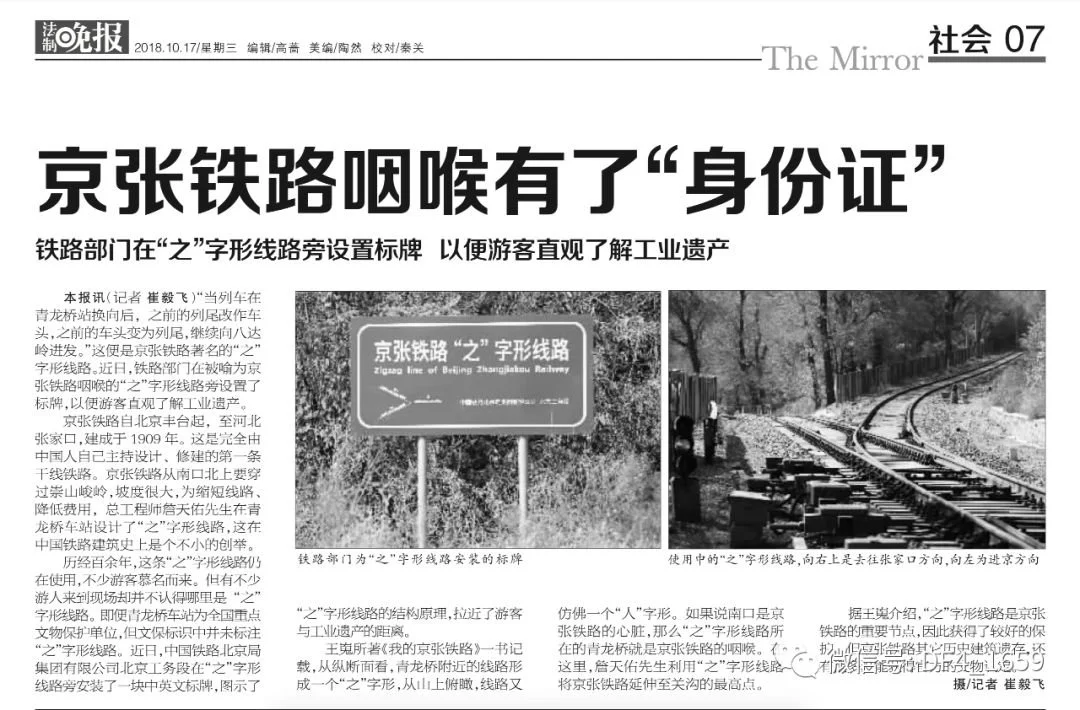
October 17, 2018, Legal Evening News, Page 07
October 17, 2018, Legal Evening News
The zigzag route in use: heading up and to the right goes toward Zhangjiakou, while heading left goes toward Beijing. October 17, 2018, Legal Evening News "When the train reverses direction at Qinglongqiao Station, the former rear of the train becomes the locomotive, and the former locomotive becomes the rear of the train, continuing onward toward Badaling." This is the famous zigzag route of the Jingzhang Railway. Recently, railway authorities installed a signpost next to the zigzag route, which is hailed as the "throat" of the Jingzhang Railway, allowing tourists to intuitively understand the industrial heritage. The Jingzhang Railway starts from Fengtai, Beijing, and extends to Zhangjiakou, Hebei, completed in 1909. This is the first trunk railway entirely designed and constructed by Chinese people themselves. Heading north from Nankou, the Jingzhang Railway had to traverse towering mountains with steep gradients. To shorten the route and reduce costs, Chief Engineer Jeme Tien Yau designed a zigzag route at Qinglongqiao Station, which was a considerable pioneering feat in the history of Chinese railway construction. After more than a century, this zigzag route is still in use, and many tourists come here upon hearing of its fame. However, many visitors arriving at the site do not recognize where the zigzag route actually is. Even though Qinglongqiao Station is a major historical and cultural site protected at the national level, the cultural relic protection signposts did not previously mark the zigzag route. Recently, the Beijing Track Maintenance Section of the China Railway Beijing Group Co., Ltd. installed a bilingual signpost in Chinese and English beside the zigzag route, illustrating the structural principle of the zigzag route and narrowing the distance between tourists and the industrial heritage. Wang Wei's book My Jingzhang Railway records that viewed from a vertical profile, the track near Qinglongqiao forms a zigzag shape, while viewed from above down the mountain, the track resembles the Chinese character "人" (ren/human-shaped). If Nankou is the heart of the Jingzhang Railway, then Qinglongqiao, where the zigzag route is located, is the throat of the Jingzhang Railway. Here, Jeme Tien Yau utilized the zigzag route to extend the Jingzhang Railway to the highest point of Guanguan. According to Wang Wei, the zigzag route is an important node of the Jingzhang Railway and has thus received relatively good protection. However, many other historical architectural relics along the Jingzhang Railway have still failed to obtain official cultural relic recognition. Photo by Reporter Cui Yifei
