
Tracking Battlefields | The Number of Anti-Japanese War Cultural Relics in Beijing Continues to Grow
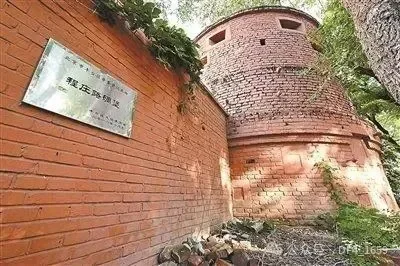
Chengzhuang Road Blockhouse in Fengtai District
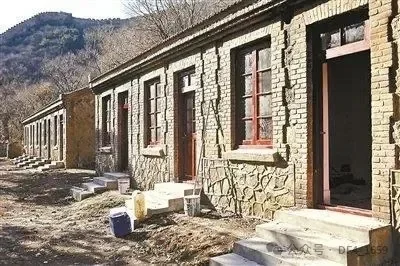
Former Site of the Japanese Military Barracks at Qinglongqiao Railway Station
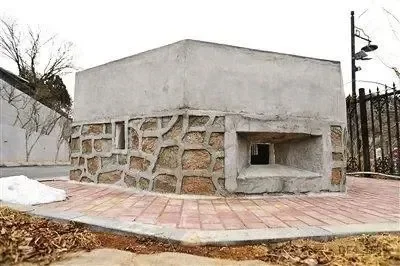
Badaling Tunnel Blockhouse of the Beijing-Zhangjiakou Railway
Beijing Youth Daily, July 7, 2025
Tracking Battlefields
This year marks the 80th anniversary of the victory of the Chinese People's War of Resistance Against Japanese Aggression and the World Anti-Fascist War. The Chinese People's War of Resistance Against Japanese Aggression was the Chinese people’s longest-lasting, largest-scale, and most costly national liberation struggle against foreign aggression in modern times, as well as the first complete victory achieved in a national liberation struggle. The 14 years of bloody battle constitute an epic, a spirit, and an indelible national memory. To mark this occasion, Beijing Youth Daily is launching a series of special features, with today's publication featuring the special report "Tracking Battlefields."
This set of reports includes both an inventory of identified anti-Japanese war relics across the city and decades of unremitting efforts by civilian volunteers to find "ironclad proof." It features both vivid introductions to the city's red anti-Japanese war-themed districts and in-depth analyses of the significance of anti-Japanese war relics. All of this profoundly demonstrates that "remembering history, cherishing the memory of revolutionary martyrs, treasuring peace, and creating the future" has become our distinct memory and inexhaustible driving force as we forge ahead on the new journey of building a strong nation and pursuing national rejuvenation.
Tracking Battlefields — Battle Accounts
Beijing's only known surviving cliff inscription by the Japanese invading forces has attained official legal status as a cultural relic; newly discovered Japanese barracks and blockhouses have made the historical remnants of the Beijing-Zhangjiakou Railway more diverse; a newly discovered original site of a "tunnel warfare" ruin has been converted into a museum for preservation... Over the past decade, thanks to the joint efforts of cultural heritage departments and heritage protection volunteers, multiple immovable cultural relics from the Anti-Japanese War period have been added in the Beijing area, bringing these little-known historical remnants gradually into the public eye.
Building upon successive cultural relic censuses, the "relic puzzle" of Beijing's Anti-Japanese War period has gradually become clearer and more complete.
Recently, reporters from Beijing Youth Daily conducted on-field visits to explore the stories behind these newly added cultural relics. Reflecting on the past to understand the present brings long-sealed history close at hand.
Three Japanese Structures Recognized as Cultural Relics
On the east side of Chengzhuang Road in Fengtai District, shaded by street trees and creeping plants, a cylindrical blockhouse stands quietly along the outer wall of Chengzhuang Road Courtyard No. 16. Built of brick masonry, the structure features shooting ports distributed across its upper and lower tiers. With the passage of time, the lower-tier shooting ports have been sealed, but the historical architecture remains visible. A heritage protection plaque mounted on the outer wall indicates that the Fengtai District Cultural Commission recognized this structure as a surveyed and registered cultural relic in 2016, naming it the "Chengzhuang Road Blockhouse." However, the plaque contains no further details, adding a touch of mystery to this anti-Japanese war remnant.
Who built the Chengzhuang Road Blockhouse? According to the book Beijing Anti-Japanese War Relics, after the Marco Polo Bridge Incident in 1937, the invading Japanese military built warehouses north of the railway in Fengtai Town and toward Dajing Village. Serving as a military material storage and transfer site, it was locally known as the "West Warehouse," and the Chengzhuang Road Blockhouse was part of these West Warehouse ruins. Investigations by cultural heritage departments revealed that the lower tier of the Chengzhuang Road Blockhouse was built by the Japanese military, while the upper tier was later added by Chinese forces.
"The recognition of the Chengzhuang Road Blockhouse as a cultural relic by the heritage department has clarified the historical landmark of the West Warehouse," introduced Chen Xinhua, a member of the Beijing Cultural Relics Protection Association. The Chengzhuang Road Blockhouse is not a unique specimen; brick blockhouses of the exact same architectural form are preserved in Xingtai City (Hebei Province), Jiaozuo City (Henan Province), and Baotou City (Inner Mongolia). All built by invading Japanese forces, they demonstrate that these were standardized military facilities constructed by the Japanese army.
Compared to the Chengzhuang Road Blockhouse, the cultural relic introduction for the "Badaling Tunnel Blockhouse of the Beijing-Zhangjiakou Railway" in Yanqing District is more detailed and verifiable. Located on the hillside outside the northern portal of the Badaling Tunnel, inside the courtyard of the Zhan Tianyou Memorial Hall, this blockhouse is built with rubble masonry and appears octagonal when viewed from above. It rises about 1.5 meters above the ground with an interior headroom of approximately 1.9 meters. Seven shooting ports are staggered at varying heights, forming a cross-fire configuration with a nearby primary blockhouse.
An explanatory sign erected by the Zhan Tianyou Memorial Hall indicates that between 1939 and 1945, in order to control mineral resources in areas such as Xuanhua and Datong, the Japanese military constructed military facilities along the Beijing-Zhangjiakou Railway, including barracks, watchtowers, and blockhouses—among them the blockhouse inside the Zhan Tianyou Memorial Hall courtyard. Following the victory of the War of Resistance, the blockhouse fell into disuse for many years. With the development of national museum and heritage undertakings, staff members of the Zhan Tianyou Memorial Hall submitted an Immovable Cultural Relic Recognition Application Form to the Yanqing District Culture and Tourism Bureau in 2023. Following on-site visits, expert demonstration meetings, and public notices without objection organized by the Yanqing District Culture and Tourism Bureau, the blockhouse was officially recognized as an immovable cultural relic on April 1, 2024.
The official recognition of the Badaling Tunnel Blockhouse not only enriches the inventory of anti-Japanese war relics, but also diversifies the types of heritage associated with the Beijing-Zhangjiakou Railway. A similar situation occurred at Qinglongqiao Station. As the "throat" of the Beijing-Zhangjiakou Railway, Qinglongqiao Station is a Major Historical and Cultural Site Protected at the National Level, yet few people notice that Japanese military barracks remain preserved within the station grounds.
In 2019, the Yanqing District Cultural Relic Management Office conducted cultural relic recognition for the Japanese barracks at Qinglongqiao Station and carried out restoration and reinforcement work. "This cultural relic recognition enriches the historical composition of Qinglongqiao Station and lays the foundation for the future opening and utilization of this heritage site," said Yu Haikuan, director of the Yanqing District Cultural Relic Management Office.
Surviving Tunnel Warfare Site Upgraded to a Museum
When tunnel warfare is mentioned, most people think of Jiao Zhuanghu. What is little known is that during the Anti-Japanese War, there was also a tunnel network stretching over a hundred kilometers in Panggezhuang Town, Daxing District, a section of which is preserved to this day. On May 4, 2023, the People's Government of Daxing District recognized the "Wangchang Village Anti-Japanese War Tunnel and Architectural Relics" as a district-level cultural relic protection unit. This cultural relic reflects the historical fact that during the Anti-Japanese War, the military and civilians of Daxing, under the leadership of the Communist Party of China, employed tunnel struggle tactics to resist Japanese fascist aggression.
Recently, reporters from Beijing Youth Daily visited Wangchang Village in Panggezhuang Town, Daxing District, and saw the "Beijing Wangchang Village Tunnel Site Museum" situated amid a wheat field. The authentic tunnel ruins inside the museum are protected by sheds and are open to visitors. During the War of Resistance Against Japanese Aggression, Daxing was located in the northern part of the Beijing-Tianjin-Baoding triangle. Because it was situated on open plains with no natural defenses, it frequently suffered enemy "mopping-up" campaigns. From 1943 to 1944, local villagers converted sweet potato cellars into underground shelters capable of accommodating one or two people. Later, families connected these underground hideouts together, transforming the tunnel network in the southern plain region from passive defense into a network where people could hide, move, and fight. Today, a 20-meter-long section of the tunnel has been reconstructed inside the site's courtyard, allowing visitors to experience the tunnel structure firsthand.
According to Yang Jingbo, vice president of the Daxing District Cultural Heritage Protection Association, Wangchang Village has boosted rural revitalization by promoting red culture and anti-Japanese war history. Since its completion last year, the Wangchang Village Tunnel Site Museum has averaged around 100 visitors per day, becoming a unique red landmark.
It is worth mentioning that after nearly a year of closure and renovation, the Jiao Zhuanghu Tunnel Warfare Site Memorial Hall in Longwantun Town, Shunyi District, reopened this May. Its exhibition area has expanded to 1,500 square meters, and the number of exhibits has increased to 187 items—both doubling previous figures. In addition to traditional graphic displays, the hall features multiple interactive devices; visitors need only click a touchscreen titled "Winning Secrets of Guerrilla Tactics" to see guerrilla tactics behind enemy lines, such as sparrow warfare, landmine warfare, and tunnel warfare, presented one by one.
The Public Fills Gaps in Anti-Japanese War Relics
Cultural relic census work is not exclusively a government domain. The Interim Measures for the Administration of Cultural Relic Recognition, promulgated and implemented by the Ministry of Culture in 2009, paved the way for the public to participate in relic census work. The Measures stipulate that cultural administrative departments at all levels shall improve systems to encourage citizens, legal persons, and other organizations to play a role in cultural relic census work. Under this institutional design, a group of heritage protection volunteers have actively participated in cultural heritage protection and "filled the gaps" for official census work.
On Fenghuang Mountain in Fangshan District, there is a cliff inscription reading: "781 Sato Mountain Showa 12 8 29 Occupied." Here, "781 Sato Mountain" is suspected to be the troop designation and the surname of the military leader, "Showa" is the era name of Japanese Emperor Hirohito, and "Showa 12 8 29 Occupied" signifies occupation on August 29, 1937. This March, the People's Government of Hebei Town, Fangshan District, erected a tourist instruction sign beside the inscription, explicitly identifying this "Cliff Inscription Commemorating the Japanese Invasion of China" as a surveyed and registered cultural relic of Fangshan District, serving as ironclad proof of Japanese militarist aggression against China.
How did the remote and secluded "Cliff Inscription Commemorating the Japanese Invasion of China" acquire legal cultural relic status? This is inextricably linked to societal participation in cultural relic protection. On November 20, 2017, cultural and historical scholar Ma Zhipu submitted an Immovable Cultural Relic Recognition Application Form for the cliff inscription to the Fangshan District Cultural Commission; on October 24, 2018, the Fangshan District Cultural Relics Protection Institute organized experts to conduct an on-site investigation; on January 13, 2020, Fangshan District publicly announced 14 surveyed and registered cultural relics, including the "Cliff Inscription Commemorating the Japanese Invasion of China," which is the only surviving known Japanese military commemorative cliff inscription in the Beijing area.
Public participation in cultural relic censuses is also exemplified at the Kangzhuang Station of the Beijing-Zhangjiakou Railway. Going back to 2018, railway cultural scholar Wang Wei compiled the historical, artistic, and scientific value of the Kangzhuang Station building complex into an Immovable Cultural Relic Recognition Application Form and submitted it to the Yanqing District cultural heritage department. Subsequently, the Yanqing District cultural heritage department organized experts to conduct research on the Kangzhuang Station building complex; in 2019, the Kangzhuang Railway Station building complex (Former Site of the Kangzhuang Railway Party Branch) was announced as a surveyed and registered cultural relic. In 2023, the Yanqing District Cultural Relic Management Office completed the first phase of the "Restoration and Surrounding Environment Improvement Project for the Kangzhuang Station Building Complex," better showcasing the characteristics and value of the architectural heritage and laying the foundation for future exhibition and utilization. Furthermore, Kangzhuang Station has witnessed a little-known history.
Yang Guoqing, a researcher of the Battle of Nankou, told Beijing Youth Daily that after the Japanese military invaded and occupied Beijing and Tianjin in 1937, they dispatched troops to attack Nankou in an attempt to invade Shanxi, Suiyuan, and other regions. The 13th Army of the National Revolutionary Army and other units rushed to defend Nankou, deploying over 60,000 officers and soldiers across a region spanning hundreds of li. "After the Battle of Nankou broke out on August 8, 1937, some Chinese troops disembarked at Kangzhuang Station and then marched rapidly to Chenjiabiao, Shixia, Huanglouyuan, and other places to block the Japanese forces, making Kangzhuang Station a hub for transporting troops and supplies." Yang Guoqing believes that as an important station of the Beijing-Zhangjiakou Railway and one of the historical landmarks of the Battle of Nankou, Kangzhuang Station obtaining cultural relic status will impart deeper historical connotations to anti-Japanese war remnants.
· Dialogue ·
Anti-Japanese War Relic Recognition Can Undergo Dynamic Supplementation at Any Time
Interviewee: Liu Weidong, Member of the Beijing Cultural Relics Authentication Committee
Beijing Youth Daily: How do you evaluate the current state of protection for Anti-Japanese War period cultural relics in Beijing?
Liu Weidong: After 1949, China carried out three national cultural relic censuses, and the fourth national cultural relic census is currently underway.
Through successive cultural relic censuses, the vast majority of Anti-Japanese War relics within Beijing's municipal territory have been officially recognized as immovable cultural relics and are protected by the Cultural Relics Protection Law. On July 18, 2024, the Beijing Municipal Cultural Heritage Bureau also issued the "Notice on Conducting Special Investigation Work on Immovable Anti-Japanese War Cultural Relics," and the Anti-Japanese War period cultural relics identified in previous censuses also laid the foundation for the special investigation launched last year. Moving forward, if new discoveries are made, cultural relic recognition and dynamic supplementation can be carried out at any time.
Beijing Youth Daily: What Anti-Japanese War period cultural relic recognitions have you participated in?
Liu Weidong: Cultural relic recognition refers to the administrative action by cultural administrative departments to confirm cultural resources with historical, artistic, and scientific value as cultural relics. In 2018, I participated as an expert in the cultural relic recognition work for the "Cliff Inscription Commemorating the Japanese Invasion of China" in Fangshan District. This was originally a product of the Japanese military flaunting its martial conquest; as the Japanese military was defeated and times changed, it gradually evolved into physical material for us to study the history of Japanese aggression against China. For this inscription to become a cultural relic in the legal sense, we must thank civilian scholar Ma Zhipu. After tirelessly investigating this mountain inscription, he submitted an Immovable Cultural Relic Recognition Application Form to the official authorities. Afterward, organized by the Fangshan District cultural heritage department, we went up the mountain together to inspect the site, and ultimately recognized the inscription as an immovable cultural relic.
Beijing Youth Daily: How do you view incriminating relic sites dating from the Anti-Japanese War period?
Liu Weidong: Before the "Cliff Inscription Commemorating the Japanese Invasion of China" was recognized as a cultural relic, architectural remnants such as blockhouses, aircraft shelters, and barracks built by the invading Japanese military had already been successively recognized as cultural relics in previous cultural relic censuses across the Beijing area. From our perspective, such cultural relic structures are also referred to as incriminating relic sites. As cultural heritage workers, protecting Japanese military remains is by no means about praising aggression, but rather because this history cannot be ignored. These relics are both remnants of the Japanese military and genuine historical landmarks, providing reference bases for us to study anti-Japanese war history, social changes, and more. In 2024, the Yanqing District cultural relic census team also discovered a 300-meter-long emergency evacuation steel rail near Sanpu Station on the Beijing-Zhangjiakou Railway, built by invading Japanese forces in 1939. The media reported on this new discovery. Such cultural relics are not only related to the Anti-Japanese War, but also make the heritage of the Beijing-Zhangjiakou Railway even richer.
Beijing Youth Daily: How do you view the public's contribution to discovering anti-Japanese war cultural relics?
Liu Weidong: Cultural relic censuses are government-led, but they cannot do without public participation. The heritage protection volunteers we commonly see mainly provide guide services in museums, but there are also people who quietly travel across mountains and fields to explore little-known historical ruins. Over the past decade, under the active guidance of government departments, the awareness of heritage protection across society has generally increased, and many heritage protection volunteers, through unremitting excavation, have brought more anti-Japanese war-related cultural relics to the surface. Relying on their sharp eyes for discovery and persevering spirit of exploration, they have become an important force in cultural relic censuses that cannot be overlooked.
Author & Photographer: Cui Yifei
