
Hidden Mysteries in the Wall Base: A Warehouse in Chaoyang, Beijing Suspected to Be Built by the Invading Japanese Army
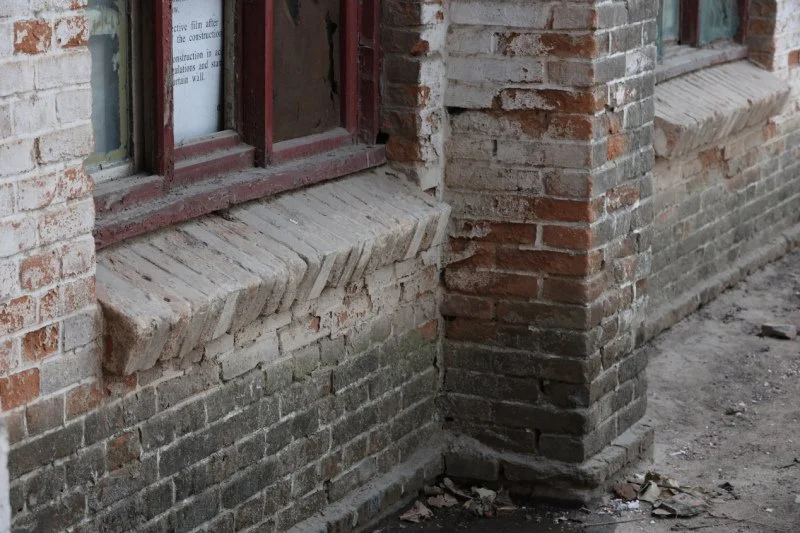
Windowsill (Photo / Beijing Youth Daily reporter Cui Yifei)
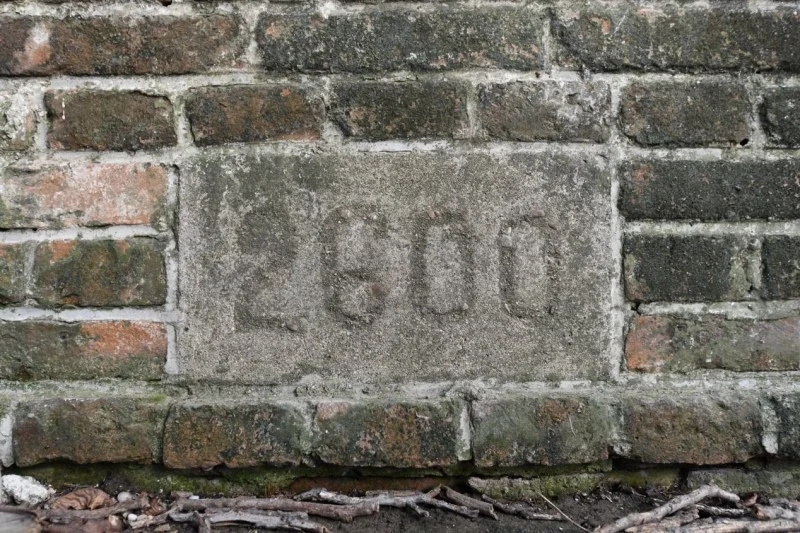
Cement marker plaque (Photo / Beijing Youth Daily reporter Cui Yifei)
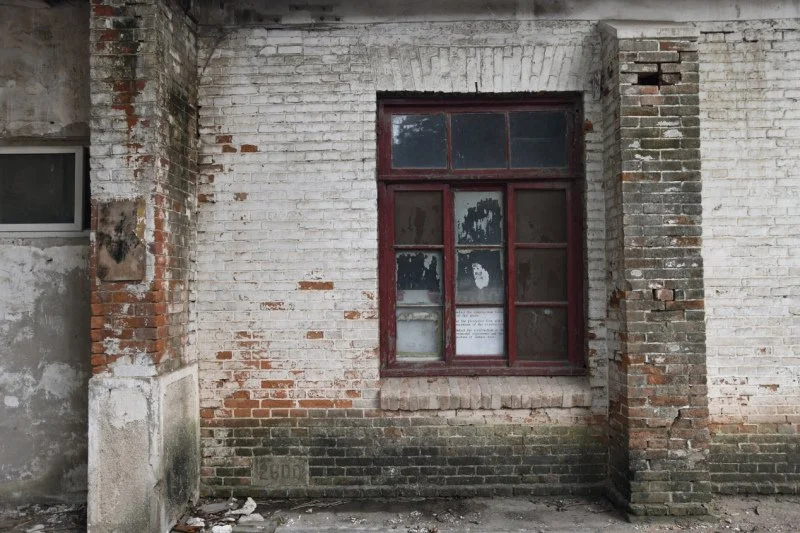
Marker plaque located at the wall base (Photo / Beijing Youth Daily reporter Cui Yifei)
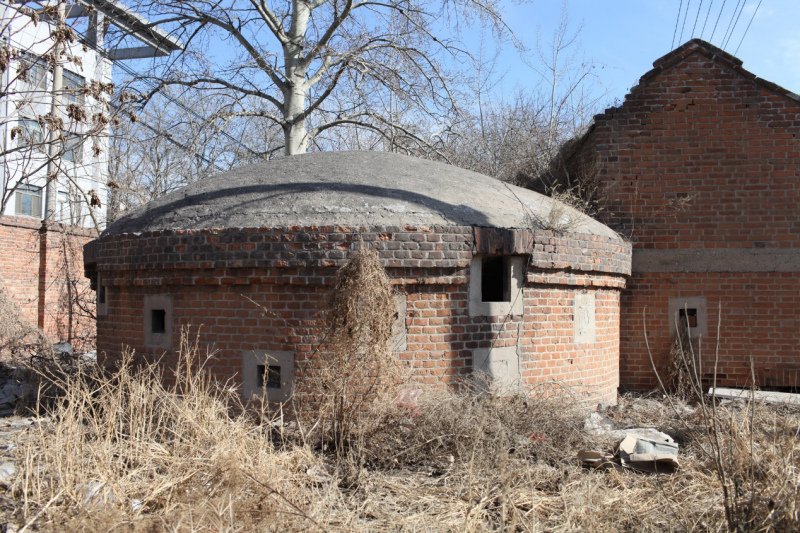
Bunker (Photographed by Cui Yifei in 2016)
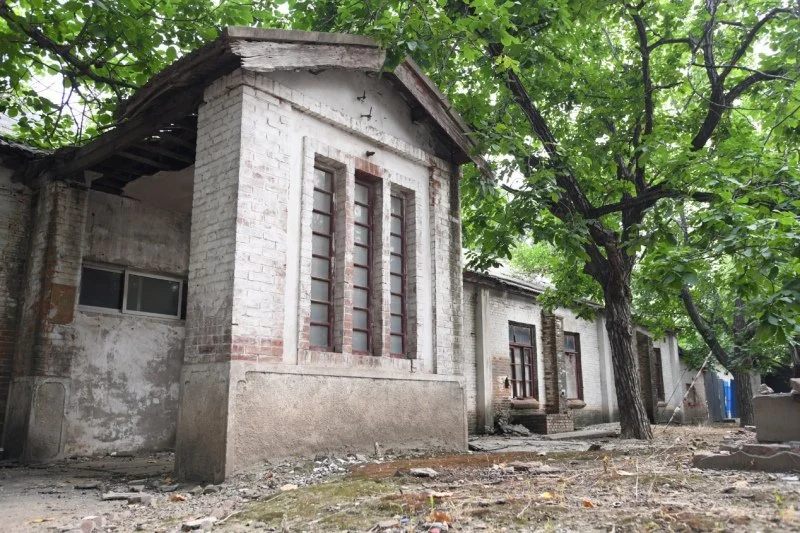
Building in Courtyard No. 10, Shuangqiao Middle Road (Photo / Beijing Youth Daily reporter Cui Yifei)
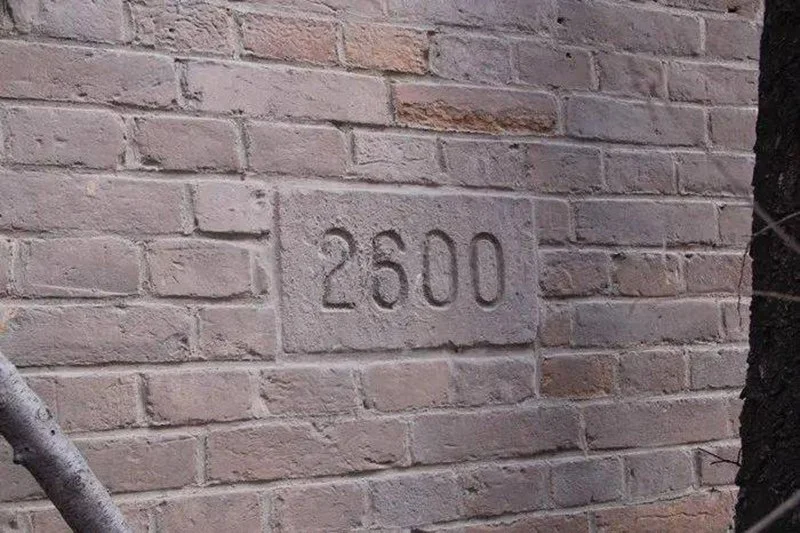
Cement plaque at the former site of the Japanese Army Barracks at Baotou No. 20 Middle School (Photo / Huang Xiang)
Beijing Youth Daily, July 7, 2026
A warehouse with an ordinary exterior has revealed unusual historical information through the meticulous observation of cultural relic protection volunteers. Recently, Wang Wei, a member of the Beijing Cultural Relics Protection Association, discovered that the sign of a warehouse in Courtyard No. 10, Shuangqiao Middle Road, is imprinted with the Arabic numerals "2600". He deduced that this might be a historical coordinate left by the Japanese military to commemorate the "2600th Imperial Year". Among the architectural remains of the Japanese invasion of China in the Beijing area, such markings are extremely rare, and a Beijing Youth Daily reporter has reported the relevant situation to the Chaoyang District Cultural Relics Management Office.
Embedded Wall Sign May Be a Mark of the Japanese Invasion of China
Recently, while sorting through old exploration photos, Wang Wei was drawn to a set of Arabic numerals that had accidentally appeared in the frame. He had once visited Courtyard No. 10, Shuangqiao Middle Road, to explore railway ruins. A brick building in the courtyard, with windowsills featuring diagonal brick-laying—identical in practice to the old barracks he had seen in Northeast China—prompted him to capture it on camera. Unexpectedly, upon reviewing the photos closely at home, he discovered the numbers "2600" clearly visible on a cement marker plaque at the base of the wall.
In Wang Wei's view, this set of numbers is by no means an ordinary construction serial number or measurement mark, but most likely a mark left by the builders to commemorate the "2600th Imperial Year"—if this deduction holds true, the construction year of the building points directly to 1940, and is closely related to the invading Japanese army.
Regarding the concept of the "2600th Imperial Year," Xie Ren, an associate professor at the School of Marxism, Nanjing University, once published an article titled "Politics in Celebration: The Commemoration of the 2,600th Japanese Era and China's Occupied Areas" in the journal Anti-Japanese War Research. The article records: in the early Meiji period, the Japanese government designated the legendary ascension year of the first Emperor (660 BC) as the first year of the "Imperial Era" (Kōki). According to this calculation, 1940 was precisely the 2,600th year of the Japanese era. To commemorate this "once-in-a-century" major moment, Japan decided to hold a grand "Era Celebration" on November 10 and 11 of that year, and colonies and occupied territories were also dragged into it.
A Bunker Formerly Located Near the Warehouse
The old building that caught Wang Wei's attention is situated in Courtyard No. 10, Shuangqiao Middle Road, with ownership currently belonging to China Agricultural Reclamation Group Co., Ltd. Entering the courtyard, a Beijing Youth Daily reporter saw that a building directly facing the main gate is constructed of red bricks, rectangular in plan (long from east to west and narrow from north to south) with a pitched roof and gable walls on the east and west sides, currently rented out as a warehouse. The reporter found a cement marker plaque beneath the north wall of the building. The plaque is 38 centimeters long and 20 centimeters high, imprinted with the Arabic numerals "2600"—this is precisely the focal point that drew Wang Wei's attention to the building.
It is worth mentioning that about 100 meters to the northwest of this building, there used to be a brick bunker as an auxiliary structure of the courtyard. Ten years ago (in 2016), a reporter visited the place and saw that the bunker was a low, cylindrical shape with a dome structure at the top, a door opening on the southeast side, and multiple shooting holes scattered at varying heights on the walls, with fan-shaped gun platforms built inside the holes. At that time, this form of bunker was the only one of its kind in Chaoyang District. However, when the reporter revisited half a year later, the bunker no longer existed. Currently, a bunker of the same shape still survives beside Chengzhuang Road in Fengtai District, which is an architectural remain of the Japanese invading forces' "West Warehouse" and has been announced as an immovable cultural relic, serving as a comparative reference.
Wang Wei pointed out that the geographical location of Courtyard No. 10, Shuangqiao Middle Road, is special: it is adjacent to the Tonggu Railway (Tongxian to Gubeikou) built by the Japanese army, and the bunker is sufficient to prove that it was once used for military purposes. In addition, he also consulted an aerial photograph from February 1945, which showed that the courtyard had already been built at that time.
Japanese Military Horse Farm in Civilian Memory
To explore the historical origins of Courtyard No. 10, Shuangqiao Middle Road, the Beijing Youth Daily reporter interviewed several local residents. According to their recollections, the courtyard was square in plan, with a bunker built at each of the four corners of the courtyard wall, which were successively demolished after 1949. The bunker photographed by the reporter in 2016 was located at the northwest corner of the courtyard and was the last bunker in the courtyard. Regarding the initial purpose of Courtyard No. 10, Shuangqiao Middle Road, residents all referred to it as a horse farm for the Japanese army.
Hong Hai (pen name), chairman of the Chaoyang District Writers Association, was born and raised around Shuangqiao. According to his understanding, Courtyard No. 10, Shuangqiao Middle Road, was suspected to be a horse-raising bureau built by the Japanese army in the past, and continued to be used for raising horses after 1949 until the mid-to-late 1970s. In addition, the Beijing Youth Daily reporter called the management unit of Courtyard No. 10, Shuangqiao Middle Road—Beijing Zhongken Huaxin Property Management Co., Ltd. (Shuangqiao Property Department)—and a staff member also stated that they had heard the saying that this courtyard was a Japanese military horse farm.
The Beijing Youth Daily reporter consulted the Monograph on Place Names in Chaoyang District, Beijing and learned that the Wujing Village area near Shuangqiao was once paddy fields of the invading Japanese army's farm before 1945, connecting to Junmazhuang (Military Horse Village) on the north. The "Junmazhuang" recorded in the annals is precisely located at the site of Courtyard No. 10, Shuangqiao Middle Road. This place-name information may serve as indirect evidence of the courtyard's historical use.
Recently, the Beijing Youth Daily reporter called the Chaoyang District Cultural Relics Management Office. According to a staff member, during the Fourth National Cultural Relic Census, they once invited experts to investigate Courtyard No. 10, Shuangqiao Middle Road, but did not recognize the buildings in the courtyard as cultural relics. The staff member also pointed out that regarding the saying that Courtyard No. 10, Shuangqiao Middle Road, was once a Japanese military horse farm, it is currently limited to legends, and they have not yet found clear historical records. However, they will further understand the "2600" marker plaque reported by the reporter.
"2600" Marker Plaques in Beijing and Baotou Mutually Corroborate
Regarding the "2600th Imperial Year" remains in the Beijing area, as early as 2015, media reports stated that the Fengtai District Cultural Relics Office discovered a stone tablet that year, with the words "Commemorative Monument of the 2600th Imperial Year" carved on the front, which was deduced to have originated from a military camp built by the invading Japanese army in Fengtai.
Coincidentally, the Baotou Municipal Cultural Relic Protection Unit "Site of the Japanese Army Barracks at Baotou No. 20 Middle School" also provides an important reference. The site is a barracks built by the Japanese army after their occupation of Baotou. Two barracks survive today, and their architectural forms are quite similar to the houses in Courtyard No. 10, Shuangqiao Middle Road—their windowsills also feature diagonal brick-laying, and a cement marker plaque with the word "2600" is similarly embedded on the wall of one of the barracks. In addition, a bunker also survives at the site, whose shape is similar to the former northwest-corner bunker of Courtyard No. 10, Shuangqiao Middle Road.
Regarding the above connections, Professor Wang Ruiying from Beijing University of Civil Engineering and Architecture analyzed that the buildings inside Courtyard No. 10, Shuangqiao Middle Road, are similar in shape to factory buildings, workshops, or warehouses, and could also be row-style barracks. Their bunker firepower deployment was strong, but focused on protecting the main buildings of the courtyard rather than scouting or monitoring a larger surrounding area. Such a layout indicates that the protected courtyard and buildings were quite important and needed to remain concealed. Therefore, regarding the local rumors of a Japanese military "horse farm," Wang Ruiying deduced that it is also not ruled out that the Japanese army used the horse farm as a cover while actually storing firearms, ammunition, and other military supplies within the courtyard.
Wang Ruiying further pointed out that based solely on the "2600" marker plaque, it is difficult to make a definitive judgment on the identity of the building, but with the important reference object of the Baotou Japanese barracks site, it is sufficient to affirm that the building was constructed by the invading Japanese army. The marker plaque was placed at the base of the wall, and its meaning signifies the laying of a foundation. From this, it can be deduced that the construction time of Courtyard No. 10, Shuangqiao Middle Road, is most likely in 1940.
By: Cui Yifei (Beijing Youth Daily)
Editor: Zhang Li
Executive Editor: Fan Hongwei
Beijing Youth Daily, July 7, 2026
