0

Home

Railway History Research

Railway Heritage Conservation

Railway Photography

Railway Cultural & Creative Products

Publications

Donation

About us

Chinese

In early 1902, the temporary platform was situated on the west side of the Beijing Majiapu Station of the Inside-the-Shanhaiguan-Pass Railway, just before the impending arrival of Empress Dowager Cixi and the Guangxu Emperor. Located roughly 200 mete View fullsize

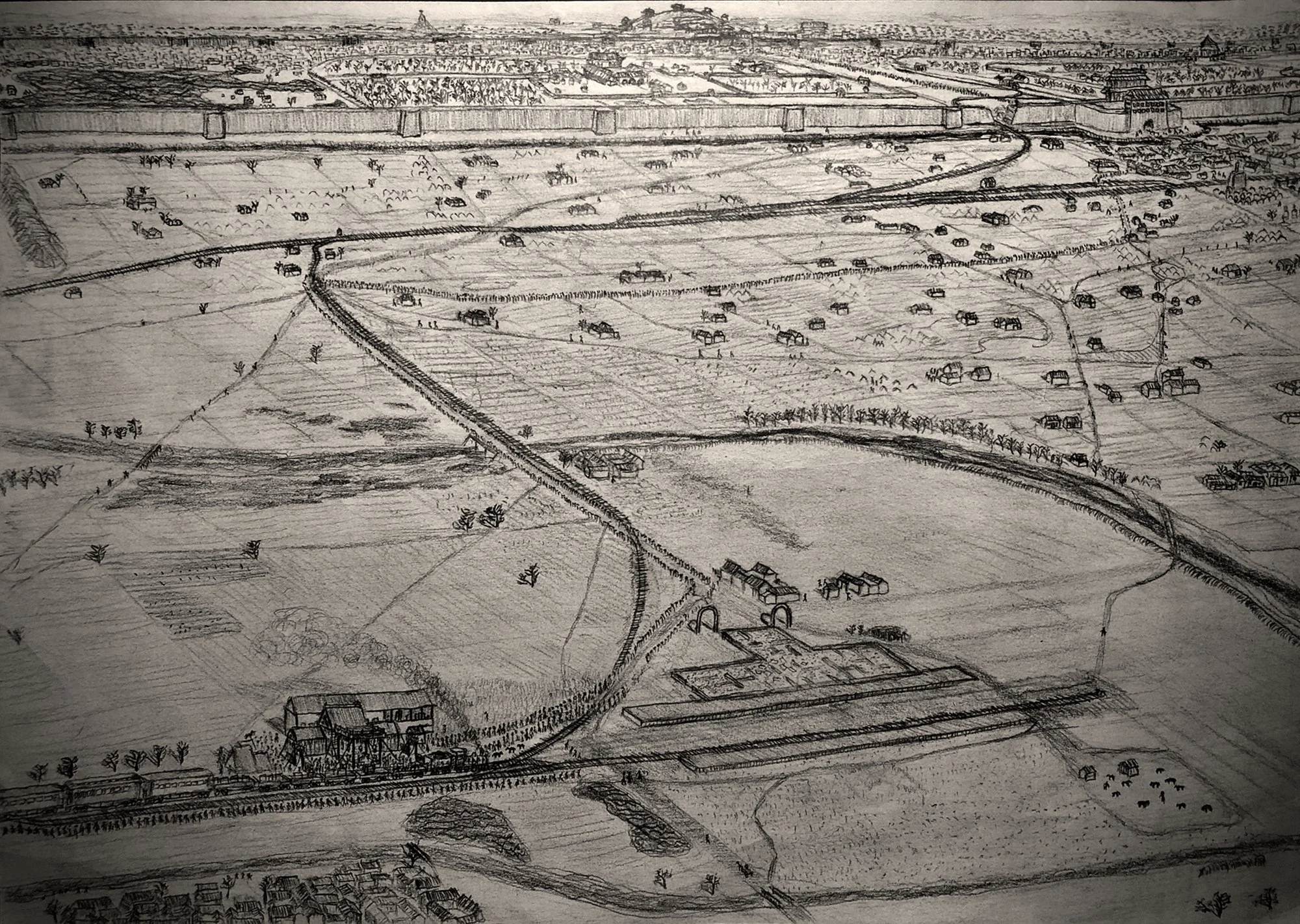
In early 1902, the temporary platform was situated on the west side of the Beijing Majiapu Station of the Inside-the-Shanhaiguan-Pass Railway, just before the impending arrival of Empress Dowager Cixi and the Guangxu Emperor. Located roughly 200 meters west of the Majiapu station building, this platform maintained a deliberate distance from the "ruined" state of the Majiapu Station itself. This restoration drawing depicts a perspective looking from southwest to northeast, created in April 2020.
Built on the high ground northeast of the Marco Polo Bridge (Lugou Bridge), the Lugouqiao Station of the Beijing-Hankou Railway was used to handle material transport trains running from Fengtai, and it also housed the Lugouqiao Machine Works. Followi View fullsize

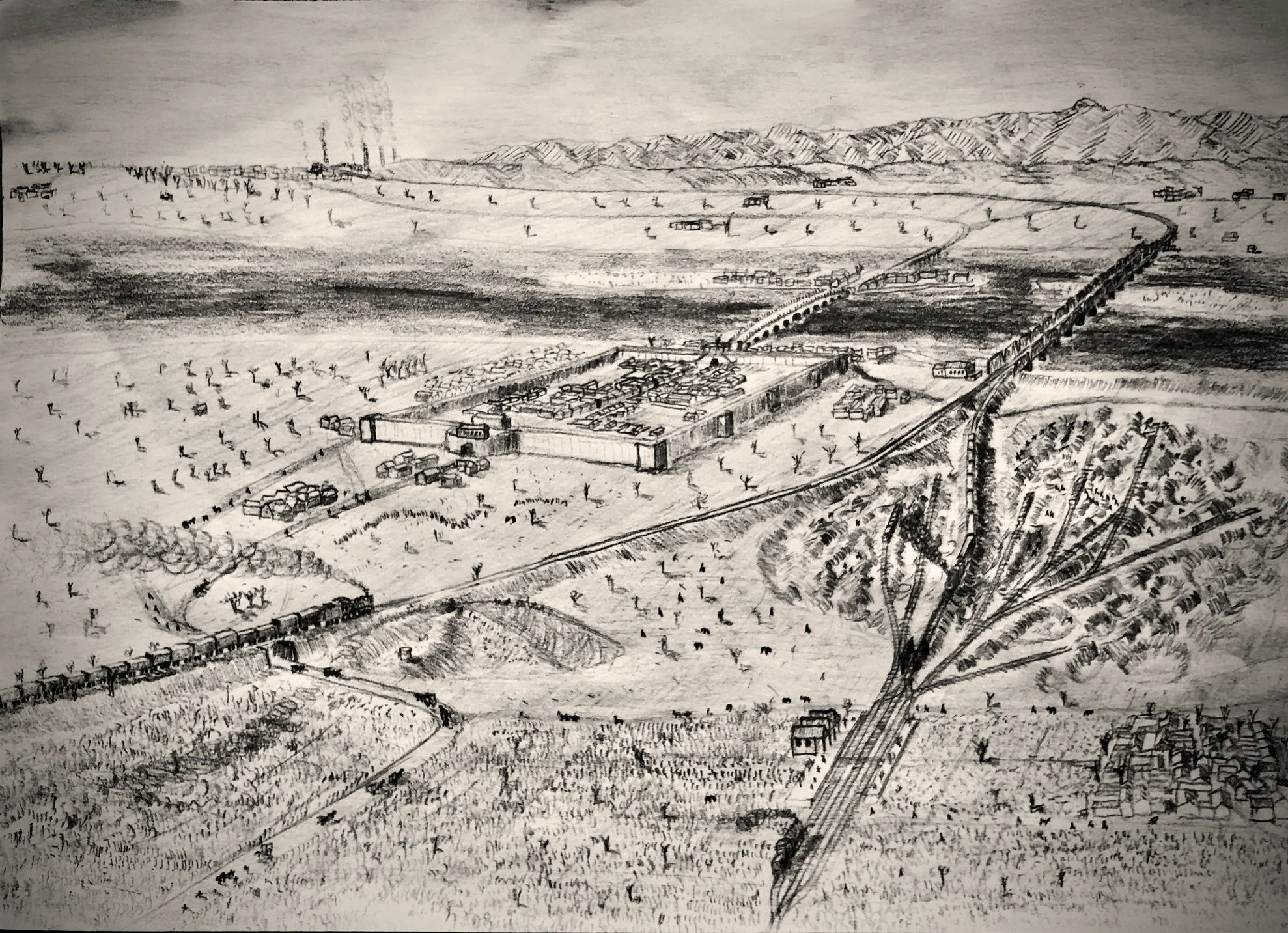
Built on the high ground northeast of the Marco Polo Bridge (Lugou Bridge), the Lugouqiao Station of the Beijing-Hankou Railway was used to handle material transport trains running from Fengtai, and it also housed the Lugouqiao Machine Works. Following the Boxer Uprising, the location of the Lugouqiao Station was relocated with the construction of the Beijing-Lugou section. After the station was decommissioned in 1944, very few people remember it anymore. The perspective of this illustration is from east to west. In the lower right corner of the picture is Lugouqiao Station; looking westward reveals the gravel yard west of the station, Wanping City, the Marco Polo Bridge, the Lugouqiao Railway Bridge, and Changxindian. Painted in February 2020.
Built in 1939, the second-generation station building of the Shunyi Station on the Beijing-Gubei Railway. In that year, severe floods broke out in the Beijing region, washing away the first-generation station and its wooden station building. Conseque View fullsize

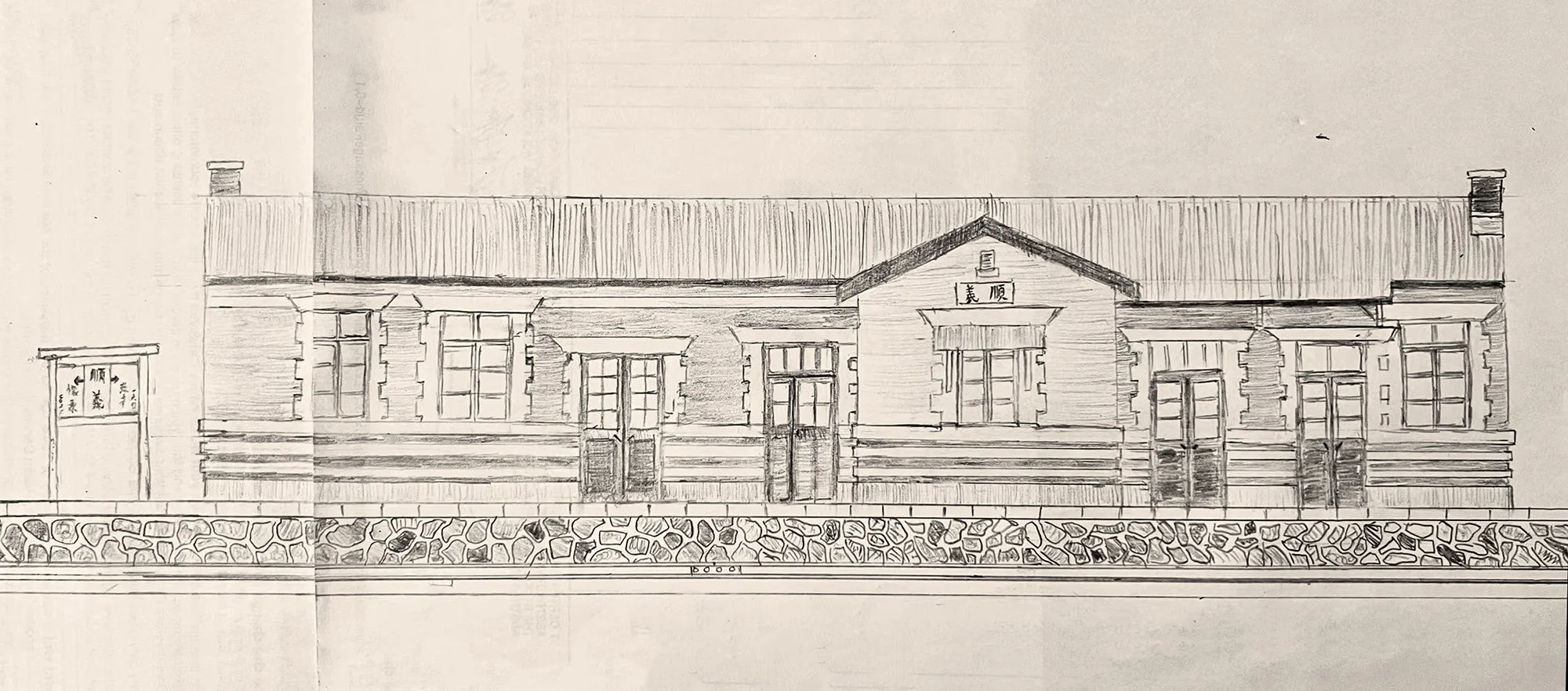
Built in 1939, the second-generation station building of the Shunyi Station on the Beijing-Gubei Railway. In that year, severe floods broke out in the Beijing region, washing away the first-generation station and its wooden station building. Consequently, Shunyi Station was relocated to the west of Shunyi City, where a brick-and-stone station building was established. Viewed from west to east, painted in October 2025.
In July 1865, British merchant Robert Durand, with the permission of the Westernization Movement leader Li Hongzhang and the Mayor of Shuntian Prefecture, constructed a narrow-gauge railway about one li long outside Xuanwumen in Beijing. A steam loco View fullsize

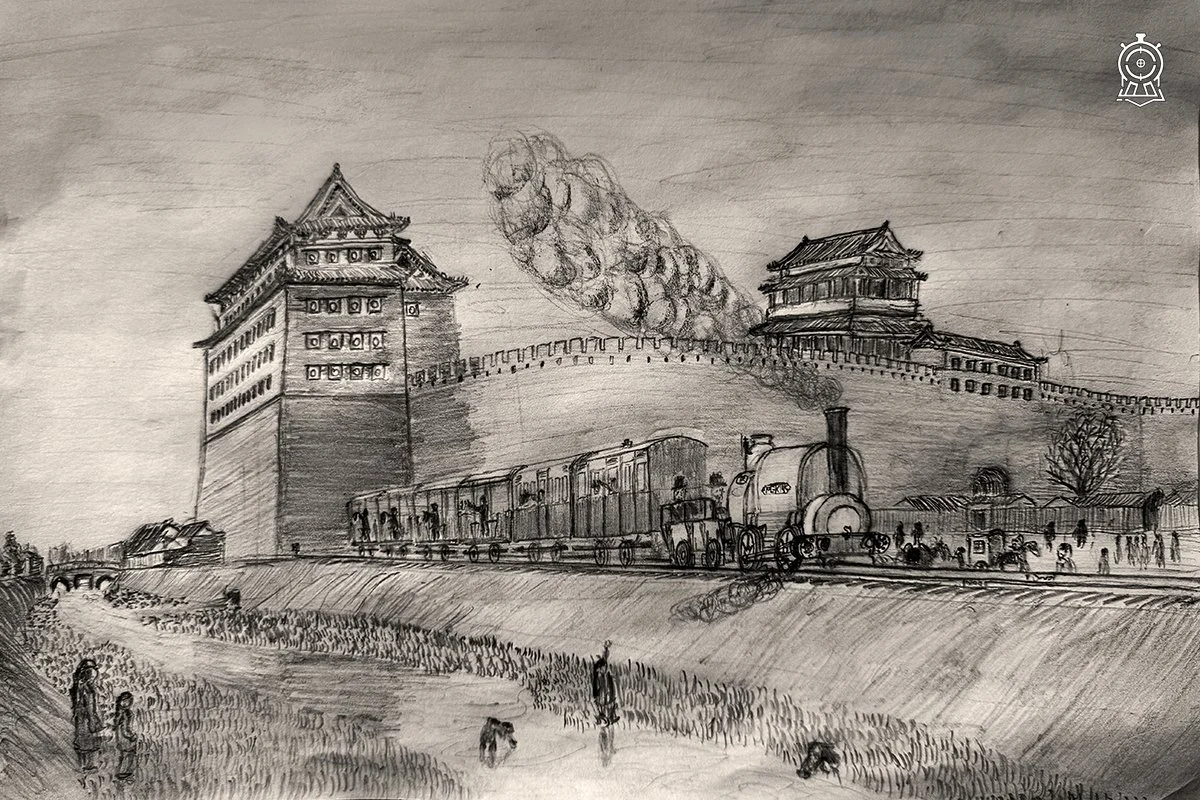
In July 1865, British merchant Robert Durand, with the permission of the Westernization Movement leader Li Hongzhang and the Mayor of Shuntian Prefecture, constructed a narrow-gauge railway about one li long outside Xuanwumen in Beijing. A steam locomotive hauled six passenger cars on the line to promote railways to the Qing court. According to records, the public was extremely astonished upon witnessing this spectacle, and subsequently, the Capital Gendarmerie Command (Dutong Yamen) dismantled the railway on the grounds that it was a "terrifying demonic device." This was the first railway in Chinese history. Painted in April 2026.

In early 1902, the temporary platform was situated on the west side of the Beijing Majiapu Station of the Inside-the-Shanhaiguan-Pass Railway, just before the impending arrival of Empress Dowager Cixi and the Guangxu Emperor. Located roughly 200 mete
Built on the high ground northeast of the Marco Polo Bridge (Lugou Bridge), the Lugouqiao Station of the Beijing-Hankou Railway was used to handle material transport trains running from Fengtai, and it also housed the Lugouqiao Machine Works. Followi
Built in 1939, the second-generation station building of the Shunyi Station on the Beijing-Gubei Railway. In that year, severe floods broke out in the Beijing region, washing away the first-generation station and its wooden station building. Conseque
In July 1865, British merchant Robert Durand, with the permission of the Westernization Movement leader Li Hongzhang and the Mayor of Shuntian Prefecture, constructed a narrow-gauge railway about one li long outside Xuanwumen in Beijing. A steam loco

Trains Chaser

1995-2026 Wang Wei . All Rights Reserved.

  • 原創影像: 本站所有由王嵬拍攝之照片版權均歸作者本人所有。

  • 歷史與授權影像: 本站部分展出之無版權歷史圖片、或經合作友人授權登載之影像,其版權歸原產權方或原創作者所有。

  • Original Photographs: All original photographs taken by Wei Wang are protected by copyright.

  • Historical & Licensed Images: Certain historical images (Public Domain) or photographs contributed by friends are property of their respective owners and used with permission/attribution.

目前網站仍在持續更新中,敬請期待。

The website is currently being updated regularly. Please stay tuned.

Contact

df41659@yahoo.com