
Underground Fortifications of the Old Jingzhang Railway Station: Extensive, Connected, and Secluded in Access
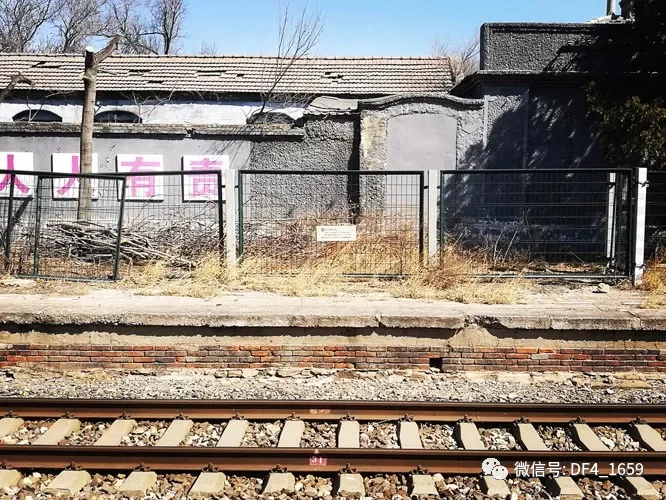
The abandoned Xibozi Station by the railway side carries a 109-year history
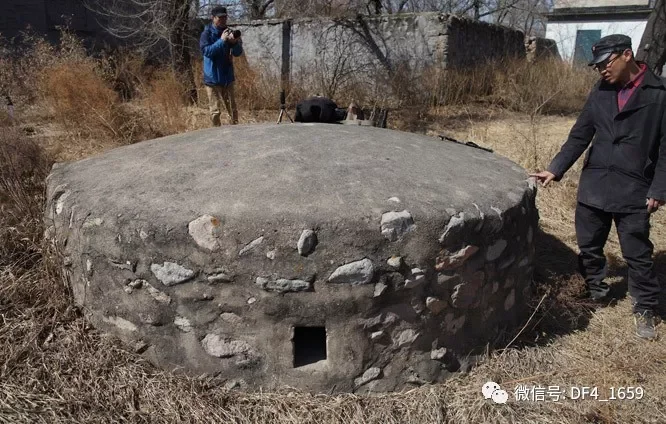
The blockhouse located behind the station building, constructed with concrete mixed with rubble
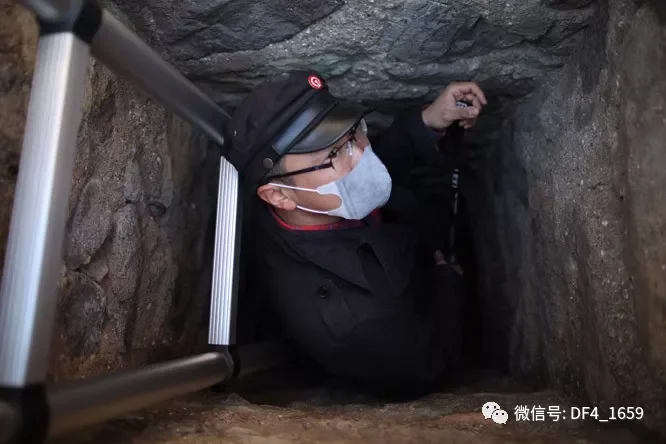
The narrow underground tunnel, just wide enough for one person to go up and down
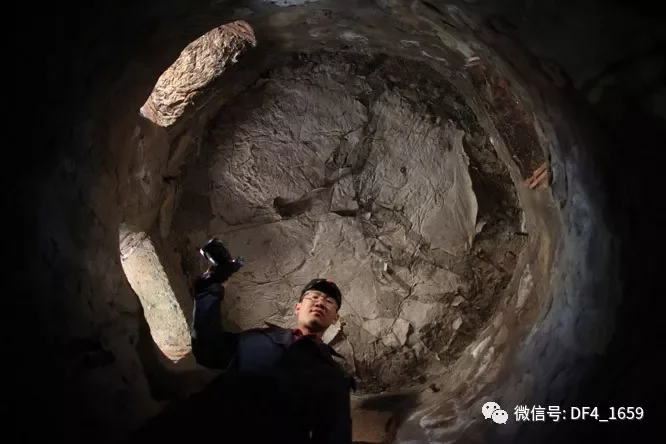
The interior of the blockhouse is dimly lit, illuminated only by the light entering through the four observation slits
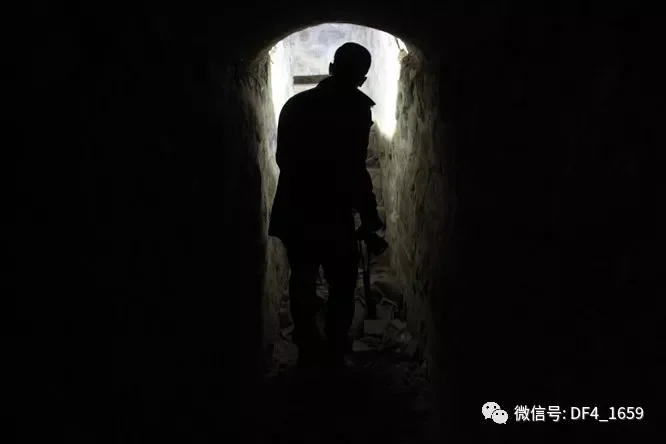
Wang Wei inspecting the tunnel with a flashlight; this tunnel leads to the old station building
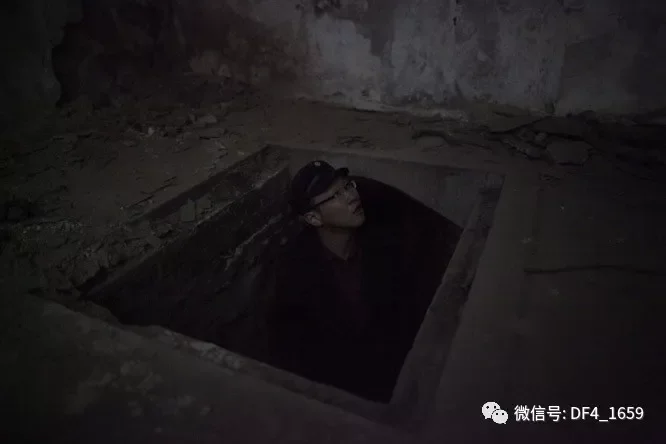
The entrance to the tunnel inside the old station building
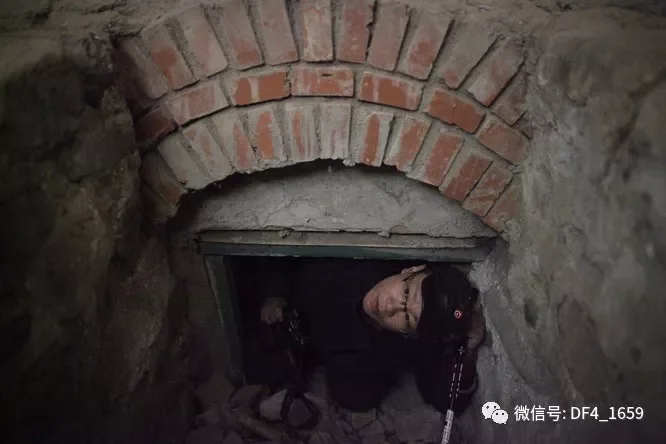
The small door leading into the blockhouse; the machine-pressed red bricks at the arched vault appear to be of modern construction
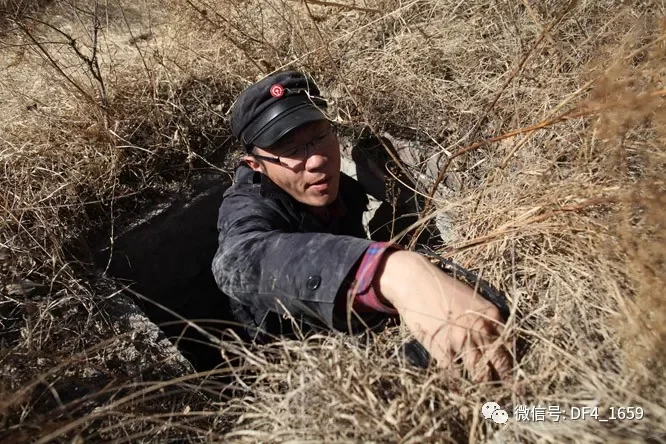
Another entrance hidden in the overgrown weeds
April 15, 2019, Beijing Youth Daily
The Abandoned Xibozi Station by the Railway Side Carries a 109-Year History
As a minor fourth-class station along the Jingzhang Railway line, Xibozi Station has a history of 109 years. Recently, while applying for cultural property recognition for Xibozi Station, railway culture scholar Wang Wei discovered that extensive underground fortifications, with depths, widths, and extents beyond ordinary imagination, were hidden beneath the old platform. Experts believe that these underground fortifications hold significant empirical value for studying the history of the Jingzhang Railway.
So who built these fortifications, and what is their structure like? Recently, a reporter from the Beijing Youth Daily, accompanied by experts, went deep into the underground fortifications of this abandoned old station to investigate.
What is Inside the Blockhouse? An Abandoned Old Station Building Conceals Extensive yet Secretly Accessed Underground Fortifications
Xibozi Station on the Jingzhang Railway is located 3 kilometers east of Badaling Station and 6.5 kilometers west of Kangzhuang Station. Having suspended passenger service around 2011, the minor station has been closed for many years, surrounded by overgrown weeds, and while the suburban S2 line passes through here, it does not stop. On the wasteland north of the old station building, a low, squat cylindrical blockhouse remains, about 3 meters in diameter and rising about 1 meter above the ground, constructed from concrete mixed with rubble, with four dim observation slits rising about 10 centimeters above the ground. Railway culture scholar Wang Wei deduced that this blockhouse was likely built by the Japanese invading forces. However, with no staff members on site and the surrounding area sparsely populated, no one could provide definitive historical information.
Recently, to assist the Yanqing District Bureau of Culture and Tourism in conducting cultural property recognition for Xibozi Station, Mr. Wang Wei went deep into the blockhouse to investigate. To gather firsthand materials, the Beijing Youth Daily reporter also accompanied him inside.
Amidst the overgrown weeds behind the old station building, a square opening loomed vaguely. The vertically excavated tunnel, about 3.5 meters deep, had its four walls constructed of concrete mixed with rubble. After careful observation and comparison, Wang Wei determined that this was the entrance and exit of the blockhouse and promptly lowered an iron ladder down.
Xibozi Station had been abandoned for many years. Before entering the cave, Wang Wei felt slightly nervous; on the one hand, due to the lack of maintenance on the old building over the years, the consequences of a potential cave-in would be unimaginable. On the other hand, because this blockhouse had been abandoned for years and was relatively damp and gloomy, the possibility of snakes injuring someone could not be ruled out. Therefore, both Wang Wei and the Beijing Youth Daily reporter prepared their equipment.
Accompanied by Mr. Wang, the Beijing Youth Daily reporter descended straight down the ladder into the underground cave. Upon reaching the bottom, the cave turned at a right angle and extended toward the blockhouse. The subsequent tunnel was pitch black, about 2 meters high with an arched ceiling, just wide and narrow enough for one person to pass through, and the floor was piled with garbage, making it difficult to move an inch. The small door of the blockhouse was almost blocked by large pieces of rubble, leaving only a small opening through which Wang Wei crawled. The semi-underground pillbox, with walls about 0.5 meters thick, had a narrow interior space, and thanks to the four observation slits, it finally had a little light. What puzzled Wang Wei was that to facilitate shooting, most pillbox observation slits are generally fan-shaped—narrow on the inside and gradually expanding outward—whereas the four observation slits of the Xibozi blockhouse were precisely the opposite: wide on the inside and gradually narrowing outward. In the tunnel leading to the pillbox, Wang Wei made new discoveries.
The tunnel branched eastward into a secret room of about 10 square meters, with no furnishings inside and door openings on both the east and west sides. Exiting through the west door revealed a "T"-shaped fork: turning left led to another underground tunnel entrance, also vertically excavated; advancing to the right and crawling out of another opening led into the abandoned old station building, evoking an eerie and terrifying feeling. Contrary to the dampness and humidity previously imagined, the air in the underground fortifications was dry and filled with thick dust.
The Beijing Youth Daily reporter noted that all three entrances and exits appeared in the form of underground caves and were extremely secluded. The blockhouse, secret room, and station building were connected in series by tunnels, featuring internal and external joint defense and extending in all directions, easily reminiscent of the famous tunnel warfare.
Wang Wei told the Beijing Youth Daily reporter that he had heard rumors of underground fortifications at stations along the Jingzhang Railway, but this was his first time experiencing it firsthand. Questions followed: railway stations were originally places for handling passenger and freight operations, so why build underground fortifications? And who built them?
Who Were the Builders? The Blockhouse Was Suspected to Have Been Built by Japanese Forces, Later Renovated and Expanded into Air-Raid Shelters After 1949
Wang Wei stated that there are many military relics along the Jingzhang Railway, mostly structures built by the Japanese invading forces. At Qinglongqiao Station, barracks, barrier walls, and pillbox fortifications built by the Japanese military remain. Dongyuan Station, Juyongguan Station, and Sanbao Station, built during the same period as Xibozi Station, all bear the imprint of the Japanese military. However, inside the underground fortifications at Xibozi Station, he noticed that some walls and arches used machine-pressed red bricks, which did not appear very old; it could not be ruled out that the underground fortifications were built during the preparations for war and against famine in the 1960s. Air-raid shelters excavated after 1949 also exist at the old station building of Changping Station and Qinglongqiao Station.
Through on-site photographs, Professor Wang Ruiying from Beijing University of Civil Engineering and Architecture analyzed that the blockhouse may have originally been built by the Japanese invading forces, though the use of machine-pressed red bricks at that time was very unlikely. It is possible that during the post-liberation period of war and famine preparations, Chinese soldiers and civilians renovated and expanded the original blockhouse, resulting in underground fortifications extending in all directions. The Beijing Youth Daily reporter noted that Xibozi is a crucial throat thoroughfare leading to the capital, possessing extremely important geographical significance and serving as a contested battleground for strategists throughout history. According to the Local Annals of the Xizhimen Train Section, after the entire Jingzhang Railway opened to traffic in 1909, to increase passing capacity, four stations—Dongyuan, Juyongguan, Sanbao, and Xibozi—were added between Nankou and Kangzhuang stations, administered by the Jingzhang Railway Administration Bureau. Xibozi Station was originally built in 1910 (the second year of the Xuantong reign in the Qing Dynasty). In September 1937, the Japanese army occupied the Yanqing area, and Xibozi Station fell under the rule of the Japanese invading army until they signed the surrender in 1945.
Yang Cunxin, the stationmaster of Qinglongqiao Station, told the Beijing Youth Daily reporter that many military facilities along the Jingzhang Railway were left behind by the Japanese invading forces, but there were also air-raid shelters constructed during the war and famine preparation period, which were abandoned as Sino-Soviet relations eased. However, more than half a century later, few people are likely able to clearly explain the historical changes of Xibozi Station.
Wang Wei sought out several veteran train drivers, all of whom knew nothing about the underground fortifications at Xibozi Station. He hopes to find more direct eyewitnesses to clarify the situation of the underground fortifications.
Interview: Many Relics Along the Jingzhang Railway Are Urgently in Need of Cultural Property Recognition
Interviewee: Wang Wei (Railway culture scholar. Born in 1990, he has been photographing and recording the Jingzhang Railway since the age of 12, documenting its historical changes through field surveys, on-site measurements, hand-drawn restoration diagrams, and oral history investigations... In June 2017, his new book My Jingzhang Railway was published, which is equivalent to a comprehensive cultural relic survey report of the entire Jingzhang Railway.)
Beijing Youth Daily: How much historical value do the underground fortifications of Xibozi Station hold for the Jingzhang Railway?
Wang Wei: The Jingzhang Railway is the first trunk railway surveyed, designed, and constructed independently by the Chinese. As a linear industrial cultural heritage, it not only possesses the "Z"-shaped (switchback) railway and quaint station buildings, but modern and contemporary military relics are also an important component of the Jingzhang Railway. Complete underground fortifications like those at Xibozi Station are the first I have seen on the Jingzhang Railway; although their construction period still needs further textual research, they are bound to be products of a special historical period, making the cultural heritage of the Jingzhang Railway more diverse and rich.
Beijing Youth Daily: It is said that you have submitted a cultural property recognition application to the Yanqing District cultural heritage authorities. What is the current progress?
Wang Wei: On October 29, 2018, regarding the old station building and underground fortifications of Xibozi Station, as well as the old station building, engine house, steam locomotive water tower, and railway worker dormitories of Kangzhuang Station on the Jingzhang Railway, I submitted the Application for Immovable Cultural Property Recognition to the Yanqing District Culture Commission. Following a new round of institutional reforms, the Yanqing District Bureau of Culture and Tourism was officially established, and the Application Form was transferred to the Cultural Relics Section of the bureau. In late March and early April, Section Chief Fan of the Cultural Relics Section began promoting this matter, and we conducted one-by-one visits to these old buildings, with expert panel reviews to follow in the next step. At the same time, I also submitted a cultural property recognition application to the Xicheng District cultural heritage authorities regarding a 1918 Jingzhang Railway building complex in Xizhimen.
Beijing Youth Daily: Many of the application projects this time involve the Kangzhuang area. Could you talk about the architectural remnants in Kangzhuang?
Wang Wei: The "Nankou to Badaling Section" of the Jingzhang Railway has been announced as a major historical and cultural site protected at the national level. The next station out of Badaling is Xibozi, and the station after that is Kangzhuang. The old station building of Kangzhuang Station was completed in 1909 and is relatively well-preserved, serving as the former site of the Kangzhuang Railway Party Branch of the Communist Party of China. The Kangzhuang Engine House is one of the few surviving engine houses on the Jingzhang Railway, currently surrounded by overgrown weeds with obvious fire hazards. The Kangzhuang steam locomotive water tower is the only surviving steam locomotive water tower in the Beijing section of the Jingzhang Railway. These unique historical buildings are not officially registered cultural relics and are not protected by the Cultural Relics Protection Law.
Beijing Youth Daily: Could you discuss the importance of cultural property status for the historical buildings along the Jingzhang Railway?
Wang Wei: The "imperial carriage house" (huachefang) in the Nankou Station area of the Jingzhang Railway was completed in 1909, and this old building still lacks cultural property status, with its roof having collapsed for a year without anyone repairing it. The "Chounikeng Bridge No. 23" located within the Nankou-to-Badaling national-level cultural protection section was washed away by floods in 1939, leaving behind two abutments from 1909, but it was not announced as a cultural relic and was buried in 2017 due to river channel renovations. Also in 2017, the Nanshahe Bridge and Beishahe Bridge on the Jingzhang Railway were demolished successively; neither of these century-old railway bridges obtained official cultural property recognition. To rescue the old buildings of the Jingzhang Railway, from 2015 to the present, I have successively submitted cultural property recognition applications to local cultural heritage authorities regarding the "old station building of Qinghe Railway Station, the steam locomotive water tower of Xiahuayuan Station, and the old station building of Changping Station," all of which eventually obtained official cultural property recognition. Without cultural property status, these old buildings are very likely to be destroyed by various new construction projects.
Beijing Youth Daily: Does your repeated submission of cultural property recognition applications expose a lack of overall protection for the Jingzhang Railway?
Wang Wei: Architectural remnants along the entire Jingzhang Railway are abundant, including not only old station buildings, but also platforms, engine houses, coal platforms, water towers, water cranes, inspection pits, imperial carriage houses, freight warehouses, office buildings, factories, bridges, tunnels, culverts, retaining slopes, and railway equipment such as rails, switches, signals, locomotives, and rolling stock. They are all important components of the Jingzhang Railway, but those that have obtained cultural property recognition are mainly concentrated in individual buildings and sections—the Nankou to Badaling section is recognized as a national-level key cultural protection unit, while others like Xizhimen Station are municipal-level cultural protection units, and Qinghuayuan Station is a census-registered cultural relic of the lowest level. However, there are still many historical buildings without cultural property status, such as Xibozi Station and the Kangzhuang Station building complex, some of which present obvious safety hazards and are in urgent need of protection.
Text / Beijing Youth Daily Reporter Cui Yifei
Photography / Beijing Youth Daily Reporter Cui Yifei
Editor / Cui Yifei
