
Century-Old Jingzhang Railway Engine House Reported to Pose Fire Hazards
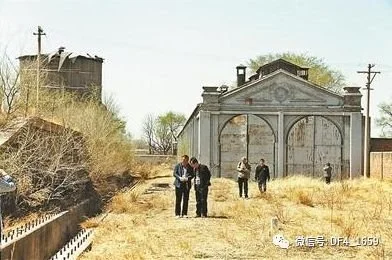
Dense weeds on the south side of the Kangzhuang Engine House run high, and once ignited, they could easily endanger this precious century-old historical building.
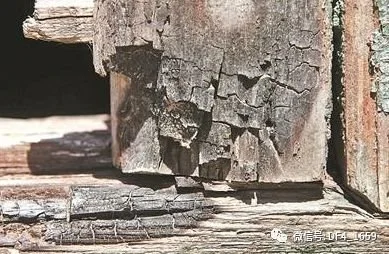
The wooden window frames show scorch marks, proving that the old building has caught fire in the past.
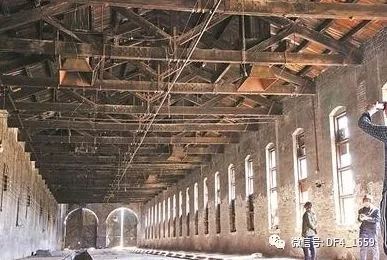
The roof trusses and lifting smoke jacks inside the engine house are entirely wooden structures, and the consequences of a fire would be unimaginable.
April 17, 2019, Beijing Youth Daily
The 110-year-old Kangzhuang Engine House of the Jingzhang Railway, featuring a brick-and-timber structure, not only shows scorch marks on its wooden windows but is also surrounded by spreading overgrown weeds... Railway culture scholars believe that such an environment easily triggers fires, endangering precious historical buildings.
It is understood that to protect these historical buildings, the Yanqing District cultural heritage authorities are advancing the cultural property recognition work for railway architectural heritages along the Jingzhang Railway, such as the Kangzhuang Engine House.
Recently, railway culture scholar Wang Wei posted a message on WeChat Moments: "I was fortunate to lead cultural heritage experts and railway department personnel to the Kangzhuang Jingzhang Railway building complex for cultural property recognition. However, during the visit, I discovered scorch marks on the window frames of the Kangzhuang Engine House, surrounded by rampant weeds. May these carriers of Jeme Tien Yow's spirit receive protection as soon as possible."
The Kangzhuang Engine House was completed in 1909 and is also referred to as the locomotive shed, garage, or large warehouse. It is located near the Kangzhuang Railway Station in Yanqing District. The engine house is 100 meters long and about 11 meters wide, with 32 tall windows on both the north and south sides, and its architectural style approximates that of a European-style church. However, having been abandoned for many years, the two railway tracks inside the warehouse have been removed, the east-facing arched door is tightly closed, most of the glass windows are broken and letting in the draft, and only tattered wooden window frames sway in the wind.
Just as Wang Wei stated, scorch marks exist on some window frames, and the originally brown wooden frames have turned charred black. This deeply worries Wang Wei, because in addition to the wooden window frames, rows of stout roof beams and trusses, 12 lifting smoke jacks, and 6 skylights inside the large warehouse are all timber structures. On the southwest side of the engine house, an observation loft protruding from the exterior wall, along with its bargeboards and decorative ornaments right above resembling hanging fish (a signature decorative feature of the Jingzhang Railway), also utilize timber. What makes Wang Wei most uneasy, however, is the overgrown weeds surrounding the warehouse. The Beijing Youth Daily reporter noted that the south and east sides of the engine house are covered in vast patches of withered grass, particularly dense on the south side where it reaches up to half a meter deep in places, clearly left uncleared for a long time. Inside and outside the engine house, the Beijing Youth Daily reporter did not observe any fire-fighting facilities or safety signs.
"Weeds are extremely easy to ignite from cigarette butts, and the consequences would be unimaginable!" Wang Wei told the Beijing Youth Daily reporter that his first visit to the Kangzhuang Engine House was on August 16, 2003. At that time, someone was still on duty around the warehouse, and the weeds could be cleared in a timely manner, but that same year the engine house was deactivated and gradually abandoned. By 2011, there was no one on duty around the warehouse anymore, anyone could enter and exit at will, and the main structure steadily fell into decay.
Abundant Jingzhang Railway Remnants in the Kangzhuang Area, Yet Lacking Cultural Property Status
As Wang Wei recorded in his book My Jingzhang Railway, Jeme Tien Yow built the engine house in Kangzhuang primarily for the turnaround and servicing of mountain-grade locomotives and ordinary locomotives west of Kangzhuang. Engine houses are particularly important for steam locomotives because exposure to wind and rain invariably damages them. The large warehouse could accommodate 8 steam locomotives. Constructing this garage used 200,000 grey bricks fired locally in Kangzhuang, along with 130,000 catties of cement and lime from Zhoukoudian. Because the Guan沟 section was not yet open to traffic when the garage was built, these materials were transported by train to Nankou and then transferred and hauled by mules, horses, and camels.
Wang Wei told the Beijing Youth Daily reporter that to expel the smoke of steam locomotives as quickly as possible, two layers of smoke jacks—inner and outer—were installed on the roof of the garage: the outer layer was fixed to the top of the garage with a rain cap on it; the inner layer could be raised and lowered to fit directly over the smoke stack of a steam locomotive. And these ingenious smoke jacks were basically assembled using timber and have survived to this day. According to Wang Wei's statistics, at the time of the Jingzhang Railway's completion, there were a total of 6 engine houses dedicated to parking steam locomotives, located respectively in Mentougou, Xizhimen, Nankou, Kangzhuang, Xiahuayuan, and Zhangjiakou, excluding the imperial carriage house and maintenance shed at Nankou. After 2002, four of these engine houses were dismantled, leaving only the two in Nankou and Kangzhuang.
The Beijing Youth Daily reporter noted that right beside the Kangzhuang Engine House stands a steam locomotive water tower used for supplying water to steam locomotives. Also constructed in 1909, it is the only surviving steam locomotive water tower in the Beijing section of the Jingzhang Railway and, like the engine house, lacks cultural property status. Wang Wei introduced that the architectural remnants of the Jingzhang Railway in the Kangzhuang area are abundant. In addition to the engine house and the steam locomotive water tower, there are contemporaneous old station buildings, coal platforms, supervisory offices, railway worker dormitories, old steel rails, and pillboxes left from the war years, forming a complete series of Jingzhang Railway architectural heritage clusters. However, during successive national cultural relic censuses, they missed out on cultural property status due to various reasons.
Relevant Departments Initiate Cultural Property Recognition; Railway Unit Claims the Building Is Safe
On October 29, 2018, regarding the Jingzhang Railway architectural remnants in Kangzhuang and other places, Wang Wei submitted the Application for Immovable Cultural Property Recognition to the approval section of the Yanqing District Culture Commission. In late March 2019, these application projects were transferred to the Yanqing District Bureau of Culture and Tourism, where Section Chief Fan of the Cultural Relics Section began advancing the cultural property recognition work.
On April 16, under the leadership and organization of the Yanqing District Bureau of Culture and Tourism, more than 10 people, including experts from the Beijing Cultural Relics Authentication Committee and relevant railway units, conducted an on-site visit to the Jingzhang Railway architectural remnants in Kangzhuang and elsewhere, with Wang Wei expounding on the heritage value on site. It is understood that the opinions of the cultural relic experts will determine the future fate of these Jingzhang Railway architectural remnants, and the recognition work is progressing step by step.
Regarding the fire hazard issue of the engine house, the Beijing Youth Daily reporter called the Nankou Construction Work Area under the Beijing Construction Section of China Railway Beijing Group Co., Ltd., based on the information posted on the signage of the garage building. A male staff member responded that the Nankou Construction Work Area is responsible for maintaining building equipment but is not the user unit of the Kangzhuang Engine Shed. The user unit is the locomotive section, and management follows usage, but he was not clear on which specific locomotive section it is. This staff member also stated that he participated in the on-site inspection on April 16, and the large warehouse should be very safe.
Text / Beijing Youth Daily Reporter Cui Yifei
Photography / Beijing Youth Daily Reporter Cui Yifei
Editor / Ji Fei
