
The 'Fengtai Qiaonan Heritage Railway Building Complex' Included in the Fourth National Cultural Relics Census as a Cultural Relic Lead
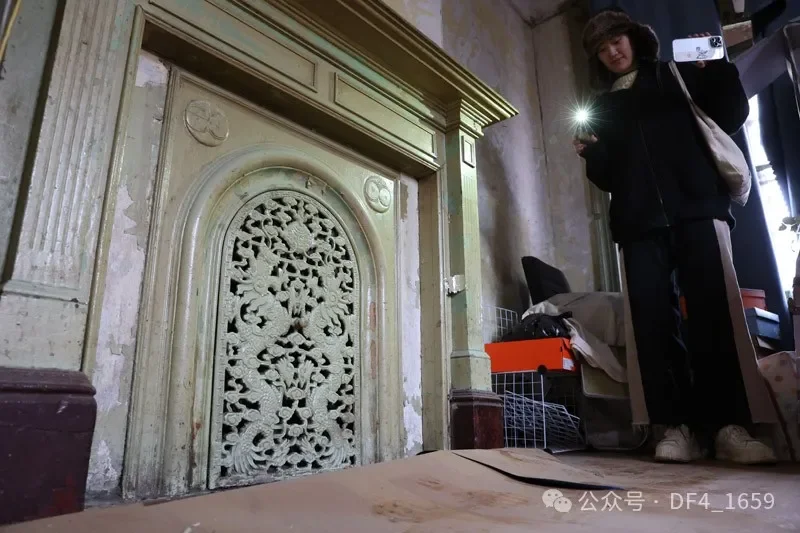
Western-style fireplace accessorized with a "two dragons playing with a pearl" fire screen
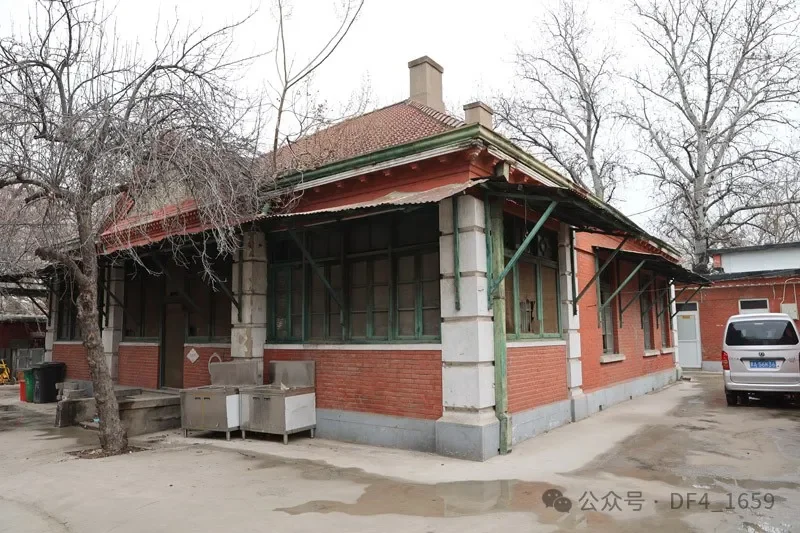
The Western-style house within the courtyard of the Comprehensive Mechanical Workshop of the Fengtai Permanent Way Section
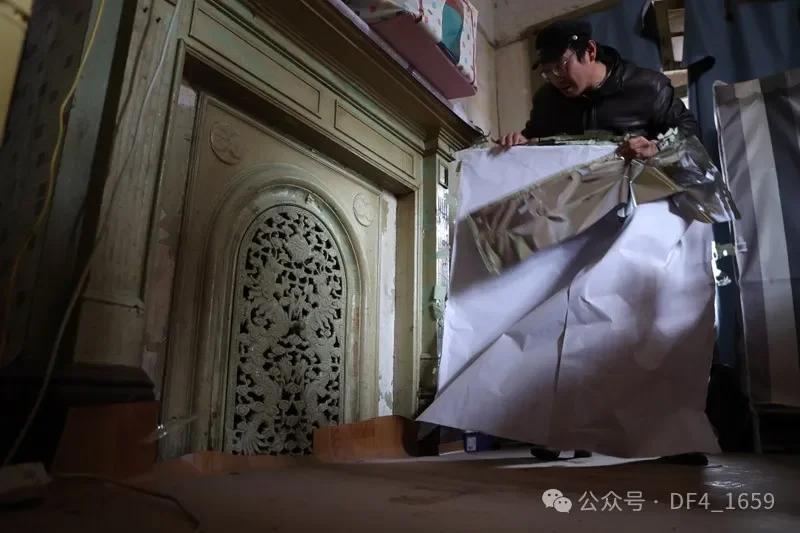
Wang Wei uncovering the plastic sheet
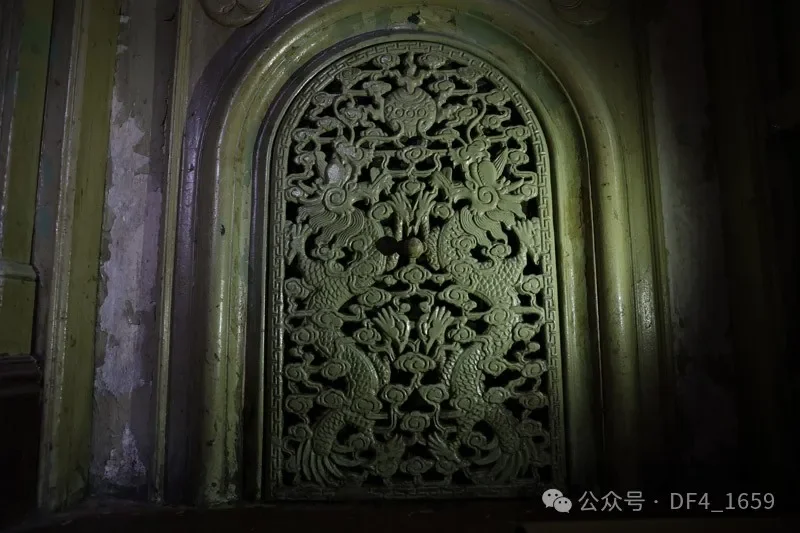
Fireplace fire screen
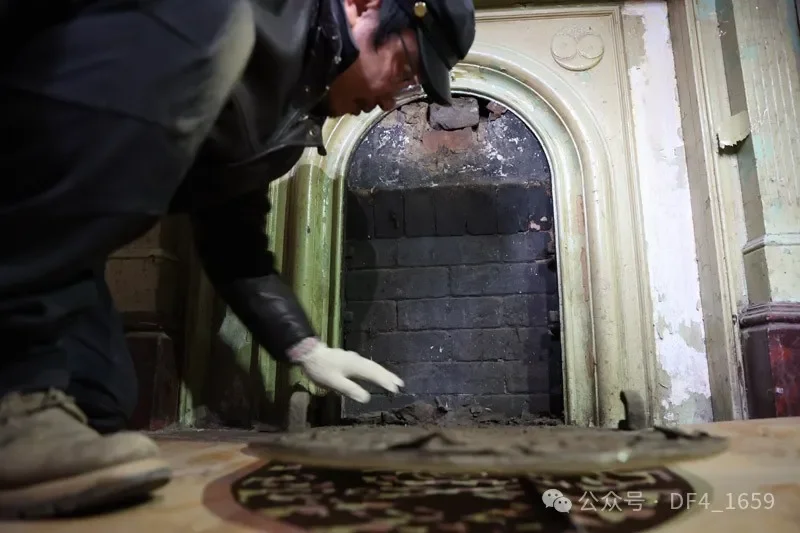
The hearth has been sealed with bricks by someone.
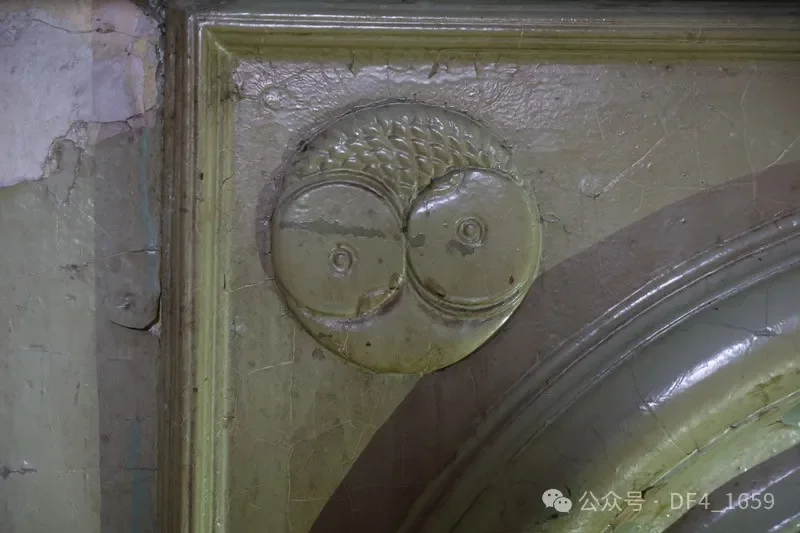
Deformed owl patterns
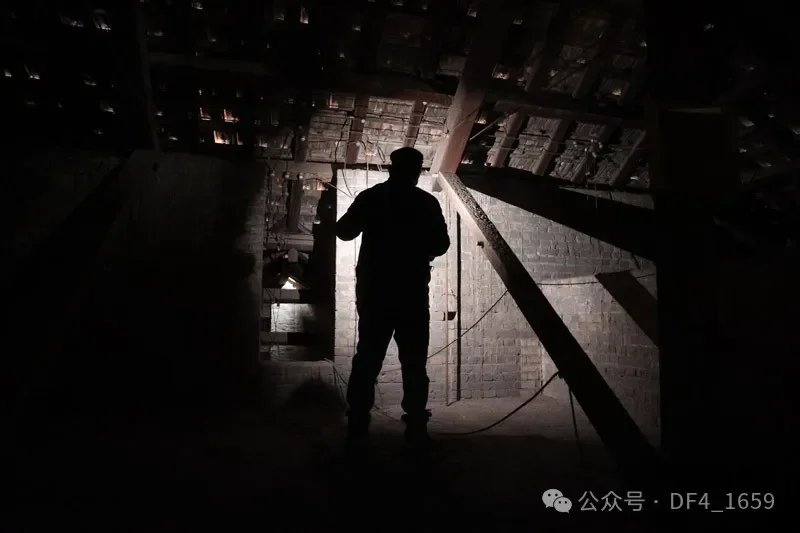
Wang Wei conducting a survey in the attic
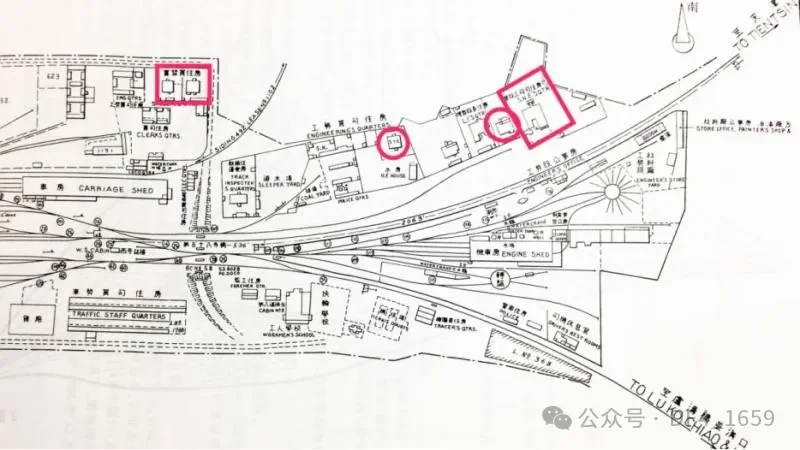
"Fengtai Locomotive Section Plan" from the early 1930s (cited from Chronicles of Fengtai Locomotive Section 1897-1997)
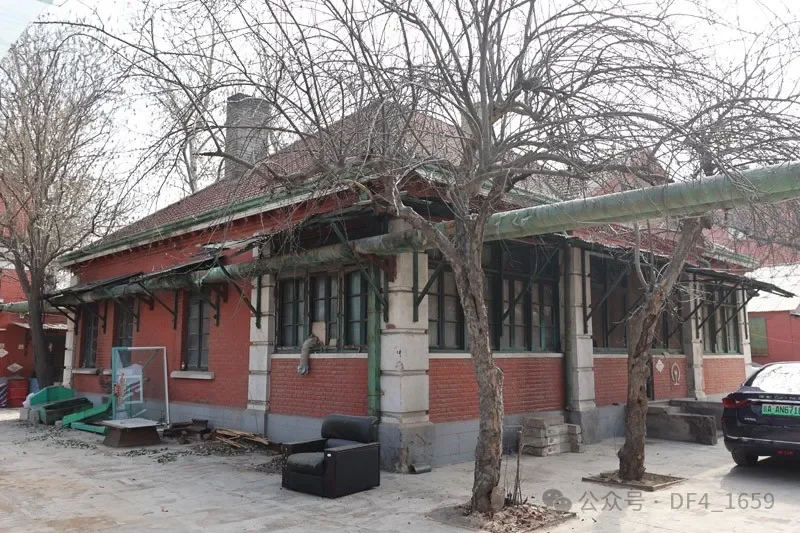
The Western-style house within the courtyard of the Comprehensive Mechanical Workshop of the Fengtai Permanent Way Section
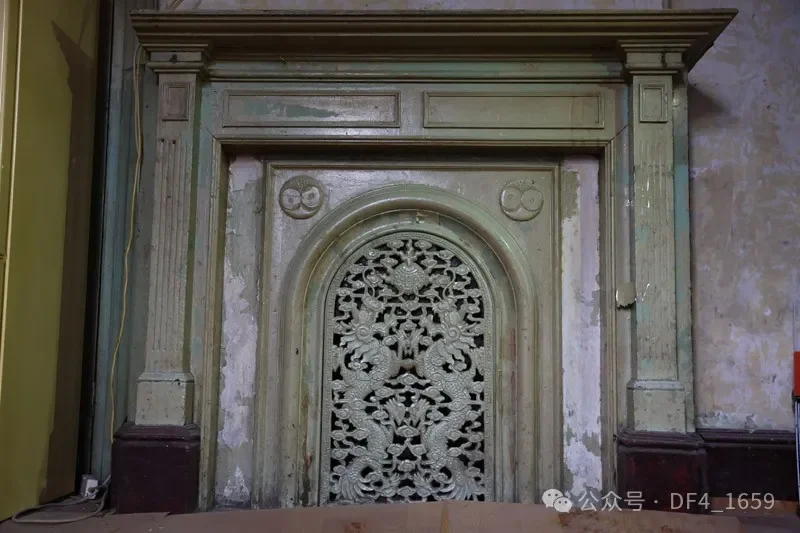
Fireplace
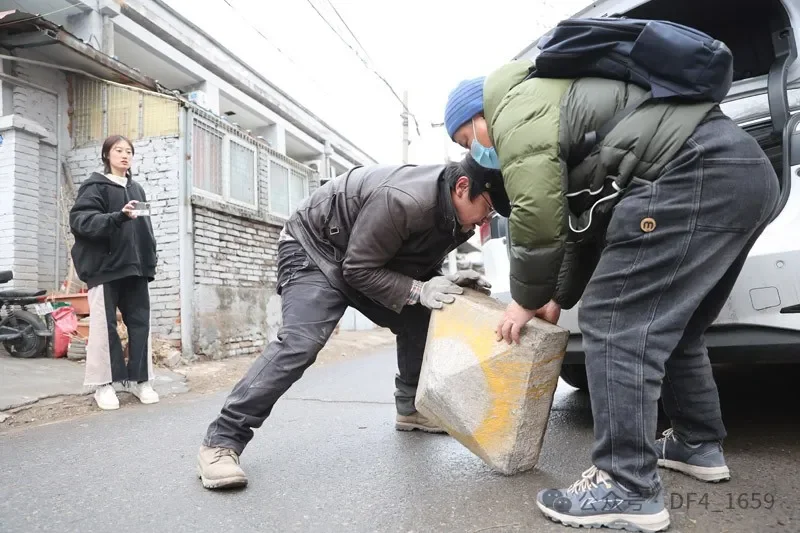
Wang Wei (middle) collecting scattered architectural components
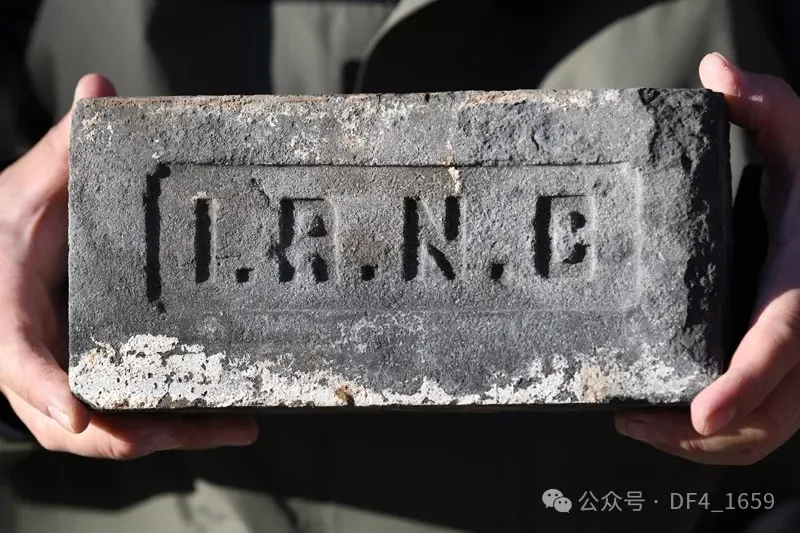
Imperial Railway of North China lettered brick
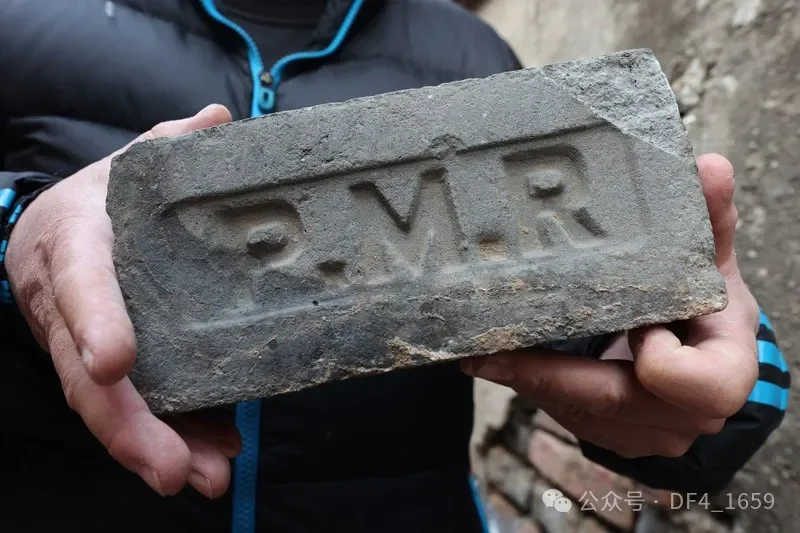
Peking-Mukden Railway lettered brick
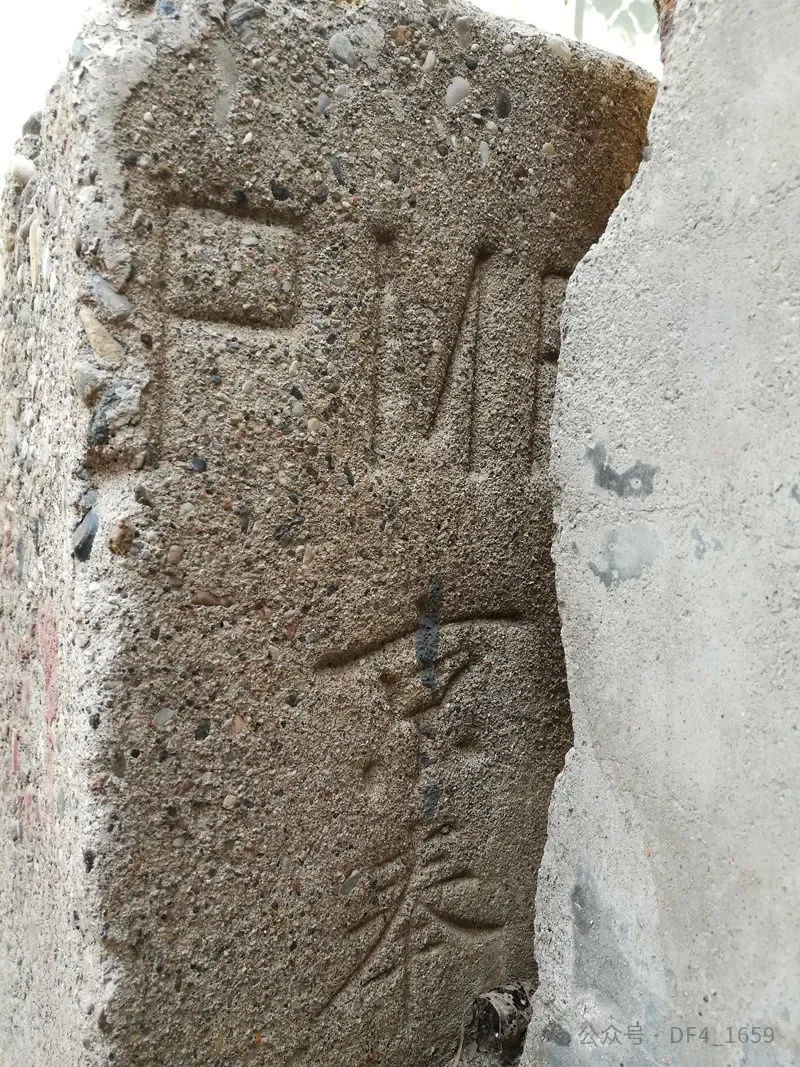
Peking-Mukden Railway boundary stone
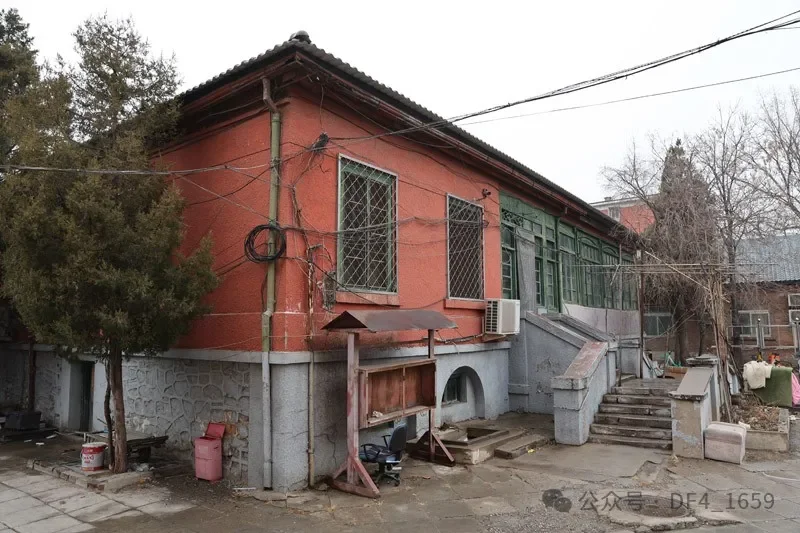
The Western-style house within the courtyard of No. 18 Zhengyang Xinkailu
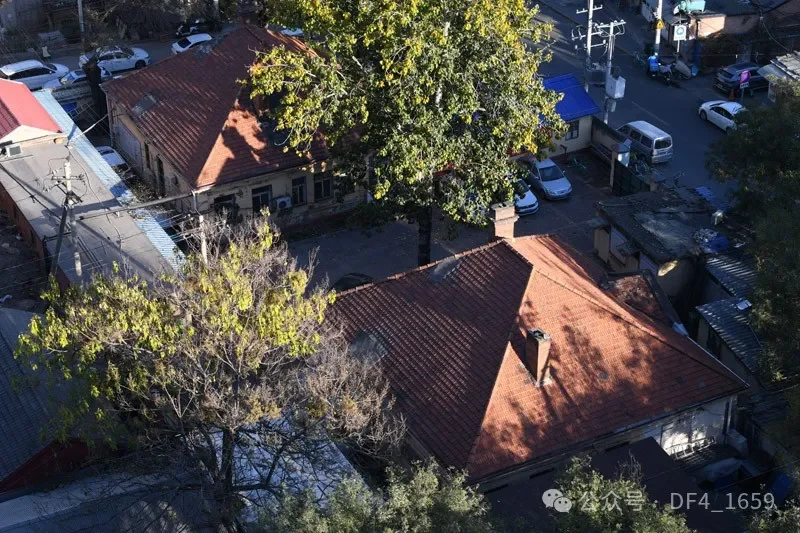
The two Western-style houses on the east side of the Fengtai Railway single apartment building
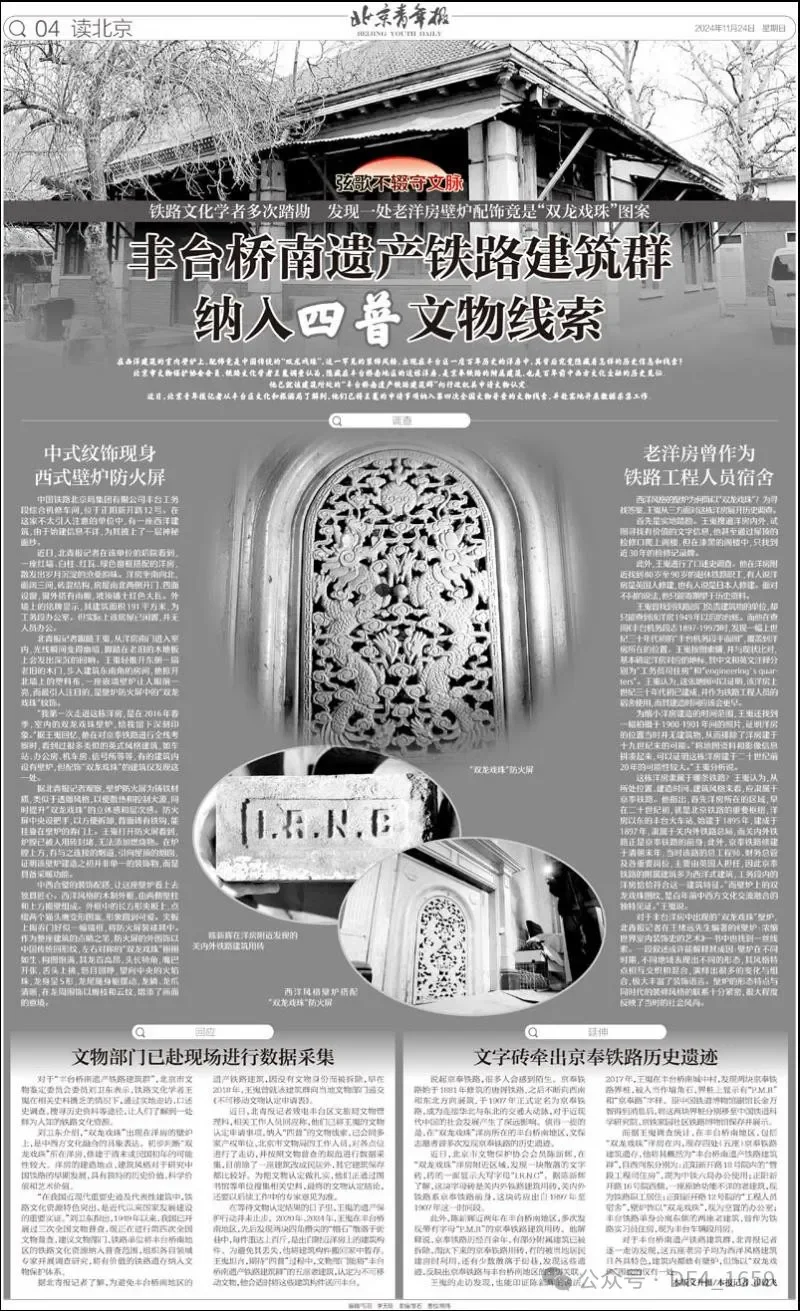
November 24, 2024, Beijing Youth Daily
On the indoor fireplace of a Western-style building, the ornamentation turns out to be the traditional Chinese "two dragons playing with a pearl." This rare decorative style appears in a century-old Western-style house in Fengtai District. What historical information and clues are actually hidden behind it? Wang Wei, a member of the Beijing Cultural Relics Protection Association and a railway cultural scholar, believes through investigation that this Western-style house hidden in the Fengtai Qiaonan area is an affiliated building of the Peking-Mukden Railway and also a historical witness to the integration of Chinese and Western cultures a century ago. He has already applied to the administrative authorities for cultural relics recognition regarding the "Fengtai Qiaonan Heritage Railway Building Complex" where this building is located.
Recently, Beijing Youth Daily reporters learned from the Fengtai District Bureau of Culture and Tourism that they have included Wang Wei's application matter into the cultural relic leads of the fourth national cultural relics census and have gone to the site to carry out data collection work.
Traditional Chinese Motifs Appear on Western-Style House Fireplace
The Comprehensive Mechanical Workshop of the Fengtai Permanent Way Section of China Railway Beijing Group Co., Ltd. is located at No. 12 Zhengyang Xinkai Road. In this unassuming unit, there is a Western-style building whose construction information is unknown, shrouding it in a layer of mystery. Recently, Beijing Youth Daily reporters saw in the backyard of this unit a Western-style house with red walls, white pillars, red tiles, and green window frames, exuding a weathered charm precipitated by time. The house faces south and has a width of three bays, featuring a brick-concrete structure. Doors are opened on both the north and south sides of the building, with windows set on all four sides. Rain awnings are built outside the windows, and the sloped roof is covered with reddish-brown clay tiles. A nameplate on the exterior wall shows that its building area is 191 square meters, serving as the office of the permanent way section. In reality, however, the house has been idle with no personnel working there.
Following Wang Wei, a Beijing Youth Daily reporter entered the interior from the south door of the Western-style house. The light instantly became dim, and footsteps on the old wooden floor produced a deep echo. Wang Wei gently pushed open an old wooden door on the east side and stepped into the room in the southeast corner of the building. He lifted the plastic sheet on the north wall, and a built-in fireplace instantly caught the eye. Most eye-catching of all was the "two dragons playing with a pearl" motif within the fireplace fire screen. "The first time I walked into this Western-style house was in the spring of 2016, and the indoor fireplace with the two dragons playing with a pearl left a deep impression on me." According to Wang Wei's recollection, during his comprehensive survey of the Peking-Mukden Railway, he had seen many similar British-style buildings, such as stations, office buildings, locomotive depots, and signal cabins. Some buildings had fireplaces inside, but this was the only one found with the "two dragons playing with a pearl" decoration.
According to the observation of Beijing Youth Daily reporters, the fireplace fire screen is made of cast iron, similar to an openwork style, to facilitate heat dissipation and fire source control while enhancing the three-dimensional sense and hierarchy of the "two dragons playing with a pearl." A handle is provided in the center of the fire screen for easy disassembly, and iron hooks are cast on the back so it can be hung on the arch door of the fireplace. Wang Wei opened the fire screen and saw that the hearth had been sealed with bricks by someone, making it impossible to add combustible materials. Above the hearth, there is a connected flue leading to the chimney on the roof, proving that when the fireplace was built, it was not a mere decoration but possessed heating functions. The combination of Chinese and Western decorative pairings makes this fireplace look ingenious. The Western-style wooden outer frame consists of pilasters on both sides and an entablature above. On the rectangular plywood within the outer frame, two deformed owl patterns are dotted, with plump and cute shapes. An arch door is hollowed out on the plywood like a picture frame, framing the fire screen inside. As the finishing touch of the entire building, the outer periphery of the fire screen is decorated with traditional Chinese meander patterns. The symmetrically balanced "two dragons playing with a pearl" are lifelike with a full composition. Their dragon heads are held high with horns, mouths open wide, tongues curled upward, and eyes wide open and staring fiercely at the flaming pearl in the center. The dragon bodies are S-shaped, their tails sway with the bodies, and their scales and claws are clearly defined. Surrounded by winding branches and cloud patterns, the atmosphere of the picture is further enhanced.
The Western-Style House Served as Railway Engineering Personnel Quarters in the 1930s
Why was a Western-style fireplace decorated with "two dragons playing with a pearl"? To find the answer, Wang Wei launched a historical investigation into this Western-style house from three aspects.
First is field surveying. Wang Wei searched everywhere inside and outside the Western-style house trying to find valuable written information, and even climbed into the attic through the roof access hatch, but in the dark attic, he only found maintenance record plates from the nearly 30 years. In addition, Wang Wei conducted oral history investigations. He found retired railway workers aged 80 to 90 near the Western-style house; some said the Western-style house was built by the British, while others said it was built by the Japanese. Faced with different statements, he could only pin his hopes on historical materials.
Wang Wei once sought out the railway department unit responsible for buildings, but could only check the ledger of this Western-style house after 1949. When reviewing the Chronicles of Fengtai Locomotive Section (1897-1997), however, he discovered a "Fengtai Locomotive Section Plan" from the early 1930s that covered the location of the Western-style house. Following the map to find the location and comparing it with the current situation, Wang Wei basically identified the corresponding landmark of the Western-style house, whose Chinese and English annotations were "工務員司住房" (engineering personnel quarters) and "engineering’s quarters," respectively. Wang Wei believes that this map can prove that the Western-style house had already been built by the early 1930s and was used as quarters for railway engineering personnel, while its construction time should be even earlier. To narrow down the time range for the construction of the Western-style house, Wang Wei also found a photograph taken between 1900 and 1901, proving that there were no buildings at the location of the Western-style house at that time, thereby ruling out the possibility that it was built at the end of the nineteenth century. "Piecing together the map data and image information can prove that this Western-style house is most likely built in the first 20 years of the twentieth century," Wang Wei analyzed.
Which railway did this Western-style house belong to? Wang Wei believes that judging from its location, construction time, and architectural style, it should belong to the Peking-Mukden Railway. He pointed out that first, the area where the Western-style house is located was an important hub for Beijing railways as early as the beginning of the twentieth century. Fengtai Railway Station, east of the Western-style house, was initially built in 1895 and completed in 1897, belonging to the Imperial Chinese Railway Administration, which was the predecessor of the Peking-Mukden Railway. In addition, the Peking-Mukden Railway was built in the late Qing Dynasty. At that time, the chief engineer, financial director, and various major professional positions of the railway were primarily held by British nationals. Therefore, the affiliated buildings of the Peking-Mukden Railway were mostly Western-style buildings, and the Western-style house within the permanent way section precisely matches this architectural feature. "And the 'two dragons playing with a pearl' pattern on the fireplace is a unique witness to the cultural exchange and integration between China and the West a century ago," Wang Wei said.
Regarding the "two dragons playing with a pearl" fireplace appearing in the Fengtai Western-style house, Beijing Youth Daily reporters also found a clue in the book Fireplaces: An Art Concentrating the History of World Interior Decoration, edited by Mr. Wang Xuyuan. A passage may explain its causes: fireplaces exhibit different forms in different periods and regions, and their stylistic characteristics interweave and mix,演绎 (interpreting) many changes and combinations, greatly enriching the decorative language. The morphological characteristics of fireplaces are closely connected with the interior decoration style of the same era, largely reflecting the social trends of that time.
Cultural Relics Departments Have Gone to the Site for Data Collection
Regarding the "Fengtai Qiaonan Heritage Railway Building Complex," Liu Weidong, a member of the Beijing Cultural Relics Appraisal Committee, stated that in the absence of relevant historical materials, railway cultural scholar Wang Wei made people aware of an obscure railway cultural resource through field visits, oral history investigations, and searching for historical materials.
Liu Weidong introduced that the appearance of "two dragons playing with a pearl" on the fireplace of the Western-style house is a concrete expression of the integration of Chinese and Western cultures. It is preliminarily judged that the Western-style house where the "two dragons playing with a pearl" is located is very likely built in the late Qing Dynasty or the early Republic of China. The construction location and architectural style of the Western-style house possess unique historical, scientific, and artistic values for studying the early development of China's railways. "Among the important modern and contemporary historical sites and representative buildings in our country, railway cultural resources have prominent characteristics and are important empirical evidence of national development and construction since modern times," Liu Weidong pointed out. Since 1949, our country has carried out three national cultural relics censuses and is currently conducting the fourth national cultural relics census. He suggested that cultural relics departments and railway units should include the railway cultural resources in the Fengtai Qiaonan area into the scope of the census, organize experts in their respective fields to conduct investigations and research, and incorporate valuable railway relics into the cultural relics protection system.
According to understandings by Beijing Youth Daily reporters, to prevent heritage railway buildings in the Fengtai Qiaonan area from being demolished due to a lack of cultural relic status, Wang Wei had already submitted an "Application Form for the Recognition of Immovable Cultural Relics" for this building complex to local cultural relics departments as early as 2018.
Recently, Beijing Youth Daily reporters called the Cultural Relics Management Section of the Fengtai District Bureau of Culture and Tourism. Relevant staff responded that they have included Wang Wei's cultural relic recognition application matter into the cultural relic leads of the "Fourth Census," and have, in collaboration with staff from multiple property rights units and the Beijing Municipal Cultural Heritage Bureau, visited various points and conducted data collection in accordance with the specifications of the cultural relics census. Currently, except for one building converted into residential housing, the other buildings are relatively well preserved. To make the cultural relic recognition solid, they are collecting relevant historical materials through units such as libraries, and the final conclusion of cultural relic recognition will still be subject to expert opinions in subsequent work.
While waiting for the results of cultural relic recognition, Wang Wei's heritage protection actions have not stopped. In 2020 and 2024, Wang Wei successively discovered two pyramid-shaped "capstones" scattered in the streets and alleys of the Fengtai Qiaonan area. Each piece weighs over a hundred catties and is an architectural component originating from the nearby Western-style house. To prevent them from being lost, he moved these architectural components to his home for temporary storage. Wang Wei candidly expressed his anticipation that during the "Fourth Census" process, cultural relics departments can recognize the five old buildings of the "Fengtai Qiaonan Heritage Railway Building Complex" as immovable cultural relics, and he will return these architectural components to Fengtai at an appropriate time.
Lettered Bricks Lead to Historical Relics of the Peking-Mukden Railway
When mentioning the Peking-Mukden Railway, many people feel unfamiliar with it. The Peking-Mukden Railway originated from the Tangshan-Xugezhuang Railway built in 1881, after which it continuously extended southwest and northeast. It was officially named the Peking-Mukden Railway in 1907, becoming a major transportation artery connecting North China and Northeast China, exerting a profound impact on social development in modern China. It is worth mentioning that in the Fengtai Qiaonan area where the "two dragons playing with a pearl" Western-style house is located, cultural relics protection volunteers have repeatedly discovered historical relics of the Peking-Mukden Railway.
Recently, Chen Xinhui, a member of the Beijing Cultural Relics Protection Association, discovered a scattered lettered brick in the area near the "two dragons playing with a pearl" Western-style house, with one side of the brick displaying the capital letters "I.R.N.C." According to Chen Xinhui's understanding, this lettered brick is a building brick of the Imperial Chinese Railway. The Imperial Chinese Railway was the predecessor of the Peking-Mukden Railway, and this brick should originate from the time period between 1897 and 1907. In addition, in the past two years, Chen Xinhui has repeatedly discovered Peking-Mukden Railway building bricks bearing the letters "P.M.R" in the Fengtai Qiaonan area. He explained that after more than a century, some affiliated buildings of the Peking-Mukden Railway have been demolished. Of the eliminated Peking-Mukden Railway bricks, some were utilized by local residents when building houses, while a few were scattered in streets and alleys. The discovery of these relics reflects the close connection between the Peking-Mukden Railway and the Fengtai Qiaonan area.
Wang Wei's visiting discoveries can also corroborate Chen Xinhui's statement. In 2017, Wang Wei discovered two Peking-Mukden Railway boundary stones in the Qiaonan urban village of Fengtai, which were used as wall cornerstones by people. The boundary stones displayed the words "P.M.R" and "Jingfeng Road." After receiving the news, Jin Wanzhi, former deputy curator of the China Railway Museum, moved these two boundary stones for preservation and display at the China Academy of Railway Sciences and the Railway Museum in the Jingtie Jiayuan community, respectively.
According to Wang Wei's investigation and statistics, including the "two dragons playing with a pearl" Western-style house, there are currently four locations (five buildings) of Peking-Mukden Railway building remnants existing in the Fengtai Qiaonan area. He summarizes them as the "Fengtai Qiaonan Heritage Railway Building Complex," which are, from west to east: the "guan-duan engineering personnel quarters" within the courtyard of No. 18 Zhengyang Xinkai Road, currently used as offices for China Railway Sixth Group; an old building with unknown original function on the west side of the courtyard of No. 16 Zhengyang Xinkai Road, currently inhabited by railway workers; the "engineering personnel quarters" in the courtyard of No. 12 Zhengyang Xinkai Road, with a fireplace decorated with "two dragons playing with a pearl," currently a vacant office; and two old buildings on the east side of the Fengtai Railway Single Dormitory, which once served as quarters for railway trainees and are now used as premises for the Fengtai Rolling Stock Section.
Regarding the Fengtai Qiaonan Heritage Railway Building Complex, Beijing Youth Daily reporters visited them one by one and found that these five old houses are all Western-style buildings with their own characteristics. Fireplaces are built inside all the buildings, but there is only one decorated with the "two dragons playing with a pearl" motif.
November 24, 2024, Related Report by Beijing Youth Daily
Text / Cui Yifei, Reporter for Beijing Youth Daily
Photography / Cui Yifei, Reporter for Beijing Youth Daily
Editor / Ye Wan
November 24, 2024, Beijing Youth Daily
