
An "Abandoned Station Building" in Beijing Included as a Clue for the Fourth National Cultural Heritage Census
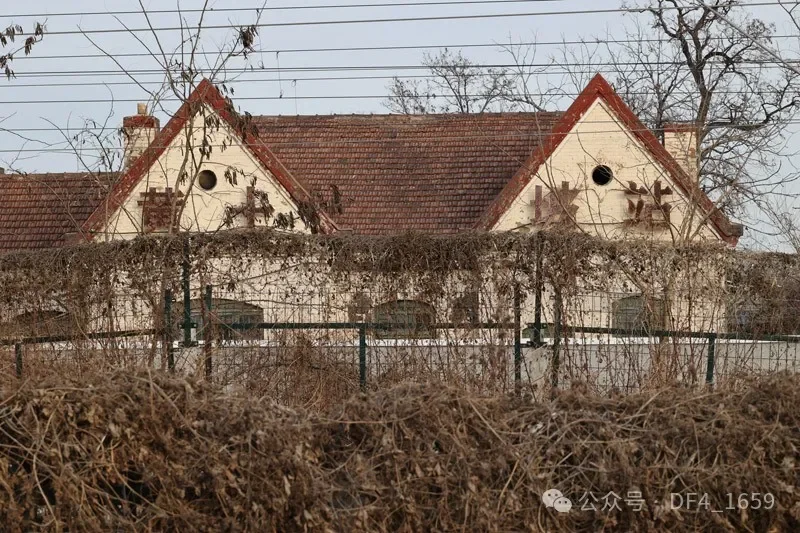
Old Huangtupo station building (Photography / Cui Yifei, reporter from Beijing Youth Daily)
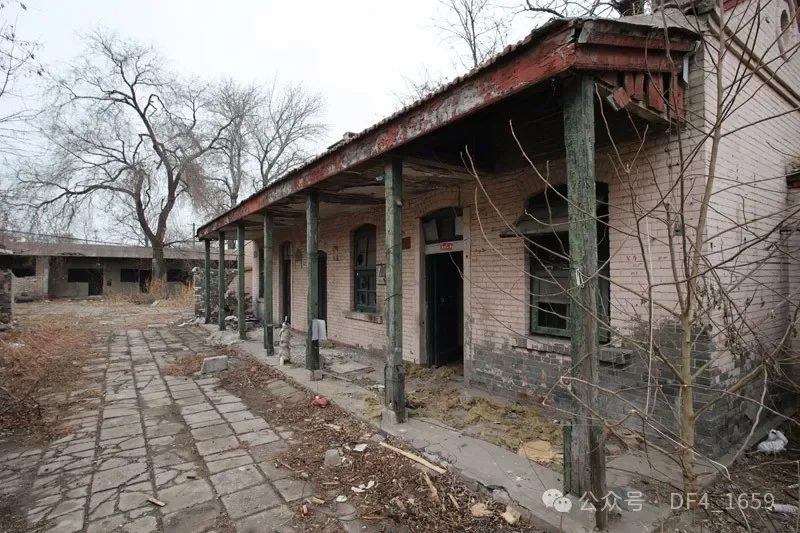
Inside the courtyard of the old station building (Photography / Cui Yifei, reporter from Beijing Youth Daily)
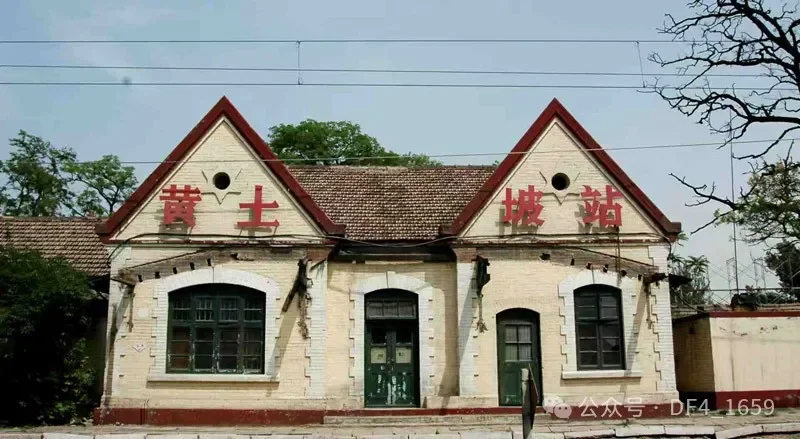
Close-up view of Huangtupo Station (Photography / Chen Xinhui)
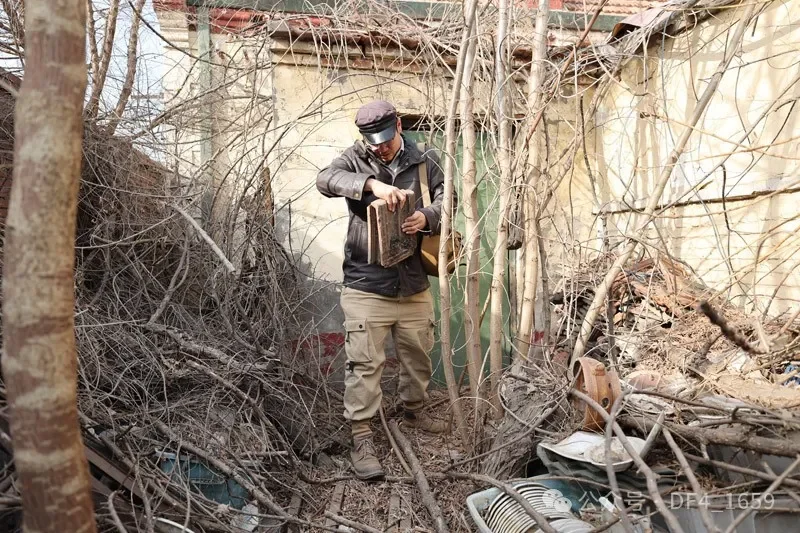
Wang Wei investigating tile components at the old Huangtupo station building (Photography / Cui Yifei, reporter from Beijing Youth Daily)
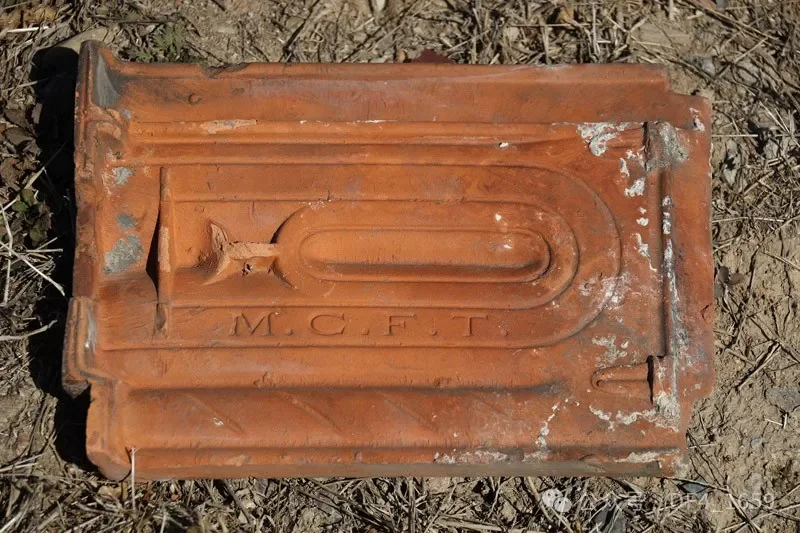
Tiles of the old Huangtupo station building (Photography / Cui Yifei, reporter from Beijing Youth Daily)
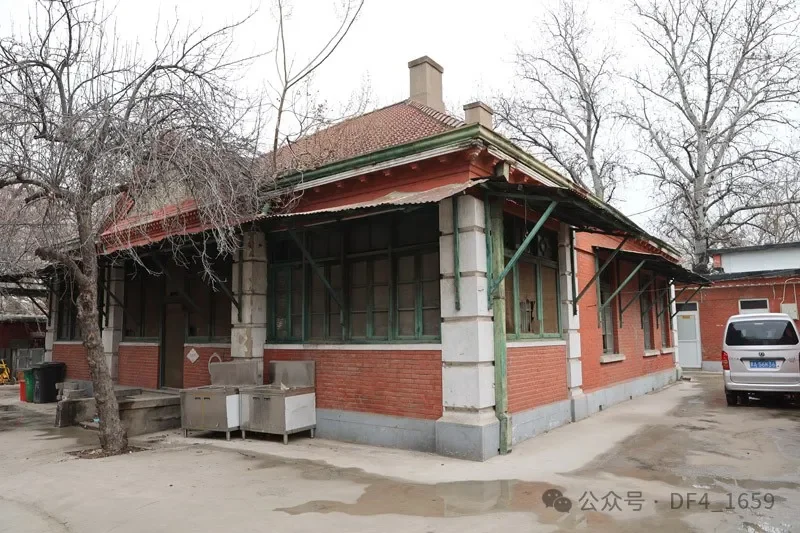
British-style building within the courtyard of the Fengtai Permanent Way Section (Photography / Cui Yifei, reporter from Beijing Youth Daily)
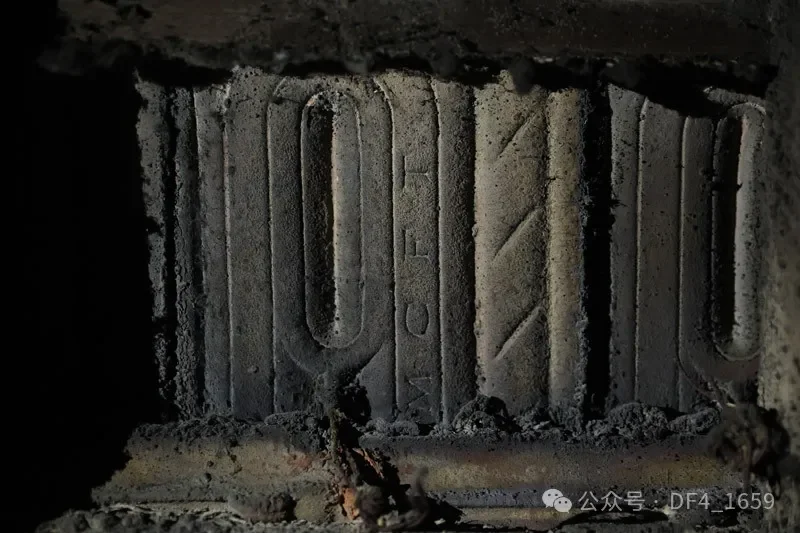
Tile components of the British-style building within the courtyard of the Fengtai Permanent Way Section (Photography / Cui Yifei, reporter from Beijing Youth Daily)
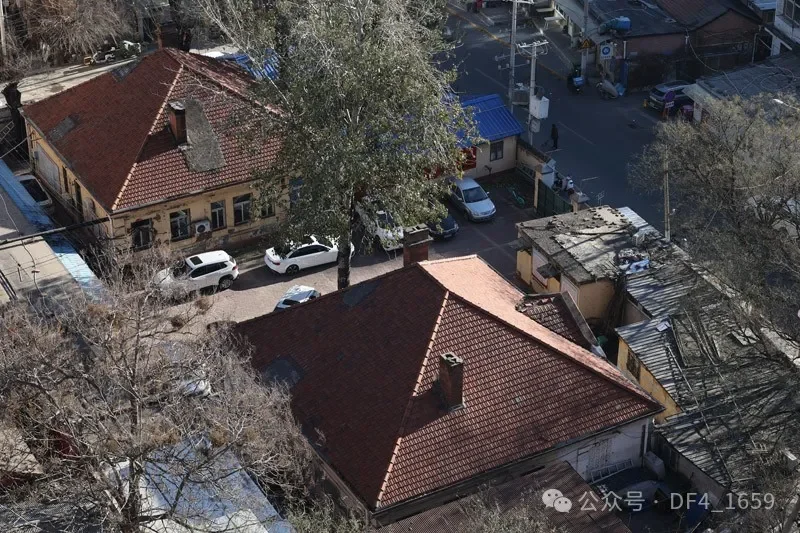
The two old buildings on the east side of the Fengtai Railway single apartment building (Photography / Cui Yifei, reporter from Beijing Youth Daily)
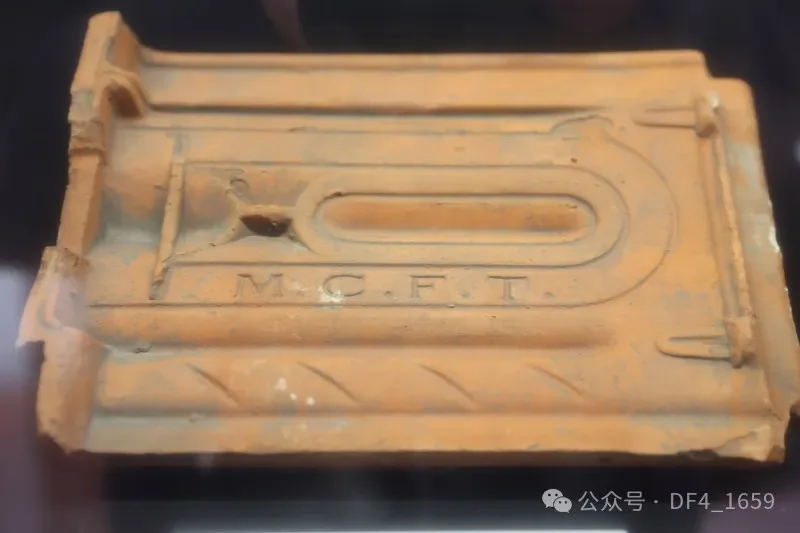
Tile components exhibited at the Red Building of Peking University (Photography / Cui Yifei, reporter from Beijing Youth Daily)
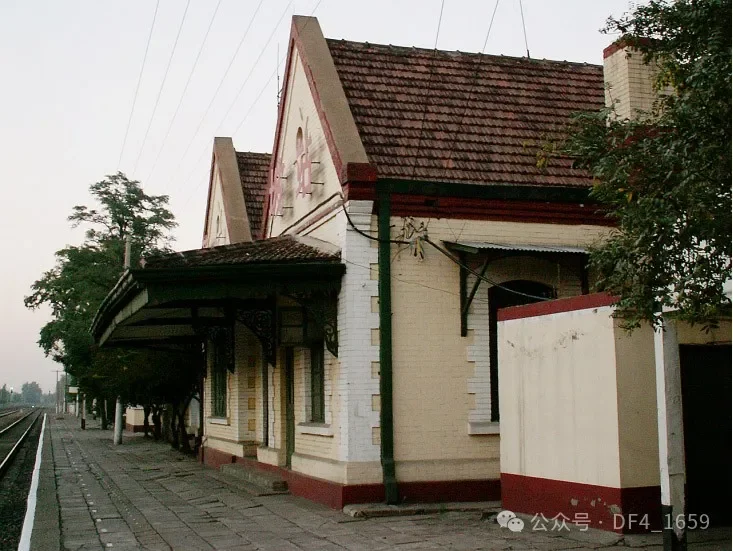
The old Huangtupo station building before its decommissioning, with the canopy still extant (Photography / Wang Wei)
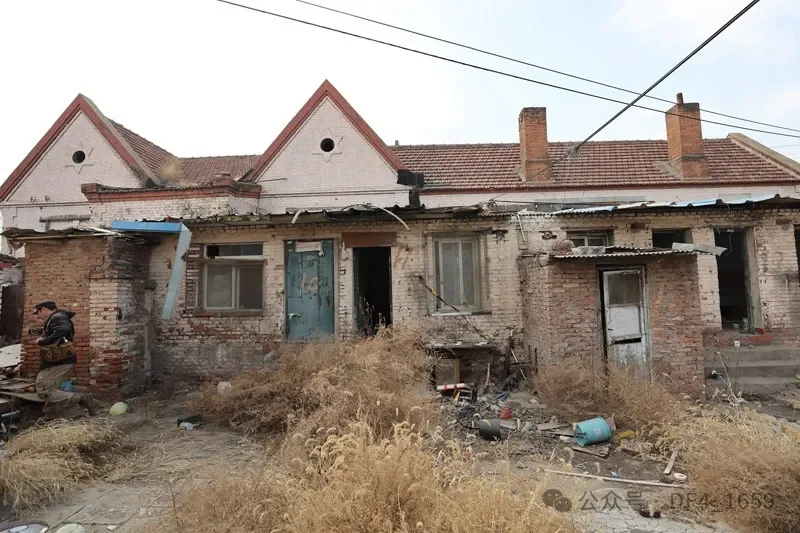
The abandoned old station building (Photography / Cui Yifei, reporter from Beijing Youth Daily)
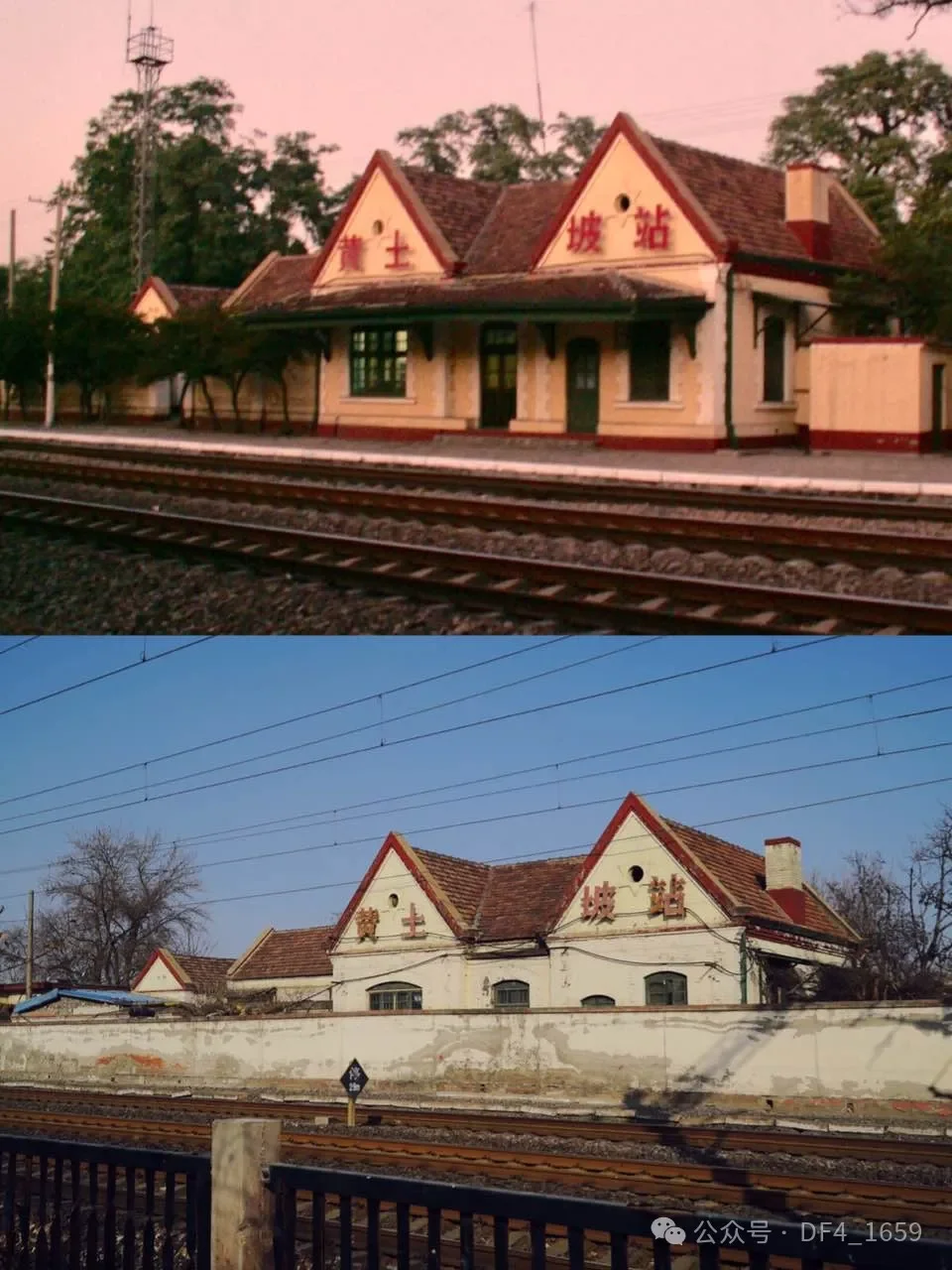
Huangtupo station building, photographed in 2005 and 2018. Photographed by Wang Wei
On December 22, 2024, Beijing Youth Daily
Reported that beside the railway tracks between Fengtai Station and Huangcun Station stands a century-old British-style building—the old station building of the former Huangtupo Station. Having been decommissioned for more than a decade and lacking official cultural heritage status, this old station has gradually faded from public memory. Recently, railway culture scholar and Beijing Cultural Heritage Protection Association member Wang Wei discovered that the surviving old Huangtupo station building is the most completely preserved small station architecture on the Beijing section of the Peking-Mukden Railway. Even more unexpectedly, the roof tiles of the old Huangtupo station building are of the exact same model as those on the roof of the Red Building of Peking University.
Recently, reporters from Beijing Youth Daily learned from the Daxing District Cultural Heritage Administration that they have included the old Huangtupo station building as a clue for the fourth national cultural heritage census.
The Most Completely Preserved Small Station Architecture on the Beijing Section of the Peking-Mukden Railway
Every time he visits the old Huangtupo station building, Wang Wei always feels a sense of anxiety. In his view, for Beijing and even the entire Peking-Mukden Railway line, the old Huangtupo station building is a unique piece of industrial heritage. However, after losing its transportation function and lacking heritage status, it faces the risk of demolition at any time.
The old Huangtupo station building is located near Langfa Third Village, Huangcun Town, Daxing District, Beijing, currently on the east side of the Beijing-Shanghai Railway. Decommissioned for over a decade, the courtyard gate enclosed by several old station buildings is tightly locked, deserted, and overgrown with weeds. Walking around to the west side of the railway and looking through the fence wall by the tracks, one can see that the main station building faces east and west, constructed as a brick-and-wood British-style building. Its "double-gabled" sloped roof is covered with red clay tiles, and the four regular-script characters "Huangtupo Station" (黃土坡站) still hang on the wall, continuing the historical landmark of the old station, though trains traveling north and south no longer stop here.
Why is the old station building in a British-style? According to Wang Wei's explanation, the Peking-Mukden Railway, to which Huangtupo Station belonged, was built in the late Qing Dynasty. At that time, the chief engineer, financial controller, and other key professional positions of the railway were primarily held by British nationals. Consequently, the ancillary buildings of the Peking-Mukden Railway were mostly in a British style, and the railway's boundary stones and official documents used both Chinese and English.
"As a low-grade station on the Peking-Mukden Railway, although Huangtupo Station was not as large as major stations like Zhengyangmen East Station, Tangshan Station, or Fengtian Station, small scale and low traffic volume do not mean low cultural heritage value." Through his field visits, Wang Wei found that among the low-grade stations of the Peking-Mukden Railway, many featured "double-gabled" British-style station buildings with very high recognizability. However, with the changes of times, many old station buildings were demolished. For instance, the old station building of Weishanzhuang Station in the Beijing area had the exact same architectural form as the old Huangtupo station building, but it failed to be completely preserved, making the surviving old Huangtupo station building the most intact small station architecture on the Beijing section of the Peking-Mukden Railway.
At the old Huangtupo station building and its surroundings, Beijing Youth Daily reporters did not find any cultural heritage protection markers. Wang Wei introduced that, having noticed the old Huangtupo station building lacked heritage status, as early as November 2, 2018, he submitted a paper copy of the "Immovable Cultural Heritage Recognition Application Form" to the relevant responsible personnel at the Daxing District Cultural Heritage Administration. In 2019, the Daxing District Cultural Heritage Administration organized a series of heritage recognition efforts and sought opinions from the Publicity Department of the CPC China Railway Beijing Group Co., Ltd., which agreed to register the old Huangtupo station building as an immovable cultural heritage item. However, subsequent progress stalled, and he has yet to receive the heritage recognition results.
Recently, a Beijing Youth Daily reporter called the Daxing District Cultural Heritage Administration. An anonymous staff member stated that they have included the old Huangtupo station building as a clue for the fourth national cultural heritage census and reported it to the Beijing Municipal Cultural Heritage Bureau, and surveys and argumentative assessments will follow.
The Old Huangtupo Station Building and the Red Building of Peking University Share the Same Roof Tiles
Cultural heritage recognition has dragged on without results, but Wang Wei's investigation has not stopped—especially since the roof tiles of the old Huangtupo station building have puzzled him for six years.
When Wang Wei visited the old Huangtupo station building in 2018, he discovered accumulated red clay tiles around the courtyard that were identical to the roof tiles of the old station building: each piece is 30 centimeters long and 22 centimeters wide, with concave letters "M.C.F.T." on the inner side, which immediately aroused his curiosity. To decipher the meaning of the abbreviation "M.C.F.T." and thereby deepen his understanding of the Peking-Mukden Railway's ancillary buildings, Wang Wei consulted many domestic and foreign websites, but came up empty-handed. Some suspected that these tile pieces were produced by the "Chee Shin Cement Co., Ltd." in Tangshan during the late Qing Dynasty. When verifying this clue, Wang Wei found a copy of the Chee Shin Cement Co., Ltd. Product Advertising Catalog at China Bookstore, where he saw similar roof tiles and ridge tiles, but found no record of "M.C.F.T.", leaving it unproven whether the tiles were produced by the Chee Shin Company.
Since then, during his inspections of the Peking-Mukden Railway, Wang Wei paid extra attention to the roof tiles and found the same product on multiple ancillary buildings along the railway. Taking the Beijing section of the Peking-Mukden Railway as an example, Wang Wei found three old buildings using "M.C.F.T." tiles within the "Fengtai South of the Bridge Heritage Railway Building Complex": a Western-style building in the courtyard of No. 12 Zhengyang Xinkailu, which was originally the "housing for engineering staff"; and two old buildings on the east side of the Fengtai Railway single apartment building, which once served as housing for railway interns. In addition, Wang Wei also saw the same tiles on the old buildings remaining at Weishanzhuang Station. Recently, Wang Wei made a new discovery—the roof tile components of the "Red Building of Peking University" turned out to be the exact same product as the tiles of the old Huangtupo station building.
Located at No. 29 Wusi Street, Dongcheng District, the "Red Building of Peking University" was formerly the First Campus of Peking University, completed in 1918 close to the construction time of Huangtupo Station. Built entirely with red bricks and red tiles, it is commonly known as the Red Building and was announced as one of the first batch of Major Historical and Cultural Sites Protected at the National Level in March 1961. During a visit, Beijing Youth Daily reporters saw that the "Historical and Cultural Exhibition of the Century-Old Red Building" displays red roof tiles replaced during repairs of the Red Building; their architectural form is completely identical to the tile components of the old Huangtupo station building, and they similarly display the letters "M.C.F.T.".
Upon learning that roof tile components identical to those of the Peking University Red Building were found on ancillary buildings of the Peking-Mukden Railway, Tian Dan, associate research librarian at the Beijing Lu Xun Museum (Beijing New Culture Movement Memorial Hall) and curator of the "Historical and Cultural Exhibition of the Century-Old Red Building," expressed great interest. She introduced that during the May Fourth Movement, student representatives took the train along the Peking-Mukden Railway to enter Beijing. "I have also been searching for the architectural designer of the Peking University Red Building, as well as historical materials related to its architecture, attempting to find answers to various questions surrounding its existence," Tian Dan said.
"M.C.F.T." tiles have also appeared in old buildings in Tianjin. According to Zhang Wei, an associate professor at the School of Architecture, Tianjin University, these tile components were used in the Former Residence of Liang Qichao in Tianjin, and "M.C.F.T." tiles have also been removed from some other old buildings in Tianjin. He also noted that as an industrial product, this type of ceramic tile features characteristics such as ease of disassembly and assembly, good drainage, and relatively light self-weight, but its specific place of production and the meaning of the letters on it still require further research.
The Old Huangtupo Station Building is a Century Old
Many Beijing residents are unfamiliar with Huangtupo Railway Station; it was not even included in the book Overview of Beijing Railway Bureau Station Systems published in 2000. To reconstruct the history of Huangtupo Station, Beijing Youth Daily reporters consulted relevant materials and, combined with investigations and oral accounts from knowledgeable individuals, briefly outlined the past and present of Huangtupo Station.
The Place Names of Daxing County, Beijing, published in 1992, recorded that Huangtupo Station was a fourth-class passenger and freight intermediate station completed in the 22nd year of the Guangxu reign of the Qing Dynasty (1896). The station building was a British-style structure, named Huangtupo Station because a large earth slope was located on its east side when the station was built.
To verify the construction date, Wang Wei also consulted the Peking-Mukden Railway Travel Guide for 1909 and 1917 respectively, where no mention of Huangtupo Station was found, but the phrase "newly established Huangtupo Station" appeared in the 1924 edition of the Peking-Mukden Railway Travel Guide. "Based on this, it is highly likely that Huangtupo Station was built in the early 1920s," Wang Wei believes. Judging from the architectural style, the old Huangtupo station building also matches the characteristics of Peking-Mukden Railway ancillary buildings of that period. In terms of transportation, the Place Names of Daxing County, Beijing records that Huangtupo Station had passenger and freight offices, passenger waiting rooms, operation rooms, signal towers, etc. Freight services ceased after 1982, and the annual passenger volume was 75,000 trips. Calculated by Beijing Youth Daily reporters based on this figure, the daily passenger volume of Huangtupo Station in the early 1990s was only 205 trips.
Who were the people taking trains at Huangtupo Station? Wu Huayong, who served as the police chief of the Huangtupo Station police district for 26 years, told Beijing Youth Daily reporters that he came to work at the Huangtupo Station police district in August 1996. At that time, a passenger train from Wuhai West to Tianjin stopped at Huangtupo at 7:35 every morning. Some railway workers would take this train from Fengtai Station to railway factories near Huangtupo for work, and take public buses back to the city center after work. "However, as bus routes became more developed and private cars increased, fewer and fewer people commuted by train. The freight, passenger, and dispatching functions of Huangtupo Station were gradually weakened, and to improve efficiency, the railway department abolished Huangtupo Station in 2007," Wu Huayong said.
According to Wang Wei's recollection, in 2005 when he was only 14 years old, he took a bus from downtown Beijing to Huangtupo Station to photograph trains, and then took a train from Huangtupo Station back to the city center, showing that the station was still handling passenger transport services at that time. "When I revisited Huangtupo Station in 2007, trains no longer stopped here, there was no staff inside the station, and the British-style canopy on the west side of the station building had been dismantled," Wang Wei told Beijing Youth Daily reporters. After the station was decommissioned, the old Huangtupo station building was rented out to the public and was once full of tenants. After leasing stopped in recent years, the old station building became completely abandoned.
Regarding the current status of the old station building, Wu Huayong expressed concern. He pointed out that the abandoned old station building poses certain fire hazards; once a fire breaks out, it may endanger the safety of railway transportation. He hopes it can be recognized as a cultural heritage item to strengthen supervision and protection of the old station building and regularly clear flammable materials such as weeds.
Current Status of Immovable Cultural Heritage on the Beijing Section of the Peking-Mukden Railway
Exploring the history of Huangtupo Station cannot be separated from the Peking-Mukden Railway. The Peking-Mukden Railway originated from the Tangshan-Xugezhuang Railway (Tangshan to Xugezhuang) built in 1881, and subsequently expanded southwest and northeast. It was officially named the Peking-Mukden Railway in 1907, and by 1912 the entire line opened to traffic, with mainline and branch lines totaling over 1,372 kilometers. As a major transportation artery connecting North China and Northeast China, the Peking-Mukden Railway featured more than a hundred large and small stations, with Zhengyangmen East Station, Tianjin East Station and Main Station, Tangshan Station, and Fengtian Station as major hubs.
As one of the state-owned mainline railways in the late Qing Dynasty, the construction of the Peking-Mukden Railway spanned over 30 years. During this period, it underwent tortuous evolutions including merchant management, official-supervised merchant management, official-merchant joint management, official management, foreign plunder, nationalization, and reconstruction through foreign loans. It is a microcosm of the difficult development history of early Chinese railways and the forerunner of officially managed railways in China. This railway played an important role in consolidating the national defense of the late Qing government, strengthening political, economic, and social ties between regions, and exerted a profound impact on modern and contemporary Chinese social development.
As the cultural carrier of the Peking-Mukden Railway, Beijing currently has three Peking-Mukden Railway ancillary buildings that have been officially recognized as cultural heritage sites:
Former Site of Zhengyangmen East Railway Station: Announced as a municipal-level cultural heritage protection unit in 2001, now serving as the Zhengyangmen Exhibition Hall of the China Railway Museum.
Former Site of the Zhengyangmen East Station Signal House: Located in the middle section of the Ming City Wall Ruins Park, announced as a Daxing District census-registered cultural heritage item in 2012, currently used as a commercial shop.
Old Station Building of Fengtai Railway Station: Announced as a census-registered cultural heritage item in 2017, currently used as office space by the railway department.
In addition, according to Wang Wei's statistics, besides the officially recognized cultural heritage sites, Beijing has several other Peking-Mukden Railway ancillary buildings with certain historical value. For instance, the "Fengtai South of the Bridge Heritage Railway Building Complex" currently preserves four locations (five buildings) of Peking-Mukden Railway ancillary buildings, from west to east:
The "Section Engineering Officer Housing" within the courtyard of No. 18 Zhengyang Xinkailu, currently used as offices for China Railway Sixth Bureau Group.
An old building on the west side of the courtyard of No. 16 Zhengyang Xinkailu, original function unknown, currently used by the railway department.
The "Engineering Personnel Dormitory" in the courtyard of No. 12 Zhengyang Xinkailu, currently a vacant office.
Two old buildings on the east side of the Fengtai Railway single apartment building, which once served as housing for railway interns, currently used by the Fengtai Rolling Stock Section.
In 2018, Wang Wei submitted an "Immovable Cultural Heritage Recognition Application Form" to the Fengtai District Culture and Tourism Bureau regarding the "Fengtai South of the Bridge Heritage Railway Building Complex" and the Majiapu Station site, and cultural heritage recognition work is currently underway. In the same year, Wang Wei also submitted an "Immovable Cultural Heritage Recognition Application Form" to the Daxing District Cultural Heritage Administration regarding the old Huangtupo station building, hoping to secure cultural heritage status for it and lay the foundation for future protection, research, and utilization.
Related report by Beijing Youth Daily on December 22, 2024
Text / Beijing Youth Daily reporter Cui Yifei, Editor / Cui Yifei

On December 22, 2024, Beijing Youth Daily
