
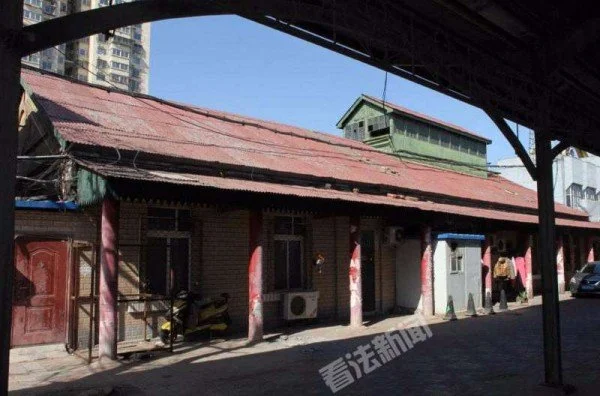
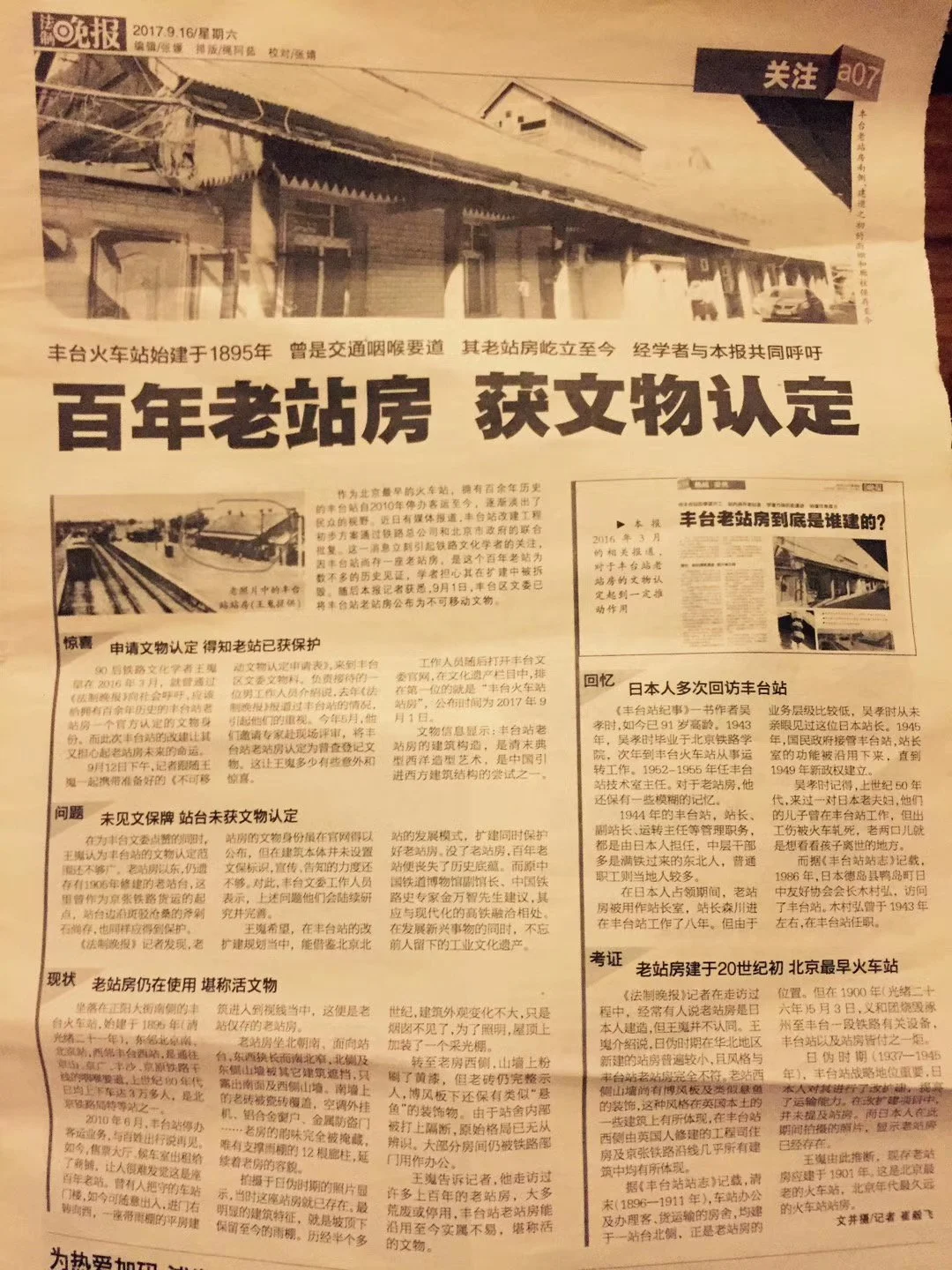
On the south side of the old Fengtai station building, the canopy and colonnade built at the time of construction survive to this day. Photo / Legal Evening News / Law Vision News Reporter Cui Yifei
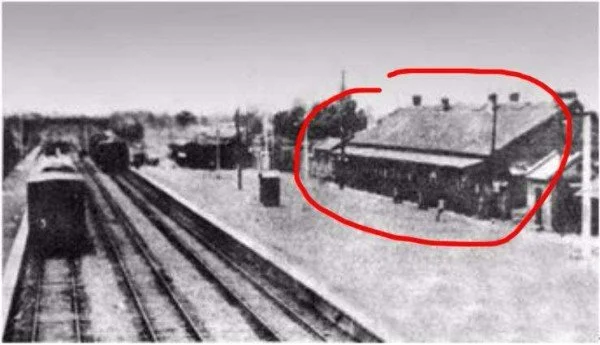
The Fengtai station building in an old photograph (Provided by Wang Wei).
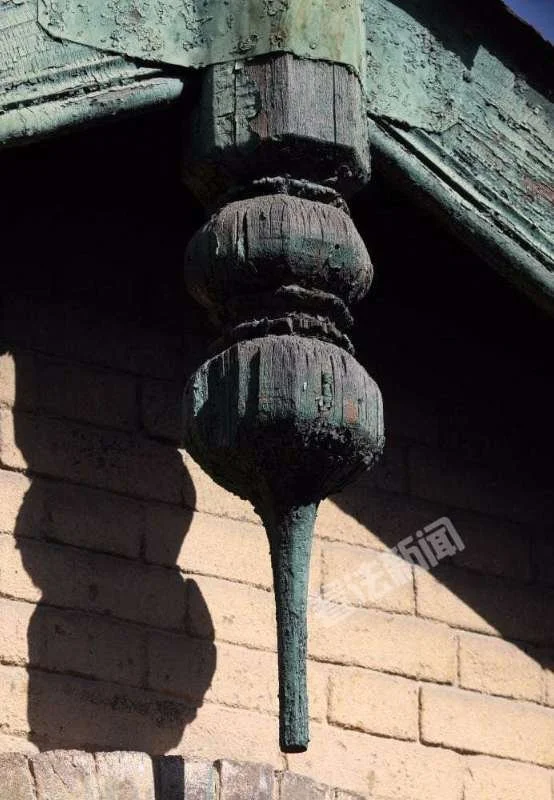
Decoration similar to 'suspended fish' ()at the top of the western gable of the old station building. Photo / Legal Evening News / Law Vision News Reporter Cui Yifei
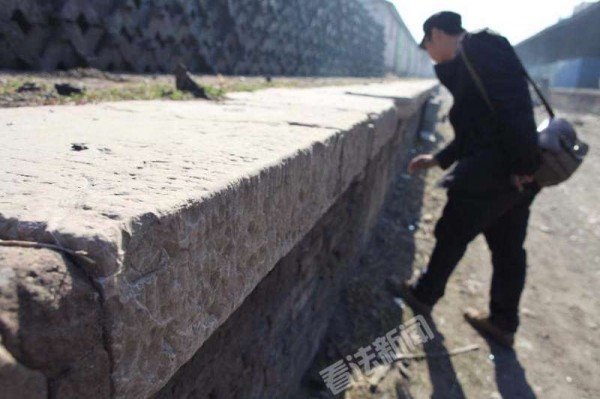
Wang Wei inspecting the platform on the east side of the old station building. Photo / Legal Evening News / Law Vision News Reporter Cui Yifei
September 15, 2017, Legal Evening News
September 15, 2017, Legal Evening News
Legal Evening News / Law Vision News (Reporter Cui Yifei) — As Beijing's earliest railway station, the century-old Fengtai Station has gradually faded from the public eye since it suspended passenger transport operations in 2010. Recently, media reports indicated that the preliminary plan for the reconstruction project of Fengtai Station was jointly approved by the China Railway Corporation and the Beijing Municipal Government. This news immediately caught the attention of railway cultural scholars. Because an old station building still survives at Fengtai Station as one of the few remaining historical witnesses of the century-old station, scholars feared it would be demolished during the expansion.
Reporters from Legal Evening News / Law Vision News discovered that on September 1, the Fengtai District Culture Commission already announced the old station building of Fengtai Station as an immovable cultural relic. The old station building of Fengtai Station is now protected by law.
Applying for Cultural Heritage Recognition, Learning the Old Station Has Been Protected
With his new book My Beijing-Zhangjiakou Railway just published and released, post-90s railway cultural scholar Wang Wei has shifted his energy back to Fengtai Railway Station. As early as March 2016, Wang Wei had called attention to the fact that the old station building of Fengtai Station possesses a history of over a century, yet has never had an officially recognized cultural relic status.
On the afternoon of September 12, reporters from Legal Evening News / Law Vision News accompanied Wang Wei, carrying a prepared "Immovable Cultural Relic Identification Application Form," to the Cultural Relics Section of the Fengtai District Culture Commission. A male staff member who received him introduced that last year's report by Legal Evening News on the situation of Fengtai Station drew their attention. In May of this year, they invited experts to conduct an on-site review and ultimately recognized the old station building of Fengtai Station as a census-registered cultural relic. This came as somewhat of an unexpected surprise to Wang Wei.
The staff member then opened the official website of the Fengtai Culture Commission, where "Fengtai Railway Station Building" ranked first under the cultural heritage section, with the publication date listed as September 1, 2017.
Cultural relic information shows: The architectural structure of the old station building of Fengtai Station is a typical late-Qing Western design and art style, representing one of China's experiments in introducing Western architectural structures. At the same time, this is also Beijing's earliest railway station and one of the representative works of China's early railway architecture.
Old Station Building Still in Use, Deserving the Title of "Living Cultural Relic"
Situated on the south side of Zhengyang Avenue, Fengtai Railway Station was initially built in the 21st year of the Guangxu reign of the Qing Dynasty (1895). It is a vital thoroughfare leading to the trunk lines of the Jingguang, Fengsha, and Jingyuan railways. In the 1980s, daily boardings and alightings reached over 30,000 people, making it one of the special-class stations of the Beijing Railway Bureau.
In June 2010, Fengtai Station suspended passenger transport operations. Today, the ticket hall and waiting room have been leased out to commercial shops, making it difficult for people to realize this is a century-old station. The station gatehouse, once guarded by personnel, can now be entered and exited freely. Turning right upon entering and heading west, a single-story building with a canopy comes into view—this is the sole surviving old station building of the station.
The old building faces south towards the platform, long from east to west and narrow from north to south. Its northern and eastern gables are blocked by other buildings, leaving only the southern facade and western gable visible. The gables are painted with yellow paint, but the old bricks remain fully exposed, and decorations resembling "suspended fish" are still preserved beneath the bargeboards.
Because the interior of the station building has been partitioned, the original layout can no longer be discerned. Most of the rooms are still used by the railway department for office work.
Wang Wei told Legal Evening News / Law Vision News reporters that he has visited many century-old station buildings, most of which are abandoned or disused. The fact that the old station building of Fengtai Station can continue to be used to this day is truly remarkable, deserving the title of a living cultural relic.
Wang Wei deduced that the existing old station building should have been built in 1901. This is Beijing's oldest railway station and the railway station building with the longest history in Beijing.
The related report by Legal Evening News in March 2016 played a certain promoting role in the cultural relic recognition of the old station building of Fengtai Station.
Cultural Relic Protection Sign Not Yet Seen; Platform Has Not Gained Cultural Relic Recognition
Wang Wei hopes that in the expansion and reconstruction planning of Fengtai Station, lessons can be drawn from the development model of Beijing North Station—protecting the old station building simultaneously during expansion. Without the old station building, a century-old station loses its historical foundation.
At the same time, Wang Wei believes that the cultural relic recognition of Fengtai Station is not yet comprehensive. To the east of the old station building, the old platform built in 1905 still survives. This once served as the starting point for the freight transport of the Beijing-Zhangjiakou Railway, and the axe-chopped stones along the edge of the platform still remain, which should likewise be protected.
In addition, although the cultural relic status of the old station building has been published on the official website, no cultural relic protection sign has been set up on the building itself, and the intensity of publicity and notification is still insufficient.
Staff members of the Fengtai Culture Commission stated that they will successively study and improve upon the above issues.
Mr. Jin Wangzhi, former deputy curator of the China Railway Museum and an expert in Chinese railway history, suggested that he hopes the old station building of Fengtai Station can be meticulously renovated to blend harmoniously with modern high-speed railways. While developing emerging undertakings, one must not forget the industrial cultural heritage left by predecessors.
Responsible Editor: Ma Xiaoxiao
