
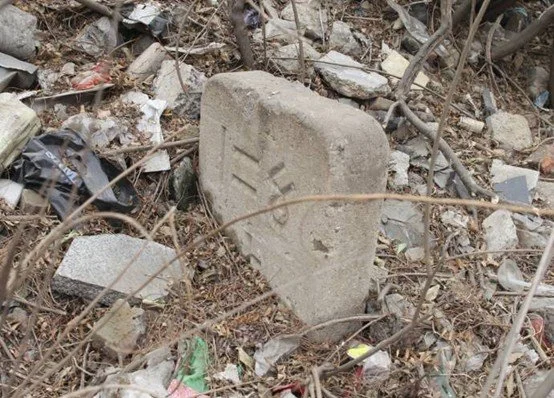
Slope Marker near Pingguoyuan, East Facade
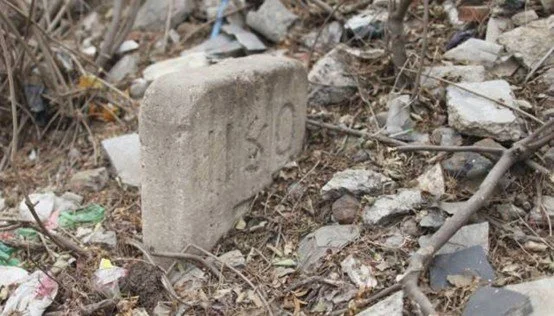
Slope Marker near Pingguoyuan, West Facade
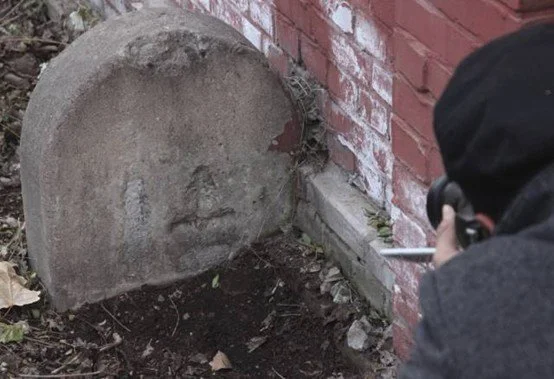
Shijingshan 17 Kilometer Marker
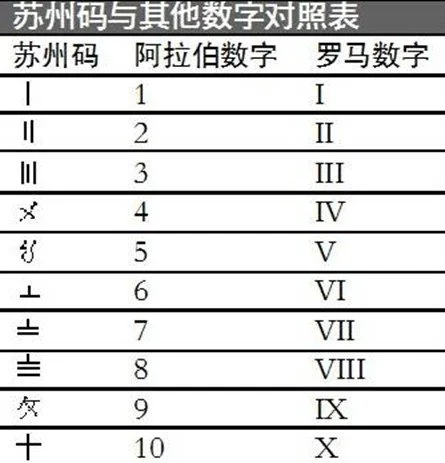
Comparison Table of Suzhou Numerals and Other Numerals
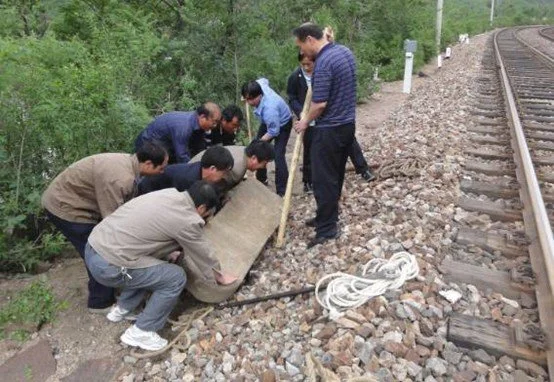
Archive Photo: Suzhou Numeral Marker Discovered Along the Beijing-Zhangjiakou Railway Previously
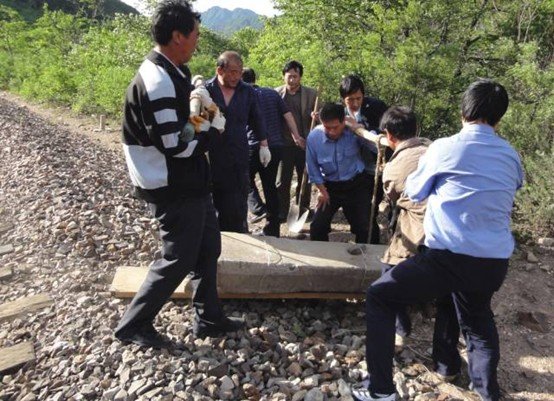
Archive Photo: Suzhou Numeral Marker Discovered Along the Beijing-Zhangjiakou Railway Previously
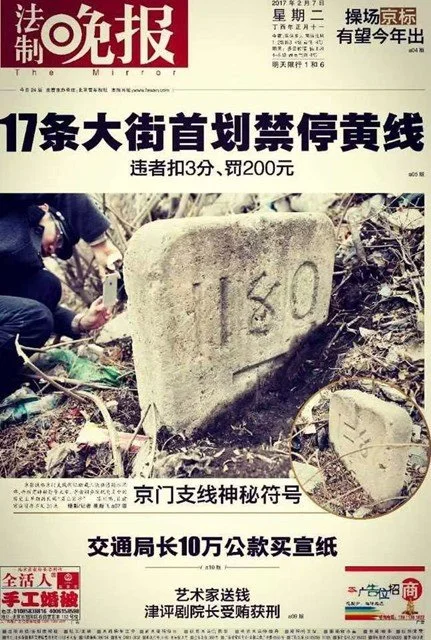
Front page headline of the Legal Evening News , February 7, 2017
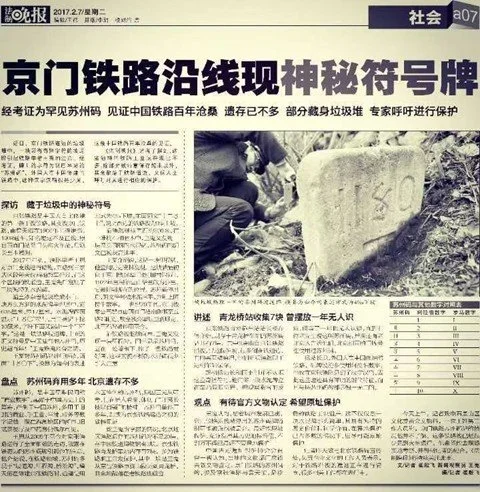
Mysterious Symbol Stones Discovered Along the beijing-mentougou Railway
February 7, 2017, Legal Evening News
Recently, a slope marker bearing strange characters found amidst a pile of garbage alongside the Jingmen Railway caught the attention of railway scholar Wang Wei. Upon verification, the characters on the marker were identified as the now-rare "Suzhou numerals."
Among railways built by foreigners in China, the use of these Chinese characters and codes is very rare, making this a testament to the century of vicissitudes experienced by China's railways.
The Legal Evening News learned that few of these unique railway industrial relics remain today. Apart from those specifically preserved, the rest are scattered along the railway tracks. Preservationists are calling for corresponding protection for them.
Exploration: Mysterious Symbols Hidden in Garbage
While the Beijing-Zhangjiakou Railway is the first trunk line independently built by the Chinese, its branch line, the Jingmen Railway, was constructed under the direction of Zhan Tianyou in 1906 and opened to traffic in 1908. Its fame is far less than that of the main line. It originally ran from Xizhimen Station to Mentougou Railway Station and was later extended to Muchengjian.
In early 2017, railway scholar Wang Wei conducted a survey of the Jingmen branch line. Only two freight trains pass daily on the section from Wulu to Sanjiadian. It was along the tracks of this section that Wang Wei successively discovered three unique concrete markers.
Wang Wei interpreted a Suzhou numeral marker: the west side reads "〢〥〇 Xia" (meaning a 4‰ downhill grade in modern terms), and the east side's intaglio characters read "〡二〥 Shang" (indicating an 8‰ uphill grade for the railway line to the west).
Continuing west along the railway for about 800 meters, amidst a pile of sleepers and bushes, Wang Wei discovered another round-headed concrete marker. The intaglio characters of the Suzhou numerals had been smoothed over with lime paste.
Wang Wei introduced that this was a kilometer marker. Historical records he consulted showed that this marker was originally located at the 16-li mark of the Jingmen line (near Tiancun). In 1922, when the unit of distance was changed from li to kilometers, it was moved to its current location. After Suzhou numerals were discontinued, the intaglio symbols were smoothed over with cement and painted with Arabic numerals. In the 1970s, the zero-kilometer starting point of the Jingmen line was moved from the south side of Xizhimen Station to near Wulu Station, so the kilometer markers along the entire line were re-surveyed, and this marker was taken out of use and remained so until now.
Continuing west along the railway line, Wang Wei discovered another kilometer marker, also displaying Suzhou numerals, standing at the base of a wall. Apart from some railway enthusiasts, these unassuming concrete markers rarely attract attention.
In a small hill formed by construction waste mixed with garbage, a square-headed concrete marker was half-buried, measuring 60.5 cm wide and 17 cm thick. The west side of the concrete marker displays the symbols "〢〥〇". After digging down 10 cm with a military shovel, the character "下" (down) was revealed below the symbols. "This is a railway slope marker. The intaglio symbols on it are China's unique Suzhou numerals, with a history of over a century!" Wang Wei could not hide his excitement.
Inventory: Suzhou Numerals Discontinued for Years, Few Relics Remain in Beijing
Suzhou numerals are early Chinese civilian "commercial numerals." Originating from counting rods in Chinese history and created in Suzhou, they were mostly used for numerical records in old commerce, handicrafts, pawnshops, and accounting. They can still be occasionally seen in markets, old-style tea restaurants, and traditional Chinese medicine pharmacies in Hong Kong and Macao today.
From 2005 to the present, Wang Wei has conducted comprehensive and detailed surveys of the Beijing-Zhangjiakou Railway. The Suzhou numeral markers scattered along the tracks caught his attention. He introduced that in the railway field, Suzhou numerals mostly appeared on "slope markers, kilometer markers, and bridge markers." When Zhan Tianyou built the Beijing-Zhangjiakou Railway, he chose to use Suzhou numerals with national characteristics. The reason can no longer be verified, but in the eyes of later generations, it embodied the spirit of "learning from the strong techniques of the foreigners to strengthen ourselves." Although Suzhou numerals have been discontinued for many years, they have become unique witnesses to the beginning of the construction of the Beijing-Zhangjiakou Railway.
Account: Qingqingqiao Station Collected 7 Markers, Which Sat Unidentified for a Year
Yang Cunsin, stationmaster of the Qinglongqiao Station on the Beijing-Zhangjiakou Railway, introduced that there are currently 7 Suzhou numeral markers preserved at Qinglongqiao Station, 6 of which came from along the Beijing-Zhangjiakou Railway. Before being relocated for protection, many lay by the tracks, and some were even buried. They organized railway workers to transport them to the station for preservation.
At first, Stationmaster Yang and his colleagues did not recognize these strange symbols. They placed a concrete marker in a prominent position at the station to observe the reactions of passengers, but no one recognized it after waiting for a year, until an old gentleman said it was called Suzhou numerals. Later, old Beijingers told them that the house numbers in Beijing's hutongs also used Suzhou numerals.
Stationmaster Yang said that in railways built by foreigners in China, Arabic numerals were mostly used for sign facilities. He only saw Chinese characters and codes on the Beijing-Zhangjiakou Railway. Therefore, these relics have distinct characteristics of the times, and each Suzhou numeral marker is unique.
According to Wang Wei's knowledge, there are fewer than 20 surviving Suzhou numeral markers from railways in the Beijing area, and there are 3 in the China Railway Museum. There are 7 stored in Qinglongqiao Station on the Beijing-Zhangjiakou Railway, mostly protected spontaneously by railway workers. One of them was transported by Wang Wei from the Zhuozishan section of the Jingbao Railway to Qinglongqiao. The rest are scattered along the old railway lines.
Views: Awaiting Official Cultural Relic Recognition, Hopes for In-Situ Protection
Wang Wei believes that with the rapid development of the city, the discontinued Suzhou numeral markers along the Jingmen Railway may be destroyed or discarded at any time. It is best to protect them in situ to give full play to their historical landmark value. Relocation for protection should not be done unless as a last resort.
Zeng Yizhi, a member of the China ICOMOS, believes that the local cultural relics department should conduct cultural relic appraisals. The Suzhou numeral markers of the Jingmen Railway involve the Beijing-Zhangjiakou Railway and Zhan Tianyou and are precious railway industrial heritage. This is not just as simple as a concrete marker; it has unique historical and scientific value. In cases where relocation protection is already in the majority, in-situ protection should be carried out as much as possible.
Reporters called the Publicity Department of the Beijing Railway Bureau yesterday. The staff member in charge of corporate culture said that an inventory of relics along the railway line is being conducted, and many related works are underway.
This morning, reporters called the Cultural Relics Section of the Shijingshan District Culture Committee. A male staff member surnamed Wang said he was not aware of the situation with the Suzhou numeral markers on the Jingmen Railway. Trains rarely pass on this railway line. He hoped to conduct an on-site inspection and get the cooperation of reporters. The Legal Evening News will continue to pay attention to this matter.
Reporter: Cui Yifei News Observer: Wang Wei New Media Editor: Li Ruixue
