
Changping Railway Station on the Jingzhang Railway Hides an 1891-Manufactured Steel Rail Jul 29
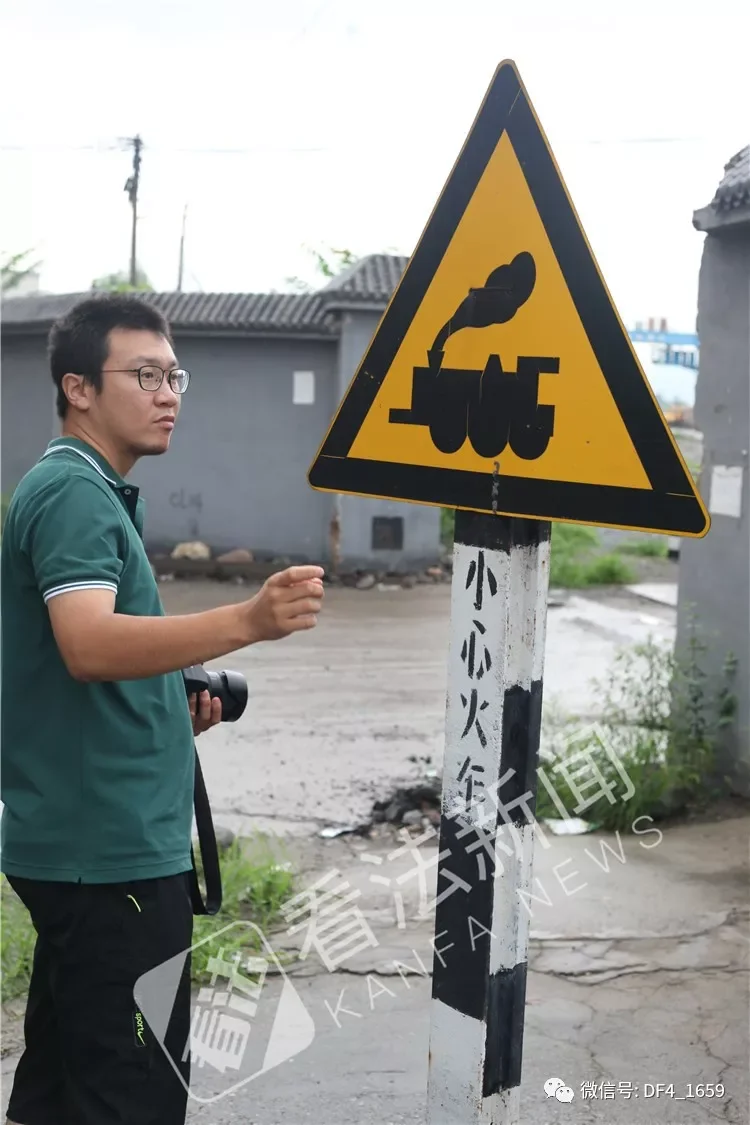
Wang Wei discovered that the signpost in front of the railway station turned out to be an old steel rail produced in 1891. Photo by/Legal Evening News · Lookout News Reporter Cui Yifei
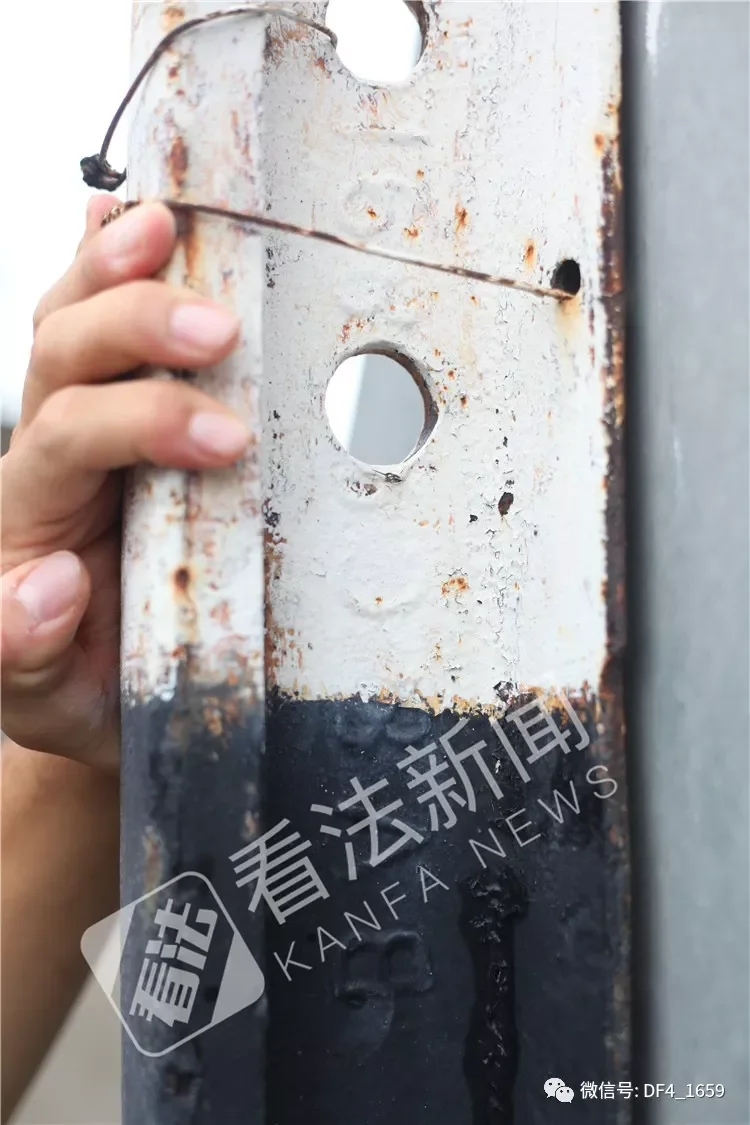
Protruding inscriptions on the steel rail record the manufacturer and production year of the steel rail. Photo by/Legal Evening News Reporter Cui Yifei
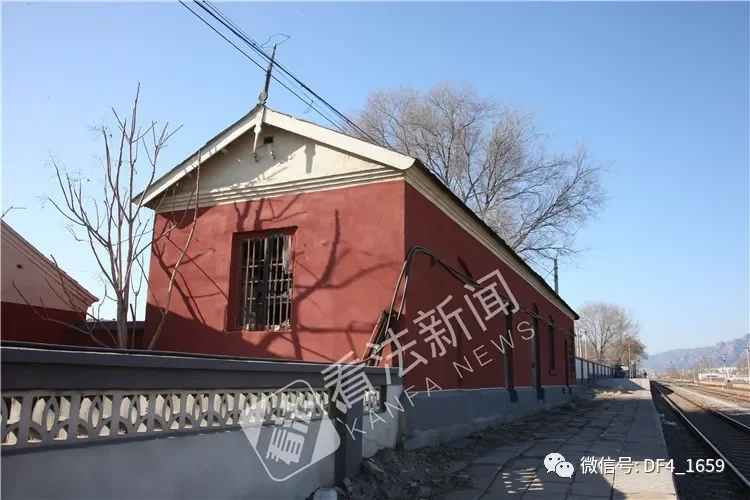
Surviving old station building ruins at Changping Railway Station on the Jingzhang Railway Photo by/Legal Evening News · Lookout News Reporter Cui Yifei
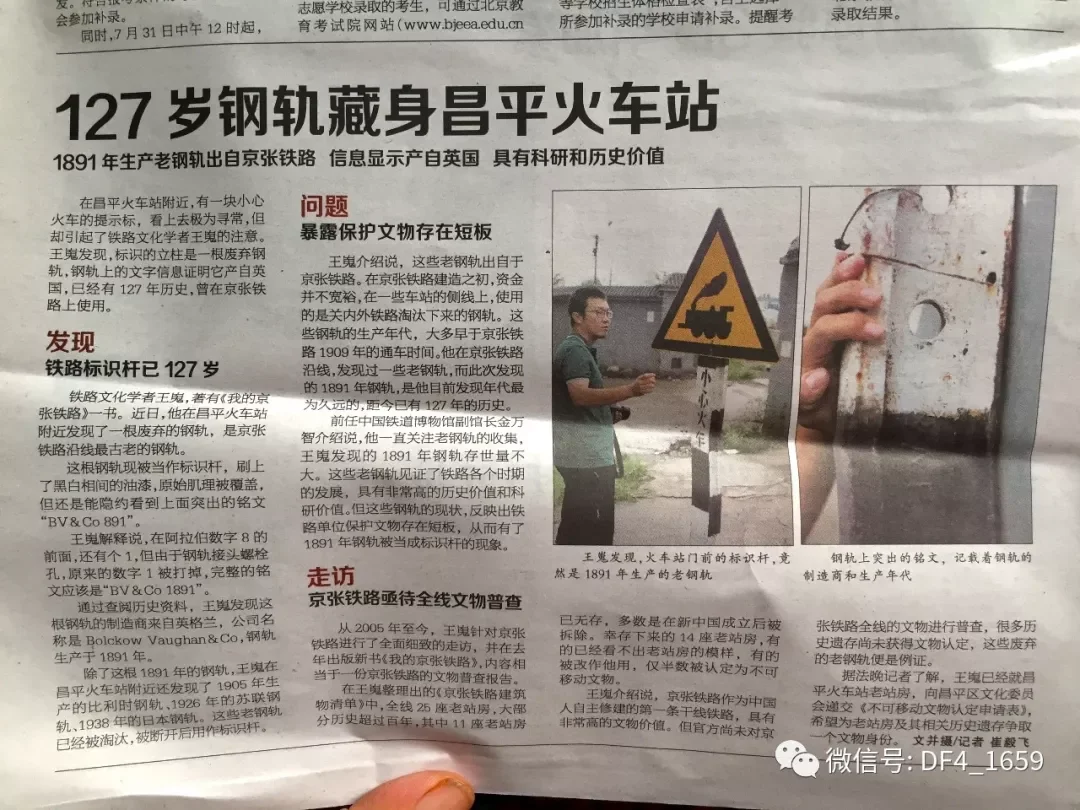
July 29, 2018, Legal Evening News · Lookout News (Reporter Cui Yifei) Near Changping Railway Station, there was a "Caution: Train" warning sign that looked extremely ordinary, but it caught the attention of railway culture scholar Wang Wei. Wang Wei discovered that the vertical pillar of the sign was an abandoned steel rail, and text information on the rail proved that it was produced in England, already possessed a history of 127 years, and had been used on the Jingzhang Railway.
Discovery: Railway Signpost Turns Out to Be a 127-Year-Old Steel Rail Railway culture scholar Wang Wei is the author of the book My Jingzhang Railway. Recently, he discovered an abandoned steel rail near Changping Railway Station, which is the oldest steel rail he has encountered along the Jingzhang Railway route. This steel rail is currently treated as a signpost and painted with black and white alternating paint, covering its original texture, but the protruding inscription "BV&Co 891" can still be faintly seen on it. Wang Wei explained that in front of the Arabic numeral 8, there was also a 1, but due to the rail joint bolt hole, the original digit 1 was knocked off, and the complete inscription should be "BV&Co 1891". Through consulting historical materials, Wang Wei discovered that the manufacturer of this steel rail came from England, and the company's full name is Bolckow Vaughan&Co... The steel rail was produced in 1891. Aside from this 1891 steel rail, Wang Wei also discovered a Belgian steel rail produced in 1905, a Soviet steel rail from 1926, and a Japanese steel rail from 1938 near Changping Railway Station. These old steel rails have already been phased out and, after being severed, were used as signposts.
Interpretation: Steel Rails Originate from the Jingzhang Railway, with Small Surviving Quantities Wang Wei introduced that these old steel rails originated from the Jingzhang Railway. At the initial construction of the Jingzhang Railway, funds were not plentiful, and on the siding tracks of some stations, steel rails phased out by the Imperial Railways of North China were utilized. The manufacturing eras of these steel rails mostly predated the 1909 opening of the Jingzhang Railway. He has discovered some old steel rails along the Jingzhang Railway route, and the 1891 steel rail discovered this time is the most ancient one he has discovered thus far, possessing a history of 127 years up to the present. Jin Wanzhi, former deputy curator of the China Railway Museum, introduced that he has consistently monitored the collection of old steel rails, and the 1891 steel rail discovered by Wang Wei exists in small quantities. These old steel rails witnessed the development of railways across various periods and possess extremely high historical and scientific research values. However, the current status of these steel rails reflects that railway units possess shortcomings in protecting cultural relics, hence the phenomenon where the 1891 steel rail was treated as a signpost.
Protruding inscriptions on the steel rail record the manufacturer and production year of the steel rail. Photo by/Legal Evening News Reporter Cui Yifei Issue: Comprehensive Cultural Relics Census for the Jingzhang Railway Is Urgently Needed From 2005 to the present, Wang Wei has conducted comprehensive and meticulous visits regarding the Jingzhang Railway and published a new book last year, My Jingzhang Railway, the content of which is equivalent to a cultural relics census report for the Jingzhang Railway. In the Jingzhang Railway Buildings List compiled by Wang Wei, among the 25 old station buildings along the entire line, the majority are over a century old, with 11 old station buildings no longer extant, most of which were demolished after the founding of the People's Republic of China. Among the 14 surviving old station buildings, some can no longer be recognized as old station buildings, some have been repurposed, and only half have been designated as immovable cultural relics. Wang Wei introduced that the Jingzhang Railway, as the first trunk railway independently constructed by Chinese people, possesses extremely high cultural relic value. However, official authorities have yet to conduct a full-line cultural relics census for the Jingzhang Railway, and many historical relics have not yet acquired cultural relic recognition, of which these abandoned old steel rails are a case in point. According to the understanding of Legal Evening News reporters, Wang Wei has already submitted an Immovable Cultural Relics Recognition Application Form regarding the old station building of Changping Railway Station to the Changping District Culture Committee, hoping to secure a cultural relic identity for the old station building and its related historical relics. Legal Evening News · Lookout News original works refuse any form of modification or editing, and Lookout News reserves the right to pursue legal responsibility.
July 29, 2018, Legal Evening News
