
109-Year-Old Jingzhang Railway Old Water Tower Gains Official Cultural Relic Designation
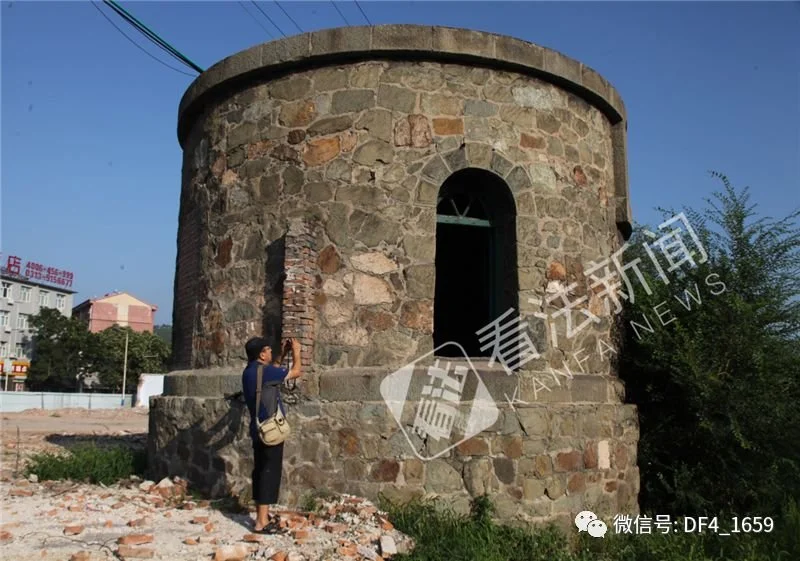
The 109-year-old Xiahuayuan Station water tower once supplied water to steam locomotives on the Jingzhang Railway. Photo: Legal Evening News · Lookout News Reporter: Cui Yifei
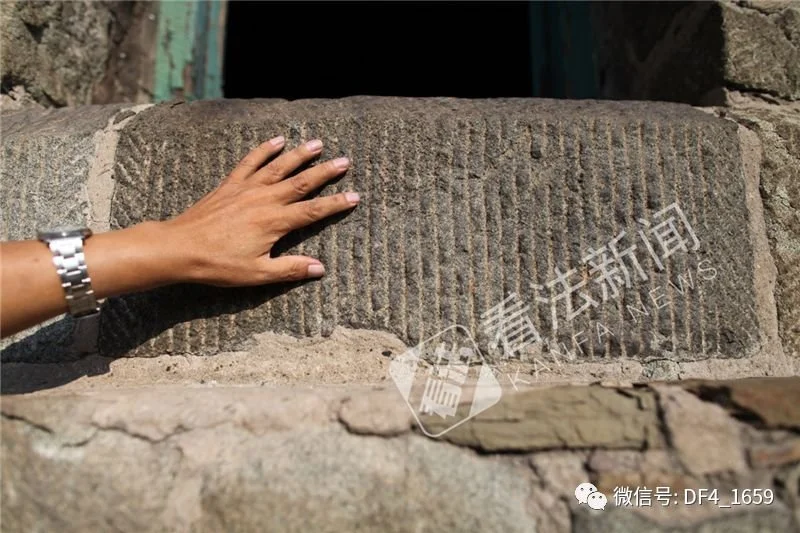
Axe-chopped stone on the old building, rugged and thick.Photo: Legal Evening News · Lookout News Reporter: Cui Yifei
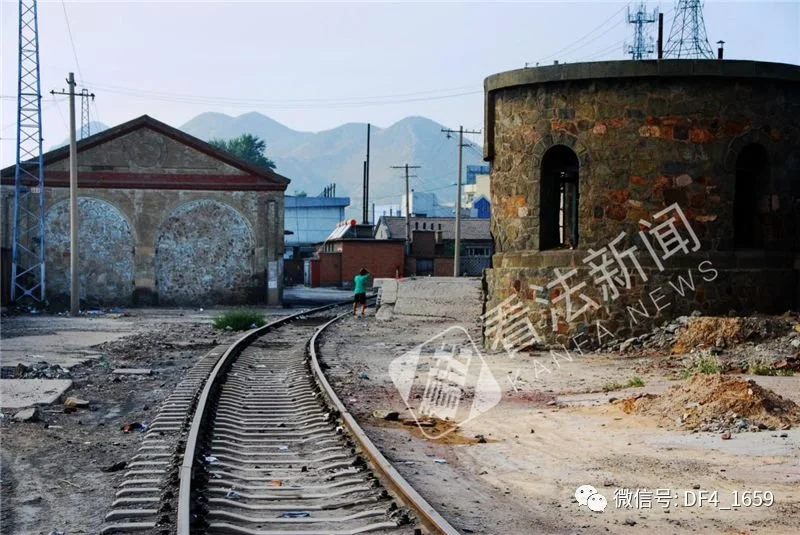
The old Xiahuayuan water tower photographed by Wang Wei; at the time, the contemporary locomotive shed on the left side of the frame still existed, but was later demolished. Photo by Wang Wei
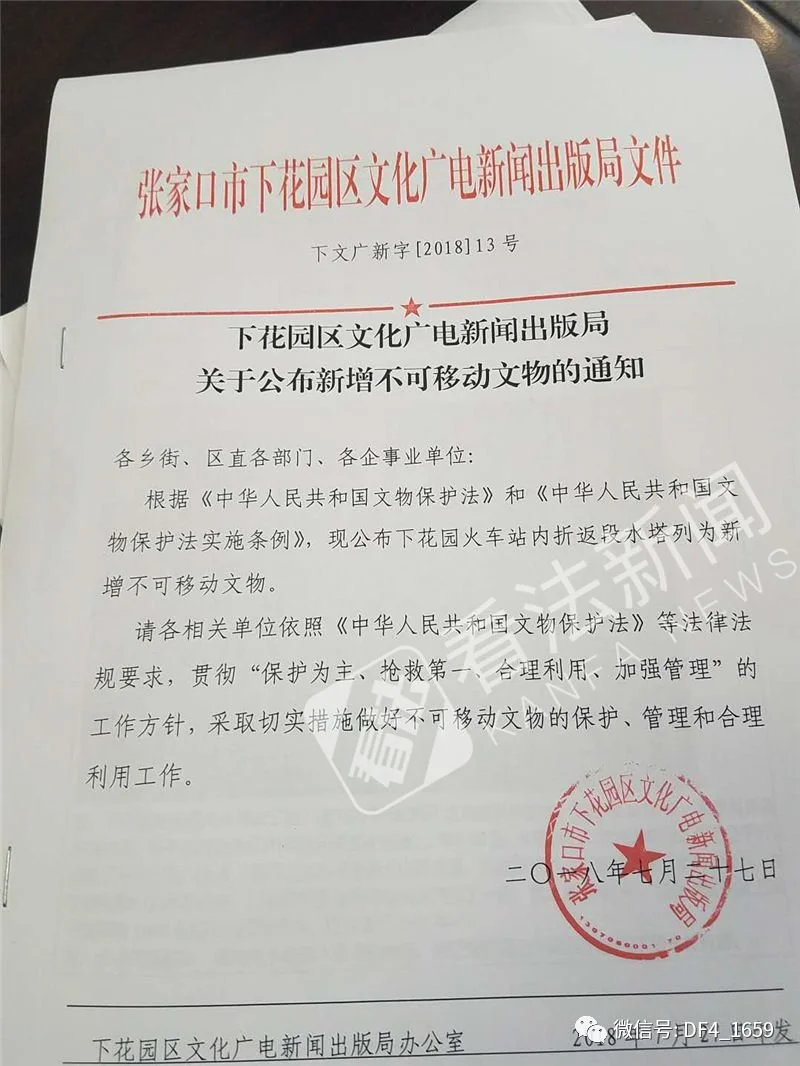
Notice of Cultural Relic Recognition issued by the Xiahuayuan District Cultural Relics Department.
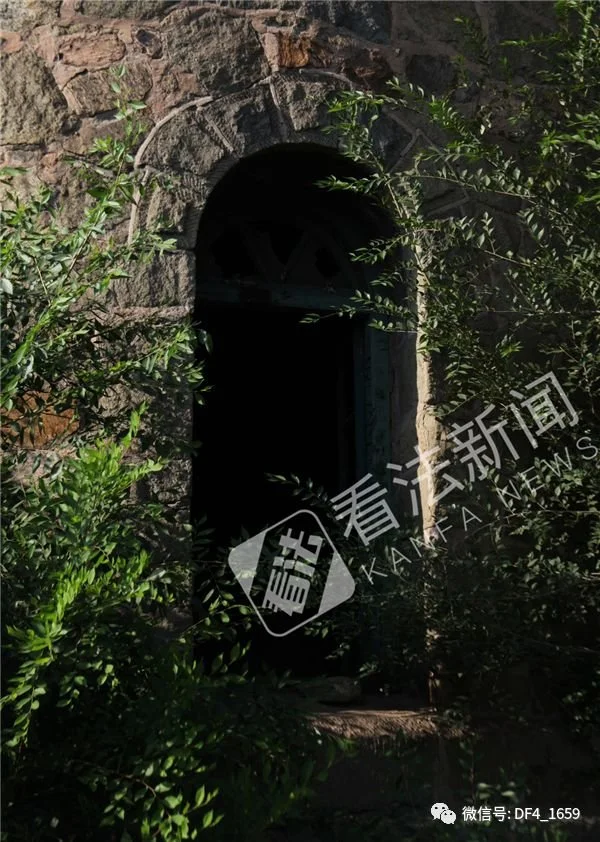
The tall and thin arched windows of the old water tower feature Western-style characteristics.
Photo: Legal Evening News · Lookout News
Reporter: Cui Yifei
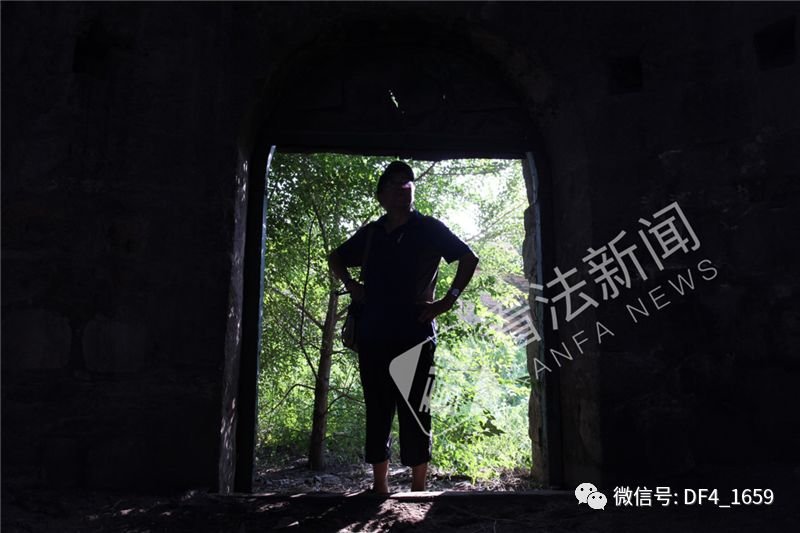
The light inside the old water tower is dim, and few people visit this place.
Photo: Legal Evening News · Lookout News
Reporter: Cui Yifei
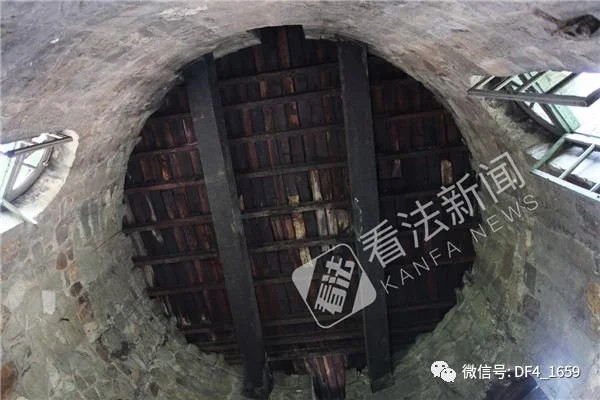
Although the water tank was dismantled long ago, the bottom of the water tank constructed using old steel rails still remains at the top. Photo: Legal Evening News · Lookout News, Reporter Cui Yifei
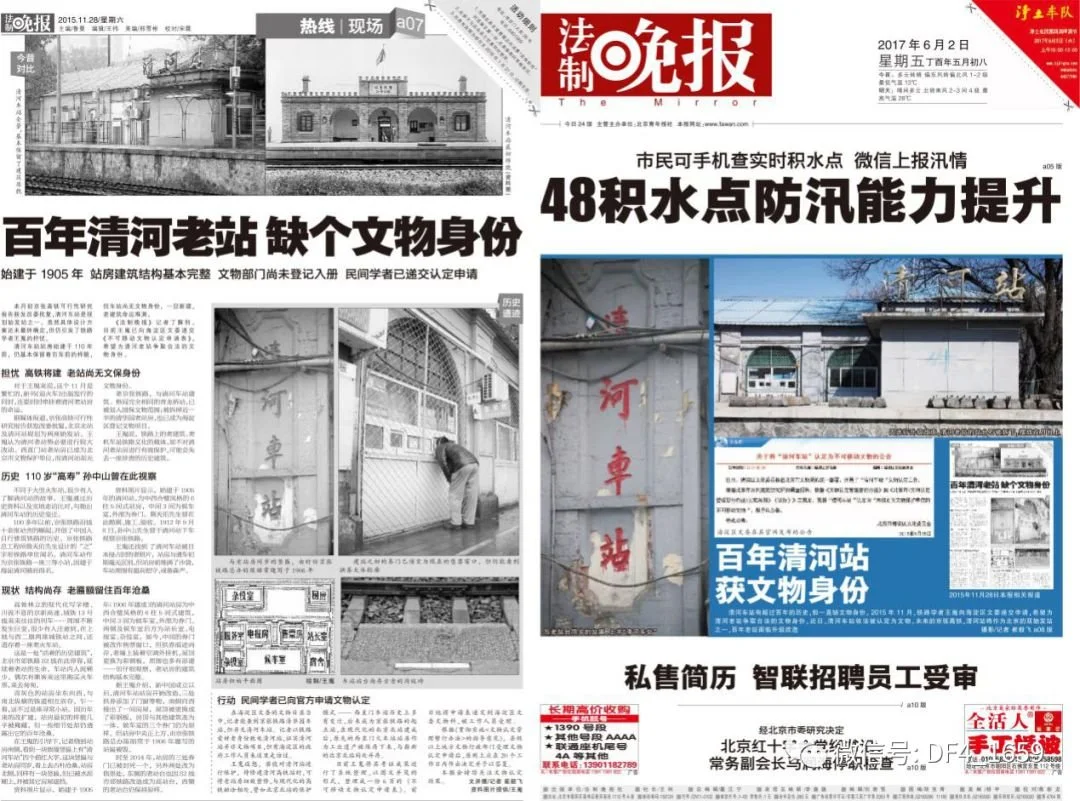
Wang Wei once fought for the cultural relic status of the old station room of the Qinghe Station on the Jingzhang Railway, and Legal Evening News reported on it continuously.
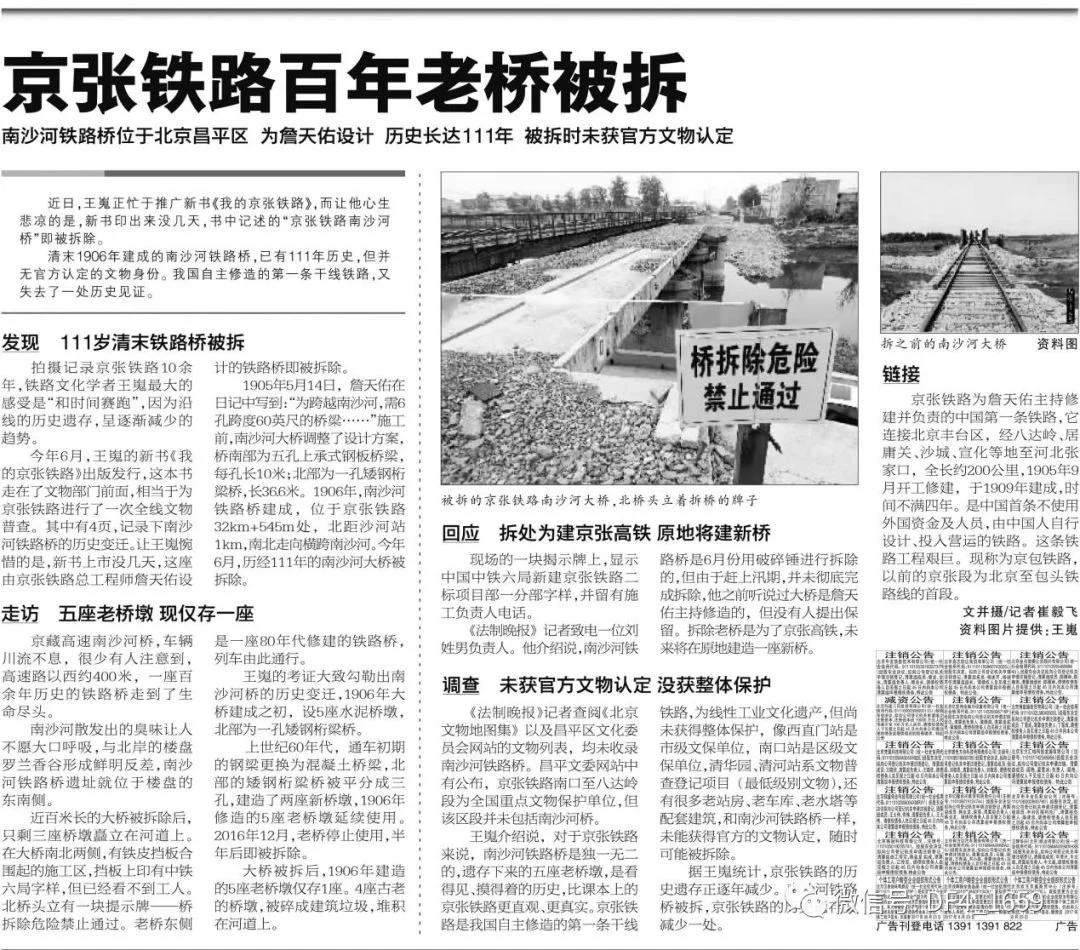
In 2017, Legal Evening News exposed that a century-old bridge of the Jingzhang Railway was demolished, and the demolished bridge lacked cultural relic identity.
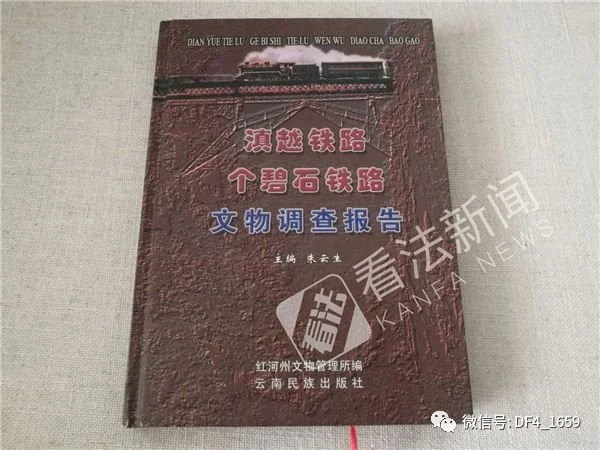
Photo: Legal Evening News · Lookout News, Reporter Cui Yifei
August 3, 2018, Legal Evening News
Legal Evening News · Lookout News (Reporter Cui Yifei) For Wang Wei, July 27, 2018, was a day worth remembering, because the Cultural Relic Recognition Application he submitted was finally settled, and officials recognized the "Xiahuayuan Station Water Tower of the Jingzhang Railway" as an immovable cultural relic. However, as the first trunk railway independently constructed by Chinese people, the Jingzhang Railway has not yet obtained overall protection, and there are still many historical buildings without cultural relic status.
Application: One of the Only Two Surviving Water Towers on the Jingzhang Railway In June 2017, My Jingzhang Railway was published and distributed, a book condensing nearly a decade of hard work by grassroots railway culture scholar Wang Wei, the content of which is equivalent to a comprehensive cultural relics census of the Jingzhang Railway. The book records that on April 2, 1909, the Jingzhang Railway track-laying reached Xiahuayuan and established a station, leading to the gradual prosperity of Xiahuayuan and the subsequent decline of the nearby Jiming Post Station. The Xiahuayuan Station Drawing drawn by Jeme Tien Yau shows that buildings such as station rooms, locomotive sheds, and water towers were set up within the station area. However, during successive station renovations, the original old station rooms and locomotive sheds were successively demolished, leaving only the water tower surviving. According to Wang Wei's statistics, at the initial completion of the Jingzhang Railway, a total of 11 steam locomotive water towers were constructed along the entire line. However, as internal combustion locomotives replaced steam locomotives, the matching water towers also gradually fell into disuse and were successively demolished, with only two surviving to this day—the Xiahuayuan Station water tower being one of them. The function of the Xiahuayuan Station water tower was mainly to supply water to steam locomotives on the Jimingshan Coal Mine branch line. After falling into disuse, the water tank on top of the tower was dismantled, but fortunately, the tower base and tower body remain basically intact. Considering the fate of the old station rooms and locomotive sheds at Xiahuayuan, about half a year ago, Wang Wei submitted the Application Form for the Recognition of Immovable Cultural Relics regarding the Xiahuayuan Water Tower of the Jingzhang Railway to the government of Xiahuayuan District, Zhangjiakou City. Three A4 pages detailed the historical information and cultural relic value of the water tower, hoping to secure official cultural relic recognition for the old structure. The local cultural relics department accepted Wang Wei's application.
Review: Rescuing Jingzhang Railway Cultural Relics Has Both Successes and Regrets The Interim Measures for the Administration of Cultural Relic Recognition, implemented starting in 2009, requires that cultural relics administrative departments at all levels should encourage citizens to play a role in cultural relics census work. Citizens requesting the recognition of immovable cultural relics may provide relevant information to local cultural relics administrative departments at or above the county level. Relevant departments shall listen to public opinions through forms such as hearings and make decisions to reply. The implementation of this measure has provided a channel for the public to participate in cultural relic recognition. Qinghe Station is one of the dual starting stations of the future Jingzhang High-Speed Railway. The old station room of the Jingzhang Railway still survives within the station, though it had not obtained official cultural relic recognition. In November 2015, Wang Wei submitted an Application Form for the Recognition of Immovable Cultural Relics to the Haidian District Cultural Commission. In May 2017, the old station room gained cultural relic recognition. Legal Evening News had previously followed and reported on Wang Wei's protection actions. The cultural relic recognition obtained by the Xiahuayuan Station water tower brings Wang Wei's successful protections of Jingzhang Railway cultural relics to two places.
Wang Wei once fought for the cultural relic status of the old station room of the Qinghe Station on the Jingzhang Railway, and Legal Evening News reported on it continuously. This year, Wang Wei submitted a Cultural Relic Recognition Application regarding the surviving old station room ruins of the Changping Station on the Jingzhang Railway. The Changping Cultural Commission has already accepted it and started organizing expert discussions. Continuously submitting cultural relic recognition applications is related to Wang Wei having personally witnessed too many historical buildings being demolished. The Nanshahe Bridge and Beishahe Bridge, located in Changping District, Beijing, are two century-old bridges of the Jingzhang Railway. Because they lacked officially recognized cultural relic identities, they were successively demolished in 2017. "If they could have been recognized as cultural relics earlier, they wouldn't have been demolished!" This matter left Wang Wei with deep regret.
Recognition: After Half a Year, the Old Water Tower Finally Gains Cultural Relic Status
On July 30, while Wang Wei was traveling on a green-skin train in Mongolia, he received a WeChat message from the relevant person in charge of the Xiahuayuan District cultural relics department: "The old water tower has obtained cultural relic recognition." Wang Wei immediately posted on Moments: "This water tower, built in 1909, is the only circular water tower left by the Jingzhang Railway. It has finally been recognized as an immovable cultural relic. Thanks to the Xiahuayuan District Government!"
Legal Evening News · Lookout News reporters noted that on July 27, the Office of the Xiahuayuan District Bureau of Culture, Radio, Television, Press and Publication issued the Notice on Publishing Newly Added Immovable Cultural Relics: According to the Law of the People's Republic of China on the Protection of Cultural Relics and the Regulations for the Implementation of the Law of the People's Republic of China on the Protection of Cultural Relics, the turnaround section water tower inside the Xiahuayuan Railway Station is listed as a newly added immovable cultural relic. All relevant units are requested to take practical measures to do a good job in the protection, management, and rational utilization of immovable cultural relics.
Article 9 of the Interim Measures for the Administration of Cultural Relic Recognition: The recognition of immovable cultural relics shall take effect from the date of announcement by local cultural relics administrative departments at or above the county level.
According to Wang Wei's statistics, the Jingzhang Railway only has two water towers surviving to this day, with the other one located in Kangzhuang, Yanqing District, Beijing, but it has not yet obtained official cultural relic recognition.
Exploration: Some People Mistook the Water Tower for a Japanese Military Blockhouse
"Everything around has been demolished, but the water tower was said to be a cultural relic, so no one dared to touch it." Recently, a Legal Evening News · Lookout News reporter drove 150 kilometers from downtown Beijing to near Xiahuayuan Railway Station, where a local railway worker pointed to a demolition area—that was the location of the old water tower.
In an open space where demolition had just been completed, a thick cylindrical building stood tall. The tower base and tower body were masonry-built with rubble, and rows of axe-chopped stone were embedded between the tower base and tower body, as well as at the top of the tower. The water tower has one large door and one small door, four tall and thin arched windows, one of which was blocked with red bricks, while the wooden window frames of the remaining windows still survive, though the glass is broken, and the position of the water crane is sealed off.
Wang Wei once measured that the water tower has a diameter of 6.66 meters, and visually estimated the wall thickness to be around 1 meter.
The interior of the water tower is dim and permeated with the smell of excrement and urine. Although the water tank was dismantled long ago, the bottom of the water tank constructed using old steel rails still remains at the top. Words such as "diesel engine oil" are written on the inner wall, proving that after losing its original function, the water tower was once used as an oil depot.
At Xiahuayuan Station, Legal Evening News · Lookout News reporters asked some railway workers for information about the water tower; many people did not think it was a water tower, but mistook it for a blockhouse of the Japanese army. It can be seen that they do not understand the history of the old water tower.
Perspective: Comprehensive Cultural Relics Census for the Jingzhang Railway Is Urgently Needed
At the end of 2017, the Implementation Opinions of the People's Government of Beijing Municipality on Further Strengthening Cultural Relics Work was released, proposing to improve the coordinated protection mechanism for cultural relics in Beijing, Tianjin, and Hebei, and promote the protection and utilization of the ruins and relics of the Jingzhang Railway.
Legal Evening News · Lookout News reporters noted that as a linear industrial cultural heritage, the Jingzhang Railway is divided into the Beijing section and the Hebei section, still lacking overall protection, and the levels of cultural relics along the route vary unevenly. For example, the "Nankou Section - Badaling Section" is a major historical and cultural site protected at the national level, the Xizhimen old station room is a municipal-level protected cultural site, the Wuweitou Tunnel is a district-level protected cultural site, and the Qinghuayuan old station room is a cultural relics census registration item (the lowest level of immovable cultural relic)... (and many historical buildings still lack cultural relic status).
Wang Wei introduced that among the 25 old station buildings along the entire Jingzhang Railway line, the majority have histories exceeding a century, but 11 old station buildings no longer exist, most of which were demolished after the founding of the People's Republic of China. Among the 14 surviving old station buildings, only half have been recognized by cultural relics departments. In addition, platforms, locomotive sheds, coal platforms, water towers, water cranes, drainage trenches, imperial carriage sheds, warehouses, office premises, factories, bridges, tunnels, culverts, slope protections, etc., were built along the route; as well as traffic equipment such as steel rails, switches, signals, and rolling stock. They are all important components of the Jingzhang Railway, but most have not been included in the scope of cultural relic protection.
Wang Wei believes that the Jingzhang Railway requires officials to organize a full-line cultural relics census, because promoting protection and utilization first requires figuring out the "family assets." Former Director of the Jeme Tien Yau Memorial Museum Shi Wenyi and former Deputy Curator of the China Railway Museum Jin Wanzhi both hold this view.
Legal Evening News · Lookout News reporters found that for the Yunnan-Vietnam Railway, which is also a linear industrial cultural heritage, the Yunnan Provincial Government invested manpower, material resources, and financial resources to complete the full-line Cultural Relics Investigation Report in 2017. And this is precisely the basic cultural relic protection work that the Jingzhang Railway lacks.
The Yunnan-Vietnam Railway, also a linear industrial cultural heritage, has completed its Cultural Relics Investigation Report.
