
Discovered at a Scrap Stall: The Tangshan Earthquake Photo Album, Housing 493 Vintage Photos
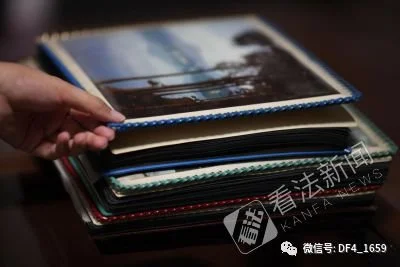
Four old photo albums concerning earthquake damage, housing 657 precious vintage photos. Photo by/Reporter Cui Yifei
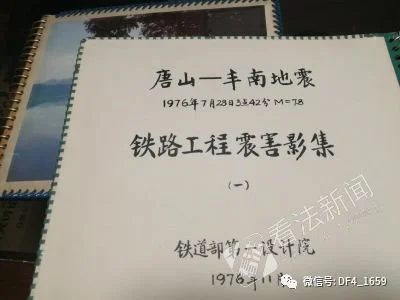
Album titles written in calligraphy brush. Photo by/Reporter Cui Yifei
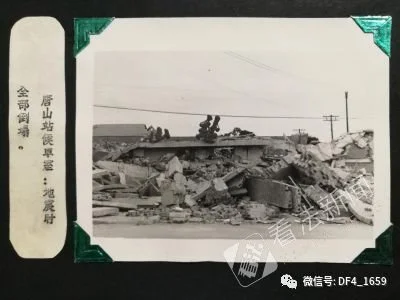
Tangshan Railway Station waiting room completely collapsed. Photo by/Reporter Cui Yifei
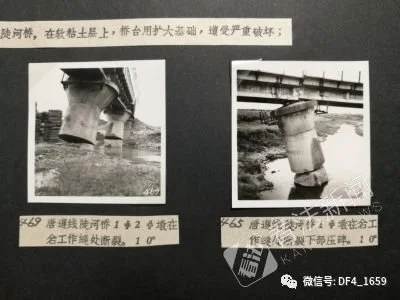
Severed railway bridge piers in the vintage photos. Photo by/Reporter Cui Yifei
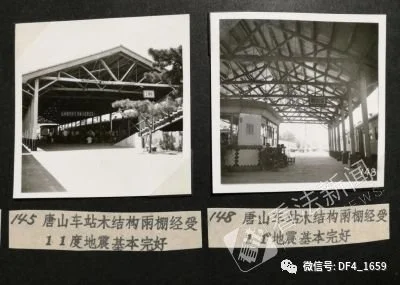
Railway ancillary structures inside Tangshan Station that were relatively well-preserved after the major earthquake. Photo by/Reporter Cui Yifei
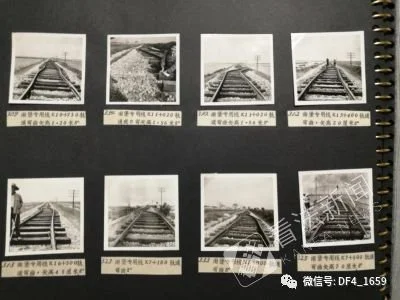
Each picture is accompanied by a lead-printed caption. Photo by/Reporter Cui Yifei
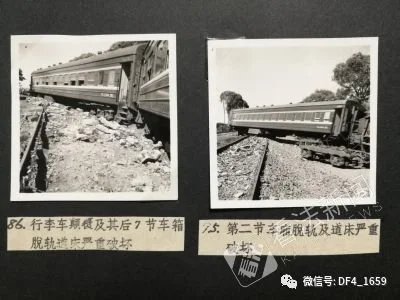
Overturned train carriages after the major earthquake. Photo by/Reporter Cui Yifei
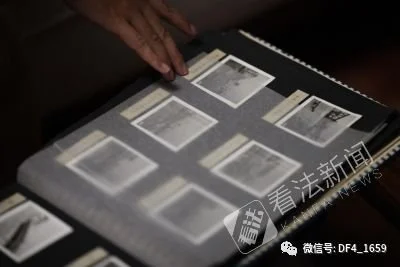
Between each page of black card, sulfuric acid paper (tracing paper) is used for protection, as if draping a blurred veil over the Tangshan earthquake of forty-two years ago. Photo by/Reporter Cui Yifei
July 27, 2018, Legal Evening News
Four old photo albums concerning earthquake damage, housing 657 precious vintage photos. Photo by/Reporter Cui Yifei Legal Evening News · Lookout News (Reporter Cui Yifei) At 3:42:53.8 AM on July 28, 1976, a magnitude 7.8 earthquake struck the Tangshan and Fengnan areas of Hebei Province, resulting in 242,769 deaths, 164,000 severe injuries, and leaving 4,204 children orphaned, while causing massive economic losses. Exactly forty-two years later, railway culture scholar Wang Wei exhibited a set titled Railway Earthquake Damage Albums, featuring 493 photographs documenting the destruction inflicted upon the railways by the Tangshan earthquake, yet this rare visual material was discovered by someone at a scrap stall.
Album titles written in calligraphy brush. Photo by/Reporter Cui Yifei Four Old Photo Albums Witness Railway Earthquake Damage Bended rails, derailed carriages, collapsed waiting rooms, fractured bridge piers... On the bookshelf of railway culture scholar Wang Wei sit four heavy old photo albums. Aside from one 1975 Liaonan Earthquake Damage Album, the other three are related to the Tangshan earthquake. The Tangshan-Fengnan Earthquake / Railway Engineering Earthquake Damage Album consists of two volumes, produced by the First Design Institute of the Ministry of Railways in November 1976; the Jingshan Line, Tongtuo Line / Earthquake Damage Conditions of Railway Facilities Album was produced by the Beijing Railway Bureau's Anti-Earthquake and Disaster Relief Frontline Command Post. All photos were captured using 120 cameras, totaling 493 black-and-white photographs across the three volumes, pasted with photo corners onto black card pages, with each photo accompanied by lead-printed captions attached below or beside them. Text information on the albums indicates that the Tangshan earthquake caused casualties among railway employees and their families, severely damaged railway facilities, and caused roadbed settlement, longitudinal cracking, and track bending along 484 kilometers of extended lines. Piers of 60 large and small bridges experienced displacement, tilting, and fracturing. Over 385,000 square meters of housing collapsed or were damaged in the Tangshan, Guyi, and Fengrun regions, accounting to 59.1% of the building area, which caused traffic interruptions on three railway lines: Jingshan, Tongtuo, and Jinji. Although simple and unpretentious in production, the albums are orderly and systematic, introducing the impact of the Tangshan earthquake on railways from nine aspects: locomotive operations, rolling stock, water and electricity, traffic operations, engineering, electrical signaling, train overturns, living hygiene, and emergency clearance.
Tangshan Railway Station waiting room completely collapsed. Photo by/Reporter Cui Yifei The Great Earthquake Did Not Destroy All Buildings Bridgehead embankments generally settled, abutments all shifted toward the river center, and pier and abutment earthquake damage conditions... The Legal Evening News · Lookout News reporter noted that the majority of the 493 vintage photographs pertain to railway bridges. Following the 12-second strong earthquake, the tracks on many railway bridges turned into an S-shape, and heavy piers suffered fracturing or displacement.
Severed railway bridge piers in the vintage photos. Photo by/Reporter Cui Yifei In addition, the Tangshan Railway Station waiting room completely collapsed, the Tangshan Railway Workers' Club completely collapsed, and the railway cafeteria completely collapsed... Aside from these damaged structures, the albums did not forget to mention the railway engineering works that performed relatively well in the disaster zone. Among them, six railway bridges and culverts remained basically intact, the second steel-structure footbridge inside Tangshan Railway Station remained basically intact, the wooden-structure platform canopy of Tangshan Station remained basically intact, the steel-structure lighthouse inside Tangshan Station remained basically intact, the water crane for supplying steam locomotives at Tangshan Station remained basically intact, and the steel-structure footbridge at Lutai Station on the Jingshan Line remained basically intact. These albums were all categorized as "Professional Design Institute and Aerial Survey Technical Data of the Ministry of Railways". Professor Wang Ruiying of Beijing University of Civil Engineering and Architecture believes that this set of albums leans more toward technical data, enabling earthquake damage analysis through visual information, which holds reference significance for future seismic resistance and earthquake prevention work.
Railway ancillary structures inside Tangshan Station that were relatively well-preserved after the major earthquake. Photo by/Reporter Cui Yifei 657 Precious Vintage Photos Purchased for 100 RMB at a Scrap Stall Mr. Guo, who initially discovered this set of albums, told the Legal Evening News · Lookout News reporter that about two or three years ago, when passing by a scrap stall near the China Railway Corporation, he discovered these four old photo albums. Flipping through them casually, he saw they were all vintage photos concerning railway earthquake damage, and thinking it would be a real pity to treat them as waste, he bought the four albums for 100 RMB.
Each picture is accompanied by a lead-printed caption. Photo by/Reporter Cui Yifei To make the best use of them, Mr. Guo gifted the albums to his good friend, railway culture scholar Wang Wei. Wang Wei enjoys considerable renown in the field of railway history and culture research. He has surveyed domestic and foreign railways for over a decade and authored the book My Jingzhang Railway. Mr. Guo stated that gifting the albums to Wang Wei stemmed first from friendship, ensuring he could still find these photos if he wanted to view them in the future. Furthermore, presenting these visual materials to a scholar allows their value to be realized, and he hopes it can assist Wang Wei's career. The Legal Evening News · Lookout News reporter searched on the Kongfz old book website and found that the Tangshan earthquake-related "Atlas of Earthquake Damage and Reinforcement Repair of Building Structures in Tianjin University," consisting of two albums totaling 126 photos, was listed by a seller for as high as 12,888 RMB. Meanwhile, the four old photo albums scavenged by Mr. Guo for 100 RMB contain as many as 657 earthquake damage pictures.
This Set of Albums Is Extremely Rare; Its Historical and Scientific Research Value Is Very High Jin Wanzhi, formerly of the China Railway Museum, participated in the rescue of wounded personnel during the Tangshan earthquake in 1976. Jin Wanzhi introduced that these four albums acquired by Wang Wei were likely used by the railway department for data retention, scientific research, and review by leadership, belonging to internal materials with scarce surviving quantities, making them extremely precious. Original negatives are even harder to find. After forty-two years, the people who shot the photos and produced the albums back then are certainly retired by now. How did this precious visual material end up among the populace? Jin Wanzhi judges that when government organs and units encounter leadership transfers or retirements, they are very likely to clear out certain materials or even treat them as waste. Scrap collectors specialize in "preying" upon such large units, acquiring these paper goods by weight, and it is estimated that the acquisition cost for the four albums did not exceed 10 RMB. When reselling them, they often mark up the price and sell them by the book. He also used to deal with scrap collectors near the Ministry of Railways for railway collection purposes. For the four precious albums, Mr. Guo only spent 100 RMB, which is equivalent to striking gold on a bargain ("jianlour"). Jin Wanzhi believes that these visual materials comprehensively record the destruction inflicted by the major earthquake upon railway architecture, serving as historical corroboration after the major earthquake, and possess extremely high historical and scientific research values. (News Observer: Wang Wei)
