
Surviving Century-Old Steel Rails Receive Relocation Protection
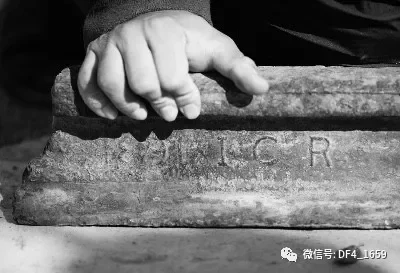
The old steel rail after relocation protection reveals its inscription—"1891 ICR," proving a history as long as 127 years. "ICR" is the abbreviation for Imperial China Railway, which can be translated as "Chinese Imperial Railway."
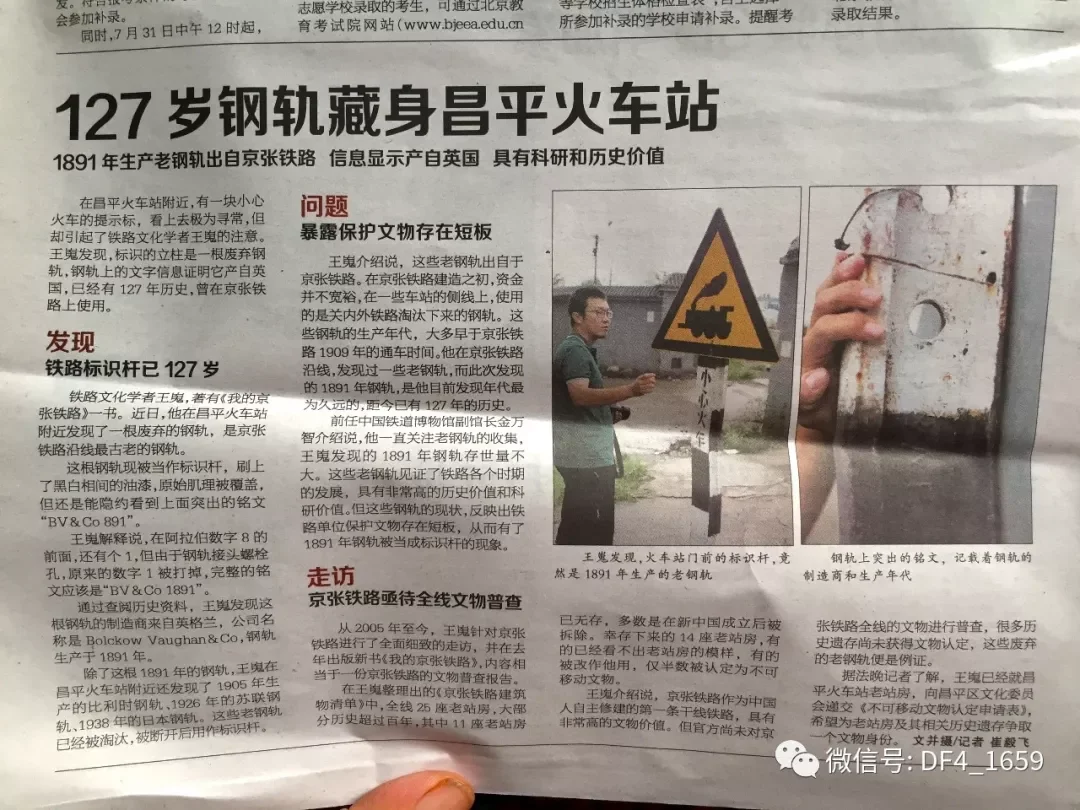
Page layout note: Related report by this newspaper on July 29
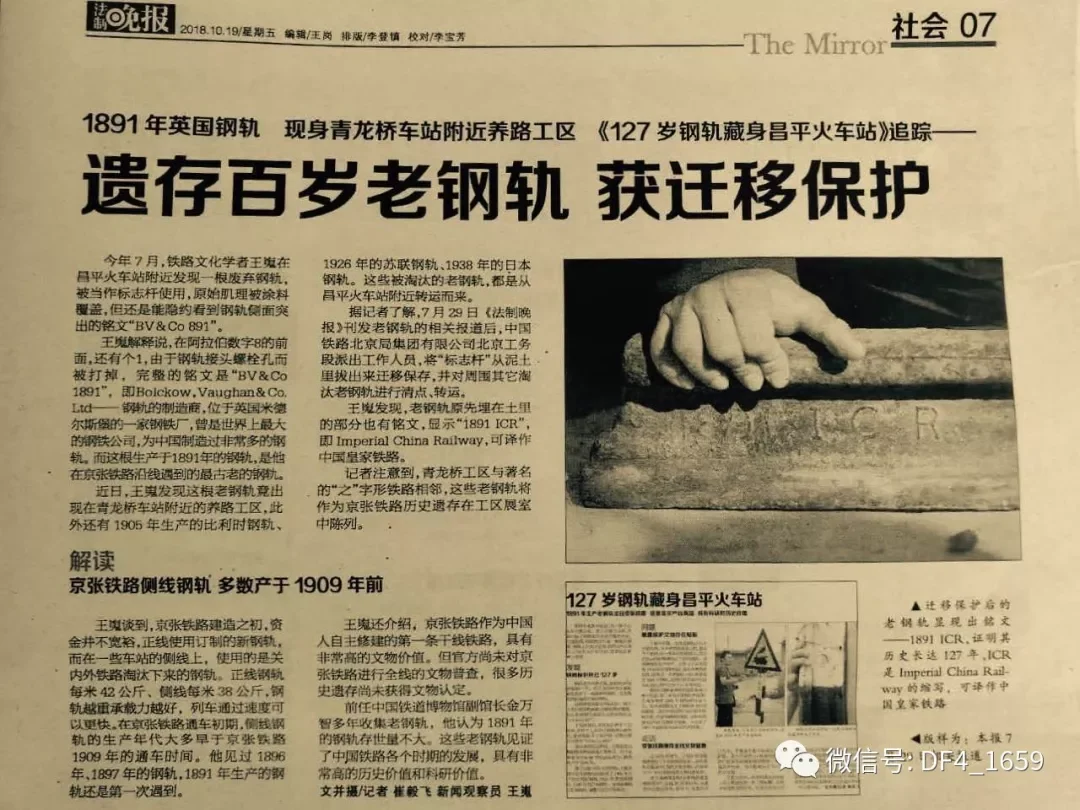
October 19, 2018, Legal Evening News, Page 07
October 19, 2018, Legal Evening News
According to reporting, after the Legal Evening News (WeChat ID: fzwb_52165216) published related reports on the old steel rails on July 29, the Beijing Track Maintenance Section of the China Railway Beijing Group Co., Ltd. dispatched staff to pull the "signpost" out from the soil for relocation and preservation, while also tallying and transshipping other obsolete old steel rails around it. Wang Wei discovered that the portion of the old steel rail previously buried in the soil also bears an inscription reading "1891 ICR," meaning Imperial China Railway, which can be translated as "Chinese Imperial Railway." The reporter noted that the Qinglongqiao Track Maintenance Section is adjacent to the famous zigzag railway, and these old steel rails will be exhibited in the maintenance section's exhibition room as historical relics of the Jingzhang Railway.
Interpretation: Most Side-Track Rails of the Jingzhang Railway Were Produced Before 1909 Wang Wei mentioned that at the initial construction of the Jingzhang Railway, funds were not plentiful. The main lines used custom-ordered new steel rails, whereas some station side tracks utilized steel rails phased out by the Imperial Railways of North China. Main line rails were 42 kilograms per meter, and side track rails were 38 kilograms per meter; the heavier the rail, the better the load-bearing capacity, allowing trains to pass at higher speeds. During the early opening period of the Jingzhang Railway, the production eras of the side-track rails mostly predated the 1909 opening of the Jingzhang Railway. He had seen steel rails from 1896 and 1897, but a steel rail produced in 1891 was the first he had ever encountered. Wang Wei also introduced that the Jingzhang Railway, as the first trunk railway independently constructed by Chinese people, possesses extremely high cultural relic value. However, official authorities have not yet conducted a full-line cultural relics census for the Jingzhang Railway, and many historical relics have not yet acquired cultural relic recognition. Jin Wanzhi, former deputy curator of the China Railway Museum, has collected old steel rails for many years. He believes that the 1891 steel rail exists in small quantities. These old steel rails have witnessed the development of China's railways across various periods, possessing extremely high historical and scientific research values. Text and Photos by Reporter Cui Yifei, News Observer Wang Wei
Legal Evening News (Reporter Cui Yifei, News Observer Wang Wei) In July of this year, railway culture scholar Wang Wei discovered an abandoned steel rail near Changping Railway Station, which was being used as a signpost. Its original texture was covered by paint, but the protruding inscription "BV&Co 891" on the side of the rail could still be faintly seen. Wang Wei explained that in front of the Arabic numeral 8, there was also a 1, which was knocked off due to the rail joint bolt hole. The complete inscription is "BV&Co 1891"—referring to Bolckow, Vaughan & Co. Ltd., the manufacturer of the steel rail. Located in Middlesbrough, England, the company was once the largest steel corporation in the world and manufactured a tremendous amount of steel rails for China. Furthermore, this steel rail produced in 1891 is the oldest steel rail he has encountered along the Jingzhang Railway route. Recently, Wang Wei discovered that this old steel rail had unexpectedly appeared at the maintenance section near Qinglongqiao Station, along with a Belgian steel rail produced in 1905, a Soviet steel rail from 1926, and a Japanese steel rail from 1938. These phased-out old steel rails were all transshipped from near Changping Railway Station.
Page layout note: Related report by this newspaper on July 29
