
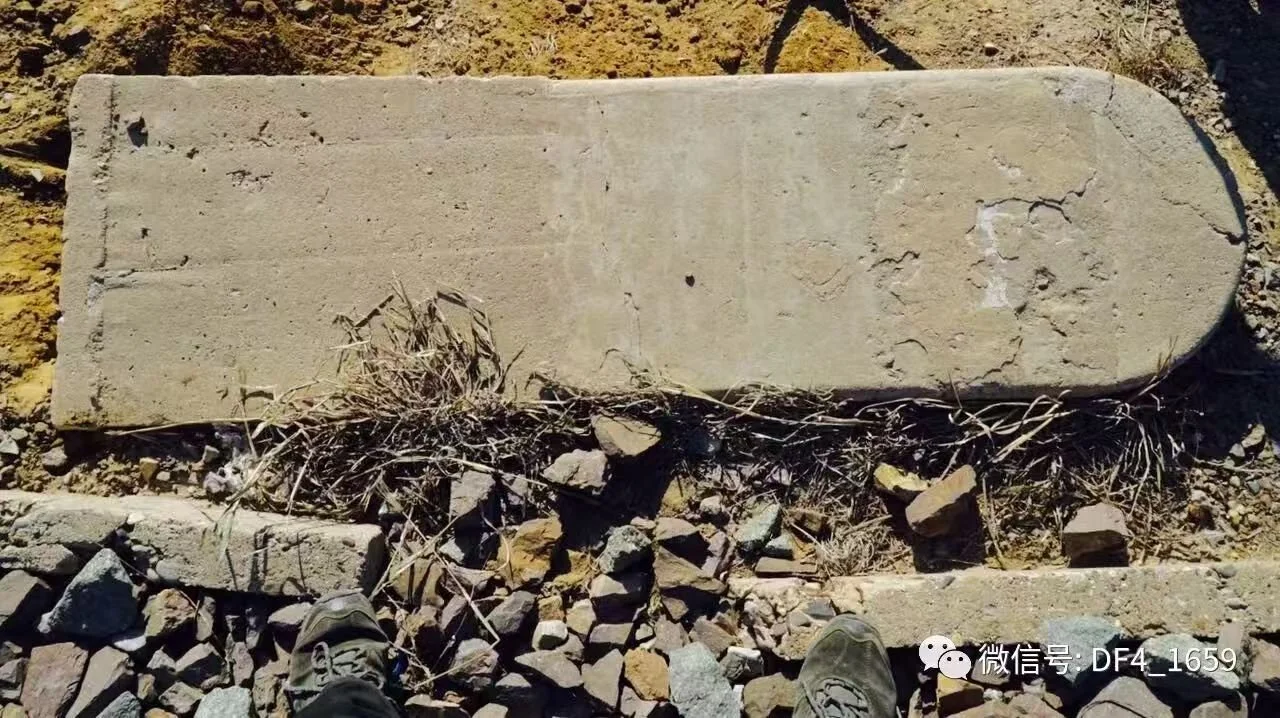
In the Kanggzhuang section of the Beijing-Zhangjiakou Railway, a Suzhou numeral board lies flat by the side of the tracks.
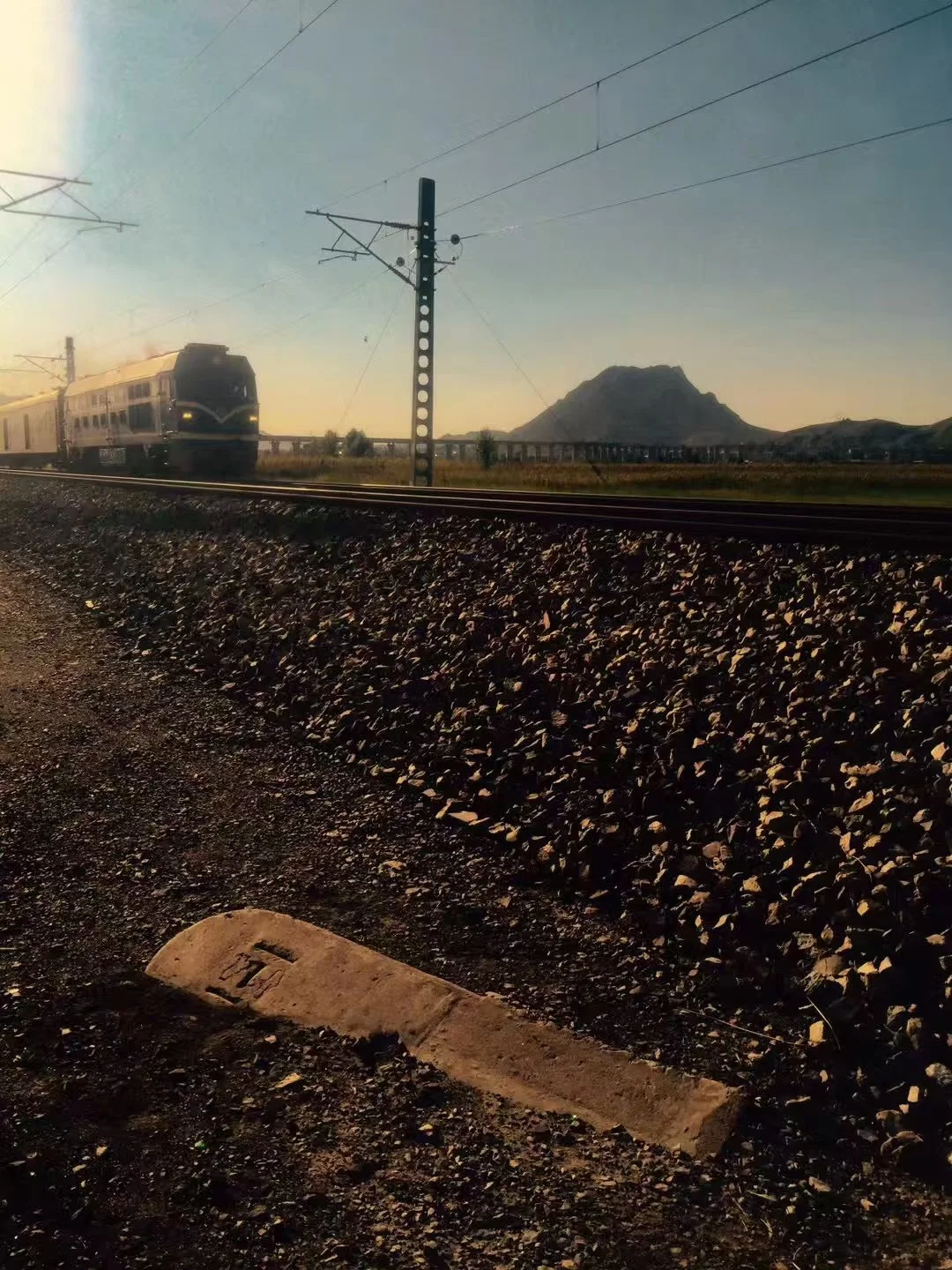
Pictured above: A Suzhou numeral mileage post half-buried by the roadbed in the Xibali section of the Beijing-Zhangjiakou Railway.
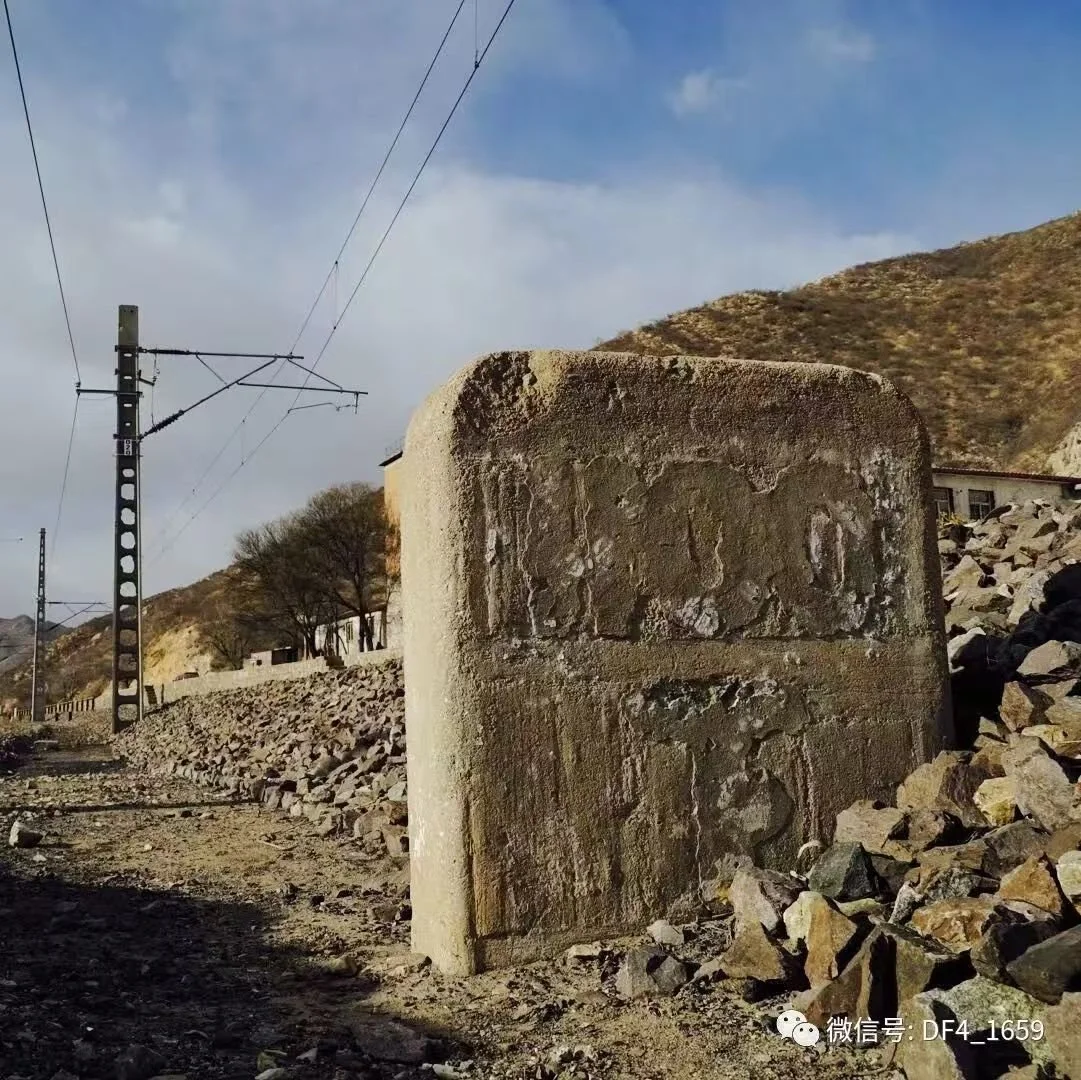
Image: This gradient board indicates that ahead in the downhill direction is a 1/200 downward slope, meaning a gradient of 5‰, photographed north of the Jinlongkou Bridge in Xiahuaayuan.
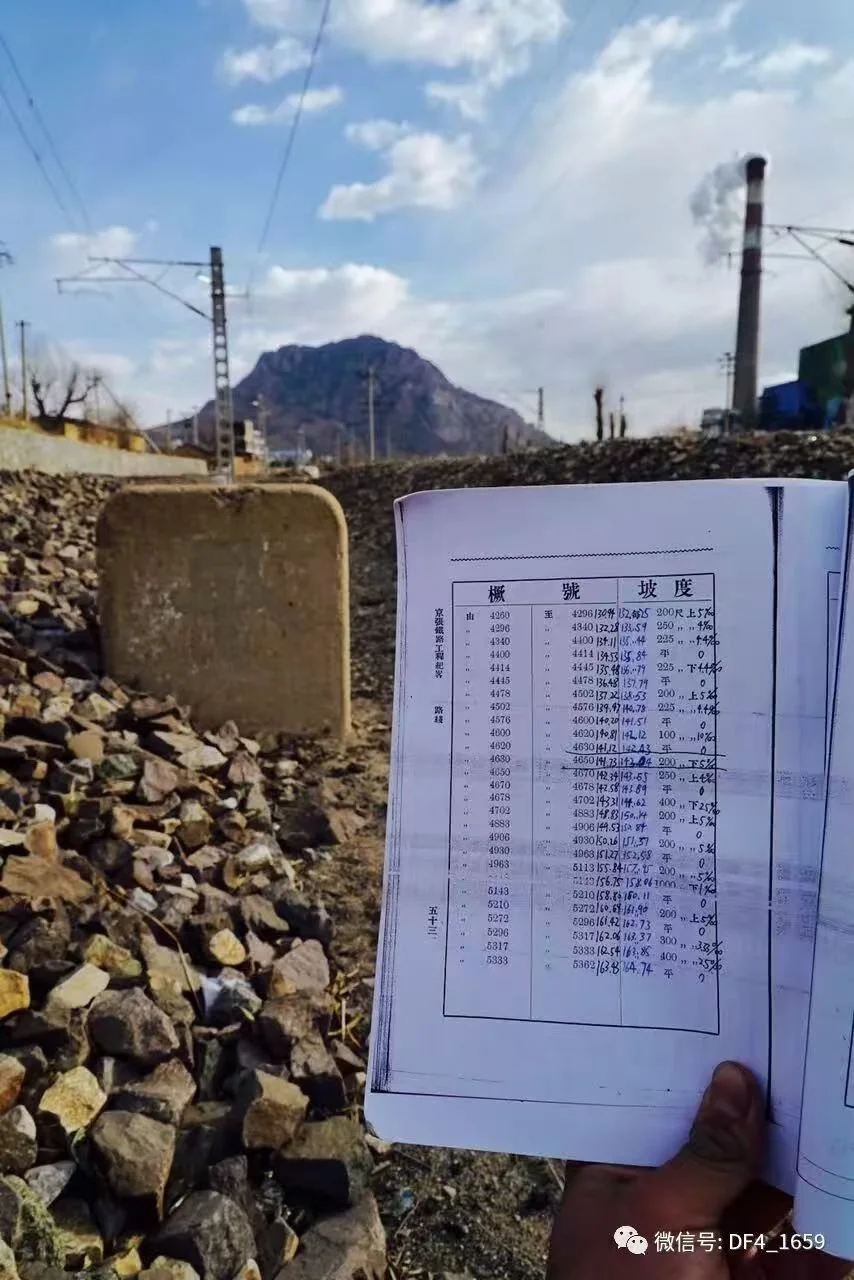
Image: This gradient board is engraved with the character "平" (ping), meaning ahead is a flat road with a gradient of 0. This gradient board corresponds to the "Engineering Outline of the Beijing-Zhangjiakou Railway" compiled by Mr. Zhan Tianyou in the fourth year of the Republic of China (1915), and the gradient change point marked with a black line is precisely north of the Jinlongkou Bridge in Xiahuaayuan.
December 13, 2017, Legal Evening News
Legal Evening News / Law Vision News (Reporter Cui Yifei) — "Suzhou numerals," as early Chinese folk commercial numerals, rarely appear in people's daily lives anymore. However, these ancient numerals are not far from us. On the Beijing-Zhangjiakou Railway, the original mileage posts, gradient boards, and bridge boards all used Suzhou numerals. However, with the vicissitudes of time, most have been abandoned, and few remain. Recently, railway cultural scholar Wang Wei newly discovered three Suzhou numeral boards along the Beijing-Zhangjiakou Railway and suggested strengthening the protection of these industrial railway heritages.
Exploration: Suzhou Numeral Mileage Posts Hidden Beside the Tracks
After his new book My Beijing-Zhangjiakou Railway was published and released this year, post-90s railway cultural scholar Wang Wei did not stop his steps in field surveys; any historical relics related to the Beijing-Zhangjiakou Railway fall within his recording scope. Recently, a friend provided a clue to Wang Wei that two new cement boards were discovered along the Beijing-Zhangjiakou Railway, suspected to be Suzhou numeral boards, which pleasantly surprised Wang Wei.
Setting off from downtown Beijing, Wang Wei drove over a hundred kilometers to the Kanggzhuang section of the Beijing-Zhangjiakou Railway. Following the coordinates provided by his source, he discovered the first cement board. The cement board lay by the side of the tracks, measuring about 1.5 meters long and about 20 centimeters thick, gradually narrowing from bottom to top up to a semi-circular arch top. Based on past experience, Wang Wei judged it to be a Suzhou numeral board, except that the carved symbols had been smoothed over with cement.
Wang Wei introduced that this is a Suzhou numeral mileage post from 1906, but it has been abandoned for many years.
Legal Evening News / Law Vision News reporters noted that apart from the carved symbols being smoothed over with cement, this Suzhou numeral board is complete and intact. Lying flat on the slope with bricks padded underneath it, it can be judged that after abandonment, railway department personnel did not discard it casually, but instead laid it flat for preservation. However, the next one Wang Wei visited was not so lucky.
Near Xibali along the Beijing-Zhangjiakou Railway, a Suzhou numeral mileage post of the same shape lay beneath the roadbed, mostly buried by debris and soil. Obviously, after being abandoned, it did not receive proper protection. Fortunately, the carved Suzhou numerals were still clear.
Inventory: The Only In-Situ Surviving Gradient Board Found Across the Entire Line
Continuing forward towards Zhangjiakou, Wang Wei came to the Xiahuaayuan section of the Beijing-Zhangjiakou Railway, targeting a Suzhou numeral gradient board. This is also the only in-situ surviving gradient board Wang Wei found during his visits along the Beijing-Zhangjiakou Railway line.
Unlike the semi-circular top of the mileage posts, the shape of the gradient board looked square-headed, planted by the side of the tracks. The Suzhou numeral carvings were similarly smoothed over with cement, proving that it had been abandoned. Seeing a train about to pass, Wang Wei immediately set up his camera to capture the ancient gradient board and a modern locomotive in a single photo.
Wang Wei told Legal Evening News / Law Vision News reporters that the three Suzhou numeral boards discovered this time were all planted in 1909. Compared to the previous two mileage posts, the position of this gradient board has not changed much. With the change from Qing system li to kilometers, the positions of mileage posts shifted accordingly, but the location of gradient change points would not change. Therefore, the displacement of this gradient board is small, and its current position is very likely the original position established in 1909, thus possessing even greater historical value.
Wang Wei revealed that he is in contact with relevant departments, and the other party is prepared to recognize this rare Suzhou numeral gradient board as an immovable cultural relic.
Wang Wei plans to add the three newly discovered Suzhou numeral boards into the upcoming reprint of his My Beijing-Zhangjiakou Railway.
Inventory: Suzhou Numerals Abandoned for Many Years; Fewer Than 20 Discovered in Beijing
Suzhou numerals are early Chinese folk "commercial numerals," evolved from counting rods in Chinese history, originating in Suzhou, China, and mostly used for numerical records in old-time commerce, handicrafts, pawnshops, contracts, accounting, and bookkeeping. They can still occasionally be seen today in markets, old-style cha chaan teng (cafes), and traditional Chinese medicine pharmacies in Hong Kong and Macau. Wang Wei introduced that in the railway field, Suzhou numerals mostly appeared on "gradient boards, mileage posts, and bridge boards." When Zhan Tianyou built the Beijing-Zhangjiakou Railway, he chose to use Suzhou numerals with domestic characteristics. The reasons behind this can no longer be historically verified, but it embodied the spirit of "learning advanced technologies of foreign nations to strengthen oneself." In 1922, Qing system li were changed to kilometers, and the original Suzhou numeral posts were mostly relocated, with their numbers also altered, leaving them abandoned and unused for many years.
Based on information mastered by Wang Wei, fewer than 20 Suzhou numeral board relics survive on railways in the Beijing area, with 3 located at the China Railway Museum. There are 8 preserved inside Qinglongqiao Station on the Beijing-Zhangjiakou Railway, mostly voluntarily protected by railway workers—one of which was transported by Wang Wei from the Zhuozishan section of the Jingbao Railway to Qinglongqiao. The rest are scattered along the tracks of old railway lines, becoming unique witnesses to the initial construction of the Beijing-Zhangjiakou Railway.
Viewpoint: Combining In-Situ Protection with Off-Site Protection
Mr. Jin Wangzhi, former curator of the China Railway Museum and an expert in Chinese railway history, introduced that the Beijing-Zhangjiakou Railway has a total length of nearly 200 kilometers. If calculated according to Qing system li, there were approximately 400 various Suzhou numeral boards along the entire line. However, as the old steles and boards were abandoned, many were either buried or hauled away by people to use as building foundations, leaving very few surviving ones that can still be found. Nevertheless, these relics are historical witnesses to the initial construction of the Beijing-Zhangjiakou Railway, holding high value for the study of railway history and even cement materials.
Suzhou numeral boards discovered currently should be protected in-situ whenever possible; for those lacking protection conditions, they can be transferred to museums, railway units along the route, or cultural relic departments for preservation.
Narrative: Beijing Hutong House Numbers Once Used Suzhou Numerals
Yang Cunxin, station master of Qinglongqiao Station on the Beijing-Zhangjiakou Railway, introduced that there are 8 Suzhou numeral boards currently preserved at Qinglongqiao Station, 6 of which originated from along the Beijing-Zhangjiakou Railway line. Before off-site protection, many had fallen by the roadside or were even buried, and they organized railway workers to transport them to the station for preservation.
Initially, Station Master Yang and his colleagues did not recognize these strange symbols. They set up a cement board in a prominent position at the station to observe passengers' reactions, but waited a year without anyone recognizing it, until an old gentleman said this was called Suzhou numerals. Later, old Beijing residents also told them that the house numbers in Beijing hutongs had also used Suzhou numerals.
Station Master Yang said that for railways built by foreigners in China, signage facilities mostly used Arabic numerals; he had only seen Chinese characters and numerals on the Beijing-Zhangjiakou Railway. Therefore, these relics possess distinct era characteristics, and every single Suzhou numeral board is unique.
Numeral Comparison Table
Suzhou Numeral Arabic Numeral Roman Numeral
〇 0
〡 1 I
〢 2 II
〣 3 III
〤 4 IV
〥 5 V
〦 6 VI
〧 7 VII
〨 8 VIII
〩 9 IX
十 10 X
