
What a Pity! A Pair of Century-Old Bridge Piers Along the Jingzhang Railway Demolished
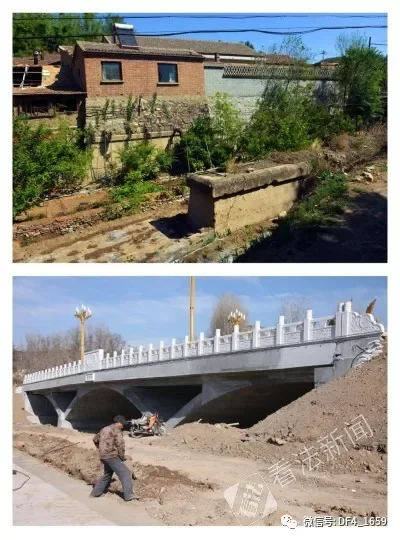
The photo above shows the two demolished old bridge piers, which stood in Youhuanggou for 108 years (photographed by Wang Wei in 2015); the photo below shows a new highway bridge constructed on the site after the demolition of the old bridge piers (photographed by Wang Wei in 2018).
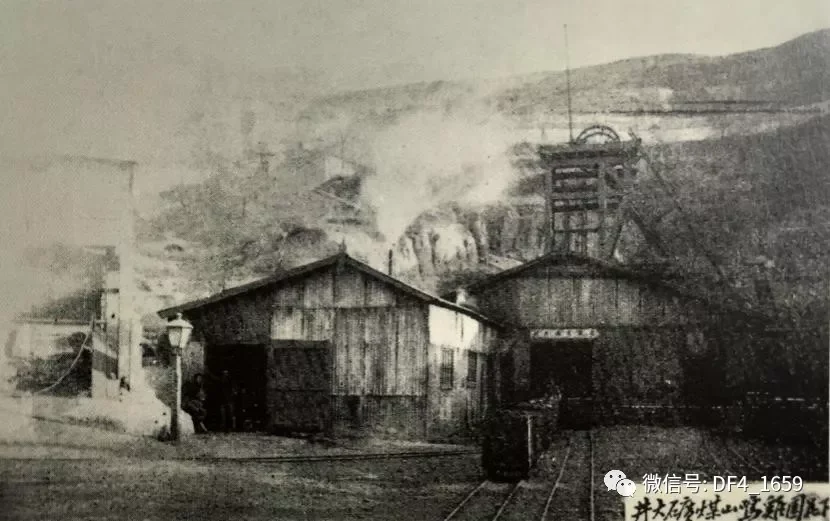
The once-thriving Jimingshan Coal Mine, with the dual-track narrow-gauge railway visible in the image (old photograph provided by Wang Wei)
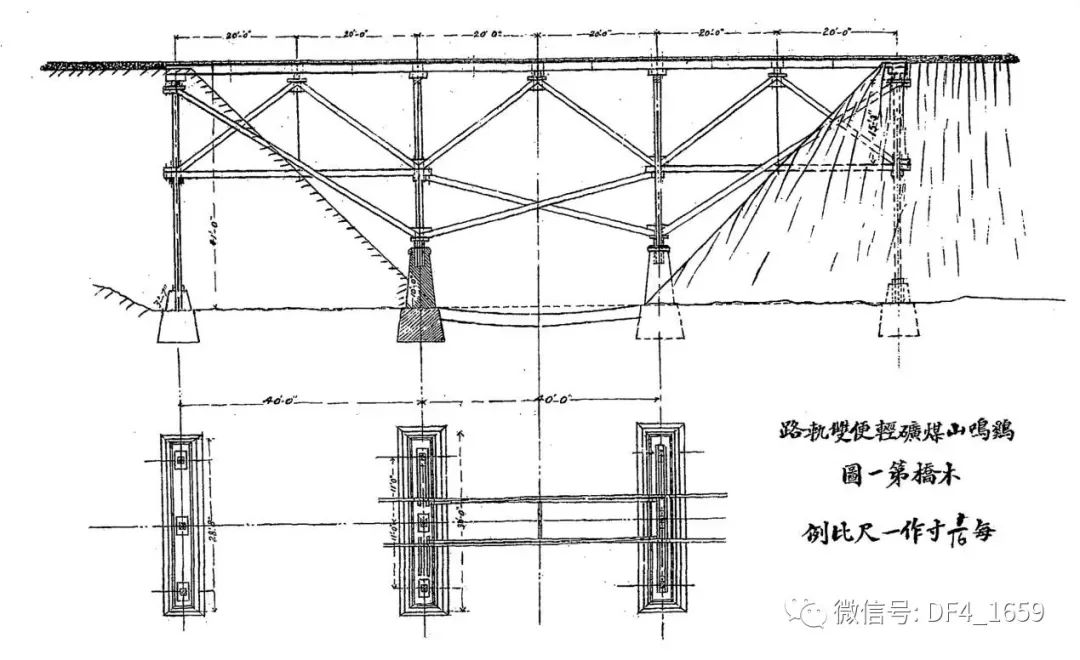
Structural drawing of the destroyed bridge (provided by Wang Wei)
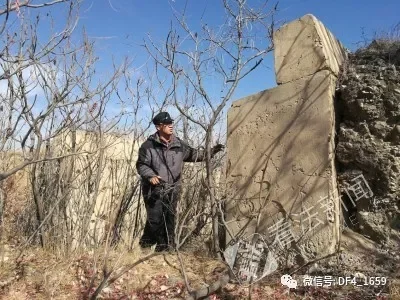
Along the narrow-gauge section of the Jimingshan Branch Line, Wang Wei discovered another set of bridge pier ruins.
Photo: Legal Evening News · Lookout News, Reporter Cui Yifei
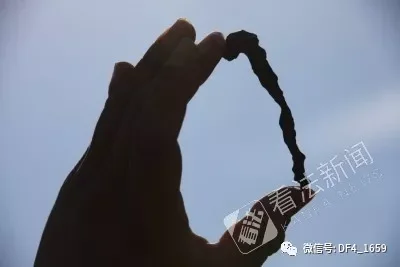
A severely rusted railway spike picked up on the roadbed.
Photo: Legal Evening News · Lookout News, Reporter Cui Yifei
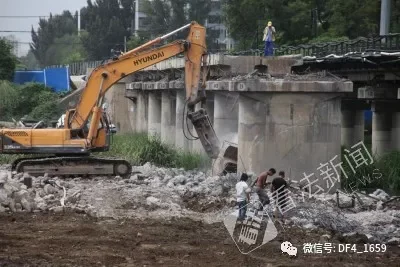
The Beisha River Bridge of the Jingzhang Railway in Changping District, Beijing, which had a history of over a century, was demolished in 2017.
Photo: Legal Evening News · Lookout News, Reporter Cui Yifei
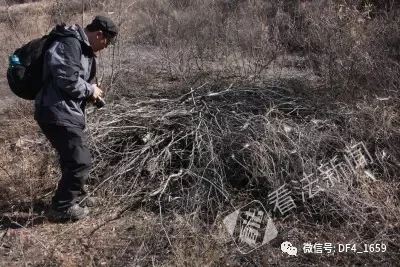
The mine shaft opening of the Jimingshan Coal Mine is now covered with dry firewood, and the vertical shaft is bottomless.
Photo: Legal Evening News · Lookout News, Reporter Cui Yifei
November 6, 2018, Legal Evening News
On October 31, 2018, the Ministry of Industry and Information Technology released the "Proposed List for the Second Batch of National Industrial Heritage," in which the Qixin Cement Plant located in Tangshan City, Hebei Province, was shortlisted. Wang Wei told reporters that, including the two lost concrete piers of the Jimingshan Branch Line, the cement used for structures along the Jingzhang Railway mostly originated from the Qixin Cement Plant.
History: The "Short-Lived Branch Line" Survived for Only 26 Years Public records show that before the construction of the Jingzhang Railway, local people were already mining coal in the Jimingshan area. When Jeme Tien Yau surveyed the Jingzhang Railway and learned that Jimingshan produced coal—with steam locomotives relying on coal as their primary fuel—the Jimingshan Coal Mine Branch Line was completed simultaneously with the Jingzhang Railway in 1909. Wang Wei introduced that the Jingzhang Railway initially had three branch lines: the Fengliu Branch Line (Fengtai to Liucun), connecting railways inside and outside the Shanhaiguan Pass; the Jingmen Branch Line (Xizhimen to Mentougou); and the Jimingshan Branch Line (Xiahua yuan to Jimingshan Coal Mine). The primary function of the latter two branches was transporting coal. The Jimingshan Branch Line connected Xiahua yuan Station with the Jimingshan Coal Mine, spanning just over 3 kilometers. The mine shaft was more than 100 meters higher in altitude than Xiahua yuan Station, presenting an excessively steep gradient for a railway. Consequently, the branch line was divided into two sections: a standard-gauge section 2.225 kilometers long, and a section closer to the mine shaft with the steepest gradient converted into a dual-track narrow-gauge railway measuring 0.792 kilometers in length. Following the opening of the Jingzhang Railway, the Jimingshan Coal Mine was operated by the Jingzhang Railway Administration. Between 1912 and 1916, annual output increased from 20,000 tons to over 40,000 tons, all of which was transported via the Jimingshan Branch Line to Xiahua yuan Station. However, good times did not last long; in the 1930s, mining ceased due to poor coal quality, and the Jimingshan Branch Line was dismantled in 1935, surviving for a mere 26 years. Wang Wei told reporters that remaining relics of the Jimingshan Branch Line are few and far between, and tearing them down so casually is truly a pity. Choosing to build a new bridge here may be because the new bridge directly faces the road leading to the Jimingshan Scenic Area. Following the surviving railway roadbed, the reporter proceeded with Wang Wei toward the Jimingshan Coal Mine. Along the way, they found another pair of abandoned concrete bridge piers and discovered three severely rusted railway spikes on the roadbed, which, like the bridge piers, boast a history of a hundred years. At this time, the once-thriving Jimingshan Coal Mine was left with only a deep mine shaft, its opening covered by dry firewood.
Investigation: Jingzhang Railway Relics Dwindle Year by Year Due to "Lack of Status" On January 27, 2018, the China Association for Science and Technology released the "China Industrial Heritage Protection Catalog (Batch 1)," with the Jingzhang Railway selected as a linear industrial cultural heritage. Legal Evening News · Lookout News reporters noted that neither the demolished bridge piers nor the surviving relics of the Jimingshan Branch Line have received official cultural relic recognition and are not protected by the Law on Protection of Cultural Relics. In fact, as the first trunk railway independently built by the Chinese people, the Jingzhang Railway appears in elementary school textbooks and industrial heritage protection catalogs, and a Jeme Tien Yau Memorial Hall has even been built along its route; however, authorities have never conducted a full-line cultural relics census for the Jingzhang Railway, leaving many historical buildings without cultural relic status. According to an inventory, due to this lack of cultural relic status, historical buildings along the Jingzhang Railway have decreased year by year: in 2003, the old station building of the Mentougou Branch Line was demolished; in 2006, the old water tower of the Xizhimen Locomotive Turning Depot was demolished; in 2009, the Xiahua yuan Locomotive Shed was demolished; in 2014, the old Langshan Station building was demolished; in 2017, subsidiary buildings of Qinghe Station, the Nasha River Bridge, the Beisha River Bridge, and Bridge No. 1 on the narrow-gauge section of the Jimingshan Branch Line were demolished; and in the same year, Bridge No. 23 at Choujikeng within the Guanguan Section—a national key cultural relic protection unit—was suspected of being buried... To rescue the cultural relics of the Jingzhang Railway, Wang Wei previously submitted "Immovable Cultural Relic Recognition Application Forms" to cultural relics departments in Beijing and Hebei regarding the old Qinghe Station building, the old Changping Station building, and the water tower at Xiahua yuan Station. Although all obtained official cultural relic recognition, one person's strength ultimately has its limits.
Interpretation: Bridge Pier Relics Are Important Historical Landmarks Jin Wanzhi, vice chairman of the China Railway Cultural Museology Committee and former deputy curator of the China Railway Museum, climbed Jimingshan in 2017 to overlook the Jimingshan Coal Mine at the foot of the mountain. To extract coal from the Jimingshan Coal Mine, Jeme Tien Yau built a very short railway, but its operational period was brief, leaving some residual traces. Jin Wanzhi believes that the surviving bridge piers, roadbed, railway spikes, and mine shafts are physical artifacts with a history of over 100 years. Taking the bridge piers as an example alone, they witnessed the layout of the Jingzhang Railway at the time of its initial completion and are typical landmark structures. How were the cement materials and load-bearing capacity more than 100 years ago? For architectural materials science, this holds extremely high scientific research value. Yet because these old buildings lack cultural relic status, many people do not know their connection to the Jingzhang Railway, leading to their casual demolition. In 2017, when the Nasha River and Beisha River bridges of the Jingzhang Railway were demolished, Jin Wanzhi repeatedly appealed to relevant departments to rescue and protect the historical relics of the Jingzhang Railway, but no response has been received to date. Jin Wanzhi stated that the Jingzhang Railway is a precious piece of industrial heritage for building the Chinese people's cultural confidence. Next year marks the 110th anniversary of the opening of the Jingzhang Railway, and he hopes relevant departments can formulate a plan to properly protect the Jingzhang Railway. The reporter noted that late last year, the "Implementation Opinions of the Beijing Municipal People's Government on Further Strengthening Cultural Relics Work" was issued, proposing the improvement of a coordinated cultural relics protection mechanism among Beijing, Tianjin, and Hebei to jointly promote the protection and utilization of the ruins and relics of the Jingzhang Railway.
