
The Only Surviving Century-Old Station Building on the Jingmen Railway Recognized as a Cultural Relic
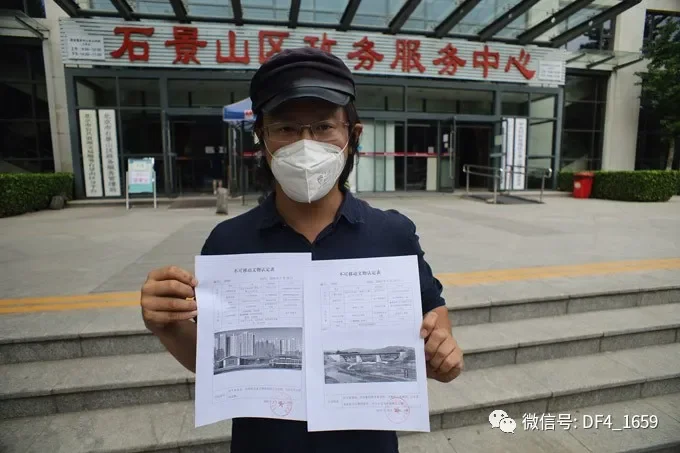
At the Shijingshan District Government Services Center, Wang Wei receives the Immovable Cultural Property Recognition Form
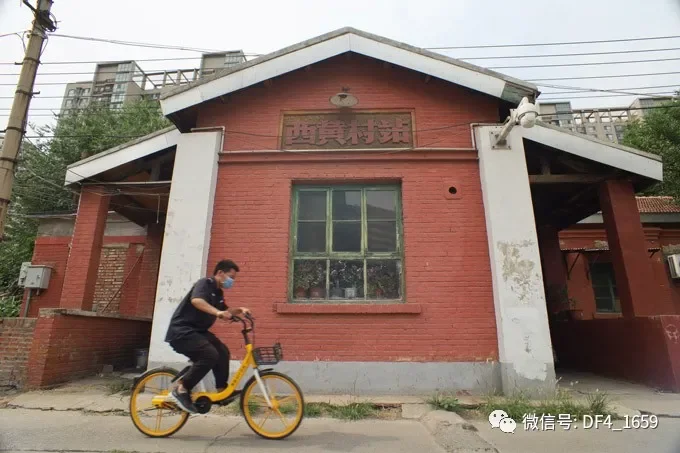
The old station building, still in use today, is viewed by Wang Wei as a "living cultural relic"
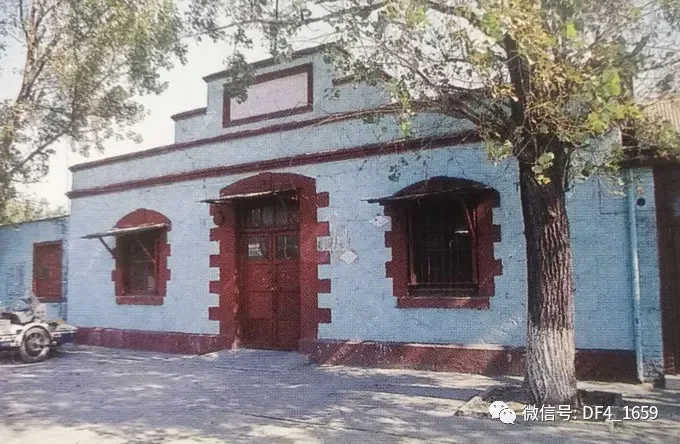
The old station building of Mentougou Station on the Jingmen Railway was demolished in 2003. Image excerpted from My Jingzhang Railway
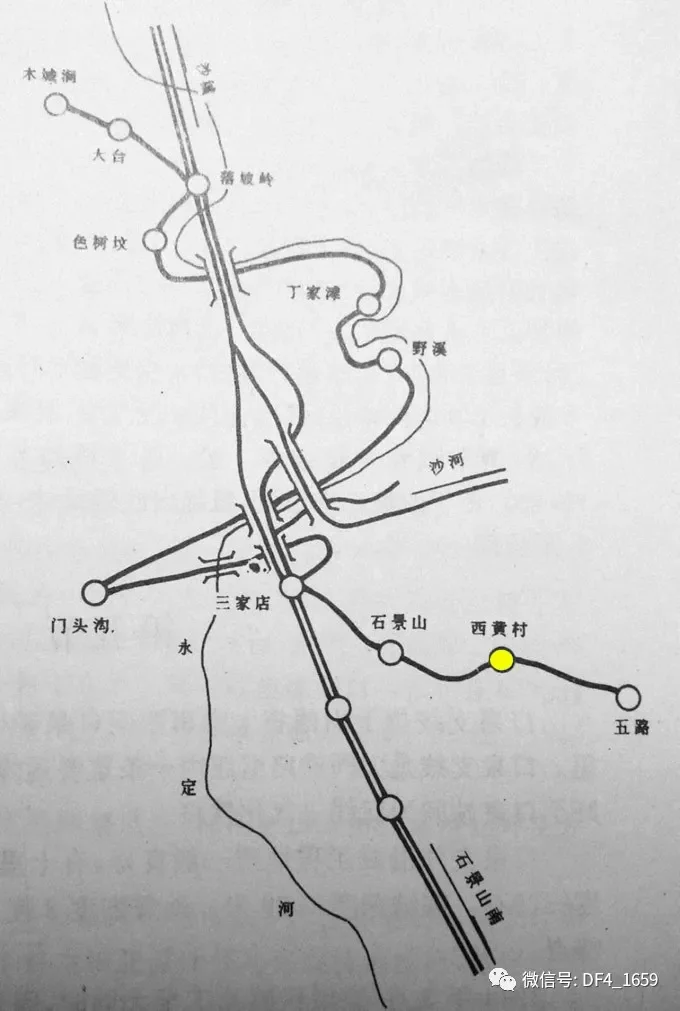
Schematic map of the Jingmen Railway and Menban Railway. Excerpted from the Chronicles of the Beijing Railway Bureau
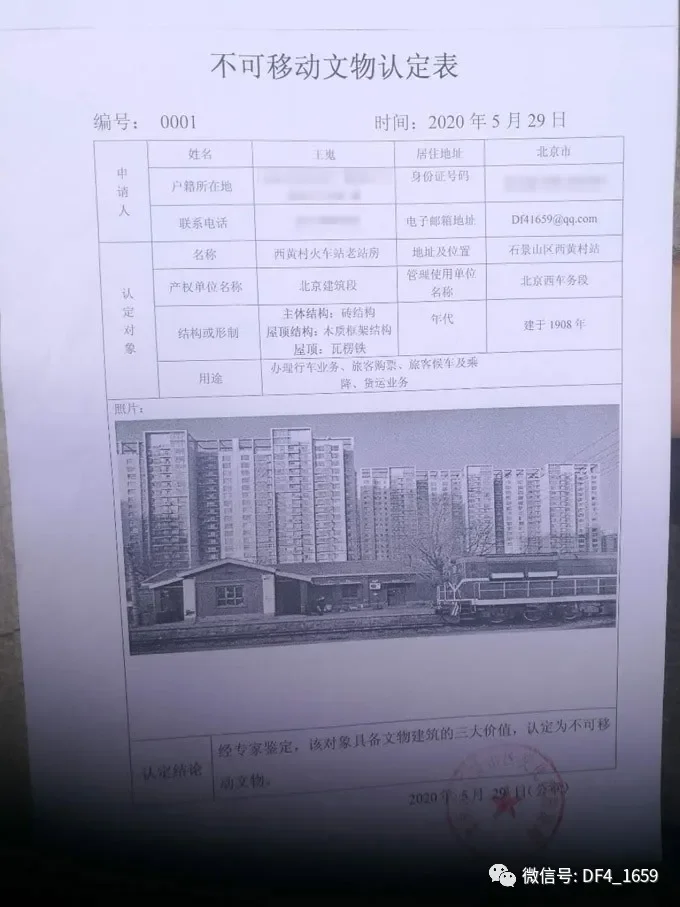
The recognition form received by Wang Wei
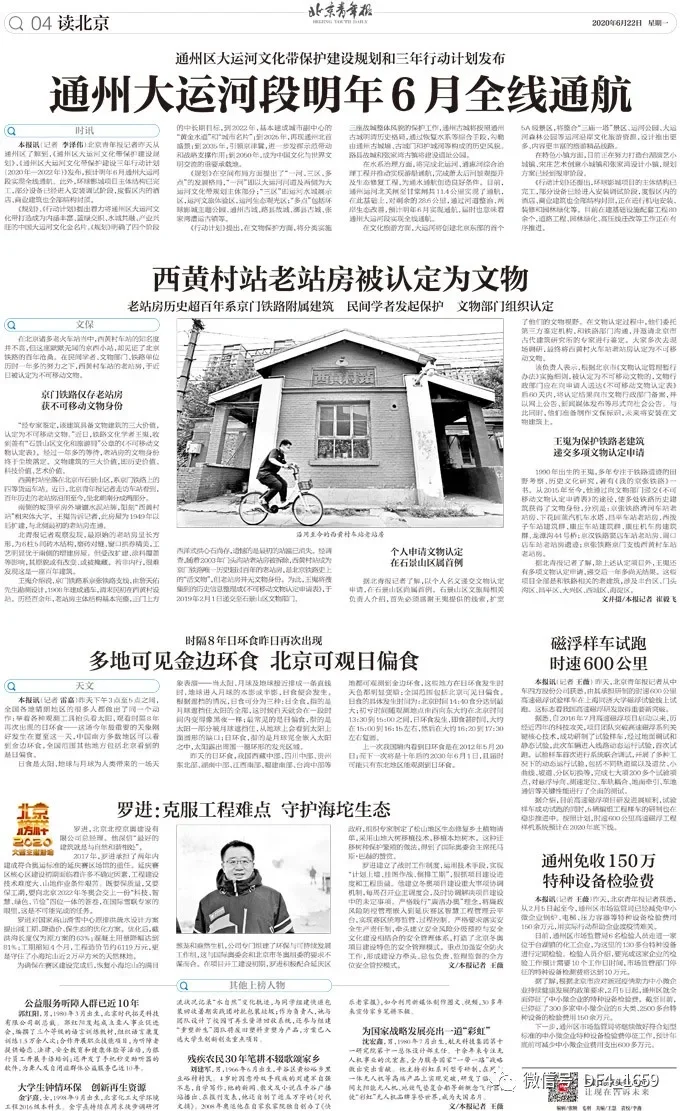
June 22, 2020, Beijing Youth Daily
Among Beijing's many old railway stations, Xihuangcun Station is not well known, yet this obscure little station in western Beijing has witnessed a century of vicissitudes in Beijing's railway history. Through more than a year of joint efforts by a folk scholar, cultural relics departments, and railway units, the old station building of Xihuangcun Station was recently recognized as an immovable cultural relic.
The Only Surviving Old Station Building on the Jingmen Railway Obtains Immovable Cultural Relic Status
"Upon expert appraisal, this structure possesses the three major values of cultural relic architecture and has been recognized as an immovable cultural relic." Recently, railway culture scholar Wang Wei received the Immovable Cultural Property Recognition Form bearing the official seal of the Shijingshan District Culture and Tourism Bureau. After more than a year of waiting, the cultural relic status of the old station building has finally been settled. The three major values of cultural relic architecture refer to historical value, technological value, and artistic value. Situated in Shijingshan District, Beijing, Xihuangcun Station is a fourth-class freight station on the Jingmen Railway. Recently, a reporter from the Beijing Youth Daily visited the station and saw that the century-old old station building remains in use today, oriented north-south and divided into two parts.
The outer wall of the pitched-roof single-story house on the south side is embedded with a cement station sign, with "Xihuangcun Station" carved in relief in bold Song typeface. Wang Wei told reporters that this structure was an expansion built after 1949 and is connected to the original old station building on the north side.
The Beijing Youth Daily reporter observed that the original old station building is rectangular, featuring a 6-pillar, 5-bay brick-and-wood structure with finely rubbed and jointed bricks and exquisite window arches. Its craftsmanship is visibly superior to the southern expanded building. However, affected by alterations, expansions, and paint coverage, its original appearance may have been altered or obscured. To an untrained eye, it is difficult to recognize this as a century-old building.
Wang Wei introduced that the Jingmen Railway was a branch line of the Jingzhang Railway, surveyed and designed by Mr. Zhan Tianyou. It was completed and opened to traffic in 1908, with a station established at Xihuangcun in the late Qing dynasty and early Republic of China period. After more than a century, the main structure of the old station building remains largely intact, and the Western-style keystone above the main entrance survives; regrettably, the original station plaque has disappeared. Investigations show that following the demolition of the old station building at Mentougou Station in 2003, Xihuangcun Station became the only old station building on the Jingmen Railway with a history exceeding one hundred years, serving as a "living cultural relic" in Beijing's railway history. Yet, the old station building lacked cultural relic status. To remedy this, Wang Wei compiled the historical information he gathered into an Immovable Cultural Property Recognition Form and submitted it to the Shijingshan District cultural relics department on February 1, 2019.
Personal Application for Cultural Relic Recognition First of Its Kind in Shijingshan District
According to the Beijing Youth Daily reporter, submitting a cultural relic recognition application in an individual capacity is the first of its kind in Shijingshan District. A relevant official from the Shijingshan District Culture and Tourism Bureau stated that first and foremost, thanks must be given to the clues provided by Wang Wei, which broadened their perspective on cultural relics. During the cultural relic recognition process, they commissioned a third-party appraisal institution, communicated with railway units, and invited experts from the Beijing Institute of Ancient Architecture to conduct appraisals. After conducting field research multiple times, they ultimately recognized the old station building of Xihuangcun Railway Station as an immovable cultural relic.
The official stated that according to the implementation rules of Beijing's Interim Measures for the Administration of Cultural Relic Recognition, for structures recognized as immovable cultural relics, the cultural relics administrative department shall, within 60 days of delivering the Immovable Cultural Property Recognition Form to the applicant, file the recognition results with the municipal cultural relics administrative department and announce them to the public through online announcements, news media releases, and other forms. Meanwhile, they are preparing to produce cultural relic protection signs, which will be installed on the cultural relic buildings in the future.
Wang Wei Submits Multiple Cultural Relic Recognition Applications to Protect Old Railway Buildings
Born in 1990, Wang Wei has spent many years focusing on field investigations and historical-cultural research of railway relics, and authored the book My Jingzhang Railway. From 2015 to the present, through submitting Immovable Cultural Property Recognition Forms to cultural relics departments, he has enabled several railway historical buildings to gain cultural relic status, namely: the old station building of Qinghe Station on the Jingzhang Railway, the Xiahuayuan steam locomotive water tower, the old station building of Changping Station, the Xibozi Station building complex, the Kangzhuang Station building complex, the Kangzhuang engine shed building complex, and Bridge No. 44 in Longtangou; the old station building of Doudian Station and the remnants of the old station building of Zhoukoudian Station on the Luohan Railway; and the old station building of Xihuangcun Station on the Jingmen branch line of the Jingzhang Railway.
According to the Beijing Youth Daily reporter, in addition to the aforementioned recognized projects, Wang Wei has several other cultural relic recognition applications pending with no results more than a year after submission. All of these projects are railway-related old buildings involving Fengtai District, Mentougou District, Changping District, Daxing District, Xicheng District, and Haidian District.
Related report in the Beijing Youth Daily, June 22, 2020
Text / Beijing Youth Daily Reporter Cui Yifei
Photography / Beijing Youth Daily Reporter Cui Yifei
Editor / Tan Weiping
June 22, 2020, Beijing Youth Daily
