
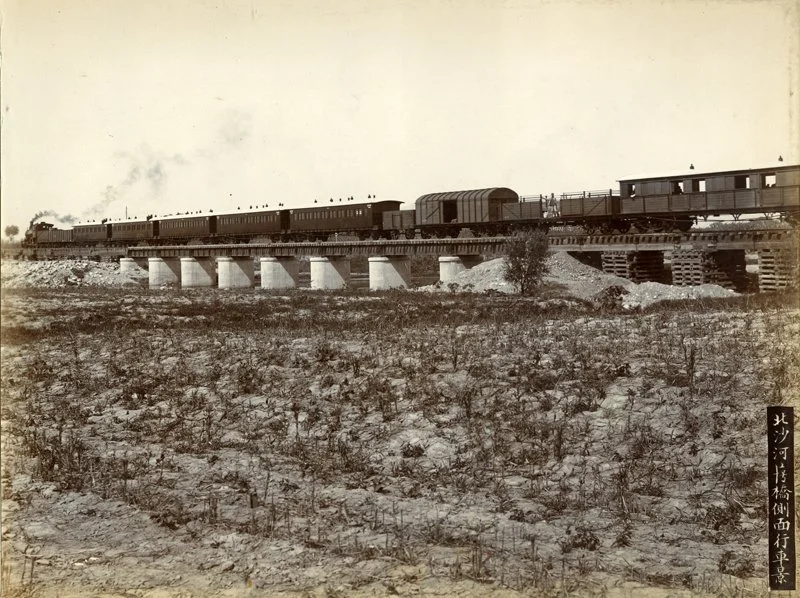
Pictured above: The appearance of the Beishahe Railway Bridge at the time of its construction.
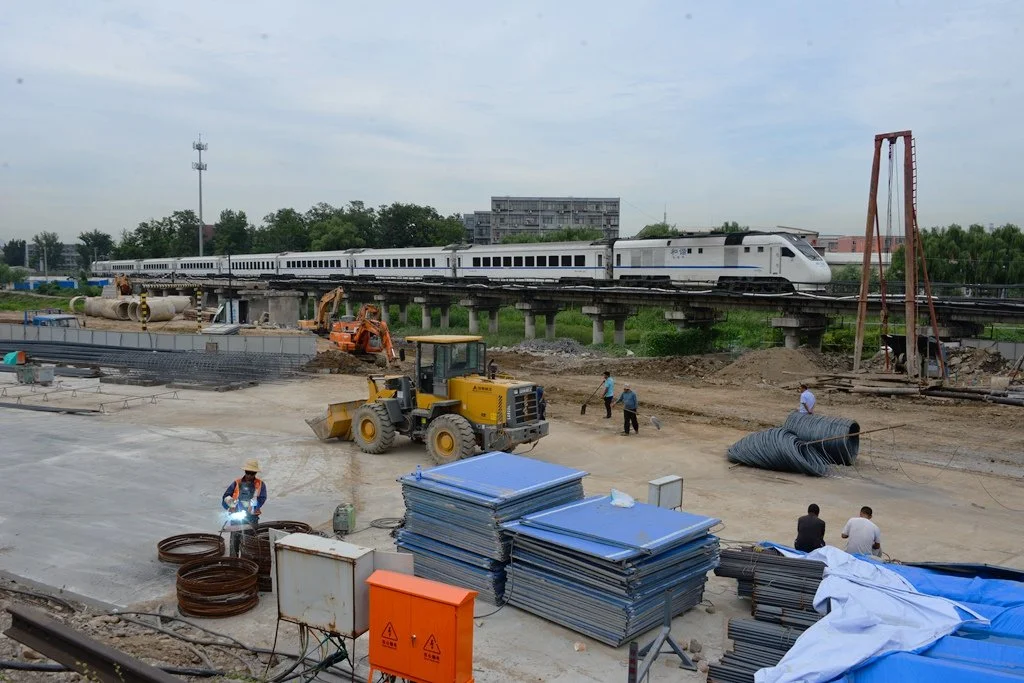
Pictured above: The Beishahe Bridge currently being demolished.
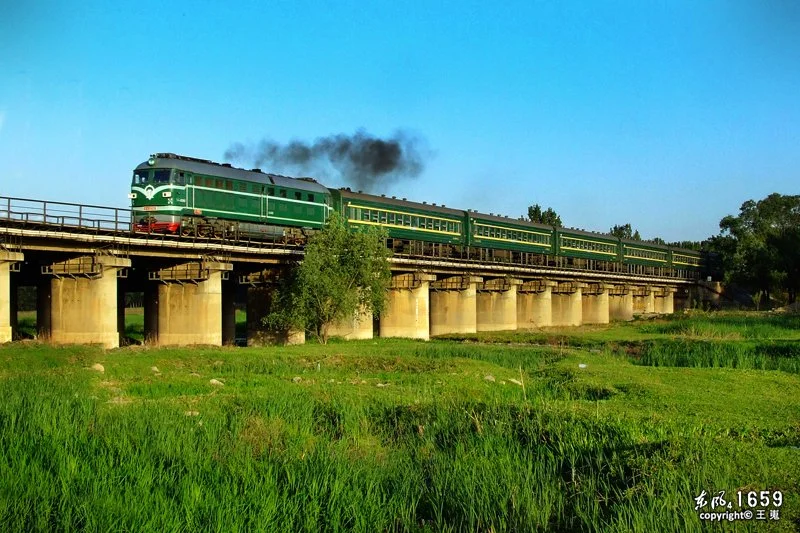
The appearance of the Beishahe Railway Bridge before its demolition, May 2007. Photographed by Wang Wei.
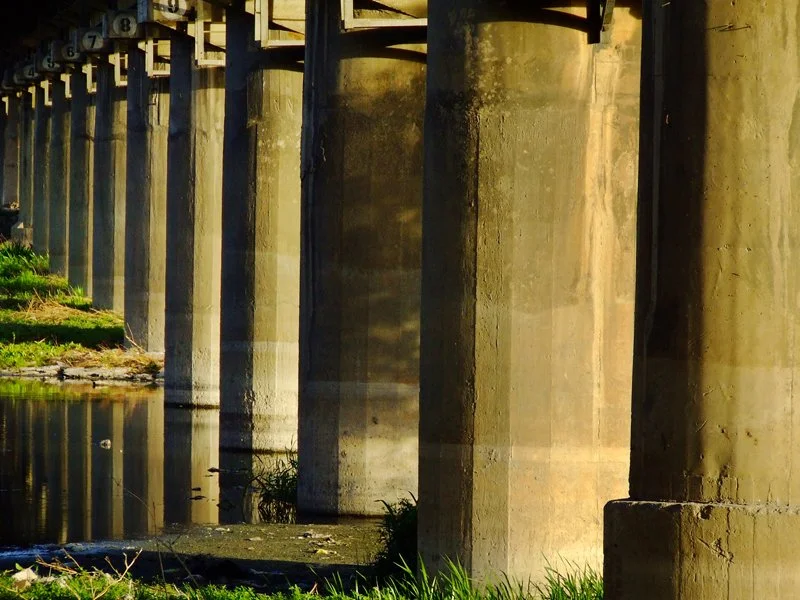
Bridge piers of the Beishahe Bridge.
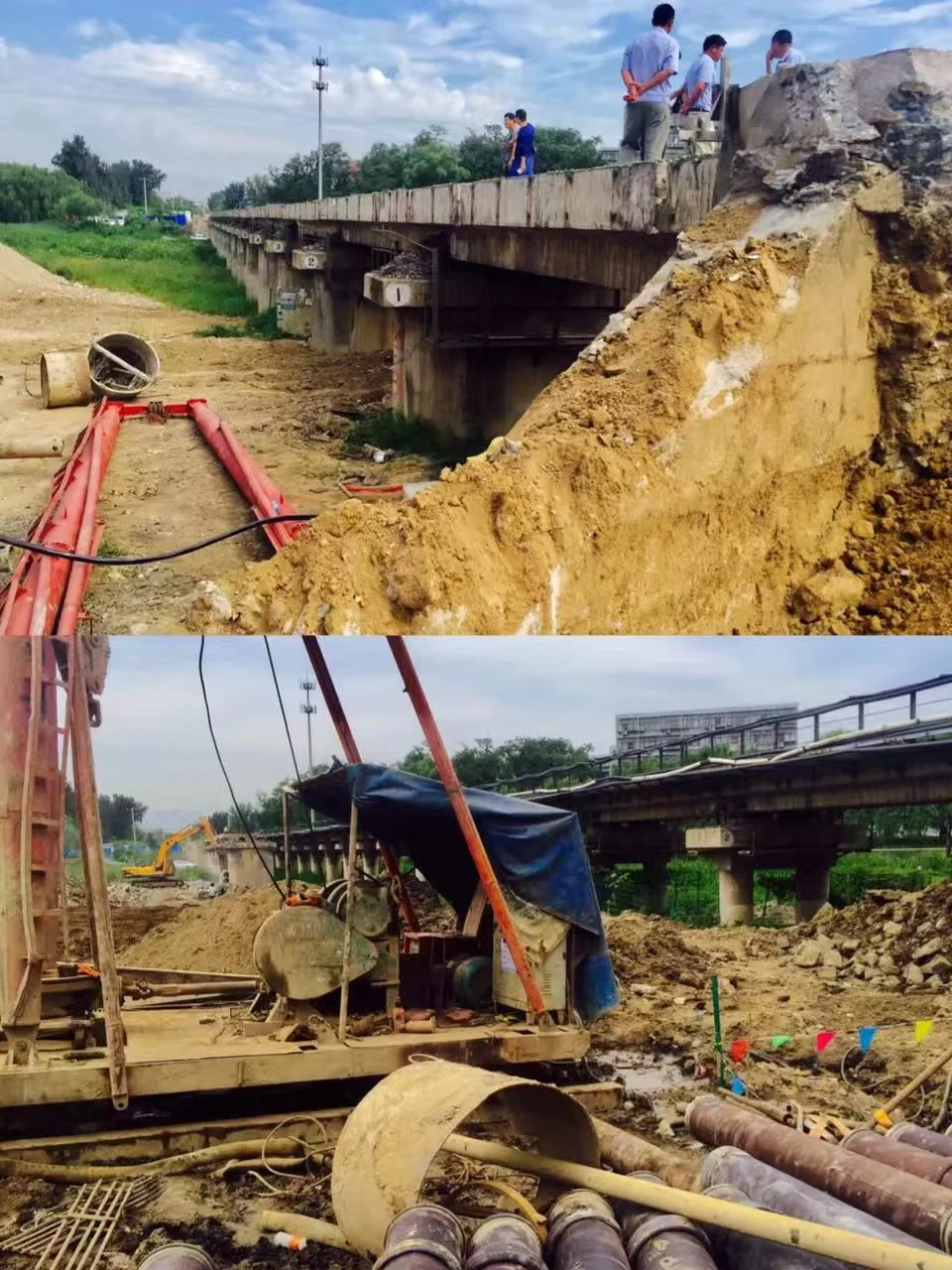
The Beishahe Bridge before demolition, photographed on August 15, 2017.
The Beishahe Bridge with its southern half already demolished, photographed on August 26, 2017.
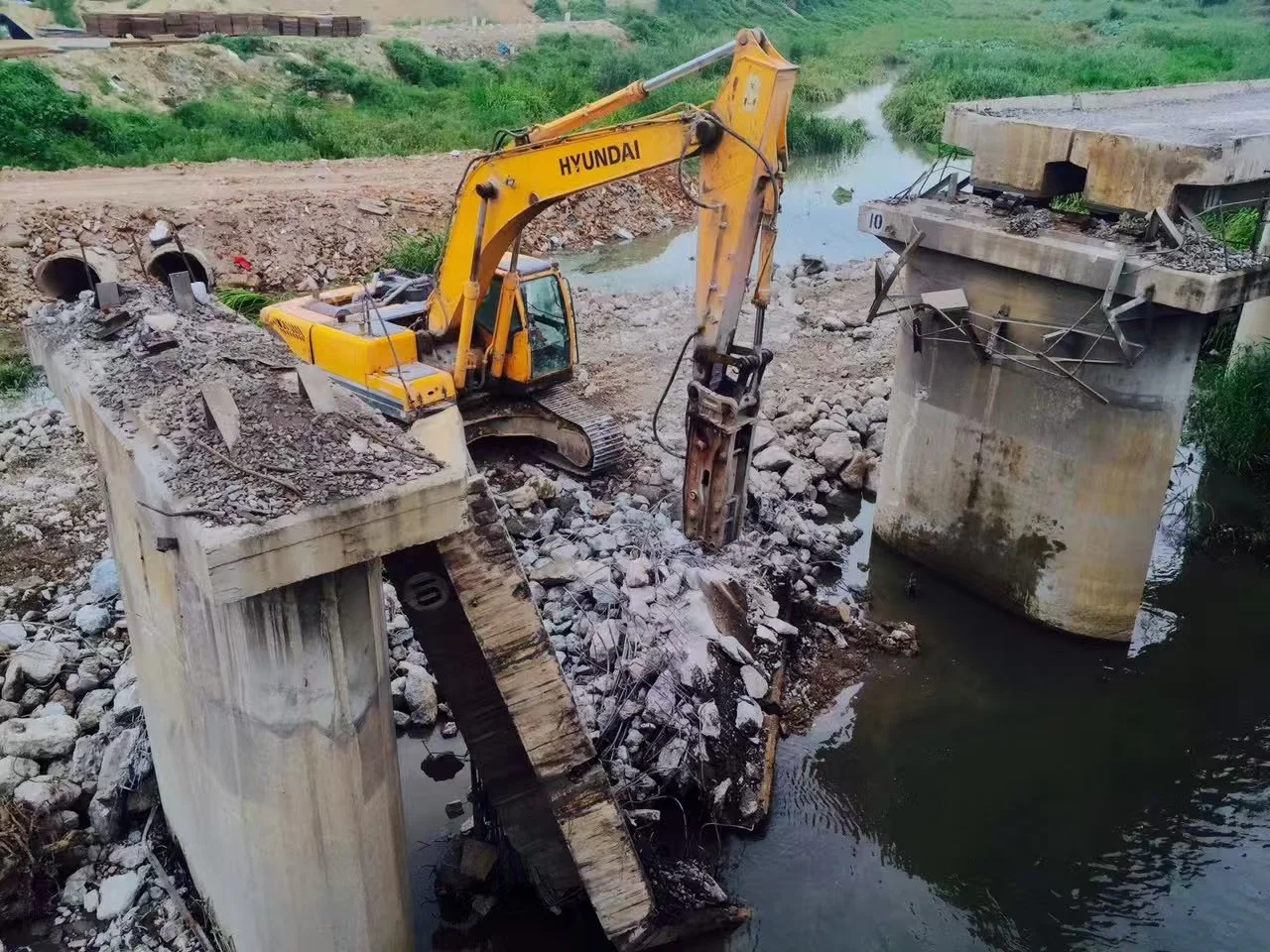
The Beishahe Bridge during demolition.
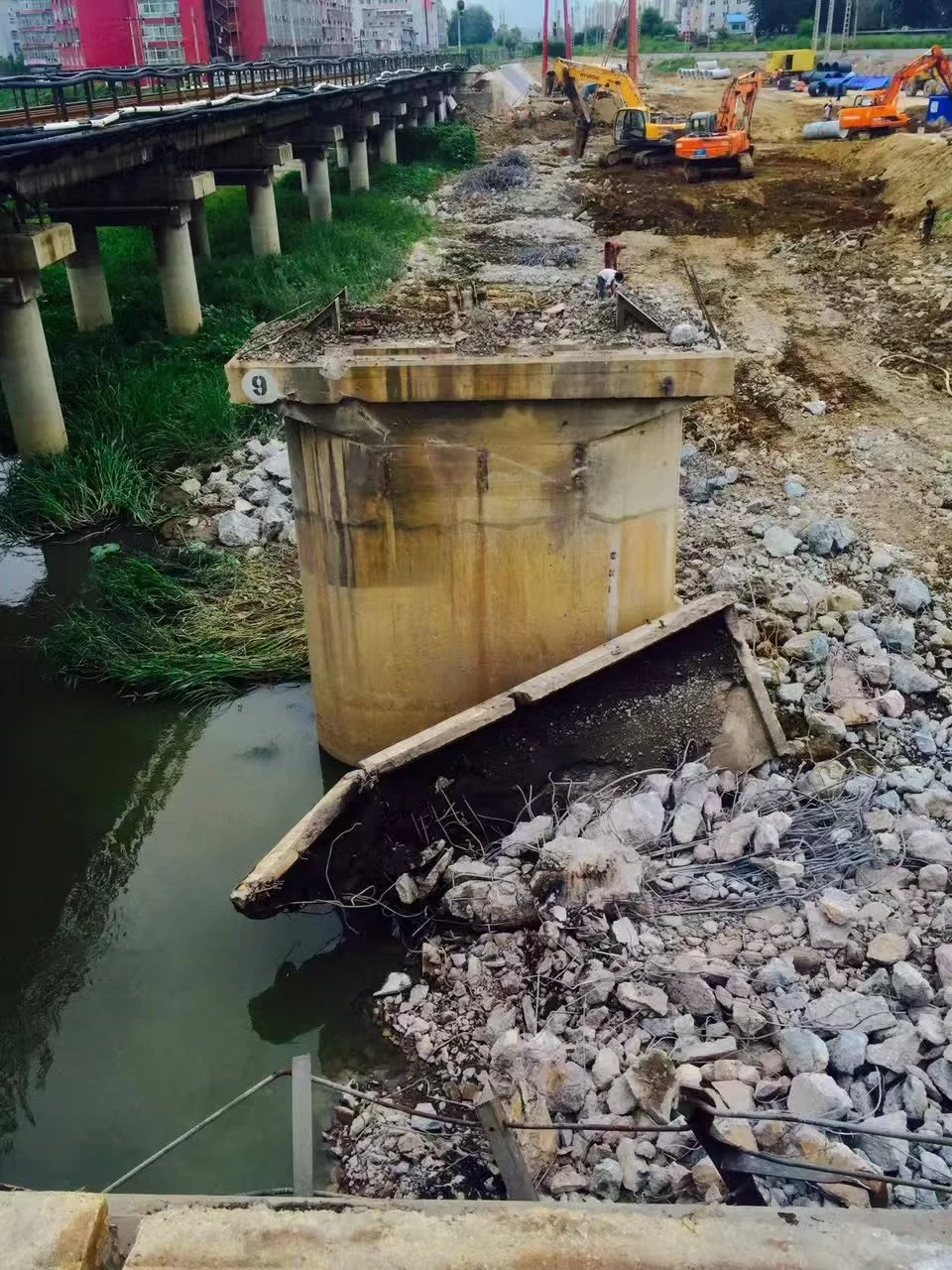
The Beishahe Bridge with over half already demolished.
August 29, 2017, Legal Evening News
Legal Evening News / Law Vision News (Reporter Cui Yifei) — Recently, one of the historical relics along the century-old Beijing-Zhangjiakou Railway—the South Shahe Railway Bridge—was demolished. Reporters from Legal Evening News / Law Vision News discovered that just recently, the Beishahe Railway Bridge, which is larger in scale, has also entered its countdown to demise. Reporters found that it is the second-longest bridge on the Beijing-Zhangjiakou Railway, initially built in the late Qing Dynasty in 1905. An on-site construction person in charge confirmed that after the South Shahe Bridge and the Beishahe Bridge are demolished, new bridges will be built in their original locations.
Scene: 16 Bridge Piers of the Century-Old Bridge Demolished Sequentially
Through more than a decade of field visits and a comprehensive census of cultural relics along the entire line, railway cultural scholar Wang Wei's new book My Beijing-Zhangjiakou Railway was published in June of this year. The book contains three pages recording the historical changes of Beishahe Bridge No. 16, and what makes him sigh with regret is that the photos in the book soon became a last testament to the old bridge. Published in 1997, the Place Names Gazetteer of Changping County, Beijing records that the Beishahe Railway Bridge was initially built in 1905 (the 31st year of the Guangxu reign of the Qing Dynasty), featuring a total of 16 spans and a total length of 168.8 meters, named after crossing the Beishahe River. It is located in Changping District, Beijing, about 700 meters west of Zongzhou Bridge on the Beijing-Tibet Expressway. Today, the 16 bridge piers of the bridge are being demolished sequentially from south to north. When reporters from Legal Evening News / Law Vision News visited on August 28, the demolition had reached pier No. 9. The grayish-blue concrete bridge piers, having withstood more than a century of heavy pressure, remained sturdy and upright, but proved vulnerable in front of the hydraulic breaker, shattering into countless concrete chunks. The steel bars were recycled, and the concrete chunks were reduced to construction waste. Wandering around the demolition site, besides taking photos and recording videos, Wang Wei had no choice but to pick up two chunks of concrete removed from the bridge piers and stuff them into his photography bag as a souvenir. "This is concrete from over 100 years ago!"
At the construction site, a security staff member working on the old bridge said that the demolition of the old bridge is for building a new one, which should be completed around next year; the bridge underfoot is too old and no longer viable. However, because there are steel bars inside the bridge piers, demolition is not easy, requiring water spraying while hammering with a hydraulic breaker. He also revealed that upon hearing the bridge was to be demolished, some retired cadres even came to take photos as souvenirs.
An on-site construction person in charge also confirmed that after the South Shahe Bridge and Beishahe Bridge are demolished, new bridges will be built in their original locations.
Inventory: The Second-Longest Bridge on the Century-Old Beijing-Zhangjiakou Railway
According to Wang Wei's statistics, if ranked by length, the longest bridge on the Beijing-Zhangjiakou Railway is Huailai River Bridge No. 56, with 7 spans and a total length of 213.36 meters. In 1927, due to river course changes, it was modified to 5 spans, and its length was shortened to 152.4 meters. It was finally taken out of service in 1954–1955. The second-longest bridge is Beishahe Bridge No. 16, which was demolished this time. When the bridge was initially built, it had 8 main bridge spans and 10 temporary bridge spans, with a length of about 125 meters. Shortly after the entire line opened to traffic, the temporary spans were converted into main spans, bringing the total bridge length to 168.8 meters. It was decommissioned and demolished in 2017. The third-longest bridge is Jinlongkou Bridge No. 99, with a total length of 153.28 meters, which is still in normal use today. Looking across the Beijing-Zhangjiakou Railway, although the Beishahe Bridge is not the longest bridge on the railway, among bridges that have been in use for over 100 years, it ranked first in length. Wang Wei's inventory found that when the Beijing-Zhangjiakou Railway opened along its entire line in 1909, there were a total of 123 bridges, among which 27 were relatively well preserved, 20 were slightly modified, 15 were naturally damaged, 51 were artificially dismantled, and 10 bridges were rebuilt on their original sites.
Investigation: Beishahe Old Bridge Has Not Obtained Cultural Relic Recognition
Reporters from Legal Evening News / Law Vision News checked the Atlas of Beijing Cultural Relics and the cultural relics list on the website of the Changping District Culture Commission, and neither included the Beishahe Railway Bridge. In other words, although the Beishahe Railway Bridge is a historical relic of the Beijing-Zhangjiakou Railway, it is not an officially recognized immovable cultural relic. The Changping Culture Commission website states that the Nankou-to-Badaling section of the Beijing-Zhangjiakou Railway is a Major Historical and Cultural Site Protected at the National Level, but that section does not include the Beishahe Railway Bridge. Wang Wei introduced that for the Beijing-Zhangjiakou Railway, the Beishahe Railway Bridge was unique—a visible and tangible piece of history. The Beijing-Zhangjiakou Railway is China's first trunk railway built independently by its own people and a linear industrial cultural heritage, yet it has not received comprehensive overall protection. Just like Xizhimen Station being a municipal-level cultural relic protection unit, Qinghuayuan and Qinghe stations being cultural relic census-registered items (the lowest level of cultural relics), many other supporting buildings such as old station buildings, old engine sheds, and old water towers—just like the Beishahe Railway Bridge—have failed to obtain official cultural relic recognition and face the risk of being demolished at any time. Jin Wangzhi, former deputy curator of the China Railway Museum and an expert in Chinese railway history research, told reporters from Legal Evening News / Law Vision News that the demolition of the two bridges on the North and South Shahe rivers made him extremely anxious. "As China's first railway designed, built, and managed independently by its own people, the Beijing-Zhangjiakou Railway cannot be protected merely section by section; rather, it must be protected as a whole to maximize the lifespan of the cultural relics and maintain their integrity."
Text and Photos / Legal Evening News / Law Vision News Reporter Cui Yifei
