
Beijing Adds a New Immovable Cultural Relic: The Badaling Tunnel Pillbox on the Peking-Zhangjiakou Railway
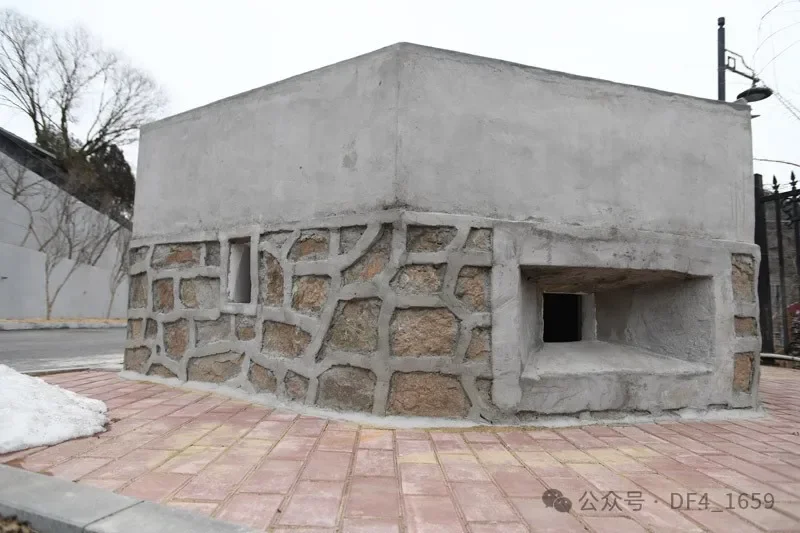
Badaling Tunnel Pillbox (Photography / Beijing Youth Daily Reporter Cui Yifei)
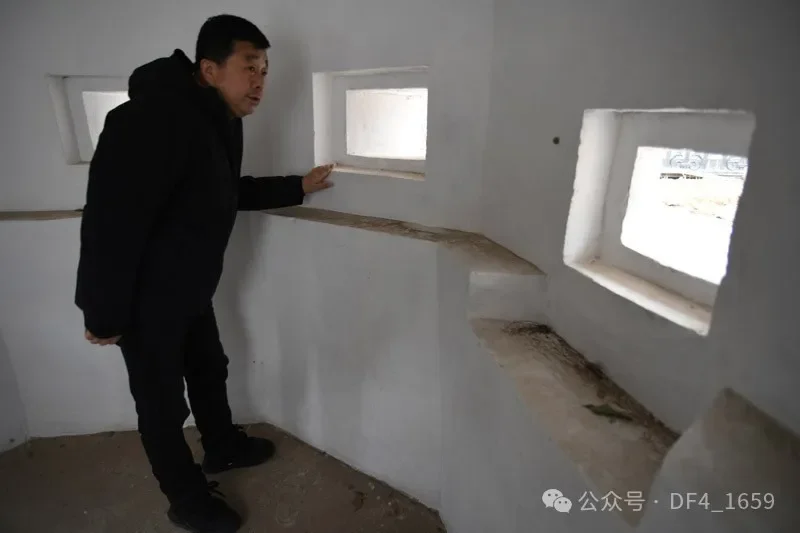
Interior space of the pillbox (Photography / Beijing Youth Daily Reporter Cui Yifei)
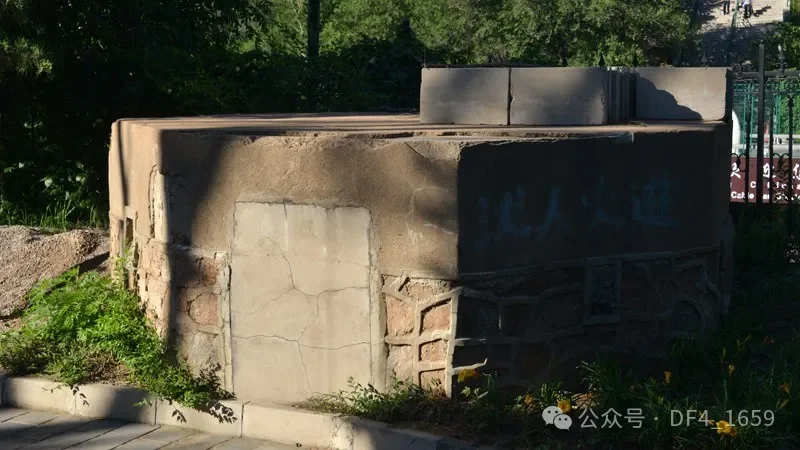
The pillbox before repairs (Photography / Wang Wei)
March 10, 2024 Beijing Youth Daily
March 10, 2024 Beijing Youth Daily
Recently, the Yanqing District Bureau of Culture and Tourism released the Announcement on Declaring the Badaling Tunnel Pillbox on the Peking-Zhangjiakou Railway as an Immovable Cultural Relic. According to Beijing Youth Daily reporters, this pillbox building serves as physical evidence of the Japanese invading forces controlling the Peking-Zhangjiakou Railway and surrounding areas, holding certain historical reference value. After acquiring statutory cultural relic status, its architecture will aid in the protection and research of cultural relics.
The Badaling Tunnel Pillbox on the Peking-Zhangjiakou Railway is located within the courtyard of the Zhan Tianyou Memorial Hall of the China Railway Museum. Beijing Youth Daily reporters observed at the site that the pillbox is situated on a hillside near the northern entrance of the Badaling Tunnel. The structure is built with rubble masonry, appears octagonal from an overhead view, features a semi-underground design, and rises about 1.5 meters above ground level. Crawling into the pillbox from the entrance, the interior net headroom is approximately 1.9 meters. Seven staggered shooting slits are distributed to provide a field of view covering all angles around the structure, and a machine gun platform is built into the inner wall of the pillbox.
Regarding the initial construction information of the pillbox, according to Zhang Yuzhen, deputy curator of the Zhan Tianyou Memorial Hall, after the Japanese invading forces launched the "Lugouqiao Incident" (Marco Polo Bridge Incident) on July 7, 1937, in order to plunder mineral resources in Xuanhua, Datong, and other places, the Japanese military constructed military facilities such as barracks, watchtowers, and pillboxes along the Peking-Zhangjiakou Railway between 1939 and 1945. These included pillboxes outside the southern and northern portals of the Badaling Tunnel. The pillbox inside the courtyard of the Zhan Tianyou Memorial Hall formed a cross-fire configuration with the main stronghold outside the northern portal.
"With the defeat of the Japanese military, this pillbox remained abandoned for many years, at times becoming a habitat for stray cats and dogs. As the country's cultural and museological endeavors developed, people began to pay attention to this type of military heritage and recognized that the pillbox, as physical evidence of the Japanese invading forces controlling the Peking-Zhangjiakou Railway and surrounding areas, has extreme historical reference value," Zhang Yuzhen introduced. To protect the pillbox architecture, in 2023, the Zhan Tianyou Memorial Hall submitted an Application Form for the Recognition of Immovable Cultural Relics to the Yanqing District Culture and Tourism Bureau, applying for the pillbox within the Zhan Tianyou Memorial Hall to be recognized as an immovable cultural relic.
Upon receiving the cultural relic recognition application from the Zhan Tianyou Memorial Hall, the Yanqing District Culture and Tourism Bureau carried out the recognition work for the pillbox relics in accordance with relevant provisions of the Law of the People's Republic of China on the Protection of Cultural Relics, the Ministry of Culture's Provisional Measures for the Administration of Cultural Relics Recognition, and the implementation rules of the Provisional Measures for the Administration of Cultural Relics Recognition in Beijing. Through on-site visits and expert consultations, the pillbox relics were determined to be well-preserved, possessing high historical, artistic, and scientific value. Following public announcement without objection, the Badaling Tunnel Pillbox on the Peking-Zhangjiakou Railway was recently recognized as an immovable cultural relic.
Zhang Yuzhen told Beijing Youth Daily reporters that in the autumn of 2023, they repaired issues such as damage to the top of the pillbox and the detachment of cement mortar from rubble gaps. At the same time, they opened the previously sealed doorway and installed an iron gate to facilitate entry and exit for visitors. To make it convenient for visitors to tour, they also laid a circular walkway around the exterior of the pillbox. Next, they will produce explanatory signs so that the public can understand the historical information of the pillbox.
Reporter's Notebook: Public Participation "Fills Gaps and Rectifies Omissions" for the Protection of the Peking-Zhangjiakou Railway
Cultural relics censuses are not the "exclusive domain" of cultural relics departments. The Provisional Measures for the Administration of Cultural Relics Recognition, implemented in 2009, paved the way for citizens to play a role in cultural relics censuses. These provisional measures stipulated for the first time at the departmental regulatory level how newly discovered cultural resources can obtain statutory cultural relic status through citizen applications, and anyone can become an applicant for cultural relic recognition.
What is cultural relic recognition? Referring to the definition in Article 1 of the Provisional Measures for the Administration of Cultural Relics Recognition, it refers to the administrative act by cultural relics administrative departments of confirming cultural resources with historical, artistic, and scientific value as cultural relics.
The Peking-Zhangjiakou Railway is the first trunk railway independently designed, constructed, and built by our country, holding an important position in the history of our country's railway construction. According to Beijing Youth Daily reporters, as a linear industrial cultural heritage, the Peking-Zhangjiakou Railway has not received overall protection. During successive cultural relics censuses, some valuable old buildings were missed in inspections and even faced the risk of destruction.
To "fill gaps and rectify omissions" for the overall protection of the Peking-Zhangjiakou Railway, starting in 2015, railway culture scholar Wang Wei, based on relevant provisions of the Provisional Measures for the Administration of Cultural Relics Recognition, successively submitted Application Forms for the Recognition of Immovable Cultural Relics to local cultural relics administrative departments for the old station building of Qinghe Station, the steam locomotive water tower of Xiayuan Station, the old station building of Changping Station, the Kangzhuang Station building complex, the Xibozi Station building complex, Longtangou Bridge No. 44, and the Pingsui Xizhimen Station subsidiary building complex. Through recognition organized by administrative departments, these old buildings ultimately all obtained statutory cultural relic status, protected by the Law of the People's Republic of China on the Protection of Cultural Relics.
This time, the Zhan Tianyou Memorial Hall submitting a cultural relic recognition application has become another practitioner of the Provisional Measures for the Administration of Cultural Relics Recognition, further enriching the historical relics of the Peking-Zhangjiakou Railway. Repeated practices have proven that public participation has become an indispensable force in cultural relic protection.
Beijing Youth Daily March 10, 2024 Related Report
Text / Beijing Youth Daily Reporter Cui Yifei
Editor / Tan Weiping
