
Old Station Sign of Juyongguan Railway Station Emerges in Abandoned Station Building
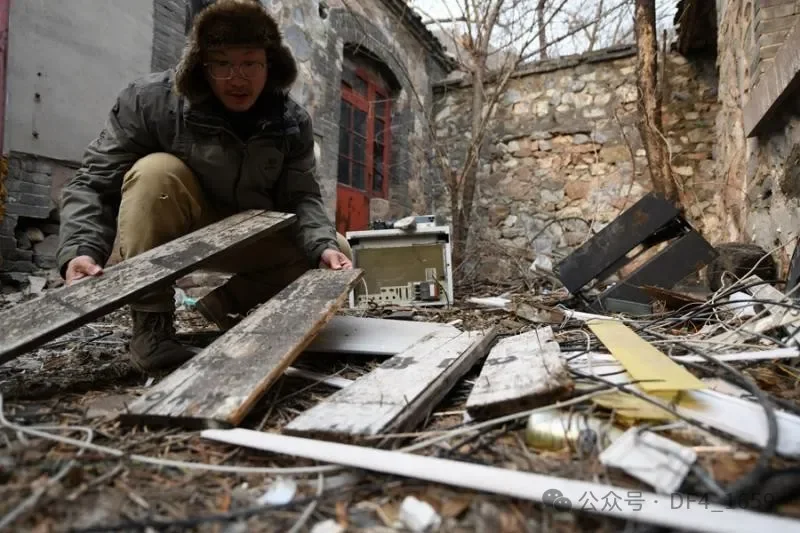
Wang Wei surveying the interior of the old station building
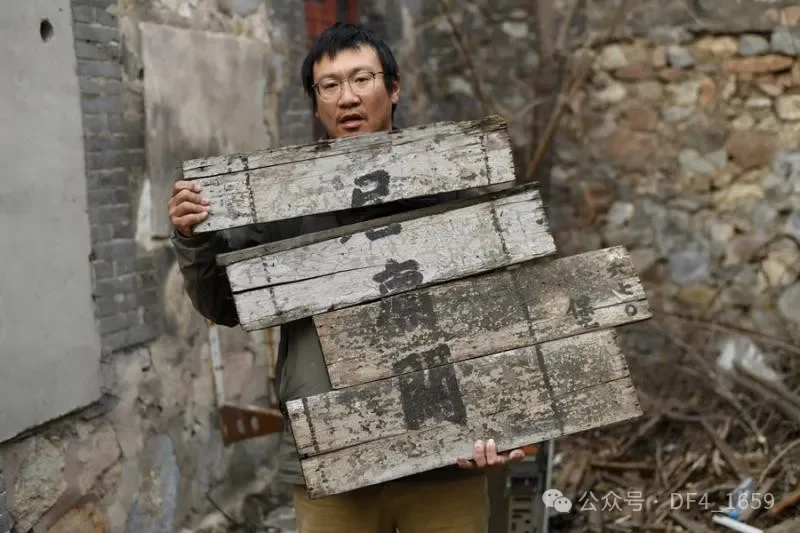
The "Juyongguan" station sign pieced together by Wang Wei
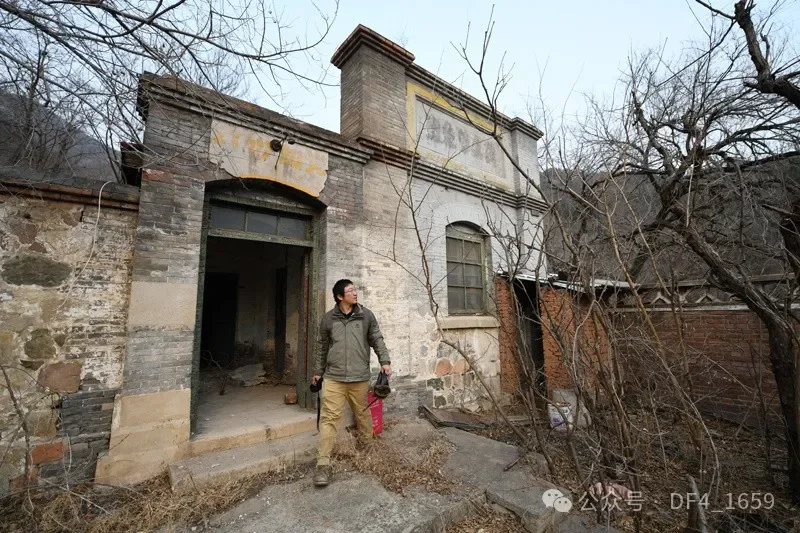
The original station sign of Juyongguan Station was inscribed by Zhan Tianyou, but the text has been covered up.
The following are related archival pictures:
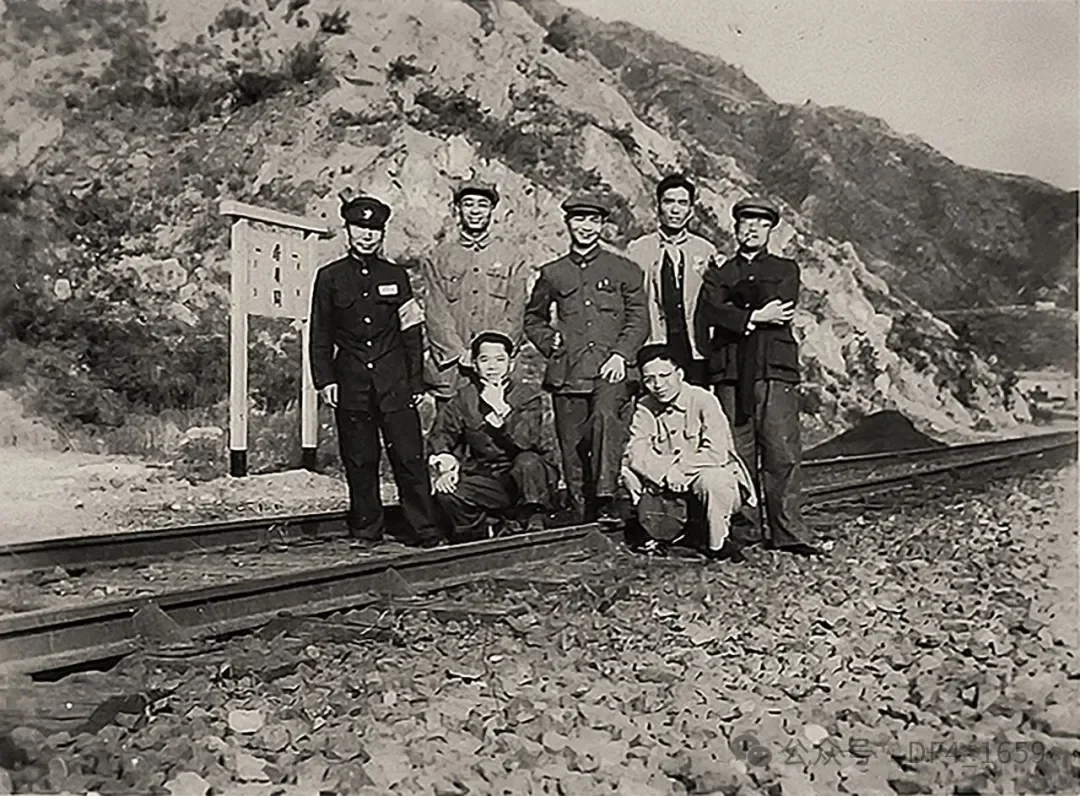
Early 1950s Juyongguan Station, with the Japanese puppet-regime style station sign standing on the east side of the track
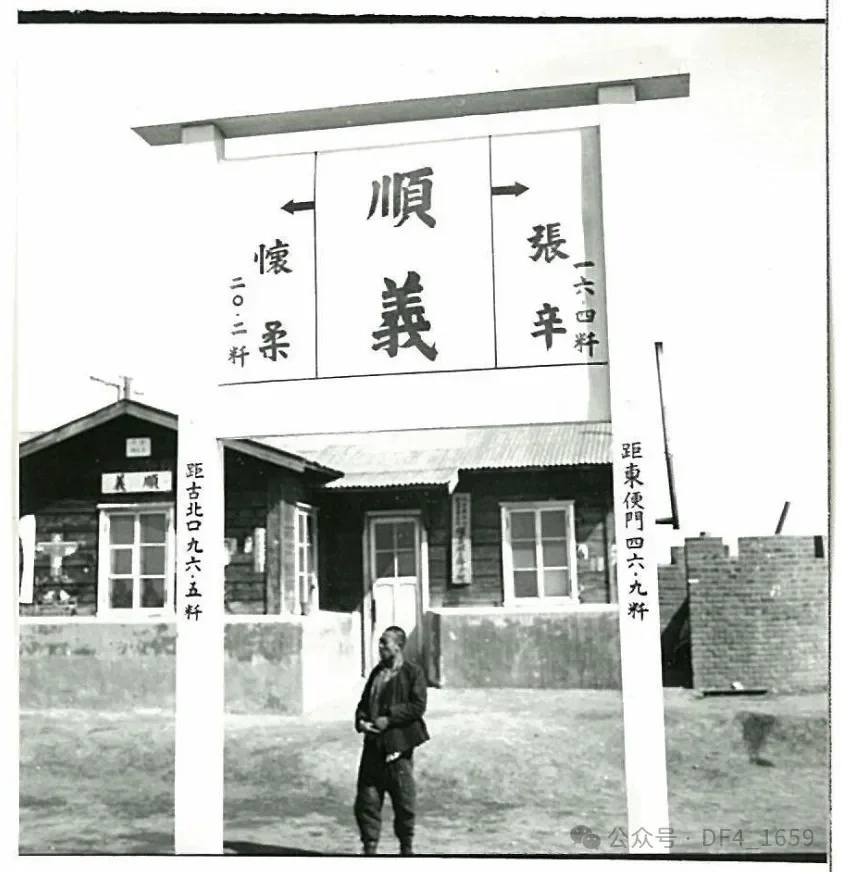
Shunyi Station, built during the Japanese puppet regime period; the station sign shared the same style as most stations on the Manchukuo railway
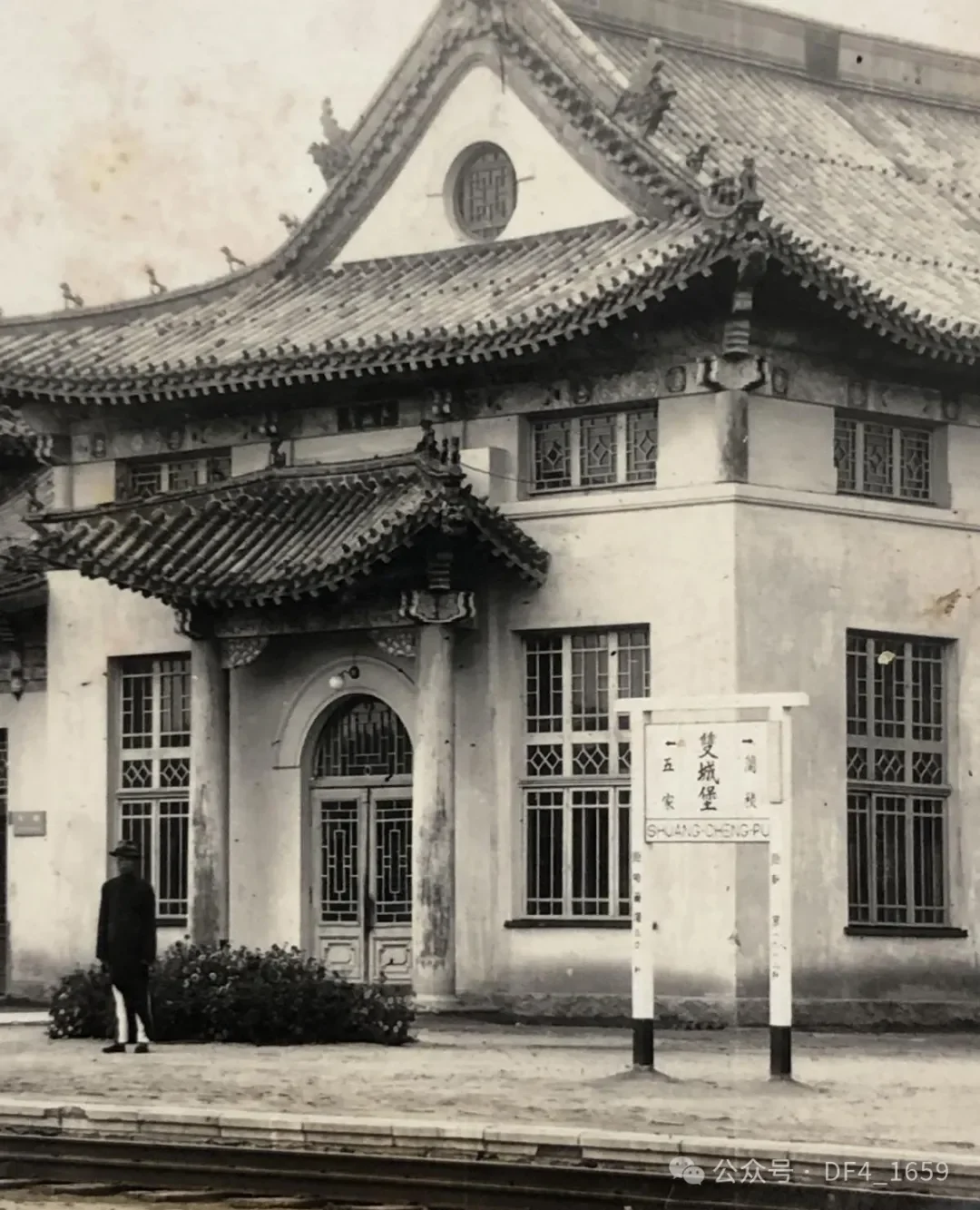
Station sign of Shuangchengbao Station during the Puppet Manchukuo period
Beijing Youth Daily, March 4, 2024
Four discarded wooden boards pieced together the three traditional Chinese characters for "Juyongguan," bringing a little-known history to the surface... Recently, while conducting research at Juyongguan Railway Station, railway culture scholar Wang Wei discovered a discarded old station sign. It is highly likely to date from the Japanese occupation period. Station signs of this particular format are extremely rare, serving as a unique historical relic of the Peking-Zhangjiakou Railway. Built in 1910 (the 2nd year of the Xuantong reign of the Qing dynasty), Juyongguan Station is situated in the Guangou section, where the construction of the Peking-Zhangjiakou Railway was at its most difficult. Its location hugs the mountains and overlooks the valley, with treacherous terrain. In the 1940s, due to line adjustments, Juyongguan Station put a new station building into use, while the old station building was repurposed and finally decommissioned in 2014. In the Changping Cultural Relics Gazetteer, Juyongguan Station is listed as a modern and contemporary historical site.
Born in 1990, Wang Wei has conducted historical investigations of the Peking-Zhangjiakou Railway for 22 years and authored the book My Peking-Zhangjiakou Railway. Recently, a Beijing Youth Daily reporter followed Wang Wei to survey Juyongguan Station. Inside the desolate old station building, a pile of discarded items caught his attention. He picked up two wooden boards scattered on the ground, splicing them vertically to reveal the traditional character "Guan" (關). "This is very likely the old station sign of Juyongguan Station; I’ve seen similar markers in old photographs." The new discovery made it hard for Wang Wei to conceal his excitement.
Subsequently, Wang Wei successively found the third and fourth wooden boards with characters. While the third wooden board pieced together the character "Yong" (庸), a small portion of the character "Ju" (居) could also be seen. On the fourth wooden board, the upper part of the character "Ju" could be found. Regrettably, though Wang Wei searched the entire courtyard, he failed to find the wooden board containing the middle section of the character "Ju." Piecing the existing four boards together basically allows for the restoration of the vertically arranged three characters "Juyongguan." After enduring years of scorching summers and freezing winters, wind erosion, and rain destruction, the surface of the sign has become mottled and covered with cracks, but fortunately, the handwriting remains legible. The original station sign of Juyongguan Station was inscribed by Zhan Tianyou, but its text has been covered up.
Which Era Does the Station Sign Date From?
According to Wang Wei's textual research, this station sign was not erected when the Peking-Zhangjiakou Railway was completed in 1909; it likely dates from the Japanese occupation period after the outbreak of the July 7th Incident in 1937. "Old station signs of this format frequently appeared at railway stations in Northeast and North China during the Japanese occupation, but discovering the 'Juyongguan' station sign is the first time I have encountered a physical specimen of this type of sign."
Wang Wei consulted image materials from the North China Transportation Company during the Japanese occupation and discovered that at that time, new station signs of a unified format appeared at some railway stations in Peiping, such as Shunyi Station, Huairou Station, Miyun Station, and Shixia Station on the Tonggu Railway (Tongzhou to Gubeikou). Through comparison, it was found that although the "Juyongguan" station sign is incomplete, its format shares numerous similarities with the aforementioned station signs: First, the station names are all vertically arranged handwritten traditional Chinese characters; second, the "Juyongguan" station sign features black characters on a white background, which is identical to the station signs in historical images; third, clear vertical black lines can be seen on both sides of the station name in both the physical object and the photographs; fourth, to the right of the station name, the characters "Pu" (堡) and "·670" can be seen. Although the information is incomplete, it can be determined that "Pu" refers to Sanpu Station adjacent to Juyongguan, and "·670" indicates the inter-station distance. This arrangement is consistent with historical images.
Why Was the Old Station Sign Abandoned in the Courtyard?
Wang Wei analyzed that this type of station sign appeared during the Japanese occupation and was replaced by new station signs in the 1950s. The replaced "Juyongguan" old station sign may have been disassembled into lumber to make furniture and placed inside the old station building for use. However, as the old station building was decommissioned, some of the furnishings inside the house gradually became forgotten by people.
On March 3, Beijing Youth Daily reporters called Juyongguan Station to inform them of the discovery of the old station sign. It is understood that Juyongguan Station is located in the nationally protected section of the Peking-Zhangjiakou Railway from the Nankou Section to the Badaling Section. After the old station building was decommissioned, it was used as staff family dormitories by other railway units, and later decommissioned due to reasons such as inconvenient water usage.
A station sign is a marker proving a station's identity and possesses historical value, but some old station signs did not receive good protection after "retiring." According to Beijing Youth Daily reporters, taking Juyongguan Station as an example, although the old station building has been decommissioned for many years, its architectural layout is largely complete. The station sign inscribed by Zhan Tianyou, chief engineer of the Peking-Zhangjiakou Railway, still stands on the station building today. Due to historical reasons, this precious station sign was covered with lime plaster, causing important historical information to be concealed. Although the station sign discovered by Wang Wei this time is not the original station sign of Juyongguan Station, it is a physical witness of a special historical period.
Old Station Sign Fills Gaps for the Peking-Zhangjiakou Railway
Li Xinhua, a researcher at the Chinese Academy of Educational Sciences and calligraphy educator, believes that from a practical standpoint, the characters on the "Juyongguan" station sign are neat and belong to easy-to-recognize regular script (Kaishu), which should come from someone skilled in calligraphy. The author first wrote on Xuan paper and then rubbed or traced it onto the wooden station sign. "Although this station sign is incomplete, it does not mask its calligraphic accomplishments." Li Xinhua stated that the three characters of the "Juyongguan" station sign have heavy brush strokes, compact arrangement, and are orderly. It belongs to the category of plaque and board calligraphy that advocates precision. Its calligraphy is powerful and robust, possessing both the dense vigor of Wei steles and the square, folded elegance of Ouyang Xun's calligraphy. The calligrapher was a master with considerable calligraphic skill.
Liu Weidong, a member of the Beijing Cultural Relics Authentication Committee, believes that the "Juyongguan" station sign likely dates from the Japanese occupation period, but its calligrapher should be a Chinese calligrapher. The fact that its handwriting could remain intact for over 70 years is likely due to the selection of biological coatings. Regarding the value of the station sign, Liu Weidong pointed out that Juyongguan has profound history, and even the Juyongguan Railway Station has a 114-year history. As the "finishing touch" of the station, the station sign holds important landmark value, reflecting the historical evolution of the Peking-Zhangjiakou Railway. Because such station signs exist in extremely scarce quantities and possess very strong uniqueness, they should be well preserved.
"Although the station and station signs are modern historical ruins, our understanding of this type of heritage may not be comprehensive," Liu Weidong stated. The Peking-Zhangjiakou Railway is the first trunk railway independently designed, constructed, and built by our country. It is an early industrial relic of our country and holds an important position in the history of our country's railway construction. "We should thank and encourage grassroots scholars for their tireless, unrewarded investigations and research, filling gaps for the Peking-Zhangjiakou Railway and restoring a little-known history."
Beijing Youth Daily March 4, 2024 Related Report
Text / Beijing Youth Daily Reporter Cui Yifei
Photography / Beijing Youth Daily Reporter Cui Yifei
Editor / Tan Weiping
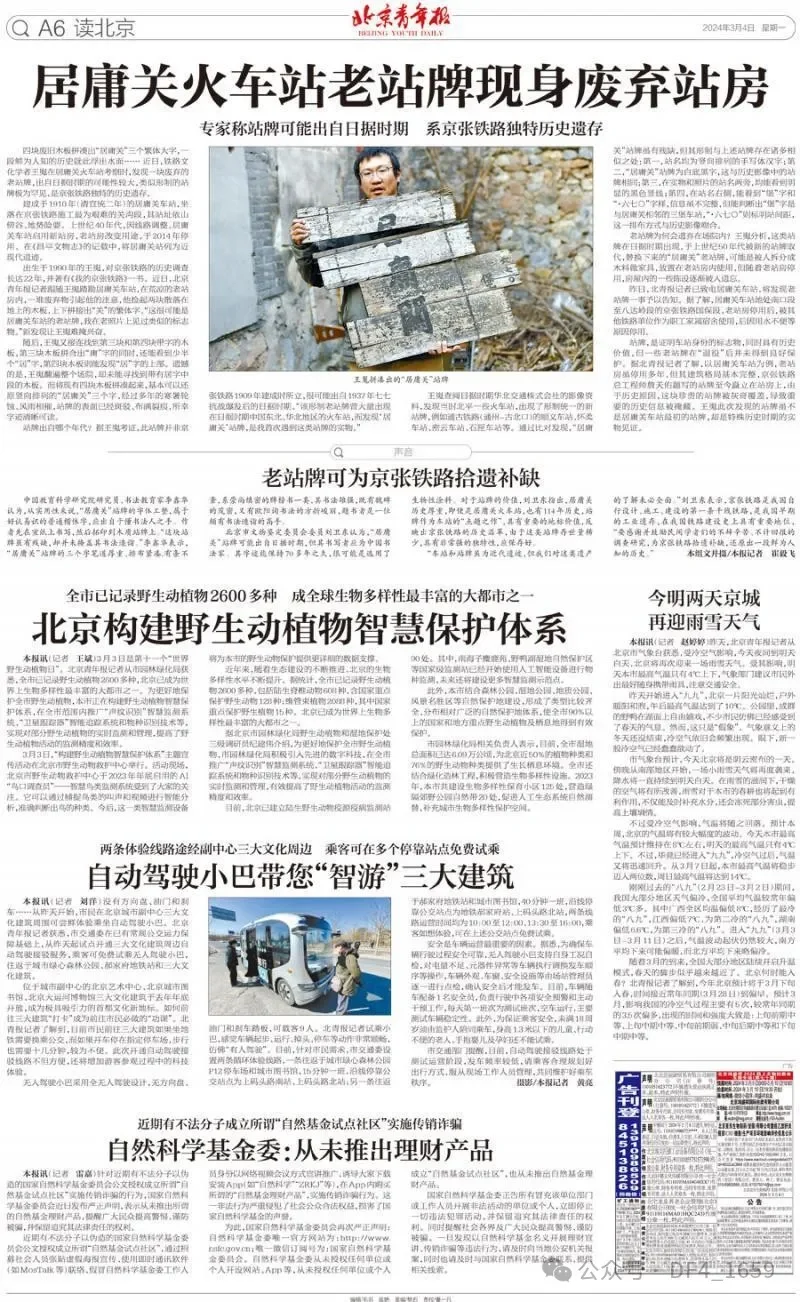
Beijing Youth Daily, March 4, 2024
