
Restoring the Early Appearance of the Kangzhuang Station Old Building on the Peking-Kalgan (Beijing-Zhangjiakou) Railway
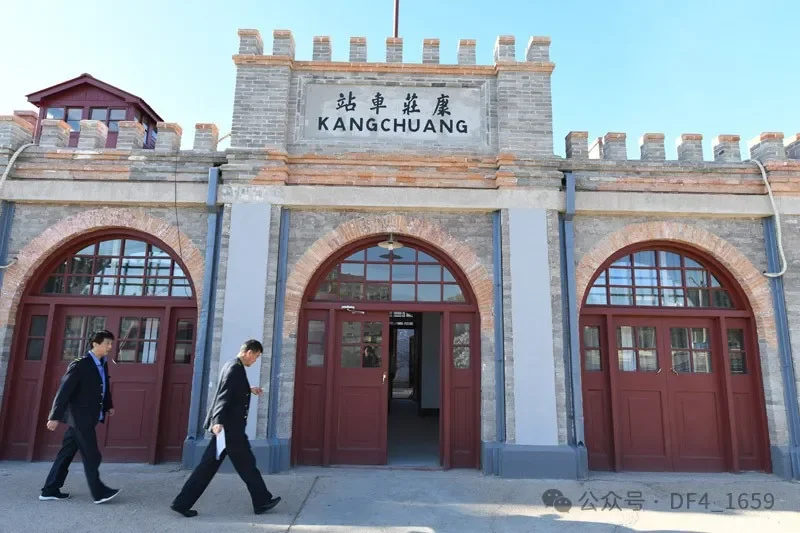
The restored old station building continues to be used as railway office space
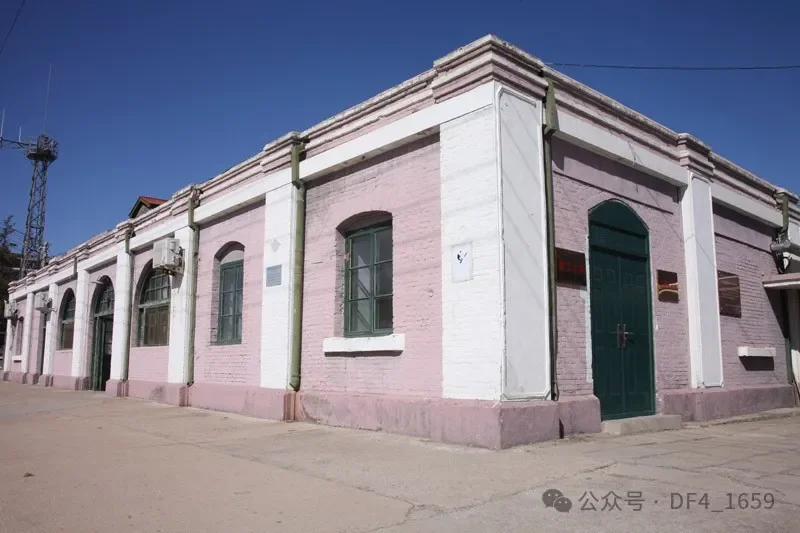
The appearance of the old station building before restoration, photographed in 2019
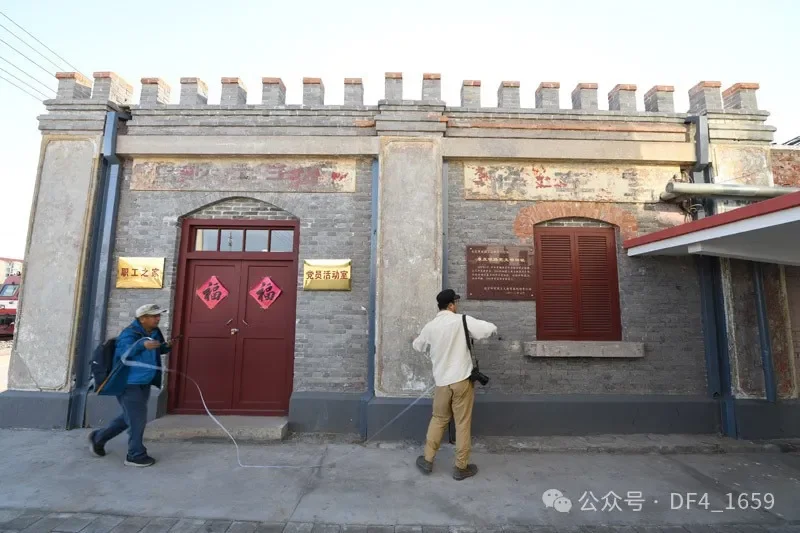
On the east wall of the old station building, mottled slogans can still be faintly seen
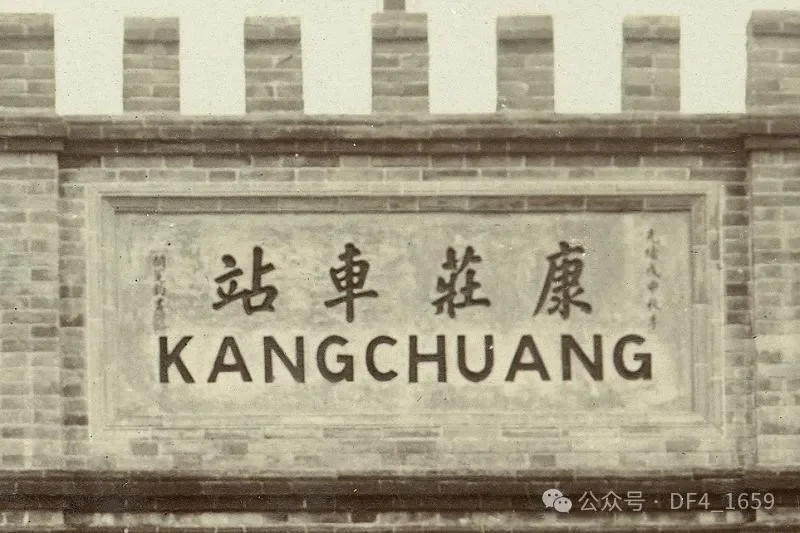
The original station plaque of Kangzhuang Station
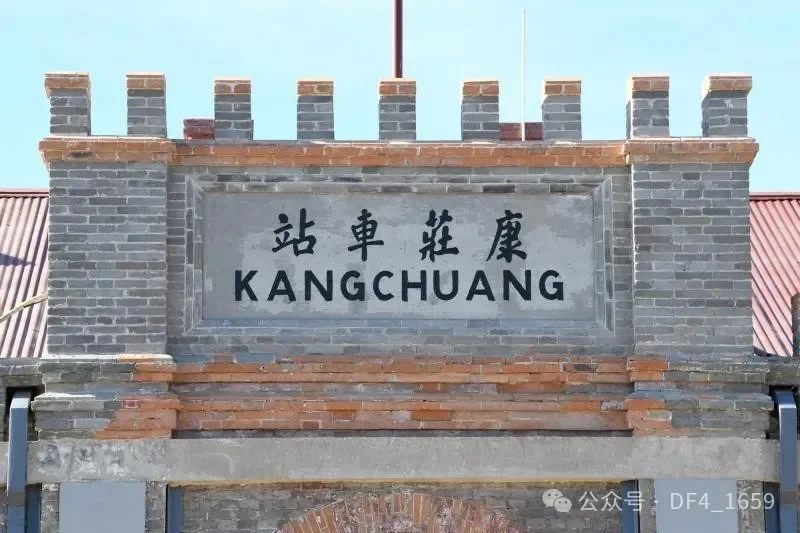
Reconstructed station plaque of Kangzhuang Station
Half of the central station plaque survives at Nankou Station
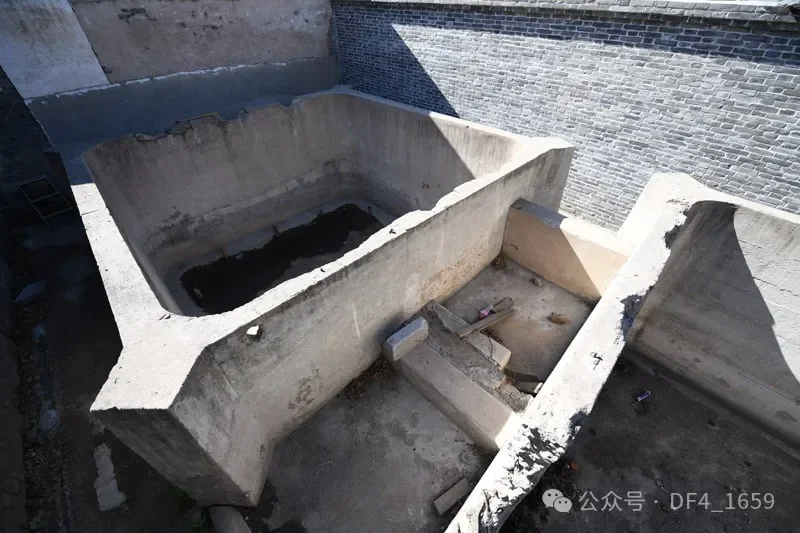
Temperature-reduction pool of the Kangzhuang locomotive shed
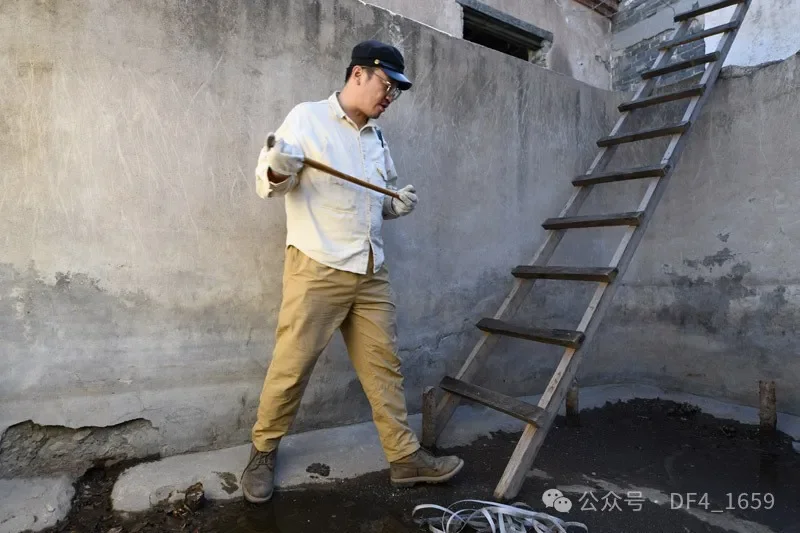
Wang Wei inspecting inside the temperature-reduction pool
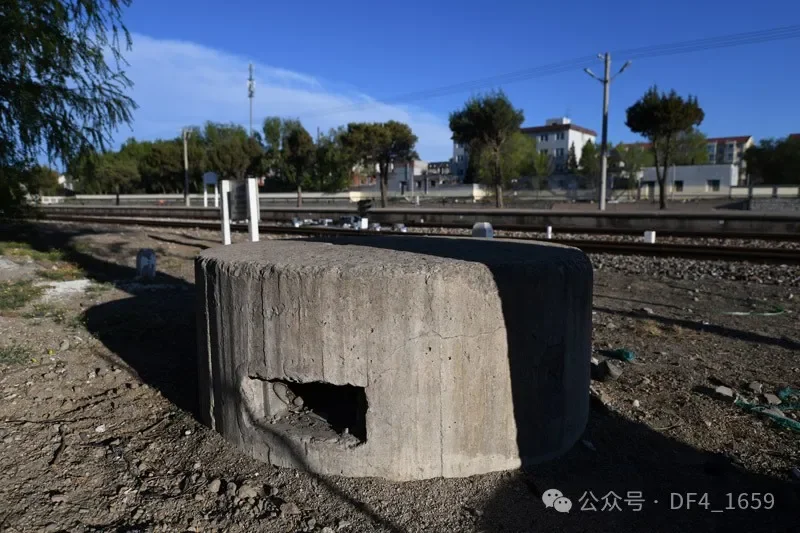
The pillbox inside Kangzhuang Station
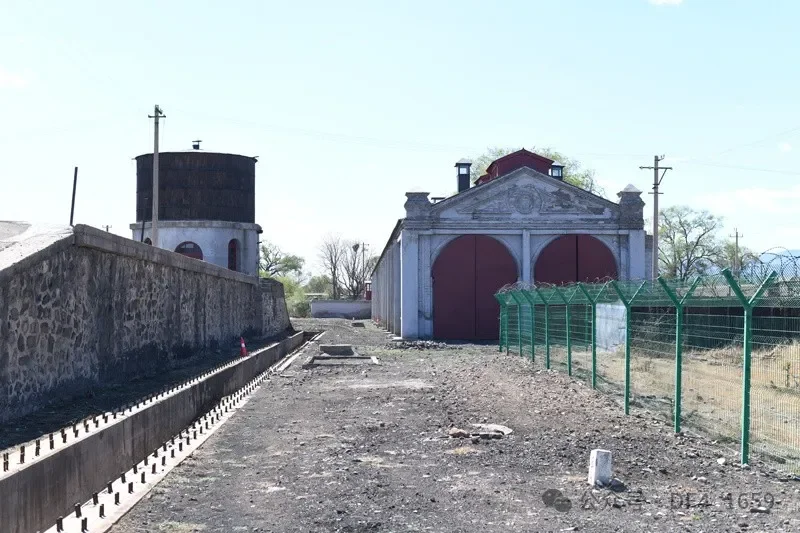
The restored water tower and locomotive shed
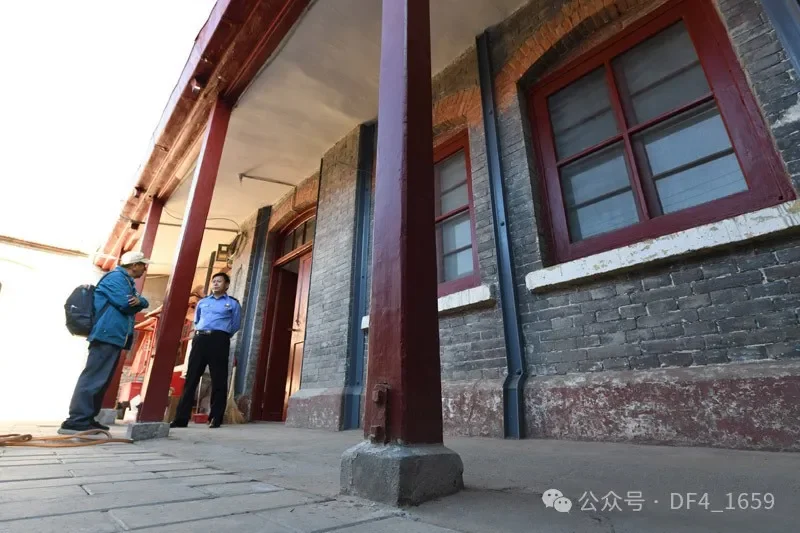
The interior of the Kangzhuang station building, showing the restored corridor pillars
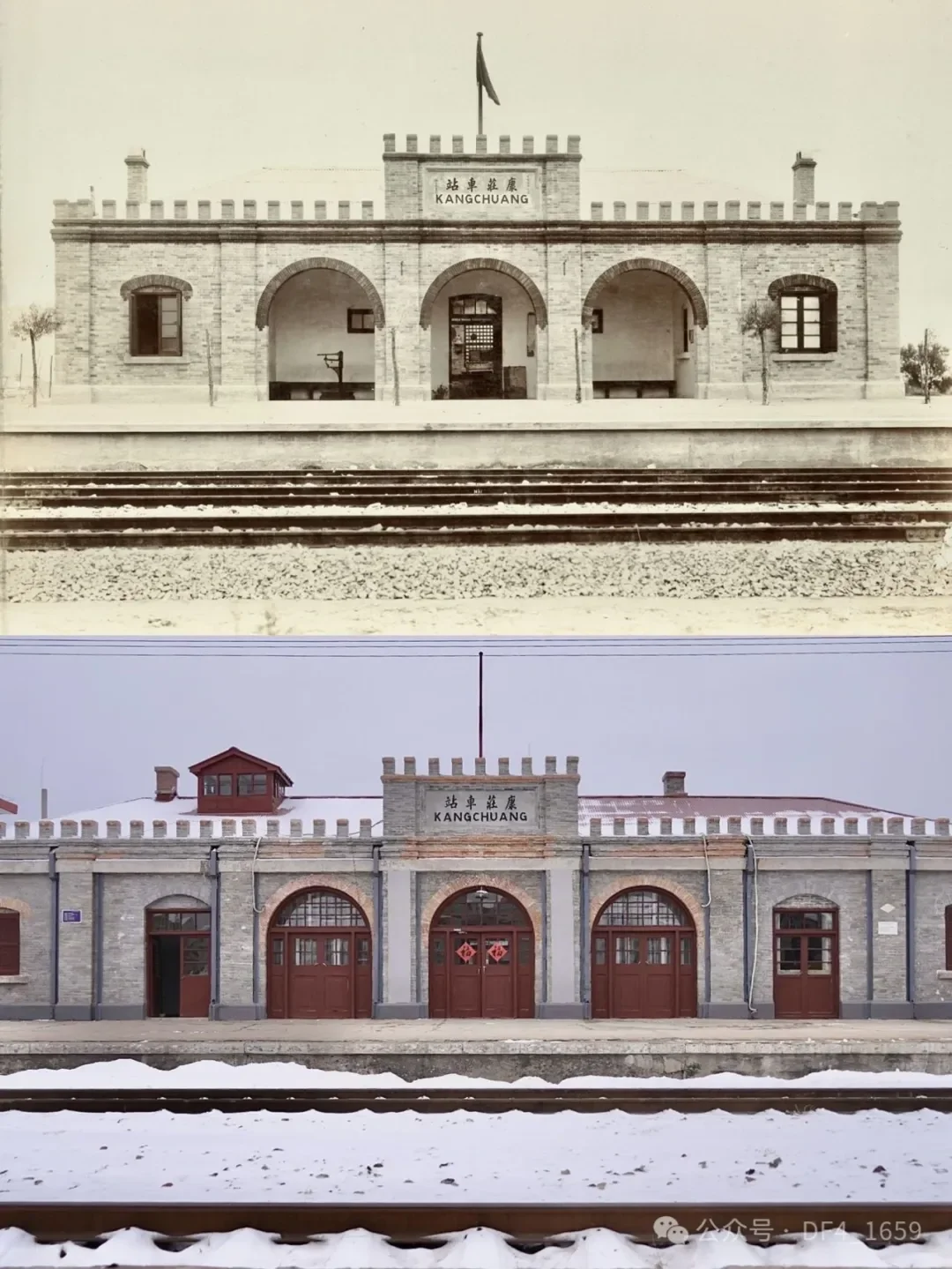
South facade of the Kangzhuang station building; the old photo shows the Kangzhuang station building in 1909 during the early period of opening to traffic.
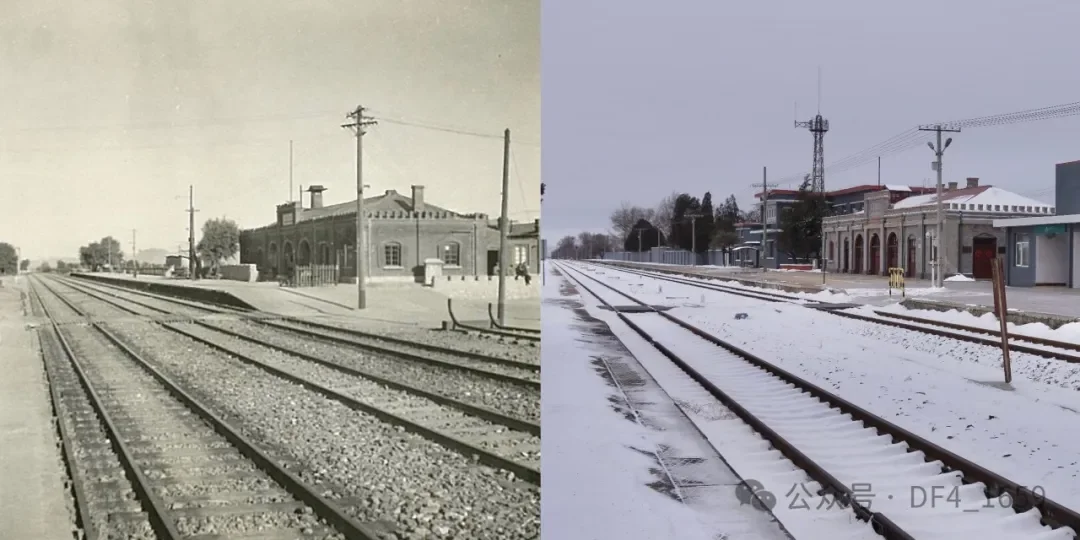
Kangzhuang Station and its up and down platforms; the old photo was taken during the Japanese puppet regime period.
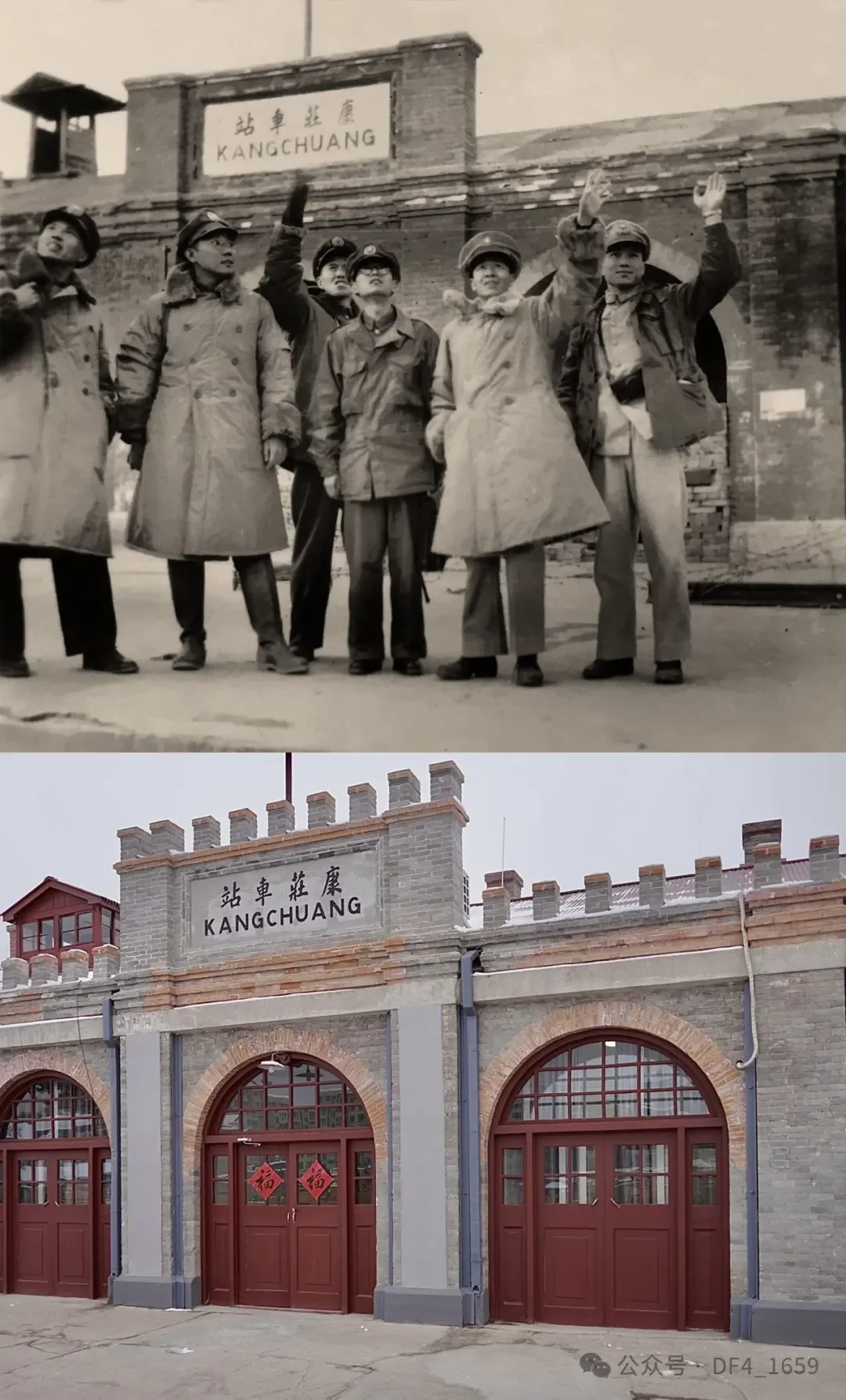
Waiting room of Kangzhuang Station; the old photo shows Kangzhuang Station after World War II, with ROC Air Force personnel in the picture, showing that the parapet has been removed.
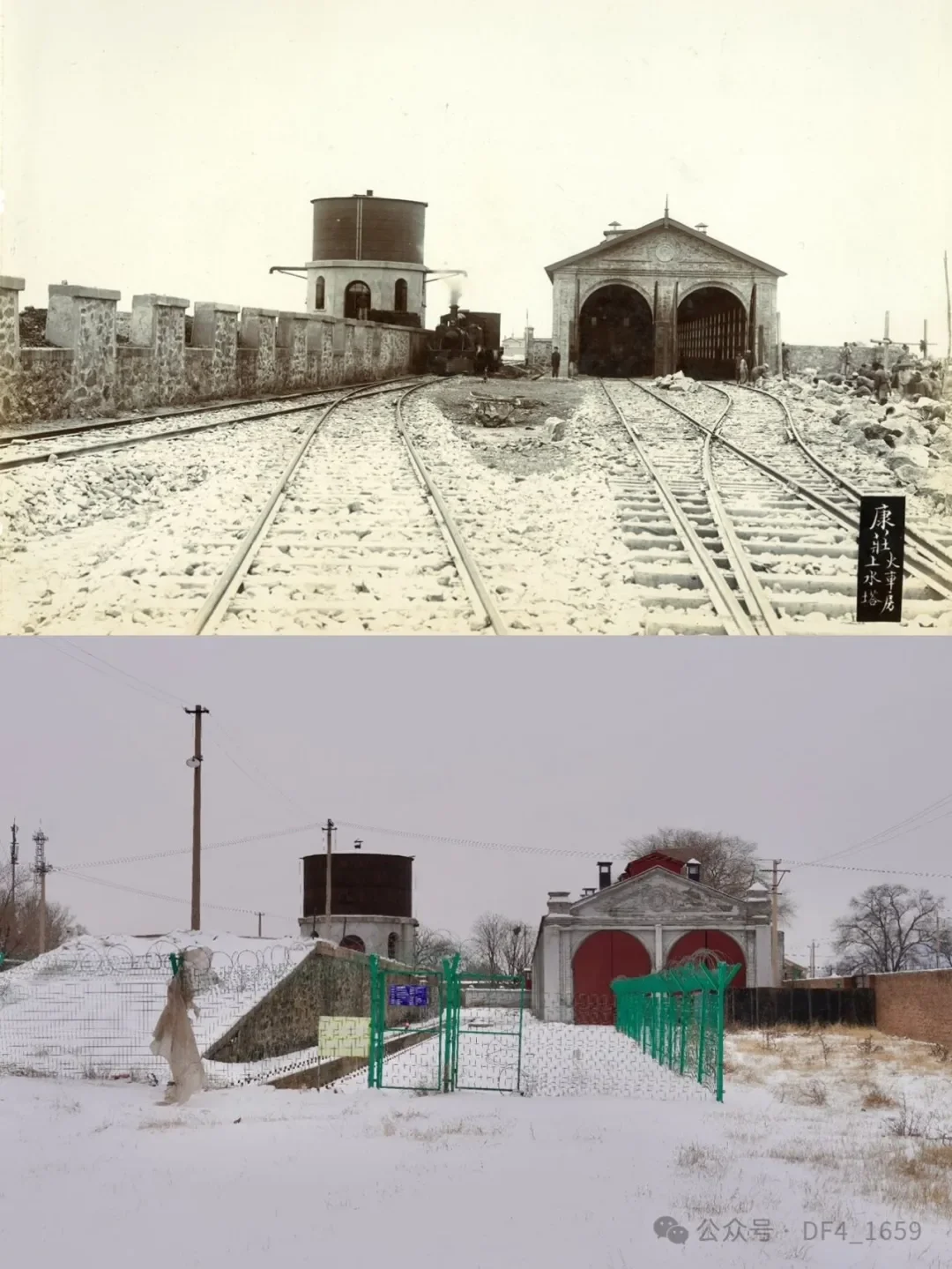
Kangzhuang locomotive shed; the old photo shows the early period of opening to traffic in 1909. Kangzhuang locomotive shed, water tower, and coaling stage; the old photo shows the early period of opening to traffic in 1909.
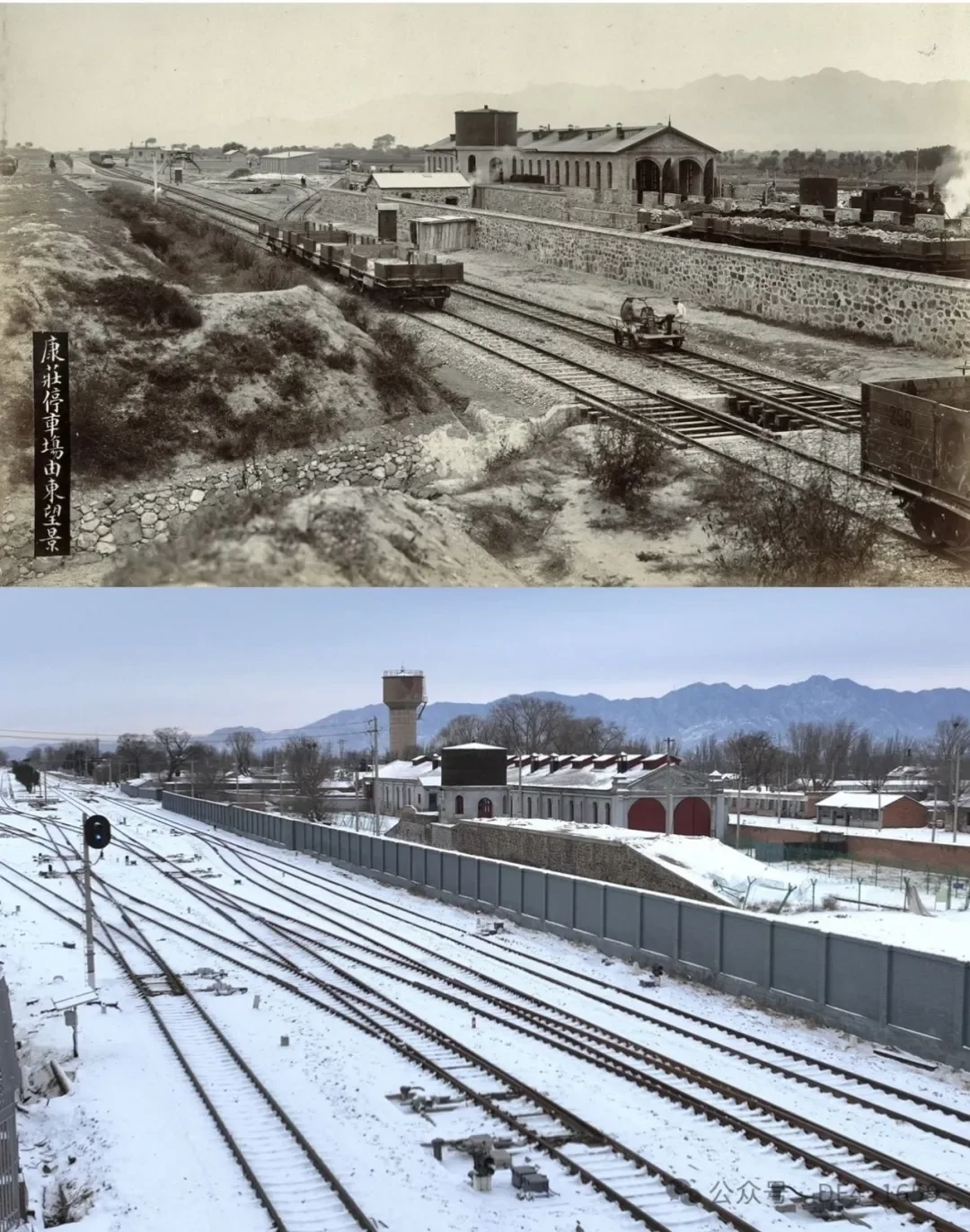
Before-and-after comparison of the Kangzhuang locomotive shed in 1909 and 2024; the old photo was taken by Tan Jintang, and the new photo was taken by Wang Wei.
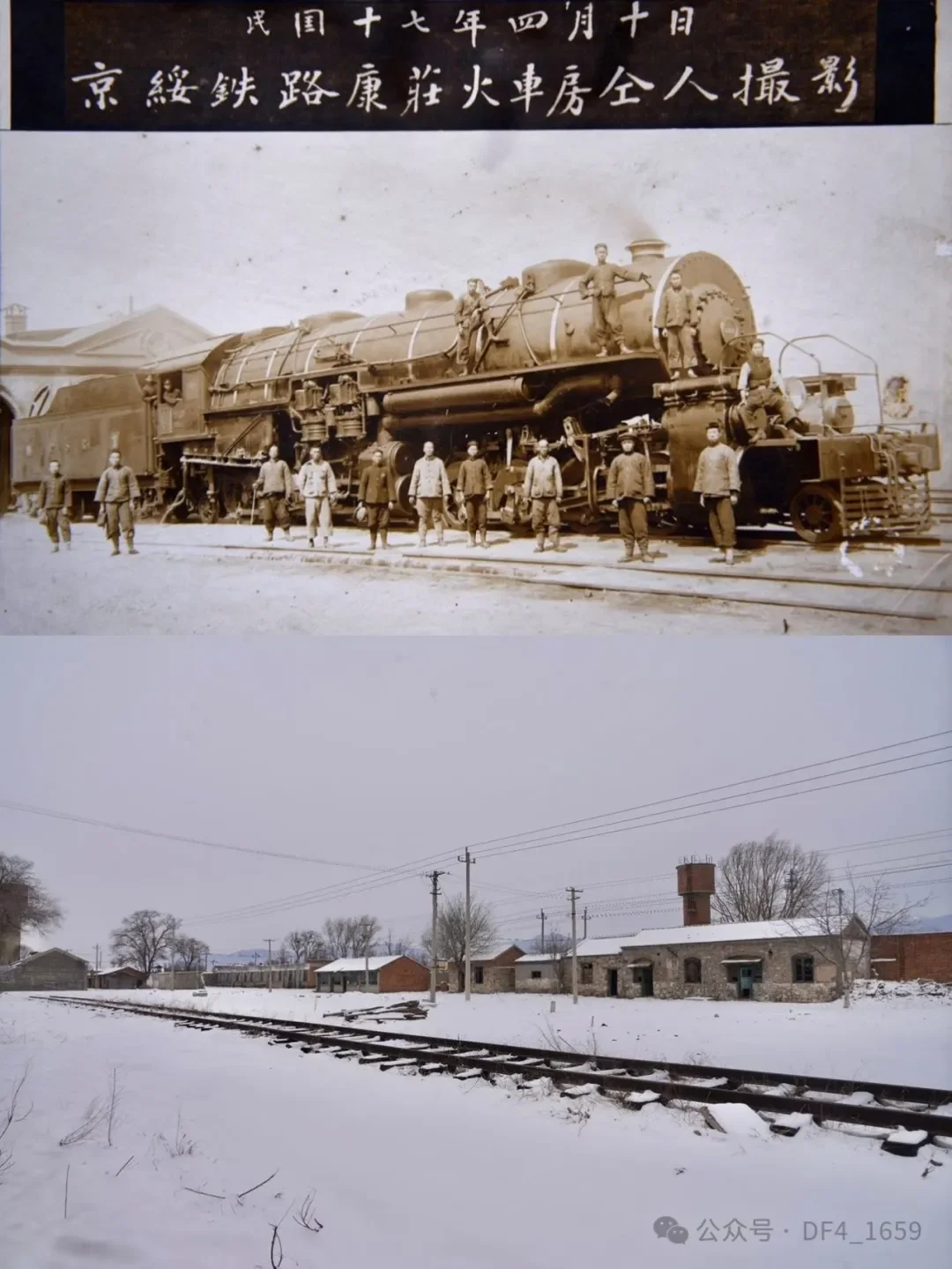
In 1921, a 4-track rectangular engine shed and a 5-track roundhouse were added to the Kangzhuang locomotive shed, which were demolished in the 1940s and 1950s. The old photo shows railway workers posing in front of a Mallet-type 4 steam locomotive and the 1921 newly-built rectangular engine shed in 1928.
May 15, 2024, Beijing Youth Daily
As a key node of the Peking-Kalgan (Beijing-Zhangjiakou) Railway, the 116-year-old Kangzhuang Station preserves industrial relics such as the old station building, locomotive shed, water tower, coal platform, and temperature-reduction pool, holding unique cultural relic value for showcasing and studying the industrialization process of China's railways. Recently, railway culture scholar Wang Wei discovered that the old station building of Kangzhuang Station has been restored to its early architectural appearance, and the central station plaque, which had been missing for many years, has been reconstructed. According to Beijing Youth Daily reporters, through Wang Wei's efforts, the Kangzhuang Station building complex was recognized as a surveyed and registered cultural relic of Yanqing District in 2019. In 2023, the Yanqing District Cultural Relics Management Office completed the first phase of the "Restoration and Surrounding Environment Improvement Project for the Kangzhuang Station Building Complex," better presenting the characteristics and value of the architectural relics and laying the foundation for future cultural relic display and utilization.
Green and Red Brick Buildings Brought to Light; Historical Slogans Preserved
Kangzhuang Station, located in Kangzhuang Town, Yanqing District, Beijing, was completed in 1908. It is one of the early stations on the Peking-Kalgan (Beijing-Zhangjiakou) Railway and is currently a third-class passenger and freight station. Every Friday, Saturday, Sunday, and Monday, trains on the Suburban Railway Line S2 stop at Kangzhuang, continuing the operational function of the old station.
The station building is the landmark structure of a station. When the Kangzhuang old station building was completed, it was five bays wide, housing a ticket office, waiting room, station master's office, telegraph office, and janitor's room. In the 1910s, the station building was expanded to seven bays with a floor area of 494 square meters. This structure has been used down to the present day and, as the old station became less busy, gradually evolved into office space for the station. To better present the value and characteristics of the architectural relics, in 2023, the Yanqing District Cultural Relics Management Office implemented the "Restoration and Surrounding Environment Improvement Project for the Kangzhuang Station Building Complex." According to visits and observations by Beijing Youth Daily reporters, the restored old station building primarily underwent three changes:
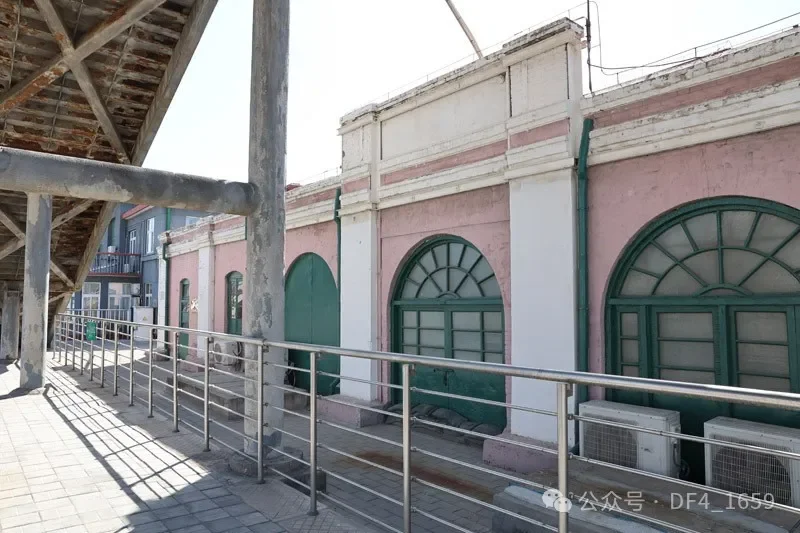
First, the original color of the green and red brick walls of the old station building was recreated. The station buildings of the Peking-Kalgan (Beijing-Zhangjiakou) Railway were mainly laid with green bricks. After 1949, the railway department repeatedly coated the old station buildings along the line, and the Kangzhuang old station building was covered with pink and white paint before the restoration. This restoration removed the exterior wall paint, bringing the green bricks back to light. At the same time, the door and window arches paved with red bricks were also recreated, giving the old station building a more contoured visual appearance. It is worth mentioning that the construction party also preserved the traces left from different periods. On the exterior wall of the eastern side of the station building, mottled and aged slogans such as "Waiting Room" can still be seen.
Second, the parapet walls were rebuilt. Image data of Kangzhuang Station show that neat parapet walls were built on top of the exterior walls of the old station building, possessing a certain decorative quality, but they had been demolished before 1949. This restoration reinstated the parapet walls.
Most eye-catching of all is the central station plaque, which serves as the finishing touch of the station building and was reconstructed during the restoration process.
Post-90s Scholar Investigates and Surveys, Helping Old Station Buildings Gain Cultural Relic Status
The Peking-Kalgan (Beijing-Zhangjiakou) Railway, completed in 1909, starts from Liucun, Fengtai, Beijing, and ends in Zhangjiakou, Hebei, with a total length of 197.1 kilometers. It is the first trunk railway independently designed and constructed by Chinese people and was selected for the Catalog of China's Industrial Heritage (First Batch) hosted by the Publicity Department of the China Association for Science and Technology in 2018.
Wang Wei was born in 1990 and grew up alongside the Peking-Kalgan (Beijing-Zhangjiakou) Railway. Relying on extensive historical investigations, he authored the book My Peking-Zhangjiakou Railway. Wang Wei discovered that as a linear industrial heritage, some valuable buildings along the Peking-Kalgan (Beijing-Zhangjiakou) Railway had not obtained cultural relic recognition, among which was once the Kangzhuang Station building complex.
"Kangzhuang Station is not an ordinary station; its geographical location determines its important value," Wang Wei explained. In the Guangou section, where the construction of the Peking-Kalgan (Beijing-Zhangjiakou) Railway was most difficult, two sectional stations, Nankou and Kangzhuang, were set up at both ends. While undertaking transportation operations, they also shouldered operations such as train marshalling, locomotive replacement, and vehicle technical inspection. Unfortunately, only the "Nankou Section to Badaling Section" of the Peking-Kalgan (Beijing-Zhangjiakou) Railway was announced as a Major Historical and Cultural Site Protected at the National Level, leaving the Kangzhuang Station building complex as a "missing pearl" of the Peking-Kalgan (Beijing-Zhangjiakou) Railway.
To protect the industrial relics of Kangzhuang Station, in 2018, Wang Wei organized the historical, artistic, and scientific value of the Kangzhuang Station building complex into an Application Form for the Recognition of Immovable Cultural Relics and submitted it to the Yanqing District cultural relics department. Subsequently, the Yanqing District cultural relics department organized relevant units to conduct research on the Kangzhuang Station building complex. In 2019, the Kangzhuang Station building complex was announced as a surveyed and registered cultural relic. Specific items included the old station building, locomotive shed, water tower, coal platform, supervisory office, workers' club, and pillbox, laying the foundation for future protection, grading, and utilization.
Station Plaque Inscriber Guan Mianjun Was China's First Minister of Railways
During this restoration, the central station plaque of Kangzhuang Station was reconstructed. The formats of the early station buildings of the Peking-Kalgan (Beijing-Zhangjiakou) Railway were basically the same. The protruding "cap wall" above the door lintel embedded the central station plaque, serving as a symbol of the station's identity. However, after more than a century, very few central station plaques have survived. According to Wang Wei's investigation, the central station plaque of Kangzhuang Station was cracked by the 1976 Tangshan earthquake and later dismantled for safety considerations.
The newly reconstructed central station plaque is located directly above the old station building, with a format similar to the original plaque, bearing the traditional Chinese characters "康莊車站" (Kangzhuang Station) written from right to right. The font is dignified and elegant, and below the Chinese characters is the Wade-Giles romanization "KANGCHUANG."
Image data shows that the original central station plaque of Kangzhuang Station also had traditional Chinese inscriptions on both sides of the station name: on the right was "Guangxu Wushen Year Autumn" (1908), and on the left was "Inscribed by Guan Mianjun." This restoration did not replicate them. Historical records note that Guan Mianjun was born in Wuzhou, Guangxi, and was a jinshi (imperial scholar) in the 20th year of the Guangxu reign of the Qing Dynasty. He once accompanied Li Honggang abroad to inspect western affairs (Yangwu Movement) and, upon returning to China, served as the first Minister of Railways and co-director of the Peking-Kalgan (Beijing-Zhangjiakou) Railway, making contributions to China's railway construction.
According to Wang Wei's statistics, there were 23 early central station plaques on the Peking-Kalgan (Beijing-Zhangjiakou) Railway, and only two have survived to this day and are displayed in their entirety: first, the central station plaque of Qinghuayuan Station, inscribed by Zhan Tianyou, chief engineer of the Peking-Kalgan (Beijing-Zhangjiakou) Railway; second, the central station plaque of Qinglongqiao Station, inscribed by Guan Mianjun. In addition, although the station plaques of Dongyuan Station and Juyongguan Station still exist, their surfaces are covered with lime plaster, and the preservation status of the text is unclear; half of a central station plaque survives at Nankou Station; while the old station building of Qinghe Station restored its cap wall during restoration, it did not replicate the station name.
Newly Discovered Abandoned Temperature-Reduction Pool Is a Steam Locomotive Maintenance Facility
During this restoration process, the Yanqing District Cultural Relics Management Office newly discovered two concrete cellar pools, which are steam locomotive maintenance facilities, further enriching people's understanding of the Kangzhuang Station building complex.
The two cellar pools are located about 300 meters east of the old station building, adjacent to the Kangzhuang locomotive shed. Because they were blocked by buildings, they were not easily discovered. Beijing Youth Daily reporters measured that both cellar pools are 4 meters square, semi-underground in design, 2.25 meters deep, and equipped with water inlet and outlet holes.
"To investigate the function of the cellar pools, I found Lu Sheng, a retired railway worker who used to engage in steam locomotive maintenance, and Master Lu referred to them as 'temperature-reduction pools,'" Wang Wei introduced. When steam locomotives were maintained, boilers needed to be cleaned. First, warm water from the temperature-reduction pool was injected into the steam locomotive boiler via water pumps and pipes, and the next step of operation was carried out after the boiler cooled down.
According to Wang Wei's investigation, these two temperature-reduction pools were built in the 1930s. After 1949, the Kangzhuang Locomotive Section was merged into the Nankou Locomotive Section, and the temperature-reduction pools were subsequently abandoned. The pump house was demolished, but the temperature-reduction pools survived due to their exceptional sturdiness. However, as steam locomotives were phased out, the temperature-reduction pools gradually fell into oblivion.
Beijing Youth Daily reporters noticed that surviving near the temperature-reduction pools are buildings such as the locomotive shed, water tower, and coal platform, which together form a relatively complete steam locomotive servicing system. They are primary physical objects for studying the operation of steam locomotives and possess unique popular science and historical value.
Establishing Yanqing's Earliest CPC Branch and Witnessing the History of the Nankou Battle
Kangzhuang Station is not only a transportation hub but also a witness to major historical events, making its heritage value more diverse.
Cultural relic protection signs show that the Kangzhuang old station building is also the former site of the Kangzhuang Railway Party Branch, which was announced as a Beijing Patriotic Education Memorial Site in 2013. In 1922, early CPC member He Mengxiong developed party members among Kangzhuang railway workers, and in early 1925, the Kangzhuang Railway Branch was established, becoming the earliest CPC organization in Yanqing. Today, the rooms on the east side of the old station building remain a party member activity room.
During the War of Resistance Against Japanese Aggression, Kangzhuang Station became a hub for transporting troops and supplies. In 1937, after the Japanese invading forces occupied Peiping and Tianjin, they mobilized troops to attack Nankou, attempting to invade Shanxi, Suiyuan, and other places. The 13th Army of the National Revolutionary Army and other units rushed to defend Nankou, deploying over 60,000 officers and soldiers across a region of hundreds of li. According to Yang Guoqing, a researcher of the Nankou Campaign, after the Nankou Campaign broke out on August 8, 1937, some Chinese troops got off trains at Kangzhuang Station and then marched in forced marches to Chenjiabiao, Shixia, Huanglouyuan, and other places to intercept the Japanese army.
Dialogue: Restoring the Early Appearance of Cultural Relics While Retaining "Historical Traces"
Interviewer: Yu Haikuan, Deputy Director of the Yanqing District Cultural Relics Management Office
Beijing Youth Daily: Which specific buildings are included in the restoration items of the Kangzhuang Station Building Complex Restoration and Surrounding Environment Improvement Project?
Yu Haikuan: The protection plan for Kangzhuang Station is divided into two parts. In 2023, the focus was mainly on restoring buildings such as the old station building, locomotive shed, water tower, worker housing, coal platform, and workers' club, eliminating safety hazards existing in the buildings, repairing and replacing damaged architectural components, and oil-painting the wooden parts, thereby preserving and restoring the value and characteristics of this architecture. In the future, we hope this century-old building complex can exert greater utilization value.
Beijing Youth Daily: When reconstructing the central station plaque, how was it made to closely resemble the original plaque?
Yu Haikuan: For the format and text of the central station plaque, we replicated it by referencing old photographs. However, information such as the inscriptions in the image data had a smaller font size and lower clarity. To avoid errors, we did not restore them and instead left them blank, planning to replicate them if clearer image data can be found in the future. In addition, we discovered through old photographs that the station plaque had black characters on a white background, and we will further restore the white background.
Beijing Youth Daily: Judging from the current restoration situation, it seems the old station building is the focus of construction?
Yu Haikuan: For the Kangzhuang Station old station building, we indeed poured a lot of time and energy. In addition to restoring the central station plaque and parapet walls, we also replaced the corrugated iron on the roof, dismantled illegally built toilets, and carved out a bathroom inside the station building to ensure the normal operational functions of the station. The most laborious part was removing the paint coatings accumulated over many years on the exterior walls. This step was repeated three times, and all of it was cleaned slowly by workers by hand using small scrapers and bamboo knives while avoiding damage to the brick body. When encountering historical traces such as slogans on the wall, they were preserved as much as possible.
Beijing Youth Daily: In addition to the slogans on the old station building, what other historical traces were preserved?
Yu Haikuan: While restoring the early appearance of the buildings, we had to balance maintaining the status quo and preserving the traces left from various historical periods, allowing the public to feel the epochal changes of the Peking-Kalgan (Beijing-Zhangjiakou) Railway. In addition to the slogans on the old station building, when restoring the workers' club, we found that the indoor terrazzo floor was extremely solid. Investigation showed it was laid in the 1970s and 1980s, when it was used as a dance hall and roller skating rink. After research and judgment, we preserved the terrazzo floor.
Beijing Youth Daily: Where did the green bricks used to reconstruct the station plaque and wall parapets come from?
Yu Haikuan: To maintain consistency with the bricks of the old station building, the bricks used for reconstruction mainly came from two channels: part of them were collected from old houses near the locomotive shed, using original materials and original craftsmanship as much as possible, while for the insufficient portion, we processed some ourselves.
Beijing Youth Daily: Most buildings in the Kangzhuang Station building complex have lost their original functions and many are in an idle state. How can the lifespan of the cultural relics be better extended?
Yu Haikuan: The Kangzhuang Station building complex is a precious industrial heritage. We have the concept of "promoting protection through utilization" and have made some revitalization and utilization plans. However, the ownership of the Kangzhuang Station building complex involves multiple railway units. Subsequently, we will further contact the railway department and listen to the wishes of the property-owning units. Next, we hope to successively carry out protection work for Sanpu Station and Xibozi Station on the Yanqing section of the Peking-Kalgan (Beijing-Zhangjiakou) Railway. In addition, the fourth national cultural relics census has already begun, and Yanqing District has established a "Peking-Kalgan (Beijing-Zhangjiakou) Railway Special Group" to sort out the historical relics of the Yanqing section of the Peking-Kalgan (Beijing-Zhangjiakou) Railway with the help of the cultural relics census, laying a good foundation for the revitalization and utilization of cultural relics.
Beijing Youth Daily, May 16, 2024 Related Report
Text / Beijing Youth Daily Reporter Cui Yifei
Photography / Unless otherwise credited, all by Beijing Youth Daily Reporter Cui Yifei
Editor / Cui Yifei
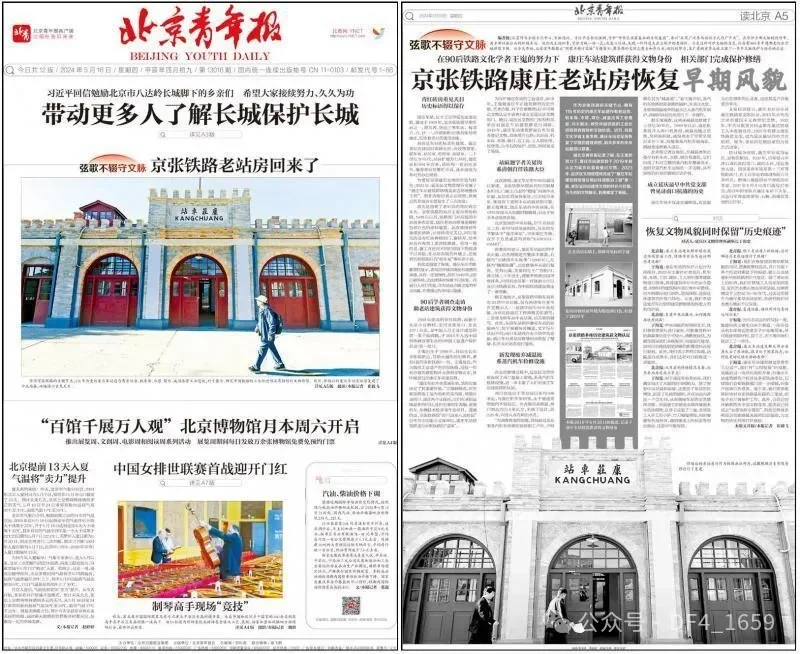
Related report by Beijing Youth Daily on June 26, 2019, documenting the Kangzhuang Station building complex obtaining cultural relic status
