
120-Year-Old Qinghe Station Old Building Opens to the Public
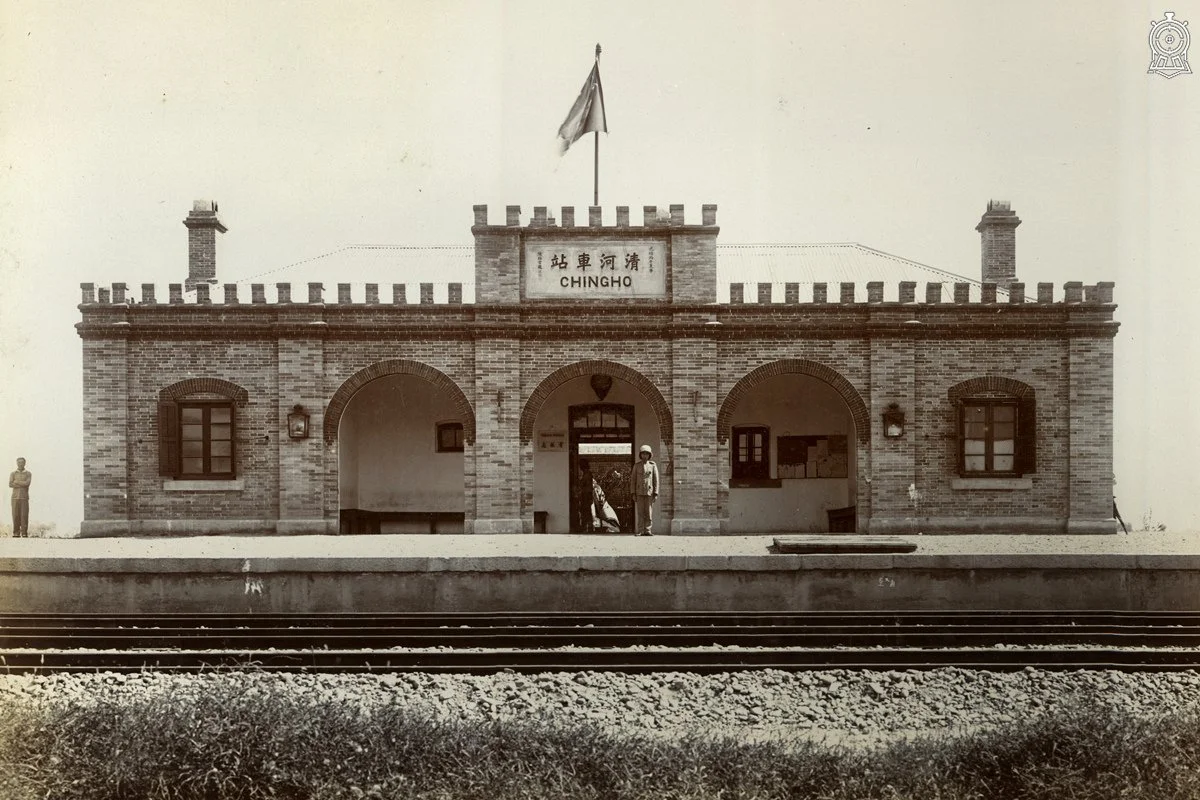
Old photograph of Qinghe Station, photographed by Tan Jintang
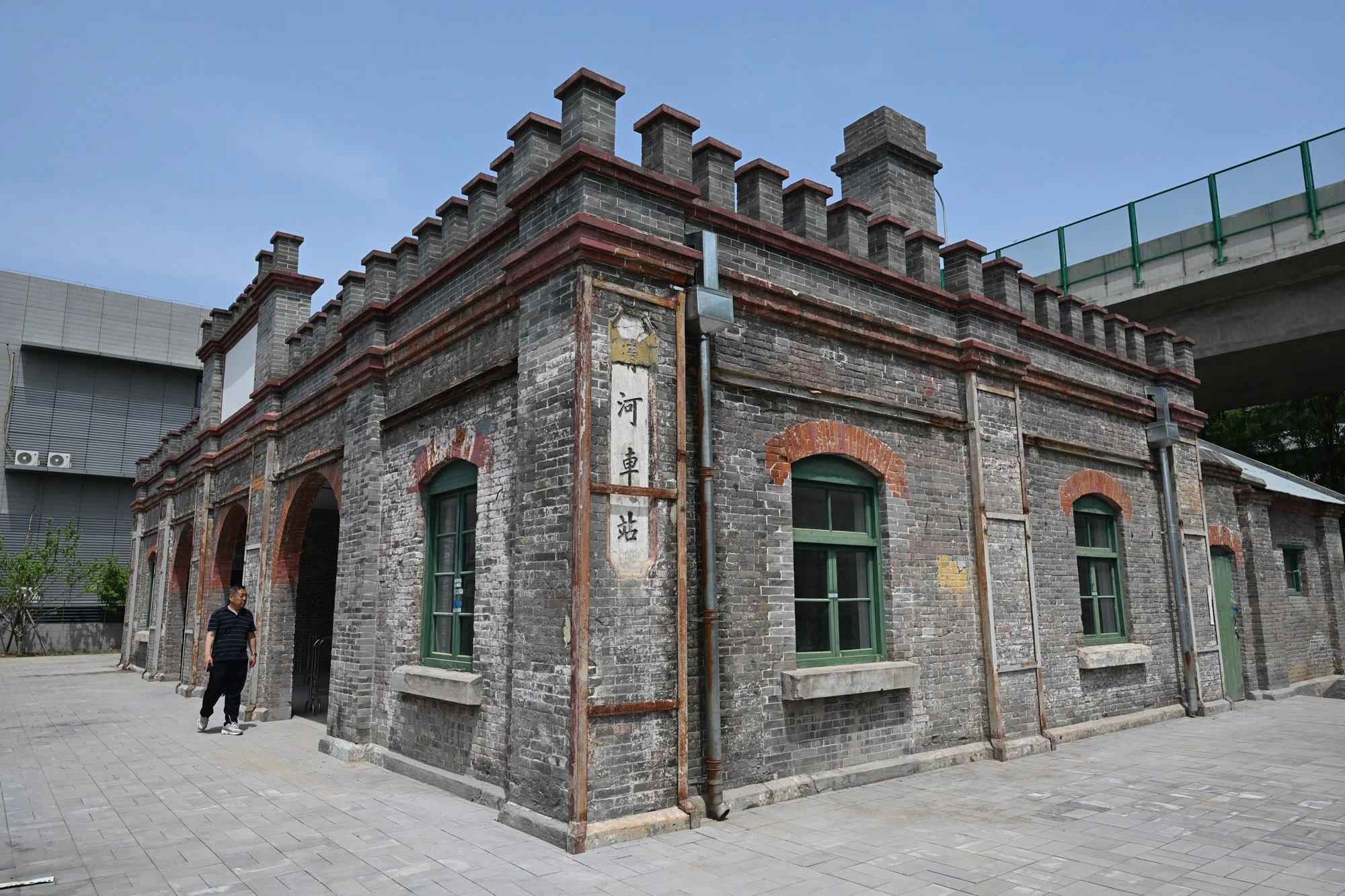
Old building of Qinghe Station, photographed by reporter Cui Yifei
May 9, 2026 Beijing Youth Daily
May 9, 2026 Beijing Youth Daily
When talking about the Qinghe Railway Station in Beijing, most people nowadays first think of Qinghe Station—the largest station along the entire Beijing-Zhangjiakou High-Speed Railway. However, few people notice that near this high-speed railway station, which went into service at the end of 2019, there is another old building: the 120-year-old Qinghe Station old building. Recently, some Beijing citizens discovered that the Qinghe old building, which had been closed off for protection for many years, has now been opened to the public, providing a unique physical remnant for the public to understand the architectural culture of the Beijing-Zhangjiakou Railway.
Exterior Open, But Interior Temporarily Unavailable for Visits
To the south of the newly built Beijing-Zhangjiakou high-speed railway Qinghe Station stands an old building that has weathered many vicissitudes. Because it has been out of service for many years and backs onto a road, it is not easily noticeable. A reporter from Beijing Youth Daily saw at the scene that there are steps on both the north and south sides of the building. Walking up the steps and around to the front, one can see that the building is in a Western-style six-column, five-bay layout, facing east and west. Vertical plaques with traditional Chinese characters for "Qinghe Station" (清河車站) are embedded on the outer sides of the northern and southern pillars respectively, which serve as the most prominent identity marker of the old building.
"The last time I visited the Qinghe old building was in February 2024. At that time, the courtyard where the old building is located had its gate locked, and it was impossible to enter the courtyard for a visit," Wang Wei, a railway cultural scholar and member of the Beijing Cultural Relics Protection Association, told a Beijing Youth Daily reporter. He originally thought the old building would remain locked up for protection, but did not expect it to be opened for visits. Subsequently, based on the on-site notice board, the Beijing Youth Daily reporter contacted Wei Hefei, the person in charge of cultural relic safety for the old Qinghe Station building, who confirmed that the old building has been open to the public starting this year.
The Beijing Youth Daily reporter saw tourists coming to visit from time to time and taking photos with the old building as a souvenir. However, because the interior furnishings of the old building have been cleared out, it currently does not meet the conditions for indoor visits. According to Wang Wei, similar to the vast majority of old stations along the Beijing-Zhangjiakou Railway, the original Qinghe old building also housed a waiting room, ticket office, station master's office, utility room, telegraph room, kitchen, and dormitory. In addition, around the old building, the Beijing Youth Daily reporter could not find any cultural relic explanatory plaques.
Wang Wei further introduced that Qinghe Station, completed in 1906, was a third-class small station along the Beijing-Zhangjiakou Railway, named after its location in Qinghe Town. On September 8, 1912, Sun Yat-sen got off the train here to inspect the Beijing-Zhangjiakou Railway. After 1949, the old building underwent multiple renovations and expansions, and its initial architectural appearance was almost hidden, but its main structure remained largely intact. In October 2016, construction of the Beijing-Zhangjiakou high-speed railway began, and Qinghe Station ceased its passenger transport business. This 110-year-old building was consequently abandoned.
Old Building Moved Nearly 360 Meters to Be Preserved
Qinghe Station is located in Haidian District, Beijing. The Beijing Youth Daily reporter consulted the Directory of Immovable Cultural Relics in Haidian District and learned that the old Qinghe Station building belongs to modern and contemporary important historical sites and representative buildings, and the management and use unit is China Railway Beijing Group Co., Ltd. It is worth mentioning that the cultural relic recognition process of the old Qinghe Station building is quite special; it was preserved through protection initiated by civilian scholars.
Looking back to 2015, when the Beijing-Zhangjiakou high-speed railway was about to start construction, a new Qinghe Station was planned as one of the dual starting stations. At that time, Wang Wei noticed that as an early station of the Beijing-Zhangjiakou Railway, the Qinghe old building still lacked statutory cultural relic status. To prevent the old building from being demolished during the construction process, he systematically sorted out its historical value, filled out an Immovable Cultural Relic Recognition Application Form, and submitted it to the Haidian District Cultural Commission on November 26, 2015. On May 25, 2017, the Haidian District Cultural Commission issued the Announcement on Recognizing "Qinghe Station" as an Immovable Cultural Relic. At the same time, Wang Wei received the Immovable Cultural Relic Recognition Form replied by the cultural relics department. From then on, the old Qinghe Station building obtained statutory cultural relic status.
However, restricted by various conditions, in the subsequent planning and construction, the old building could not be preserved on its original site. Due to the construction needs of the Beijing-Zhangjiakou high-speed railway Qinghe Station, the old Qinghe building—with a building area of about 336 square meters and a weight of about 700 tons—underwent two overall translation moves: in September 2017, the old building was first translated 84.55 meters to the east; in February 2019, the old building initiated its second translation, moving 274.81 meters to the southwest to reach its current site. During the translation process, the construction team used 4 jacks to tow it along prefabricated tracks, with each towing stroke being 0.2 meters, making the total translation length reach 359.36 meters.
After completing the translation, relevant departments renovated the old building, such as replacing roof tiles, reinforcing the structure, patching and repairing walls, and replacing doors and windows, so as to restore its original historical appearance as much as possible.
Blank Central Station Plaque is a Later Reconstruction
During the visit, the Beijing Youth Daily reporter noticed that a protruding "cap wall" stands directly above the old Qinghe building, and a rectangular station plaque is embedded within the wall, with a blank plaque surface bearing no words. Regarding this, Wang Wei explained that the old Qinghe Station building underwent multiple renovations and expansions, and the original central station plaque had long been dismantled. It was reconstructed during this renovation, but the station name information and other details on the plaque were not restored, leaving a gap in historical information.
Image data shows that the original central station plaque of Qinghe Station was inscribed by Chen Zhaochang, then-director-general of the Beijing-Zhangjiakou Railway, in the summer of the Bingwu year of the Guangxu reign (1906). It was written horizontally from right to left with four traditional Chinese characters for "Qinghe Station" (清河車站), with the Wade-Giles romanization "CHINGHO" marked below it. The Beijing Youth Daily reporter subsequently called the Cultural Relics Protection Section of the Haidian District Bureau of Culture and Tourism regarding the blank station plaque. A staff member stated that the restoration of the words on the station plaque requires archival support, and they will consult relevant experts.
According to Wang Wei, the Beijing-Zhangjiakou Railway, completed and opened to traffic along its entire line in 1909, is the first trunk railway designed and built independently by the Chinese people. The 25 old station buildings along the entire line have basically the same shape and system, among which 23 station buildings feature central station plaques, serving as the finishing touch of the station architecture. However, after more than a century, most station buildings have either been demolished or remodeled, and today only two original central station plaques along the entire line are completely displayed to the public: one is the central station plaque of Qinghuayuan Station, inscribed by Zhan Tianyou, chief engineer of the Beijing-Zhangjiakou Railway; the other is the central station plaque of Qinglongqiao Station, inscribed by Guan Mianjun, China's first railway minister. In addition, although the central station plaques of Dongyuan Station and Juyongguan Station still exist, their characters are covered with lime plaster.
The Beijing Youth Daily reporter noted that with the continuous advancement of cultural relic protection work along the Beijing-Zhangjiakou Railway in recent years, the central station plaques of two stations have been successfully reconstructed. One is located at Kanggusha Station (Kangguzhuang Station), where the original central station plaque no longer existed. In 2023, local cultural relics departments completely restored the central station plaque and the inscribed station name when renovating the old Kangguzhuang building. The other is the old Qinghe building, where its central station plaque has been re-erected, but the inscribed station name has not yet been restored.
Text and Photography by: Cui Yifei (Beijing Youth Daily)
Archival Photo Photography: Tan Jintang
